

Why Different Industries Need Different Machining Choices
No two sectors call for the same part behaviour. A component for an assembly in Durban may need corrosion resistance for coastal air, while a part for a production line in Johannesburg may need consistent wear performance and a clean mating fit. That is why we start with function, then look at the material, the machining method and the inspection plan.
Our job shop is set up for short runs and repeat work, so we can support teams that need parts made to a drawing, a sample, or a revised part after a supplier change. We work with clients across Pinetown, Westmead, New Germany, Pietermaritzburg, Richards Bay and Umhlanga, with delivery coordination where needed.
For many industries, the real challenge is not just making a part, but making it fit first time and stay consistent on the next batch. That calls for clear communication around hole sizes, threads, surface finish and any assembly clearances.
Machined Parts for Manufacturing and Equipment Builders
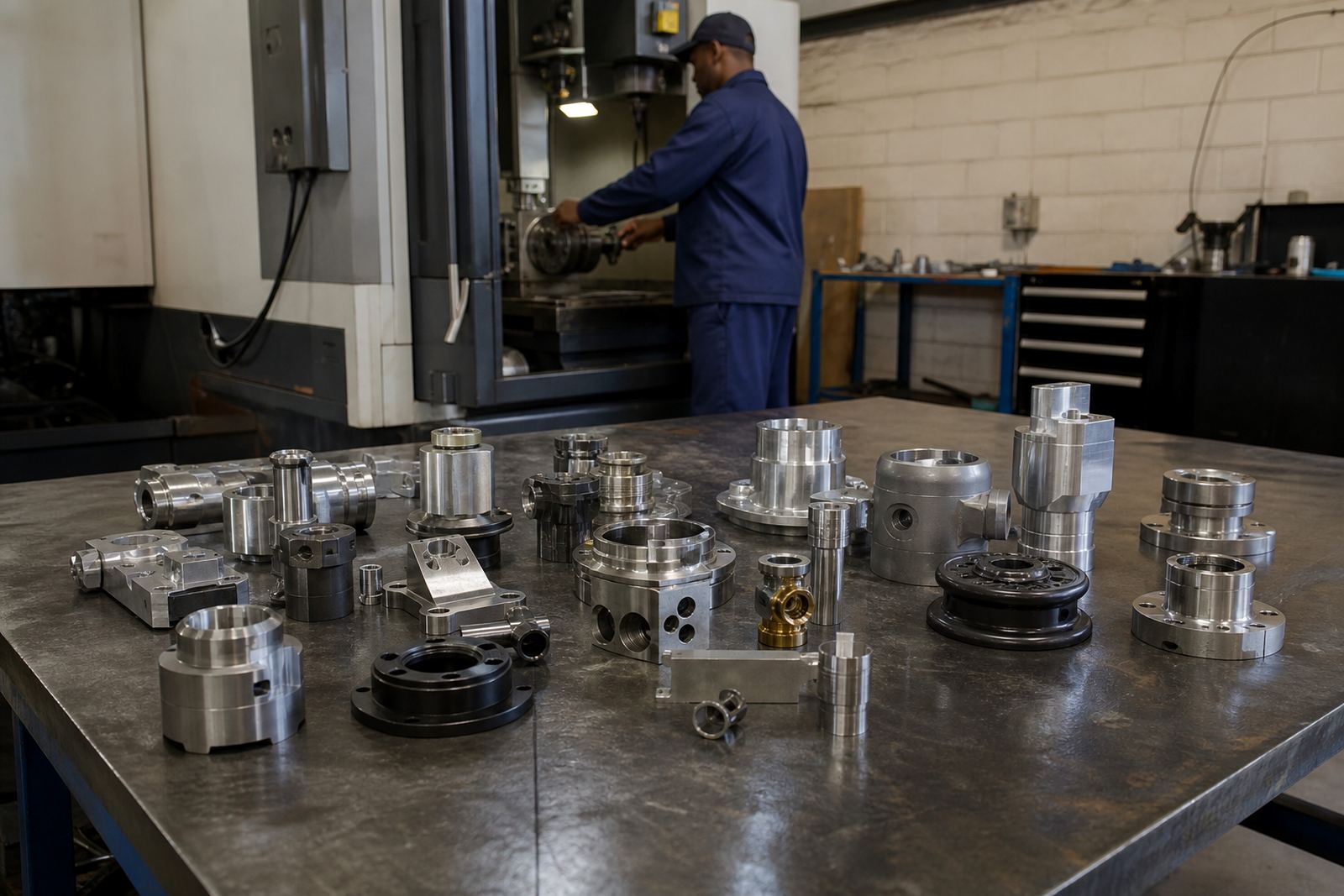
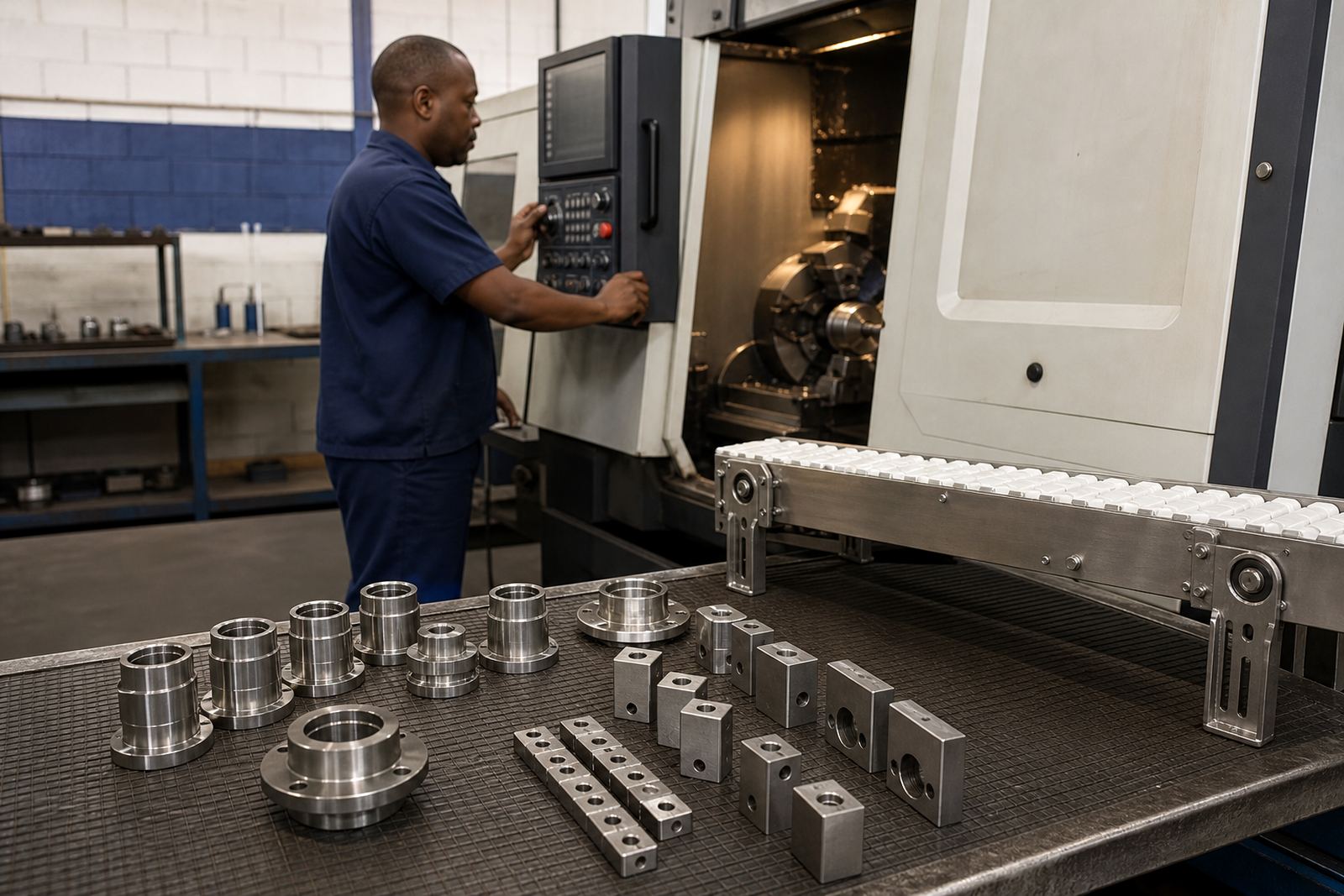
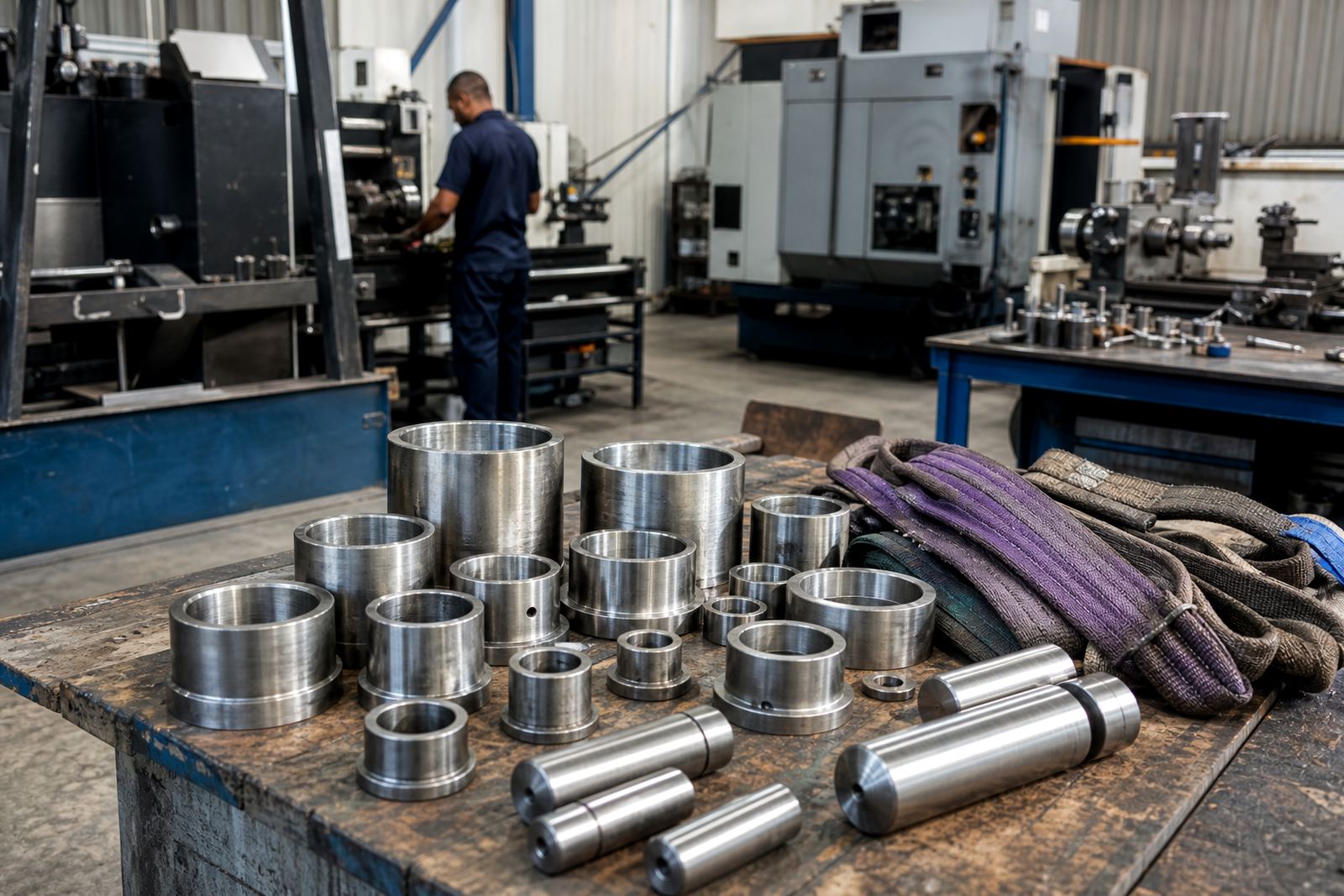
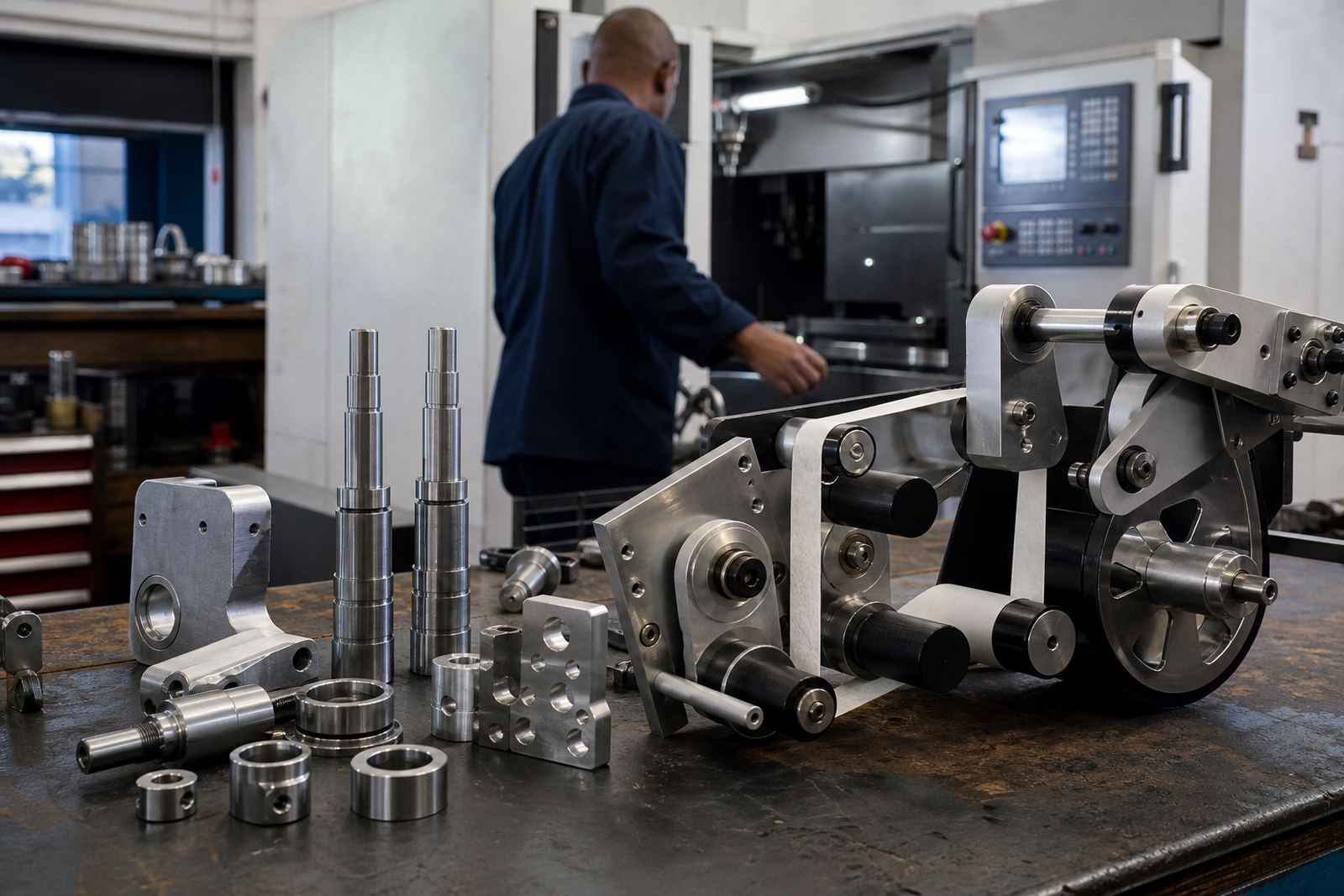
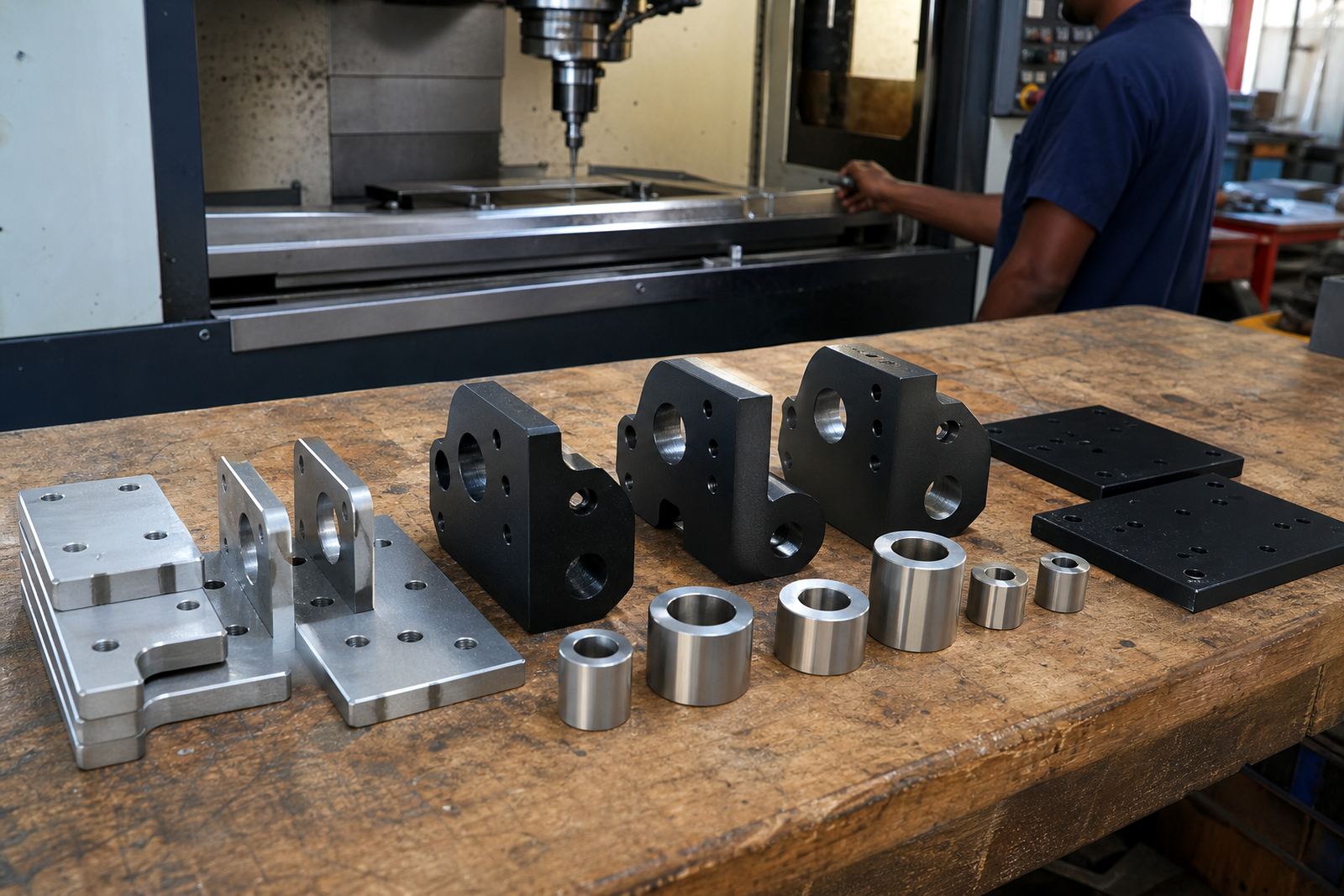
Manufacturing customers often need replacement parts, fixture components, brackets, shafts, spacer pieces and adaptor items. These are the parts that keep equipment running when a full production stop is not practical. In small-batch work, careful CNC milling and turning help keep dimensions controlled while allowing useful changes between revisions.
- Prototype parts for machine builds and production trials
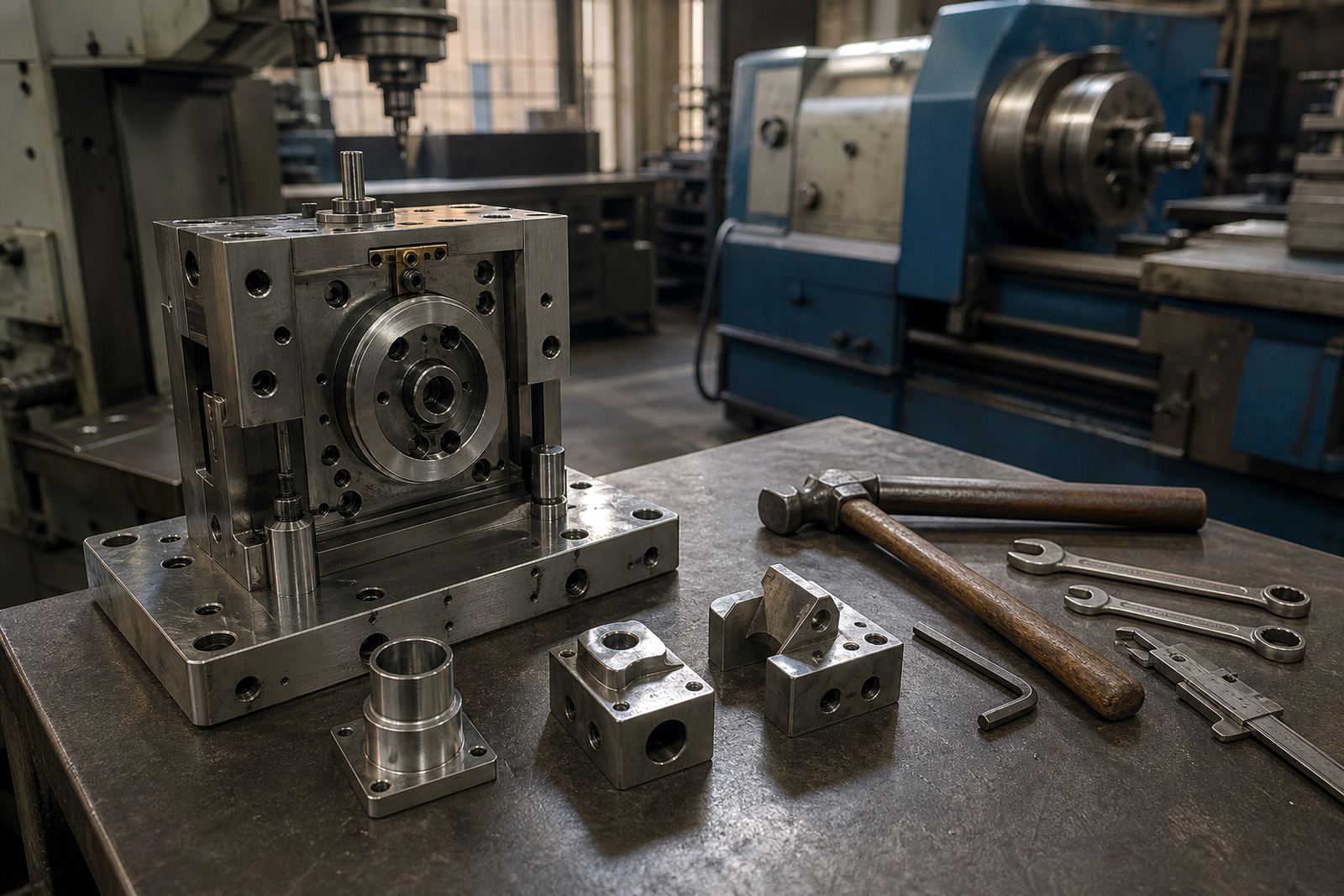
- Jigs, fixtures and location pieces for assembly work
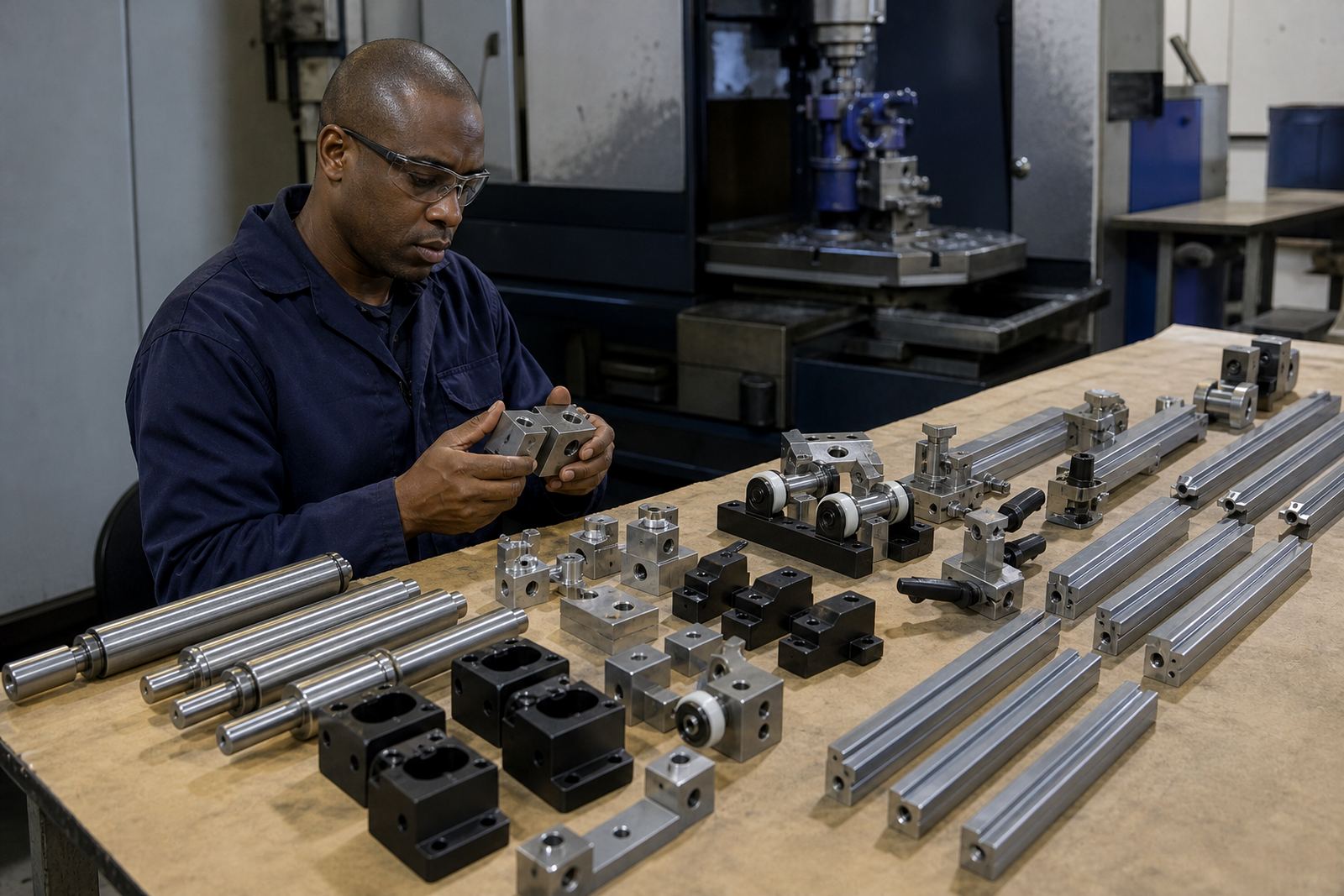
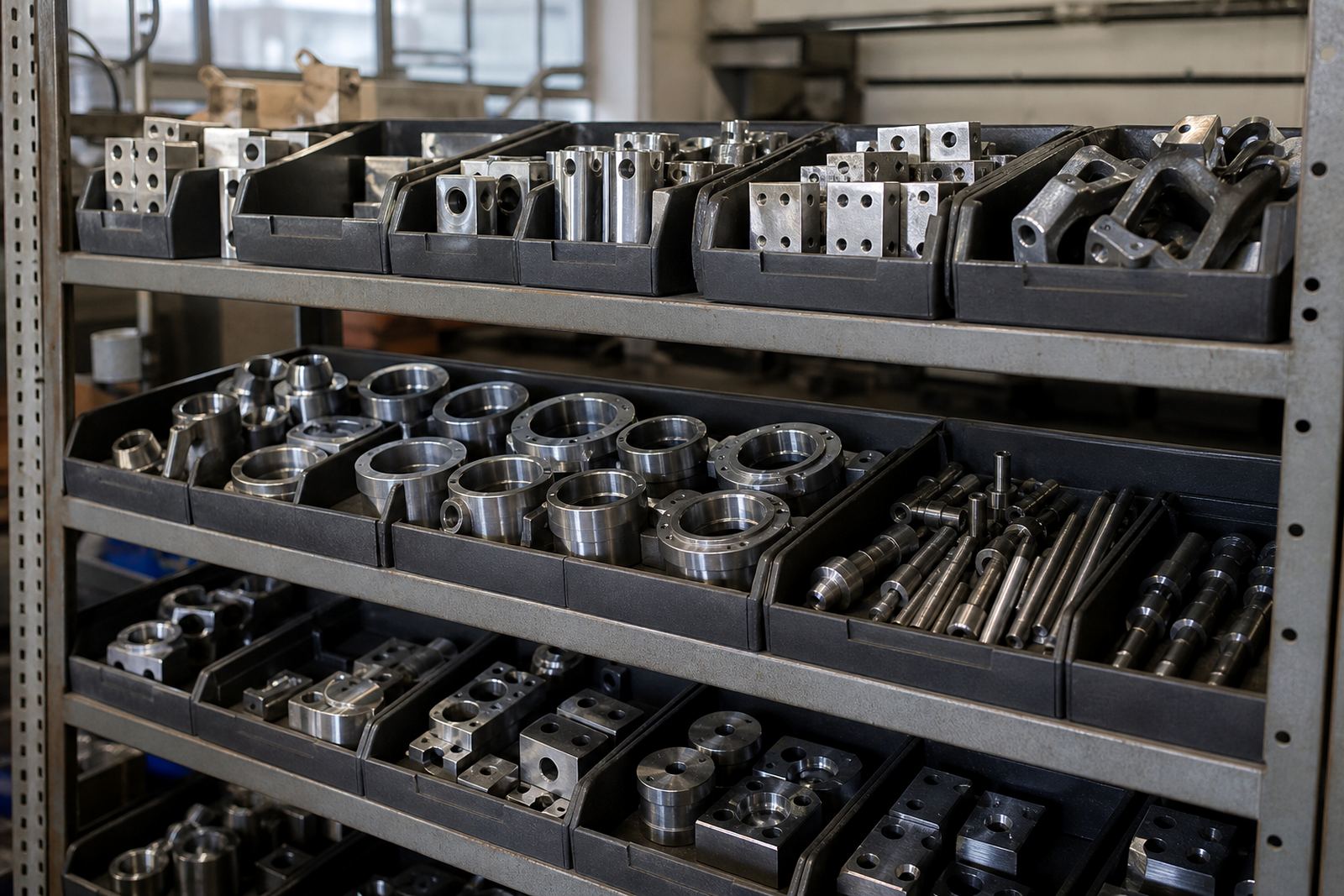
- Replacement shafts, bushes, sleeves and spacers
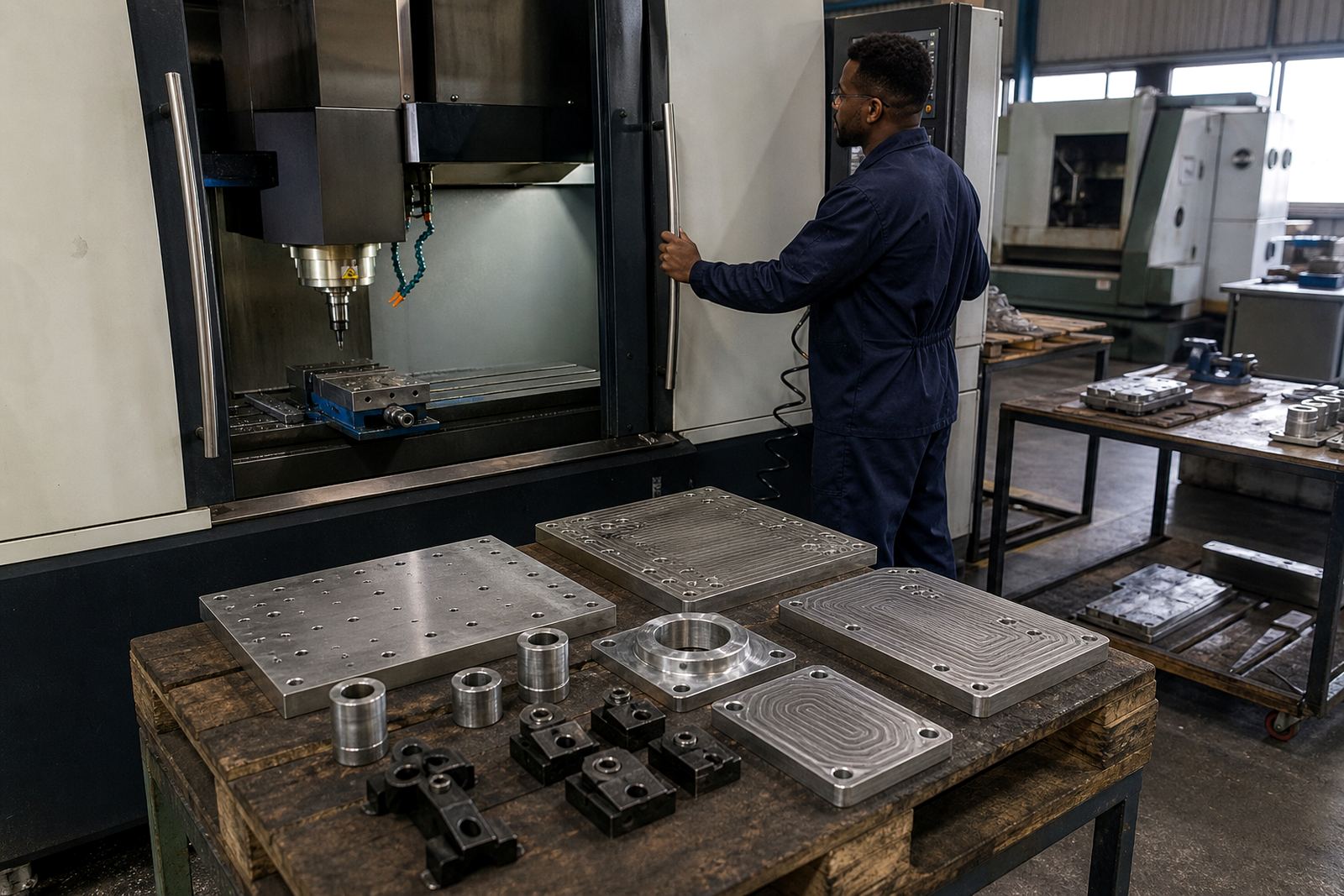
- Mounting plates, adapter blocks and support components
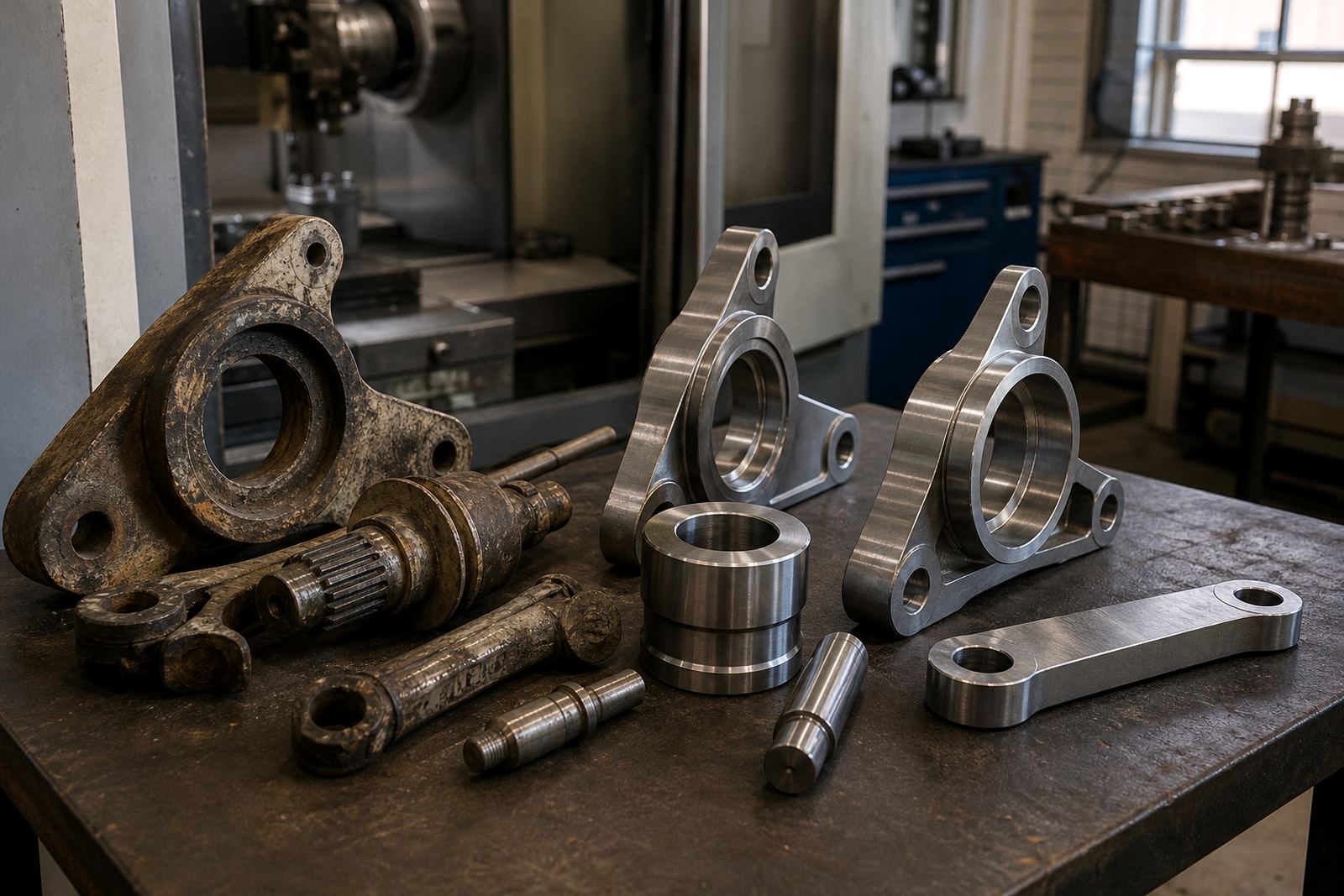
We can also assist with drawing review, sample part remake and drawing updates when a part has been used in the field and needs a practical improvement. On some jobs, a slight change to a radius, chamfer or thread depth can make assembly much easier.
Fit Critical Parts for Automotive and Transport Work
Automotive and transport applications usually need parts that assemble cleanly and can handle vibration, heat and regular use. Depending on the application, clients may ask for close tolerance holes, turned diameters, slot features or matched parts that work together in a larger assembly. Where required, we provide tolerance guidance so the drawing suits the function instead of over specifying every detail.
Material choice matters here. Some parts are better suited to aluminium for reduced weight, while others need steel for strength or brass for easier machining and stable thread engagement. In coastal areas such as Durban and Richards Bay, corrosion resistance can be an important part of the decision too.
- Brackets and mounting components
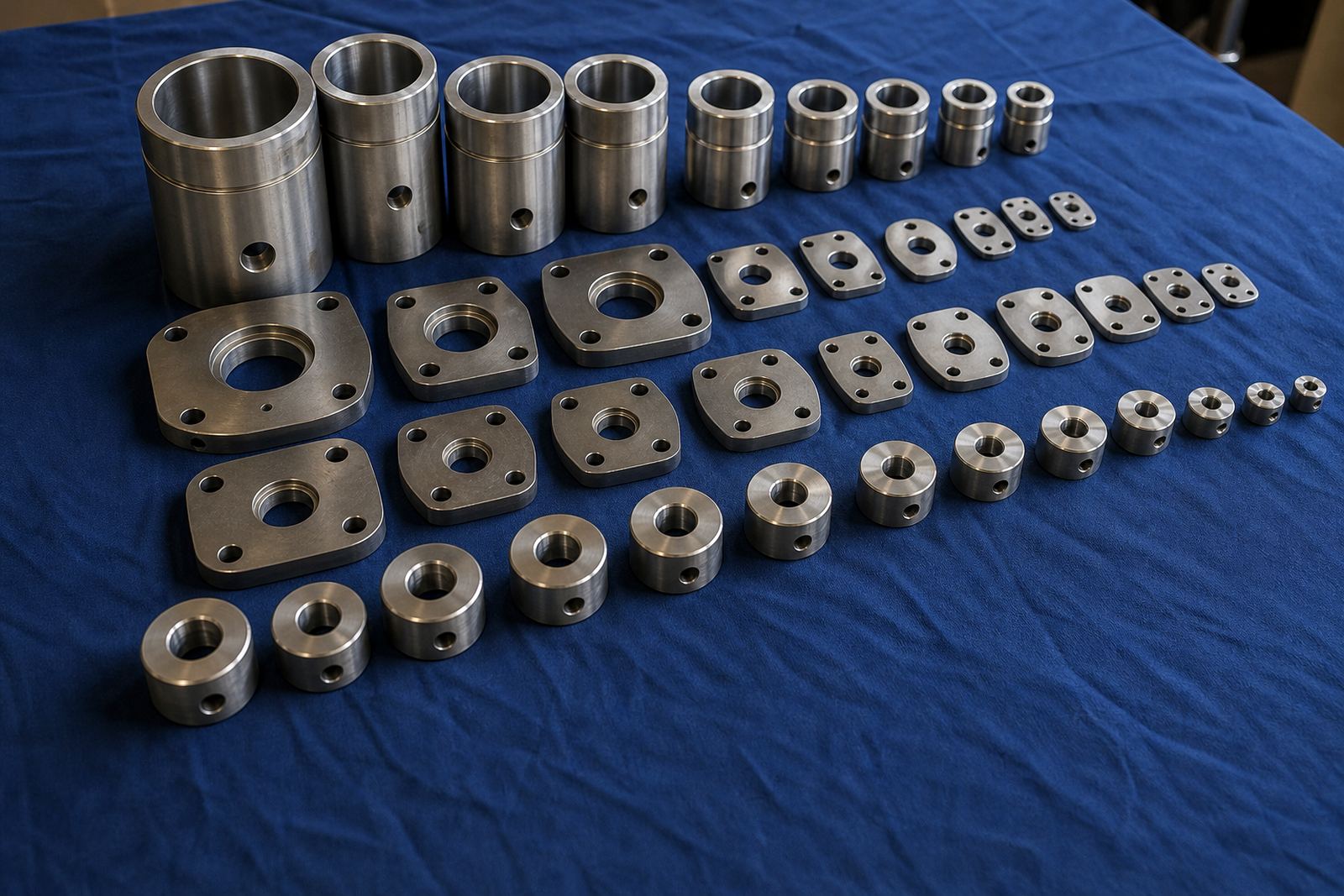
- Spacer rings and locating parts
- Threaded adaptors and bush-type components
- Parts for repairs, test rigs and workshop use
Support for Food, Packaging and General Processing Plants
Processing environments often need hygienic, easy to clean parts with repeatable fit and sensible wear life. The exact material and finish depend on contact, cleaning methods and the environment around the machine. For this reason, we focus on function and practical manufacturability rather than overcomplicating the spec.
Short runs are common in this space, especially where a line change, a machine repair or an urgent replacement is needed. Batch planning helps us keep related parts together, while inspection reporting gives the customer a clear record of key dimensions. If a part needs to fit into an existing assembly, assembly fit checks can save time on site.
Where a sample is available, we can use it to guide a remake, then adjust the drawing so the next order is easier to repeat. That kind of support is often valuable when a plant is under time pressure and can not afford trial and error.
Engineering Help for Mining, Water and Heavy Service Areas
Heavy service sectors often need parts that can cope with dust, abrasion, vibration and long operating hours. In these jobs, the right tolerance is important but so is the choice of stock size, wall thickness and feature layout. Overspecifying can push up cost and extend lead times without improving the part in real use.
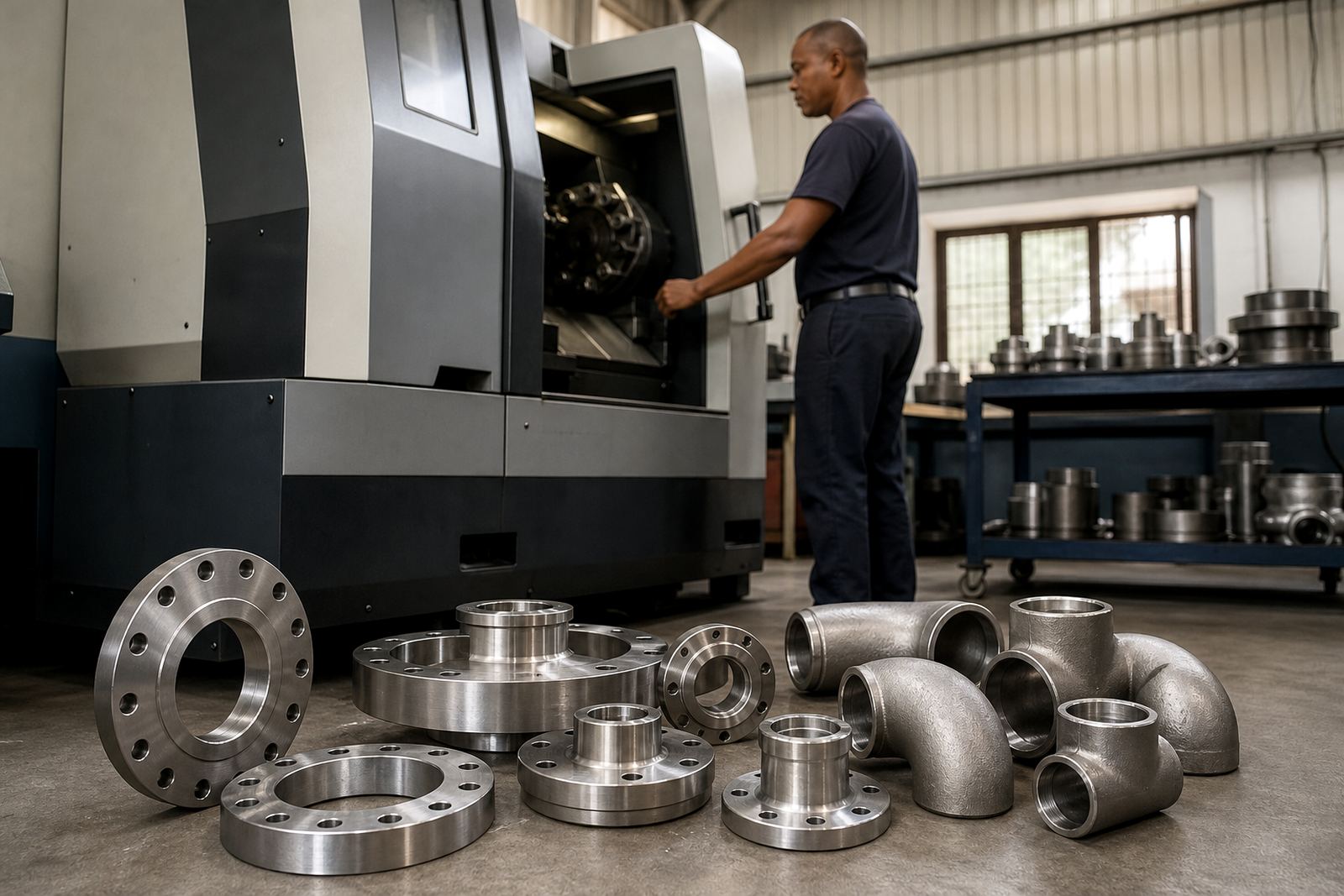
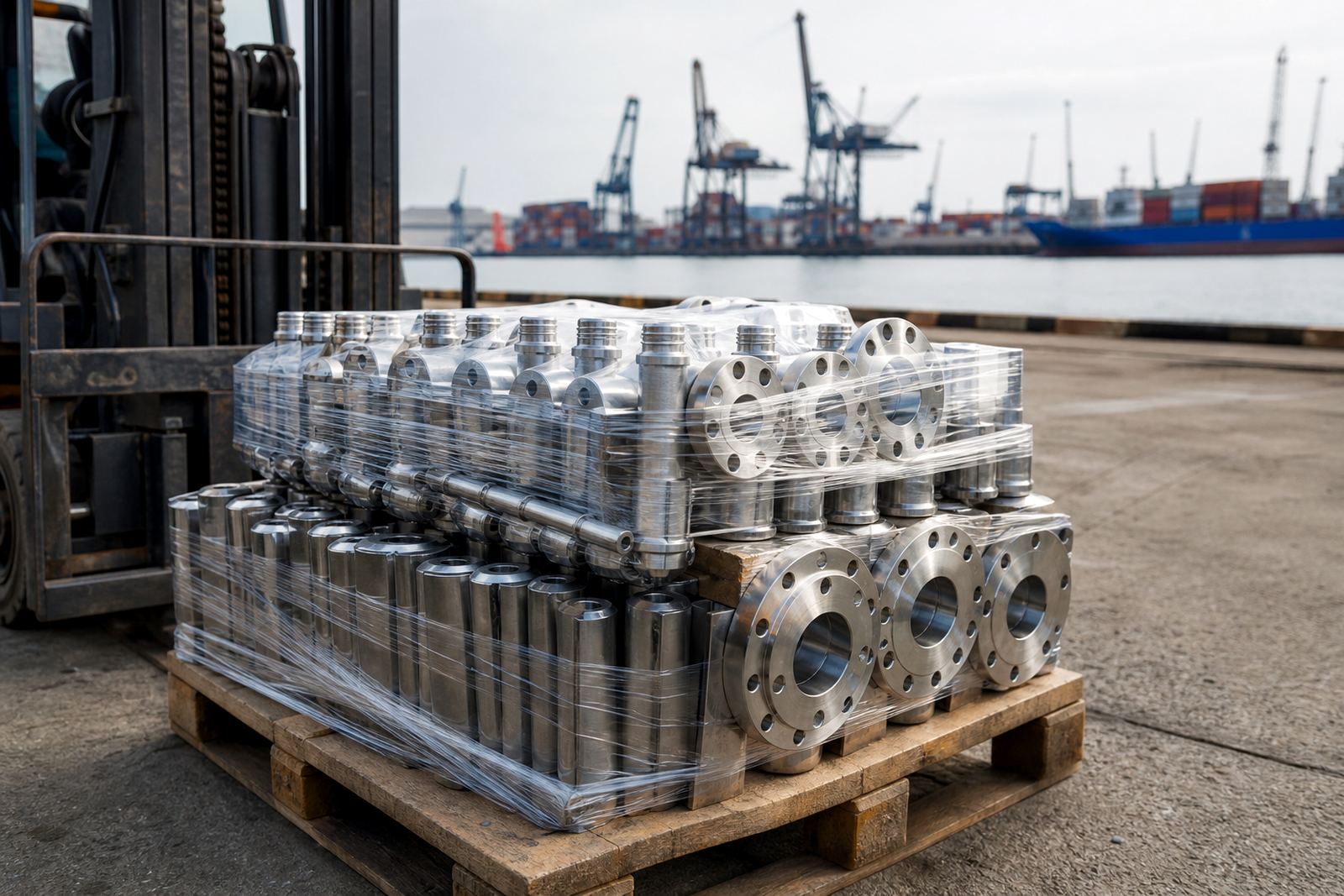
We work on components that may be used in pumps, frames, covers, support pieces and general maintenance applications. For customers in Gauteng and KwaZulu-Natal, delivery coordination can be arranged to help keep site work moving. Accurate turning is often useful for round parts, while milling is better for pockets, faces, slots and bolt patterns.
How We Help You Choose the Right Route
If you are not sure which service suits your part, start with the job function and the drawing if you have one. From there, we can discuss material selection, prototype planning, part optimisation and repeat order support. The aim is to match the part to how it will actually be used, not just how it looks on paper.
- Share a drawing, sketch or sample through the enquiry form on our contact page
- Tell us where the part will be used and what it must fit with
- Let us review tolerances, material and batch size before cutting begins
That process helps avoid delays and reduces the risk of a part arriving that almost fits but not quite. It also makes it easier to plan future orders when the same component is needed again.
Working with PME CNC Machining Across South Africa
Founded in 2008, PME CNC Machining is based in Pinetown and supports clients across South Africa, including Durban, Pietermaritzburg, Richards Bay and Johannesburg. Our team includes Mandla Sibusiso Mkhize, Anele Nondumiso Dlamini, Johan Petrus van Wyk, Siyabonga Patrick Zulu, Naledi Refilwe Molefe and Kyle Brendan Naidoo, all focused on keeping jobs organised from enquiry to delivery.
Whether the requirement is a one-off remake or a small batch for repeat use, we keep the process practical and clear. If your industry needs reliable fit, sensible tolerances and straight communication, PME CNC Machining is ready to help.