Parts That Keep Product Moving
Materials handling equipment often works in tough conditions, from dusty inland plants to humid coastal sites around Durban, Richards Bay and the KZN north coast. Rollers, guide blocks, brackets, spacers and wear parts all need to fit cleanly so product can move without snagging, wobble or uneven loading. When a part drifts out of size, the whole line can suffer from noise, tracking issues and repeat stoppages.
We machine small-batch parts for clients who need practical replacements or fitted upgrades, not mass production. That includes one-off sample parts, short runs for maintenance stock, and repeat orders where the aim is to keep machines running with less downtime. Mandla Sibusiso Mkhize leads the business from Pinetown, with support from a team that handles programming, production, quality and client coordination.
Typical Components For Conveyor And Handling Systems
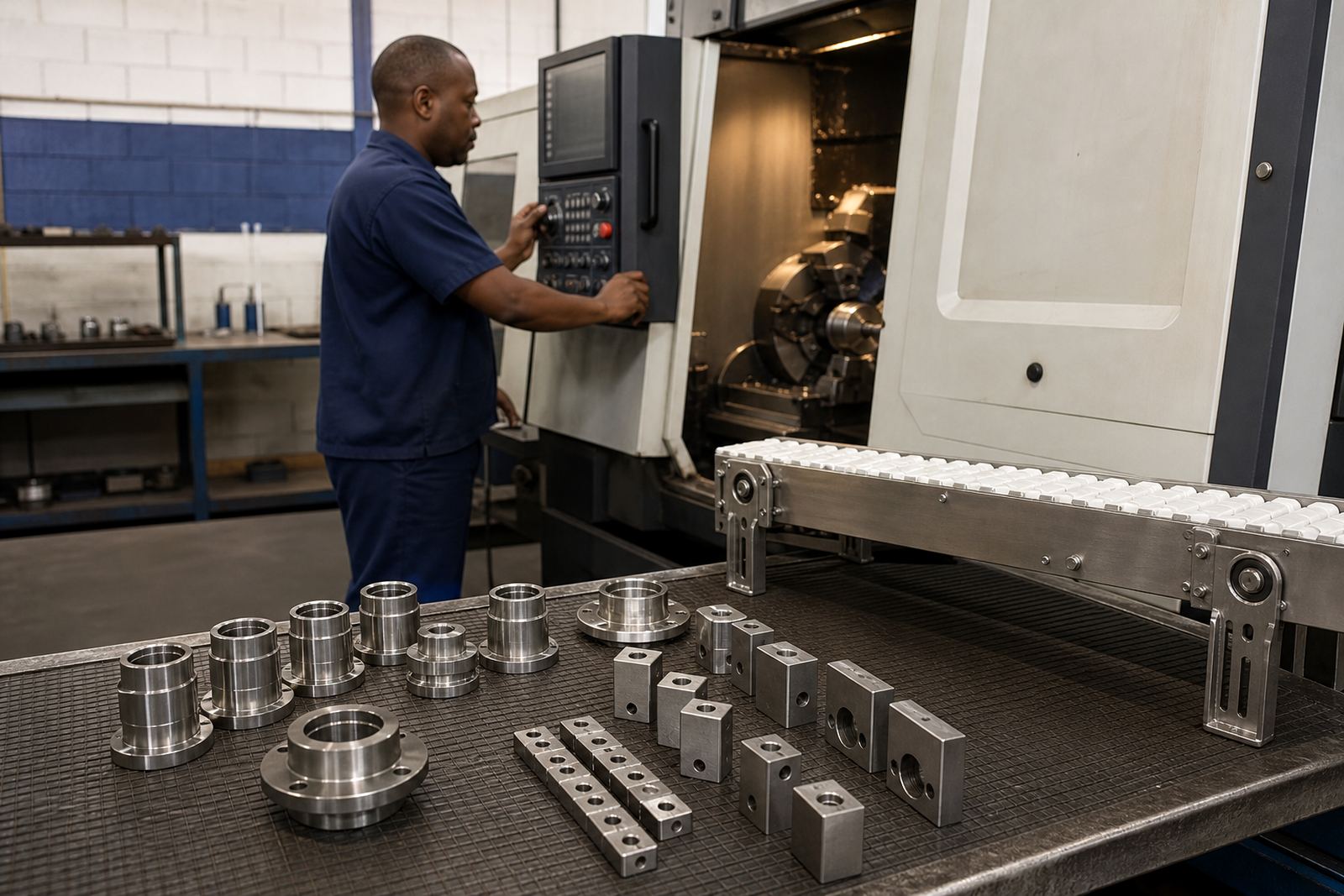
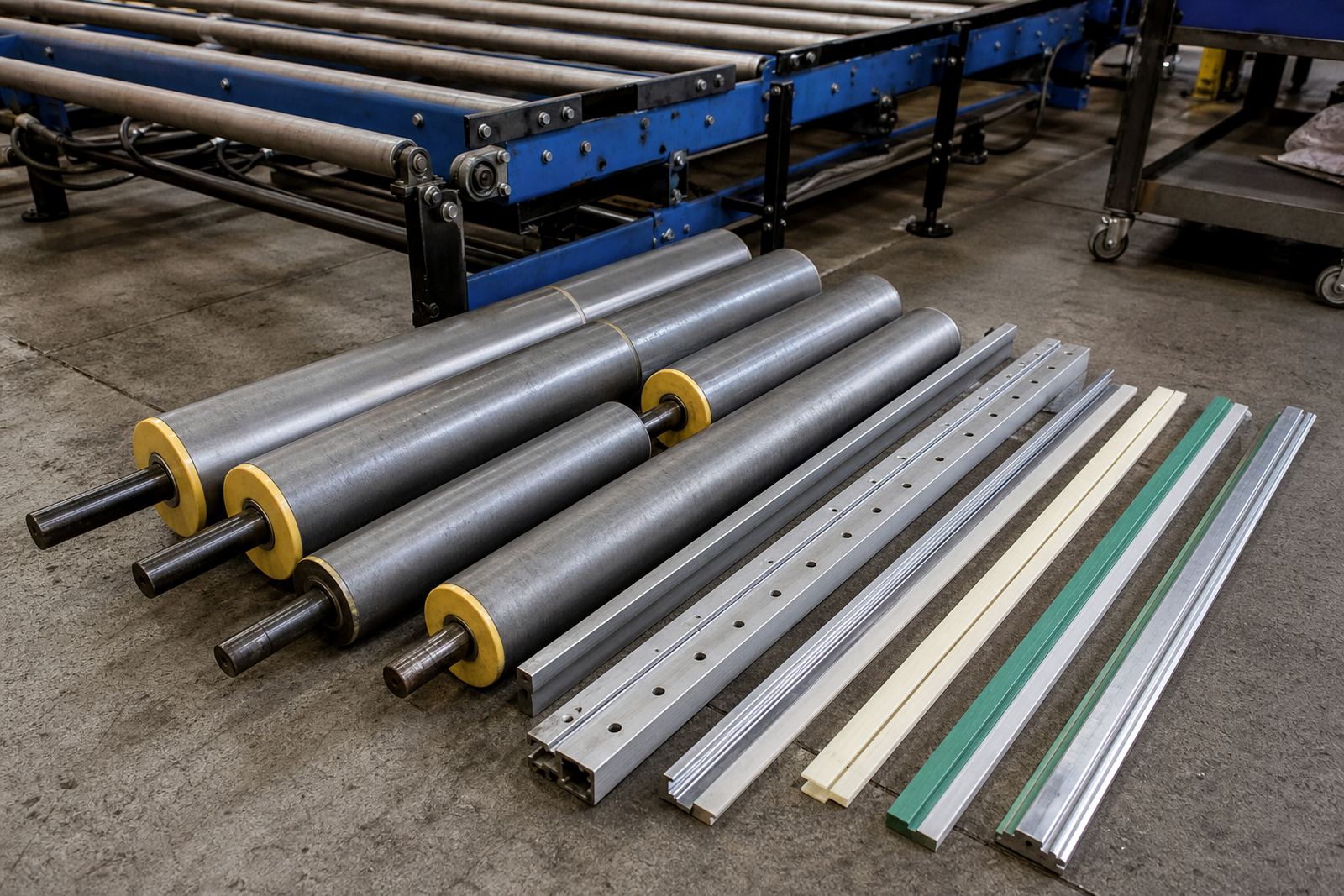
CNC milling and turning suit a wide range of materials handling components. Milling is often used for brackets, mounting plates, housings, guide parts and shaped components with slots, faces or drilled patterns. Turning is common for rollers, shafts, sleeves, bushes and round parts that need concentricity and a clean running surface. In many plants the part is simple in shape, but it still has to meet the same fit every time or the assembly starts to bind.
- Guide rollers, idlers and support sleeves
- Mounting brackets and adjustable plates
- Spacer rings, bushes and shaft collars
- Wear strips and bearing-related components
- Small replacement parts for transfer units and feed systems
For parts that see frequent contact or vibration, material choice matters as much as the geometry. Depending on the application, clients may consider aluminium, mild steel, stainless steel or engineering plastics. The final choice usually depends on load, corrosion exposure, temperature and how the part interfaces with other hardware.
Planning Around Fit, Wear And Plant Conditions
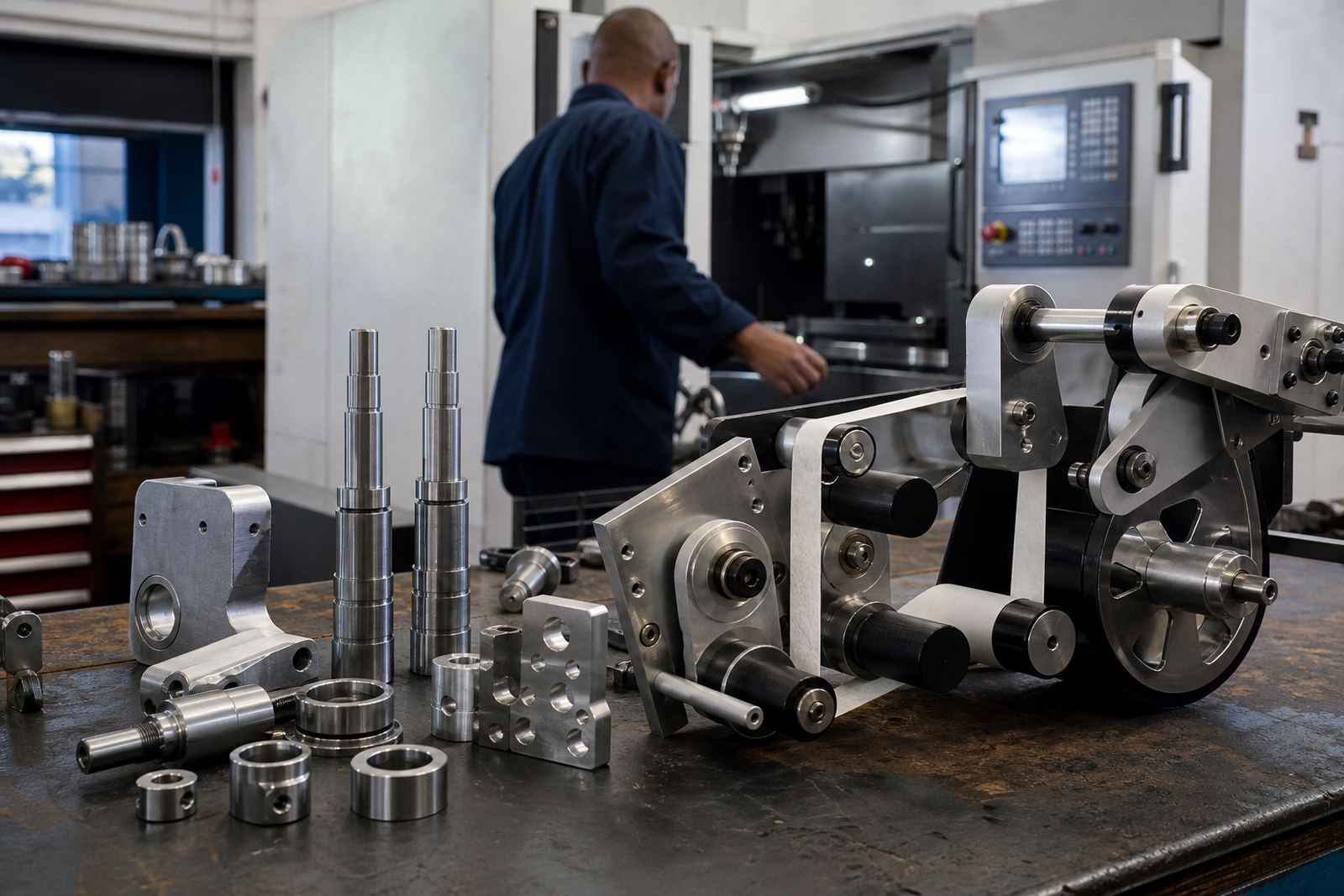
Good machining starts before cutting metal. We review drawings, sample parts or worn-out components to understand what changed, what must stay fixed and where tolerance matters most. On materials handling jobs, the critical points are often bore size, shaft fit, face flatness and hole position. A part can look simple on paper yet still fail if the mounting holes are shifted by a fraction or the running surface is not true.
Layout planning also matters. Some parts need clearance for guards, sensors, fasteners or cleaning access. Others have to sit within an existing machine envelope where space is tight and there is no room for redesign. In coastal areas like Umhlanga or Richards Bay, corrosion and moisture can influence both material selection and finishing. In hotter inland sites, dust and heat can affect wear patterns and lubrication, so the part needs to be set up for the real environment not only the drawing.
Our team can help with tolerance guidance, drawing updates and part optimisation when a component should be easier to machine or easier to maintain. That saves time on repeat orders and makes replacement parts less awkward for maintenance teams on site.
Common Mistakes That Cause Premature Wear
Materials handling failures often begin with small design or fit errors. A bracket may be strong enough but placed so the load is not carried evenly. A roller may run true on the machine but still wear early because the shaft finish is poor or the bearing seat is too loose. Another common issue is replacing a part based only on a rough old sample, with no check for the real wear cause. That can repeat the same problem instead of solving it.
- Using the wrong material for moisture, corrosion or impact
- Ignoring vibration or side loading in the design
- Overspecifying tolerances where they do not help performance
- Missing clearance for guards, seals or cleaning access
- Copying a worn part without measuring the original condition
Sample part remake services are useful when a component has failed in service and the maintenance team wants a corrected version. We also do assembly fit checks and inspection reporting, which helps confirm that the part will sit properly in the machine before the order is repeated.
Budget Ranges For Small-Batch Handling Parts
Budget for CNC machining in materials handling depends on size, material, setup time, number of features and how much inspection is needed. A simple turned spacer or small bracket may sit in a lower cost bracket, while a multi-feature milled part with close fits, repeated setups or hard-wearing material will cost more. As a practical guide, many small-batch handling parts fall somewhere from a few hundred Rand for simple items up to several thousand Rand for more involved components. Larger or more complex parts can sit above that, especially when there is a short turnaround or a need for matched sets.
Clients in Durban, Pinetown, Pietermaritzburg, Johannesburg and nearby industrial areas often look for repeatable parts that can be ordered again without starting from scratch. That is where batch planning and drawing review help control cost. If the first part is set up correctly, the second and third usually become easier to manage and that keeps the project more predictable.
How PME Supports Maintenance Teams Across South Africa
PME CNC Machining handles the full support chain for small-batch work, from drawing review and material selection through to delivery coordination. For materials handling clients, that often means checking fit against existing equipment, confirming hole patterns and advising on what should be held tight and what can be opened up slightly for easier assembly. Repeat order support is also important because many plants prefer to keep a few spare parts on hand rather than wait for a breakdown.
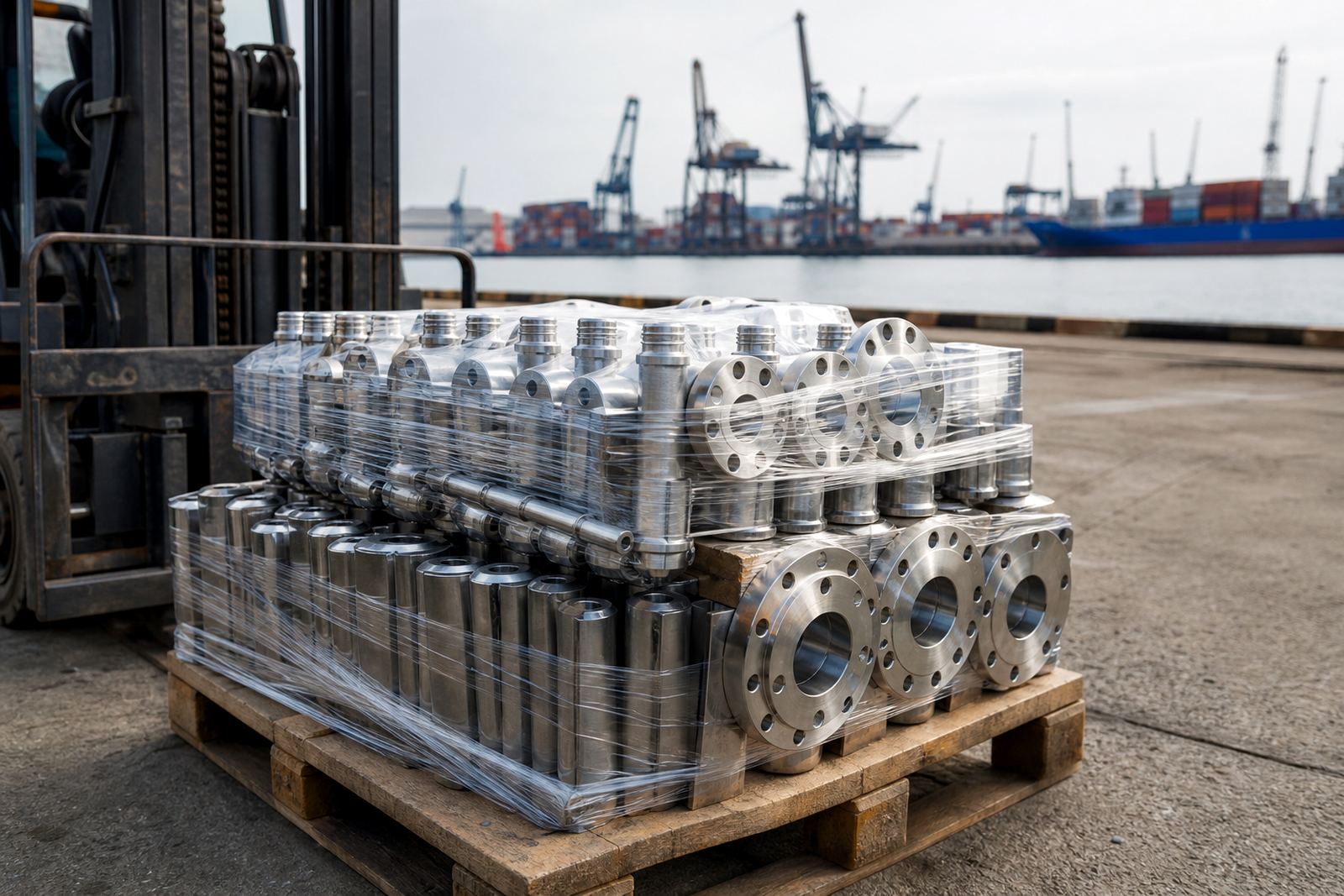
We work from Pinetown and support enquiries from Westmead, New Germany, Durban, Umhlanga, Pietermaritzburg, Richards Bay and Johannesburg through the contact page enquiry form. That suits maintenance managers, workshop teams and production buyers who need a practical machining partner for short runs and replacement parts. The aim is straightforward: get the part made properly, fit it once, and keep the line moving.
If you are planning a new conveyor fit-up or replacing a worn handling component, start with the drawing, a sample part or clear measurements. From there the job can be planned around the actual machine conditions, the available budget and the level of finish the application really needs.