When pump and valve parts need to be remade
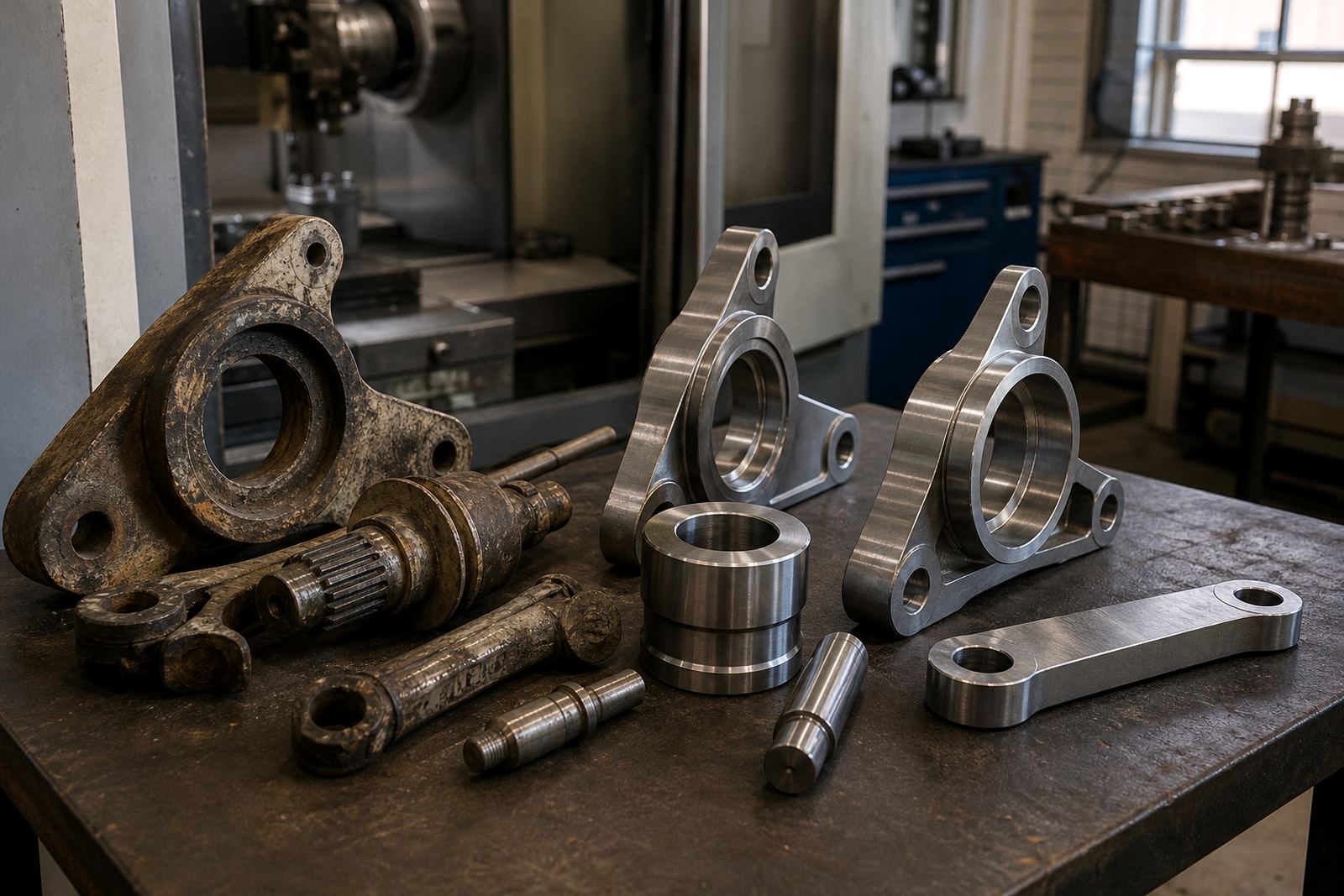
Pumps and valves often fail in the same places: worn shafts, damaged threads, scored housings, tired spacers and parts that no longer hold alignment after years of service. In many cases the whole unit does not need replacing, only the component that has drifted out of tolerance or been damaged during maintenance. That is where small-batch CNC turning and milling becomes useful, especially for repair work in factories, farms, water systems and process plants.
We handle parts for maintenance and adaptation work where dimensions matter and the original item may be out of production or no longer suited to the application. Clients in Durban, Pinetown, Pietermaritzburg, Richards Bay and Johannesburg often come to us with a worn sample, a drawing, or a fitment issue that needs practical measuring and remake support.
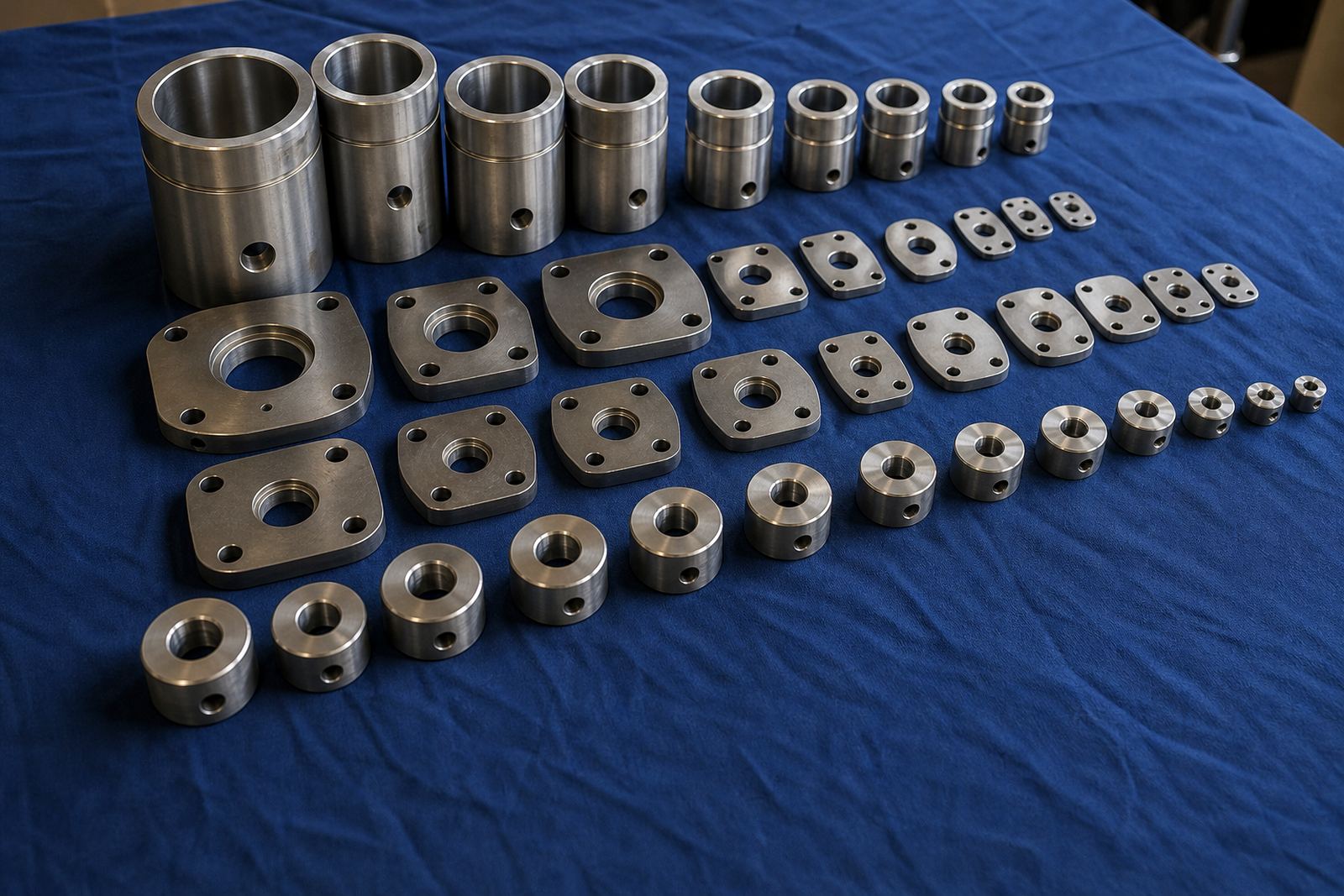
Typical components we machine for fluid handling equipment
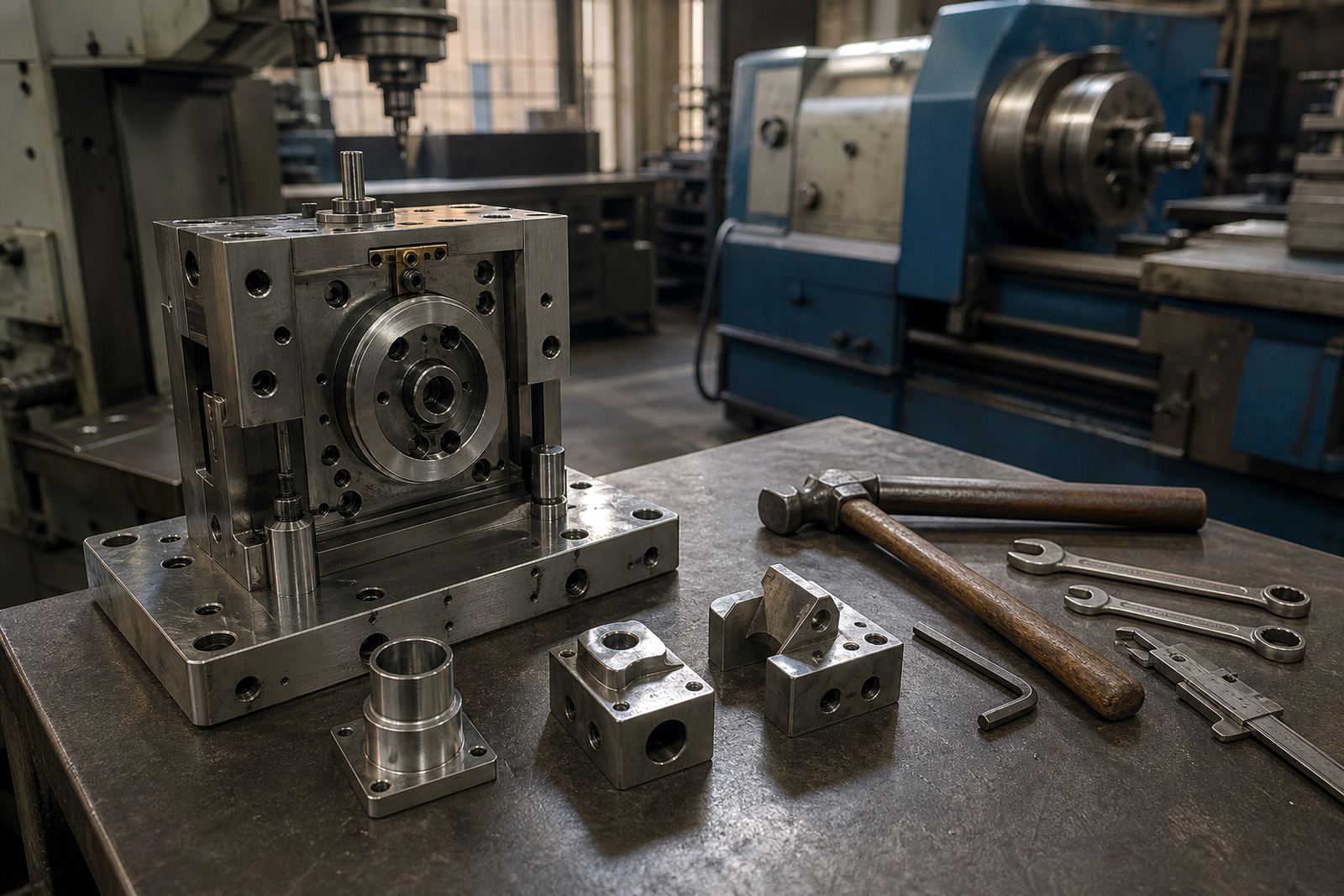
Pump and valve jobs can involve both rotating and static parts. Turning is used for round components, while milling helps with flats, slots, bolt patterns, keyways and faces that must sit square. The final part may be simple, but the working environment is not. Seawater, cleaning chemicals, heat, vibration and load shedding all put pressure on the equipment and on the maintenance schedule.
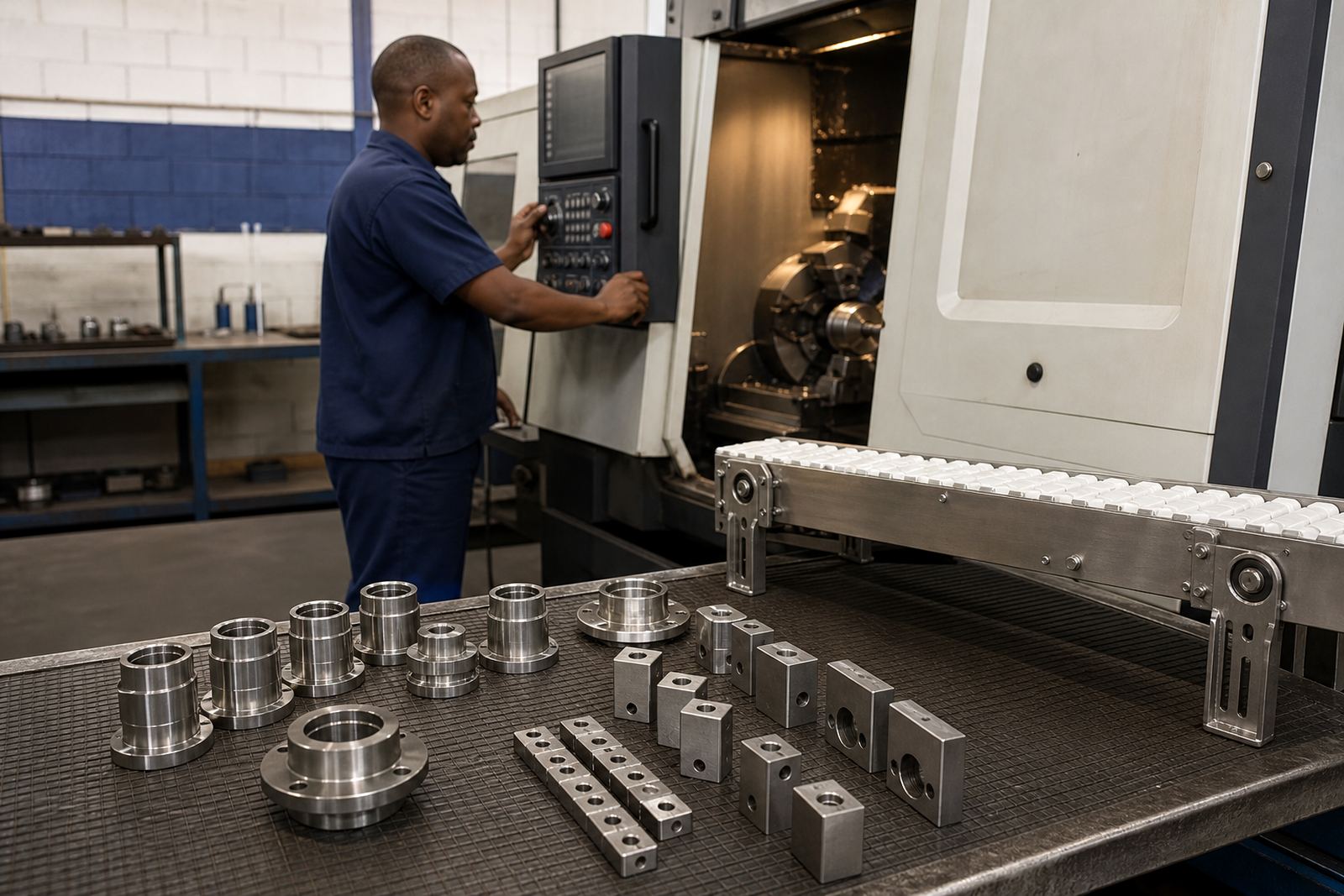
- Shafts, sleeves and bush-type parts
- Spacers, collars and retaining rings
- Seal housings and cover plates
- Mounting adapters and flange interface parts
- Valve stems, guides and actuator interface pieces
- Inspection sample parts for repeat maintenance jobs
We also assist with drawing updates when a part has been changed during a shutdown and the workshop now needs a clearer record for the next service. That small step saves time later, especially where the same equipment is maintained across multiple sites.
Tolerance guidance and material choices that suit the job
Pumps and valves rarely need every feature to the same level of accuracy. A bore that locates a bearing, a sealing face, or a stem diameter may need tighter control than a non-critical spacer. Good planning starts by deciding which dimensions matter for fit, movement and sealing, and which can be left with practical workshop allowances. We provide tolerance guidance around the job so the part is made for its actual function, not just copied by eye.
Material choice is also important. Common jobs may call for carbon steel, stainless steel, aluminium, brass or engineering plastics, depending on corrosion exposure, pressure, wear and the liquids being handled. Coastal humidity in places like Durban and Richards Bay can change what makes sense for long-term service, while inland sites may worry more about heat, abrasion and plant vibration. If the wrong material is used, a part can seize, gall or corrode long before the next shutdown. Sometimes the safest option is simple and practical, not fancy.
We do not promise blanket tolerances for every part because the right figure depends on the geometry, material and how the component fits into the full assembly.
How we plan a small-batch pump or valve job
Small batch work is often about getting the first piece right, then repeating it without changing the fit. Our process starts with a drawing review or a sample part remake, followed by material selection and prototype planning where needed. For repeat orders, we look at batch planning so the next set can be made consistently without unnecessary rework. On pump and valve jobs, that consistency matters as much as the first part itself.
- Confirm the worn dimension against the mating part
- Check whether the part sees rotation, sealing or structural load
- Decide if the job needs turning, milling or both
- Set up inspection points before production starts
- Allow for assembly fit checks before the order is closed
For maintenance teams working under time pressure, this planning can prevent last-minute changes in the workshop. It also helps when one site in Pinetown has a different installation arrangement to a similar unit in Johannesburg or Umhlanga, since the same pump family may have been adapted several times over the years.
Common mistakes that cause repeat failures
One of the most common mistakes is copying a worn part without measuring what it should have been when new. Another is ignoring the fit between the remade part and the existing assembly, especially where seals, bearings or valve seats are involved. If a shaft is even slightly off, the whole unit can run hot or start wearing again sooner than expected.
Material mismatch is another frequent issue. A part that looks fine on the bench may not survive the liquid, temperature or cleaning regime on site. The same applies to poor surface finish on sealing surfaces, or holes and slots placed without considering the full assembly. When that happens, the repair becomes a false economy and the unit is back off the line too soon.
We also see cases where a part is made without checking access around the installation, which creates assembly problems later. In plant work, a few millimetres can matter, and if the fit is awkward the maintenance team loses time at the worst possible moment.
Budget ranges for maintenance and adaptation work
Budget depends on part size, material, complexity, quantity and whether the job starts from a sample, a sketch or a full drawing. Simple turned spacers, collars or sleeves usually sit in a lower budget range than parts that need multiple milling operations, inspection steps or careful fit verification. Repeat batches are often more efficient than one-off remakes because setup time is shared across the set.
For planning purposes, clients usually think in terms of a small turnaround repair, a moderate batch for ongoing maintenance, or a more detailed remake where the original part must be reverse engineered from a worn sample. If the job needs special material sourcing or extra inspection reporting, that will also affect the overall Rand figure. The important part is to identify the function first, then match the budget to the actual risk of failure.
From Pinetown, we support enquiries from Durban, Westmead, New Germany, Pietermaritzburg, Richards Bay, Johannesburg and Umhlanga through the enquiry form on our contact page. If the part is for a pump, valve or related fluid handling assembly, the best starting point is a clear description of the fault, the quantity required and any drawing or sample that is available.