Parts That Keep Plastics Lines Moving
Plastics processing plants tend to run with tight space, repeated changeovers and a fair bit of wear from heat, dust and routine cleaning. The parts around the line are often not the main product, but they still decide how safely and efficiently the plant runs. That includes brackets, mounting blocks, shafts, guide parts, tooling components, machine guards and small maintenance spares that have to fit properly the first time.
For this type of work, CNC milling and turning are well suited because they allow accurate repeat work on small batches without pushing up costs for simple one-off spares. We machine parts from a range of common engineering materials depending on the use case, such as aluminium for light components, mild steel for general plant parts, stainless steel for wet or washdown areas, and certain engineering plastics where low friction or insulation is needed. If a part is exposed to moisture, cleaning chemicals or coastal humidity in places like Durban and Richards Bay, material choice becomes just as important as the machining itself.
In plastics operations, the best part is often the one that is easy to maintain and easy to replace. A good drawing review can save a lot of trouble later, especially when the original part was made overseas or was modified on site over time.
Typical Equipment And Support Parts We See
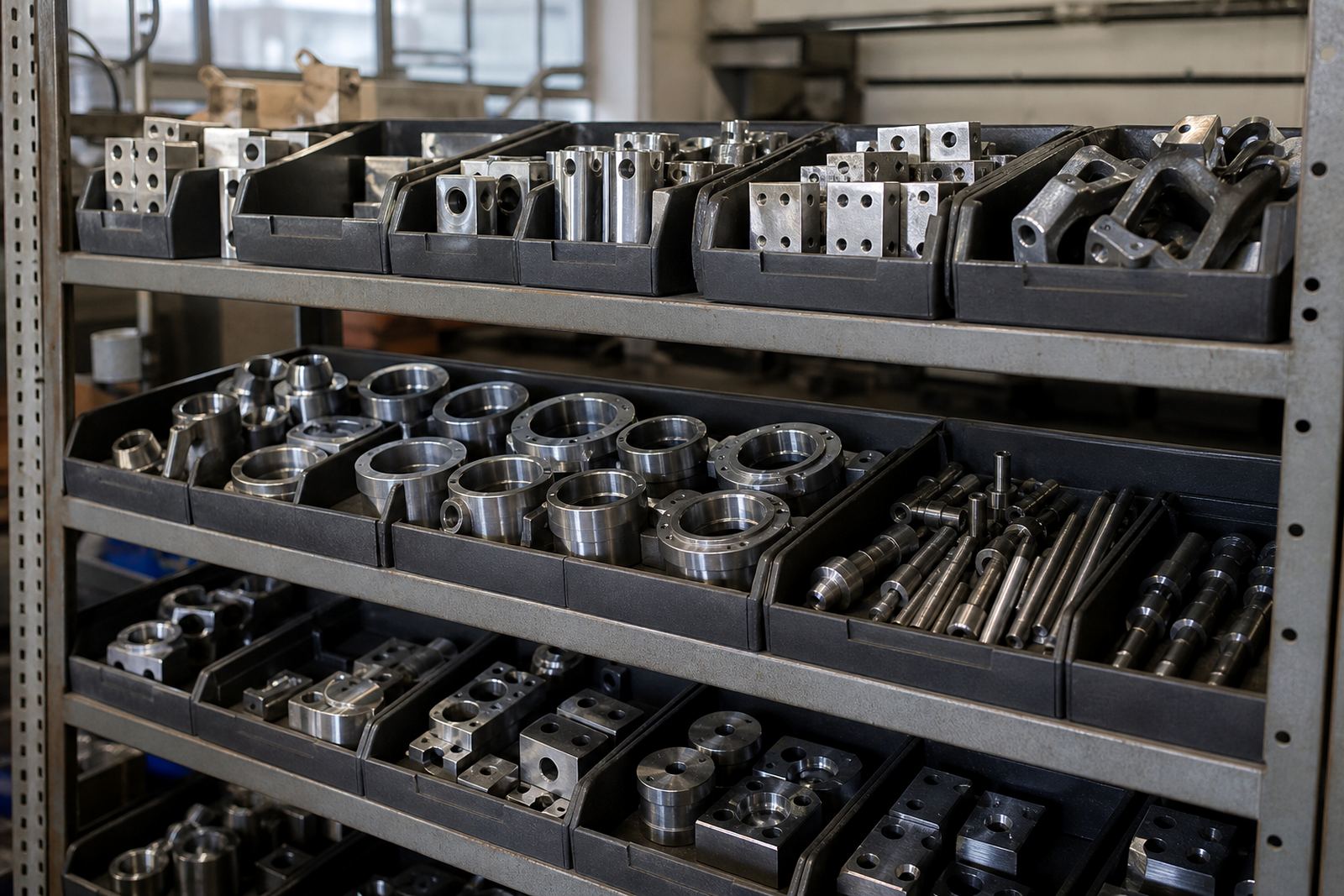
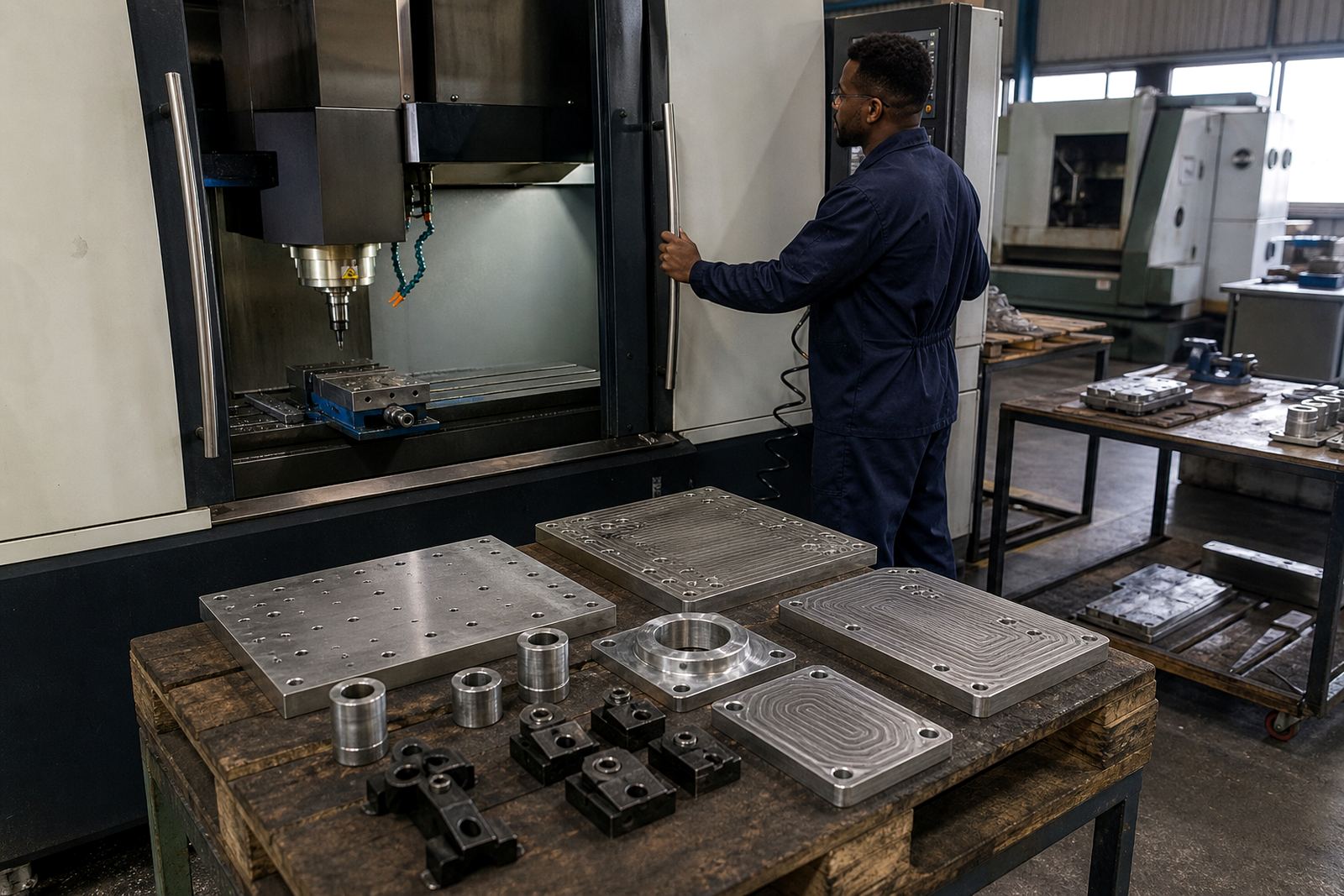
Every plastics plant is different, but the same kinds of support components come up again and again. Some are for injection moulding, some for extrusion, and some for material handling or packaging around the line. We help with small-batch parts that are practical to install, simple to inspect and suitable for repeat ordering when wear starts showing.
- Guard brackets, hinge parts and cover supports
- Clamping blocks, spacers and mounting plates
- Roller shafts, bush housings and guide blocks
- Tooling adapters and fixture parts for changeovers
- Maintenance spares for conveyors, transfer points and supports
- Small inspection aids and fit-check components
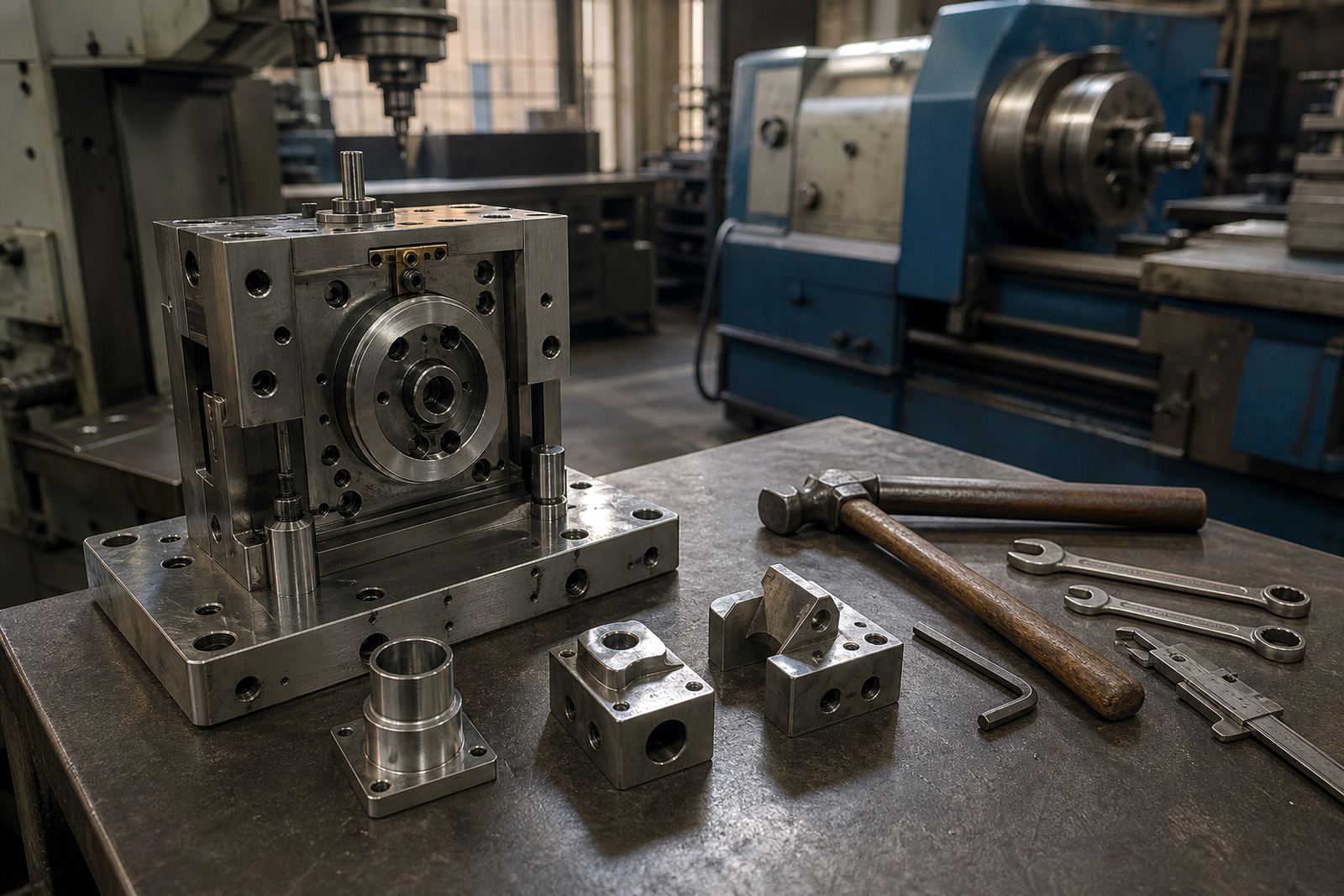
Where a part must align with an existing assembly, we can work from a sample part remake, a drawing update or a measured fit check. That helps when old parts have worn, holes have elongated, or previous repairs were done quickly and not always neatly. In a busy plant, those small faults can create downtime at the worst time, usually when the production schedule is already full.
CNC Milling And Turning For Small Batch Plant Parts
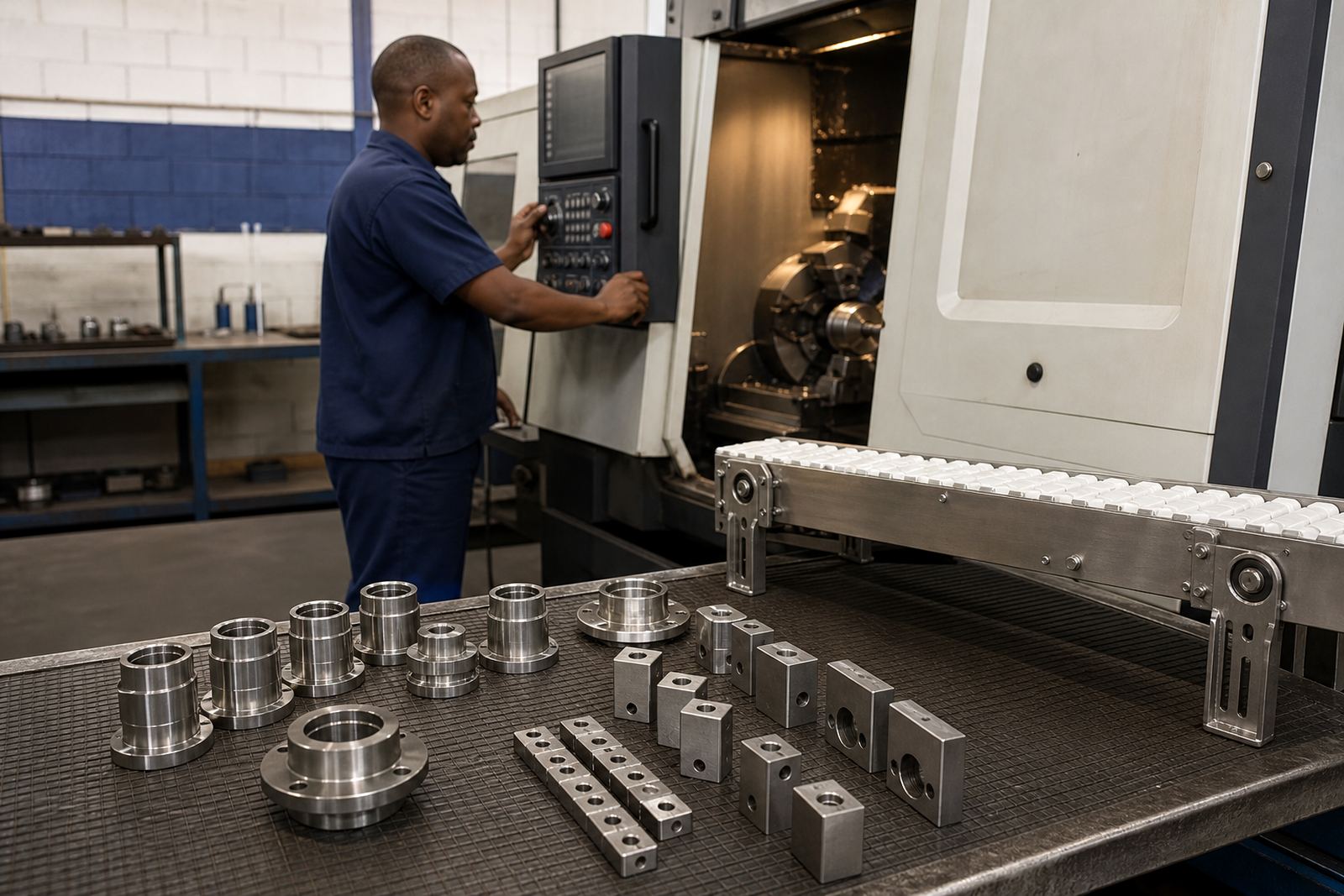
CNC milling is useful for flat features, pockets, slots, drilled patterns and shaped support parts. CNC turning is used for round components like shafts, sleeves, bushes and threaded fittings. In plastics processing, many parts need a mix of both, especially where a round section must locate into a plate, housing or bracket. A small run of accurate parts is often better than making a large stock of components that sit in a store room for years.
We work to the drawing and to the function of the part. If a component is only carrying light load, that changes the material and the geometry. If it sits near hot equipment or on a line that gets washed down, that changes the finish and the corrosion risk. Tolerance guidance is useful here, because not every feature needs a fine tolerance, and trying to machine everything too tightly can increase cost without adding value. On the other hand, some fit features do need careful control so assembly is not forced on site.
For plastics operations in Pinetown, Westmead and New Germany, a practical approach is usually the right one: machine only what is needed, keep the design serviceable, and make sure the part can be fitted by the maintenance team without special tricks.
Layout Advice For Guards, Tooling And Maintenance Access
Plastics plants often grow around existing machines, so the layout can be tight and a bit awkward. That is normal. What matters is whether a new part improves access, protects people and keeps the plant easy to service. We often advise on part optimisation so a bracket, cover or spacer does not block a panel, interfere with a hinge, or make a guard harder to open during cleaning.
A few layout points usually make a difference:
- Leave enough clearance for hands, tools and removal of worn parts
- Avoid sharp corners where operators work close to moving equipment
- Use fixings that can be removed without stripping the hole every time
- Keep drainage and cleaning in mind for wet areas and coastal sites
- Make sure the part can be replaced without dismantling half the assembly
When a plant is running under load-shedding pressure, downtime windows are shorter and maintenance has to be planned properly. A repeat order support approach helps when the same part is needed again and again, because you do not want to start from scratch every time a machine is stopped for service. Small planning changes can save a lot of grief later, especially on a line that has to restart quickly after a power cut.
Common Mistakes That Make A Small Part Expensive
In plastics processing, the costly mistakes are often simple ones. A part gets copied from an old sample without checking wear, the hole pattern is slightly off, or the material choice does not suit the environment. Then the component arrives and does not sit square, binds under load, or needs extra work at the plant. That is where drawing review and sample part remake support can be worthwhile.
Another common issue is over-engineering. A simple support block does not always need a heavy section or a complicated profile. Sometimes a leaner design works better, uses less material and is easier to replace. At the same time, too much cost-cutting can lead to a part that flexes, cracks or wears too quickly. The balance depends on use, load and how often the part will be handled.
Plants in Johannesburg may want faster turnaround for urgent maintenance spares, while coastal operations often need more attention to corrosion and cleaning exposure. Either way, the best outcome usually comes from clear measurements, a proper drawing update if required, and a plain understanding of how the part is actually used on the floor.
Budget Ranges For Prototype And Batch Work
For plastics processing parts, budget depends on size, material, complexity and how much checking is needed before production. A simple spacer or small bracket can sit at the lower end of the scale, while a fitted shaft, tooling component or assembly-critical part will cost more because of material, setup and inspection time. One-off remake work is usually more expensive than a repeat batch because the first item carries the setup and clarification effort.
As a general guide, small maintenance or guard-related parts may start from a few hundred Rand, with more involved machined parts running into the low thousands. Prototype planning, tolerance guidance, inspection reporting and delivery coordination can all affect the final figure. If a part needs stainless steel, tighter fit control or extra checks after a sample remake, the budget should reflect that. It is better to know that early than to discover it after the line has stopped.
For plants that keep a spares list, we can also help with drawing updates and repeat order support so the next order is faster. That makes budgeting easier because the part history is already in hand and the maintenance team does not need to explain the same issue twice.