

Home / Industries / Agriculture

Industries

Agriculture

PME CNC Machining supports agriculture with small-batch CNC milled and turned parts made for real working conditions, from dusty inland farms to humid coastal operations. Based in Pinetown, we help clients across Durban, Pietermaritzburg, Richards Bay and Johannesburg keep machinery moving with practical parts, sensible tolerances and clear drawing support.

Agriculture

Agricultural parts that have to keep working

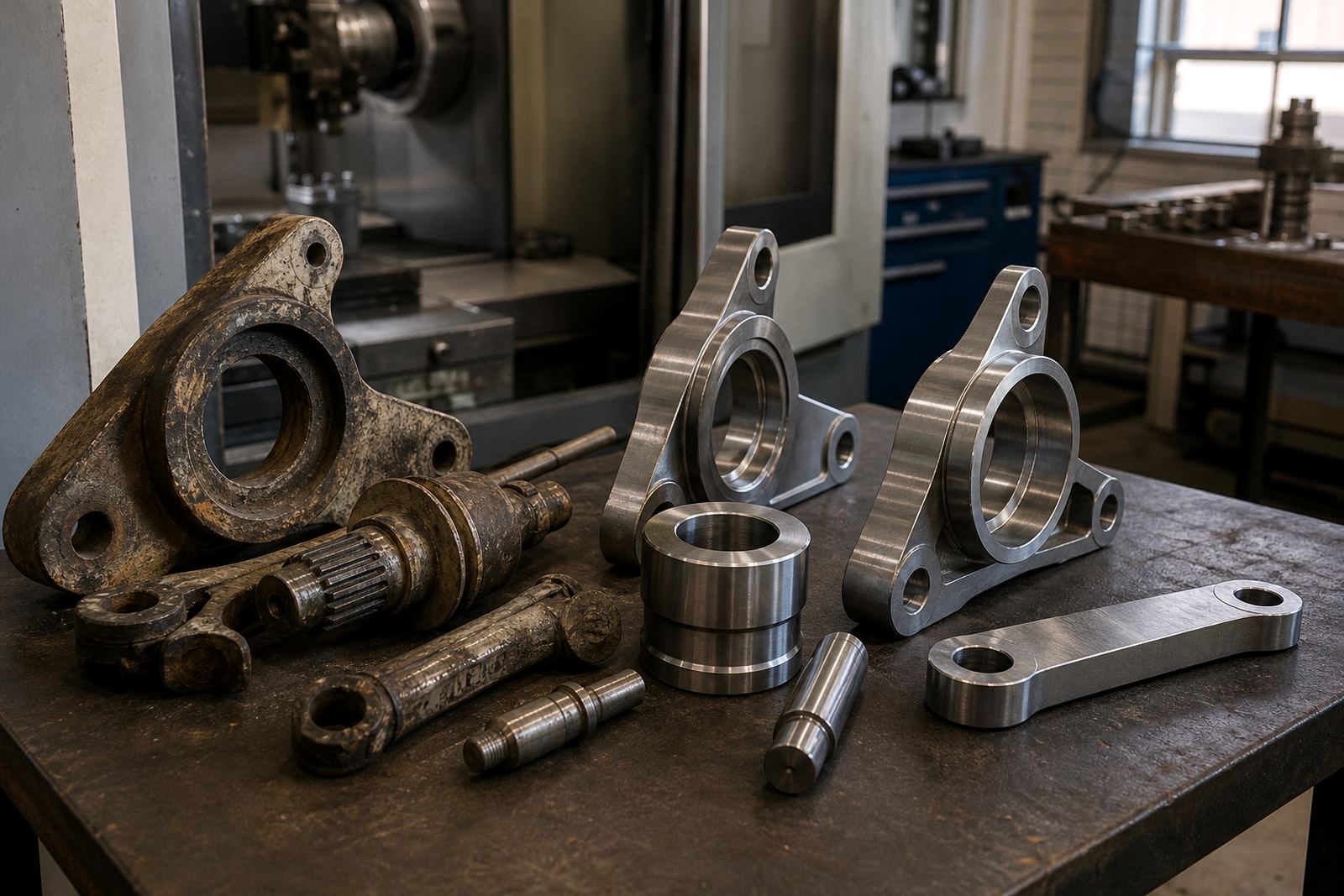
Agricultural machinery does not get gentle treatment. Shafts run under load, brackets take vibration, wear parts deal with grit, mud and fertiliser residue, and many components have to fit around existing equipment that is already in service. PME CNC Machining handles small-batch work for these conditions, making replacement parts and repeat parts that are suited to the way farm equipment is used in South Africa.

We work on parts for conveyors, pumps, trailers, feed systems, irrigation structures and general machinery support items. In many cases the job is about replacing a damaged piece before the season is lost, or improving a part that has been wearing too fast. That can mean a straight replacement from an existing sample, or a part made from updated drawings with minor adjustments for fit, access and maintenance.

  • Shafts, spacers and bushes for rotating assemblies
  • Mounting brackets, cleats and support plates
  • Wear parts exposed to dirt, moisture and repeated impact
  • Repair pieces for older equipment with limited spare availability

How CNC milling and turning suit farm equipment

CNC turning is commonly used for round parts such as shafts, sleeves, pins and bush-type components. It helps maintain diameter consistency and concentricity, which matters when a part runs in bearings or has to align with pulleys, hubs or couplings. CNC milling is better suited to flat or shaped parts such as brackets, mount plates, housings and components with holes, slots or stepped faces.

For agricultural work, the key is not only the shape of the part but how it will behave in use. A shaft for a drive system may need a clean finish on bearing seats. A bracket may need edges relieved so vibration does not start cracking at a corner. A wear part may need enough material in the right place to allow for later rework. We look at the function first, then the process that suits it best.

Common materials include mild steel, stainless steel, aluminium and other machinable metals selected for strength, corrosion resistance or weight. In coastal areas like Durban and Richards Bay, corrosion resistance becomes more important. Inland, dust and abrasion often matter more. We help guide material choice based on exposure, load and expected service intervals.

Planning around seasonal demand and downtime

Agricultural equipment usually cannot wait long. Planting, irrigation, harvesting and feed handling all come with narrow windows, so planning a machining job means thinking about downtime, backup parts and delivery timing. We often advise clients to identify critical components early, especially items that are expensive to stop because of one worn shaft or a missing bracket.

Good planning starts with a drawing, a sample part or at least accurate measurements. If the original part is worn, bent or repaired already, that needs to be noted before machining begins. It is also worth checking adjacent parts for wear. A new machined piece will not solve a problem if the mating component is already oval, loose or misaligned.

  • Confirm the actual working dimensions, not only the old worn part
  • Check bolt spacing, hole size and clearance around guards or housings
  • Allow for service access, especially where grease points or covers must still be reached
  • Plan spares for machines that cannot easily stop in peak season

Typical agricultural job setups we see

A typical agricultural machining job may involve a worn shaft with keyed features, a mounting bracket with holes on a non-standard pitch, or a replacement wear plate where the original has thinned from abrasion. Some jobs are simple one-off replacements, while others involve small batches of parts for several machines on the same farm or across a contractor fleet.

For small-batch work, repeatability matters. Once the first part is right, the rest need to match so they fit the same machine or assembly without extra filing and drilling on site. We support repeat orders with drawing updates, sample part remake work and inspection reporting so the next batch starts from a clearer record. That helps when a farm manager, workshop or procurement team needs the same component months later.

We also support assembly fit checks where a machined part must sit with purchased items or existing hardware. This is especially useful with older equipment where dimensions may differ between production years or repair history has changed the original layout.

Common mistakes that cost time and money

One common mistake is copying a worn part exactly without checking what the original dimension should have been. Another is choosing a material only because it is available, rather than because it suits the load and environment. A mild steel part may be fine indoors, but in wet and coastal conditions it can corrode faster than expected. In some farm applications, stainless steel is not necessary either, so the choice needs balance.

Measurement errors are another problem. If a shaft seat is measured with dirt, burrs or previous damage on it, the new part can end up too tight or too loose. Hole position and parallelism also matter. A bracket can look correct on paper yet still force the assembly out of line if one face is off. That can lead to premature bearing wear, noise or vibration once the machine starts working again.

  • Do not measure only the damaged part if a better reference exists
  • Do not ignore surface finish where parts slide, seal or rotate
  • Do not assume a part is standard just because it looks common
  • Do not skip inspection when a job must fit first time on site

Budget ranges for small-batch agricultural machining

Small-batch agricultural machining can vary widely in cost because the price depends on size, material, complexity, setup time and whether the work is from a clean drawing or from an old sample that needs checking first. A simple turned spacer or bracket will usually cost less than a multi-feature shaft with tight fit requirements and extra inspection steps. If the job includes drawing updates, repeat order support or delivery coordination, that also forms part of the planning.

As a rough guide for budgeting, many smaller farm parts sit in the lower Rand hundreds per piece, while more involved shafts, brackets or wear components may move into the low thousands depending on quantity and material. Very small batches often carry more setup cost per part than larger repeat orders, so it helps to group related items together when possible. Clients in Pinetown, Durban, Westmead, New Germany, Pietermaritzburg, Richards Bay, Umhlanga and Johannesburg often use the enquiry form on our contact page to describe the part, send a drawing and ask for guidance before committing to a batch.

If a part is keeping a machine out of service, it is usually better to ask early and plan the replacement properly than to rush a poor fit. That approach saves time in the workshop and on the farm, which is where it really matters.

Local support from Pinetown to farms nationwide

PME CNC Machining is based in Pinetown, KwaZulu-Natal and run by Mandla Sibusiso Mkhize with a team that manages production, programming, supervision, quality and client support. Our work suits farms, contractors and equipment owners who need practical machining support for small runs rather than large-scale production. We keep the process clear from drawing review through to delivery coordination, so the job moves in a straightforward way.

Agricultural operations often face tough conditions, from salt air near the coast to dust, heat and power interruptions inland. That is why we focus on parts that are sensible to make, sensible to maintain and proper for the equipment they serve. Whether the need is a single replacement shaft or a short batch of brackets and wear parts, the aim is the same: make the part fit and keep the machine working.

What our CNC Machining customers say

Verified Google reviews

Questions we get asked

What agricultural parts can you machine?

We commonly machine shafts, brackets, spacers, wear parts, pins, sleeves and other small-batch components used in farm machinery, handling systems and support equipment.

Can you work from a worn or damaged sample part?

Yes, but the worn condition must be checked carefully. We can review the sample, compare measurements and help decide what should be copied and what should be corrected.

Do you help with repeat orders for the same part?

Yes. We support repeat order work with drawing updates, inspection reporting, sample part remake and batch planning so the next run matches the first properly.

Planning something? Send the team a message.

Contact form