Parts That Keep Energy Equipment Aligned and Secure
Renewable energy sites often need small machined parts that do not sound complex until they have to fit first time on site. Brackets, spacers, clamp plates, shafts, bushings, adapter pieces and mounting blocks all play a part in keeping panels, frames, inverters and support equipment positioned correctly. In coastal KwaZulu-Natal, humidity and salt air can work against poor material choice, so the right finish and material selection matter as much as the shape itself.
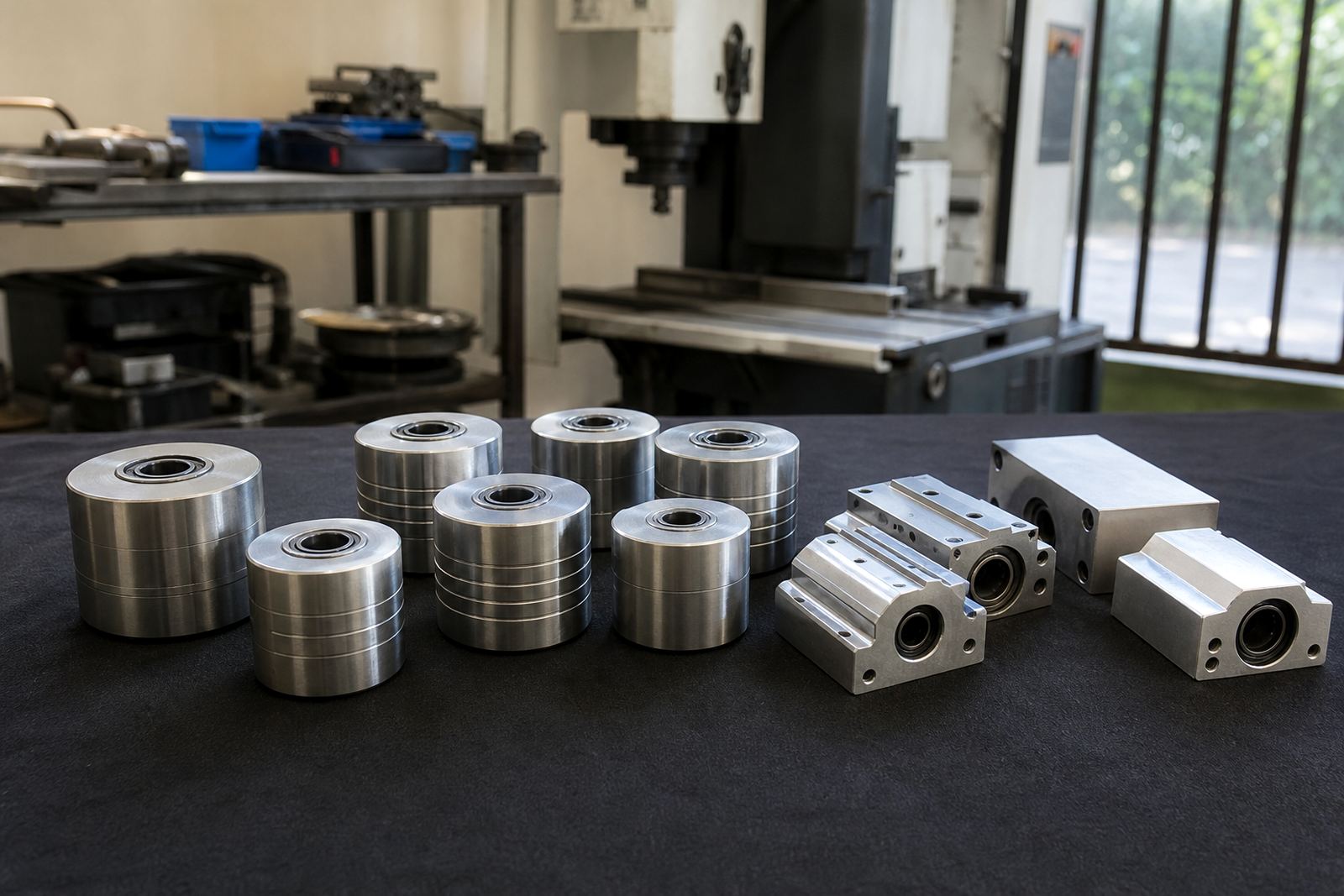
PME CNC Machining handles small-batch production for these kinds of components in Pinetown. We work from drawings, samples or practical notes from the installation team, then use CNC milling and turning to produce repeatable parts for solar, battery room and maintenance applications. The aim is simple: parts that fit, hold alignment and stand up to daily handling without causing delays on site.
Typical Equipment Sets We Machine For
Renewable energy systems vary, but the hardware around them usually needs the same kind of careful machining. A small batch might include items for ground-mounted solar arrays, rooftop support frames, battery enclosures, cable management, control room fixtures or maintenance access hardware. On some jobs the part is only a spacer or a custom washer, on others it is a more involved mounting or alignment component that must match an existing assembly.
Common machining work for this sector includes:
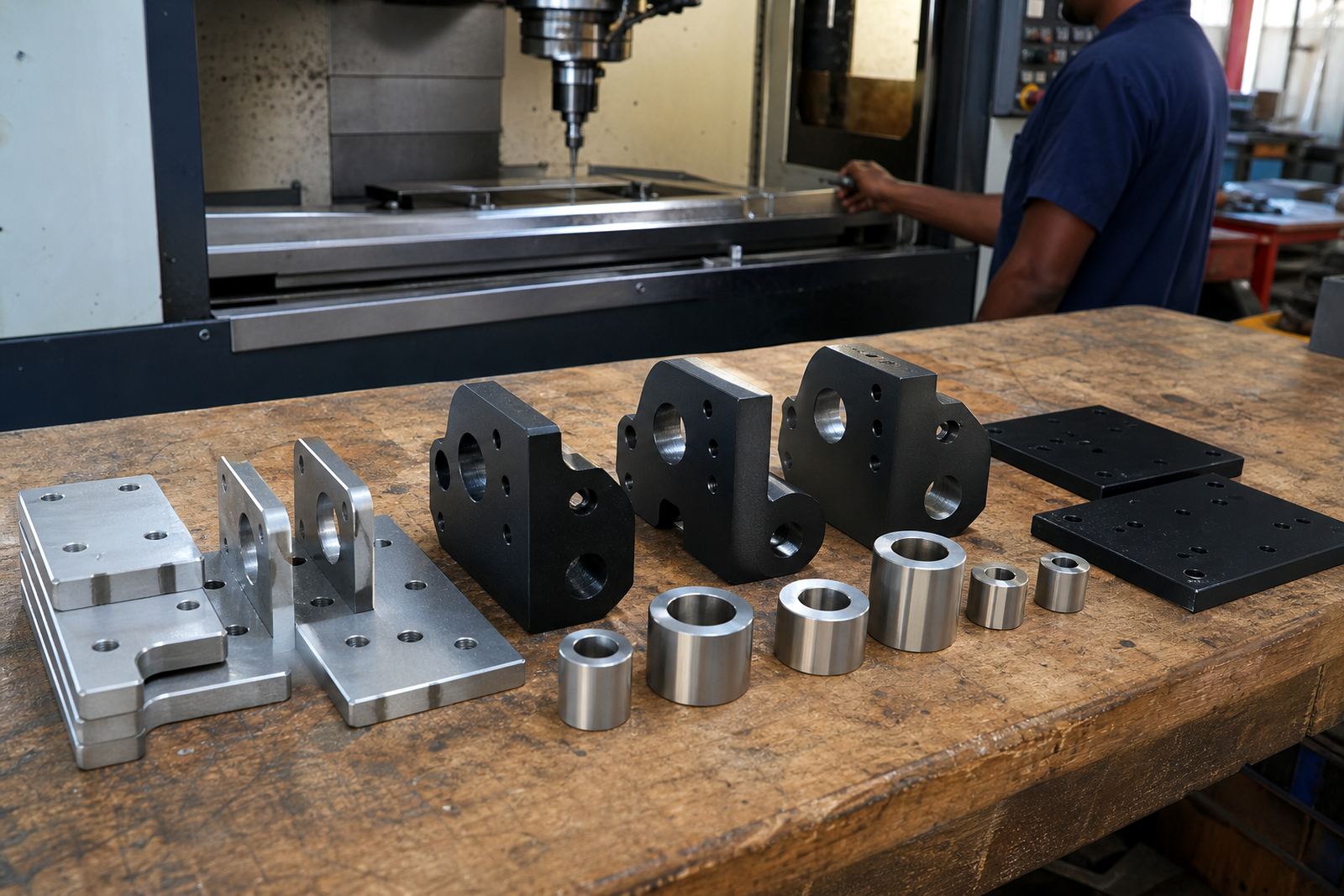
- Mounting brackets and clamp parts for frames and supports
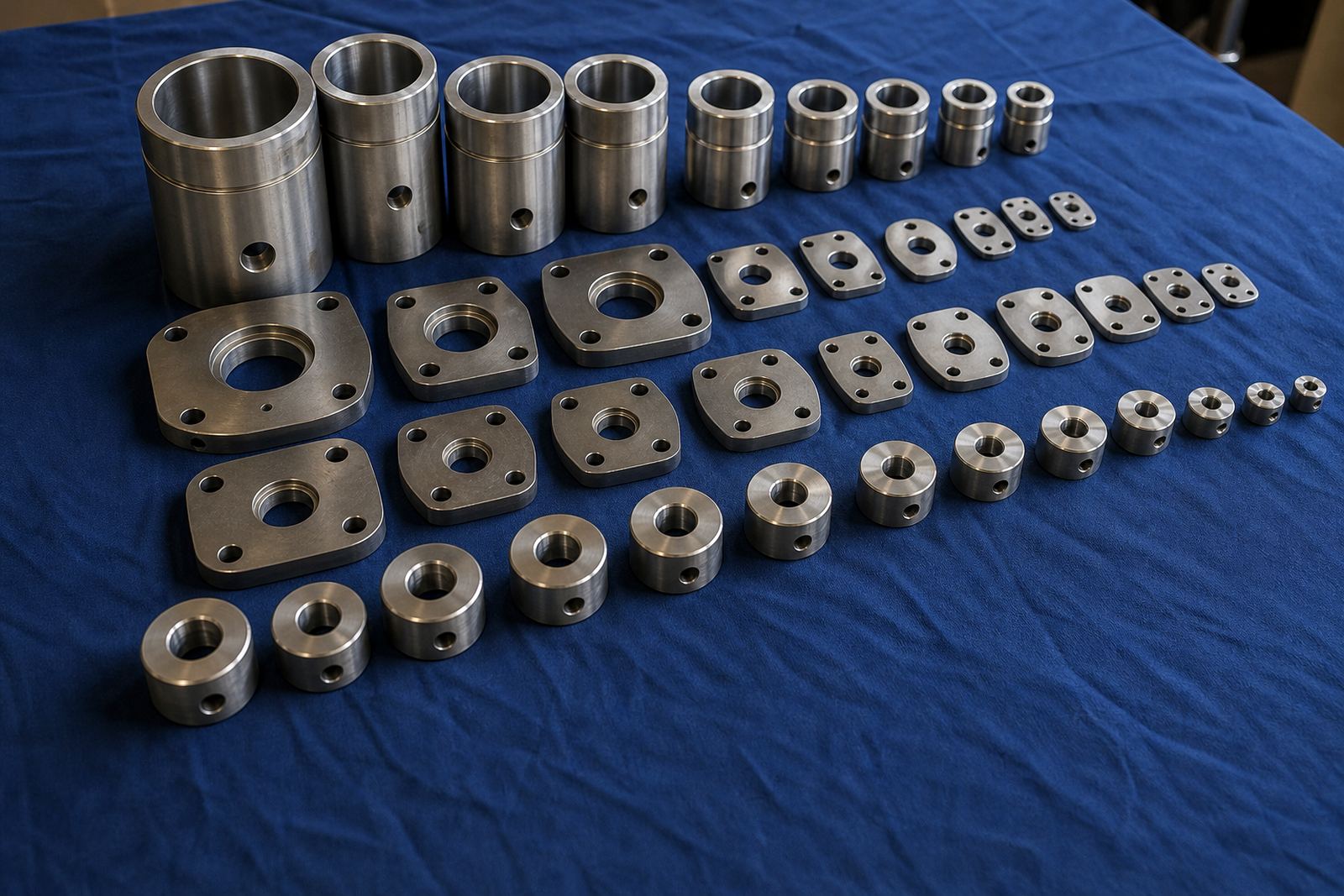
- Alignment spacers, bushes and shim-type components
- Adapter plates for mixed equipment interfaces
- Turning work for pins, sleeves and simple shafts
- Maintenance parts that replace worn items on existing installations
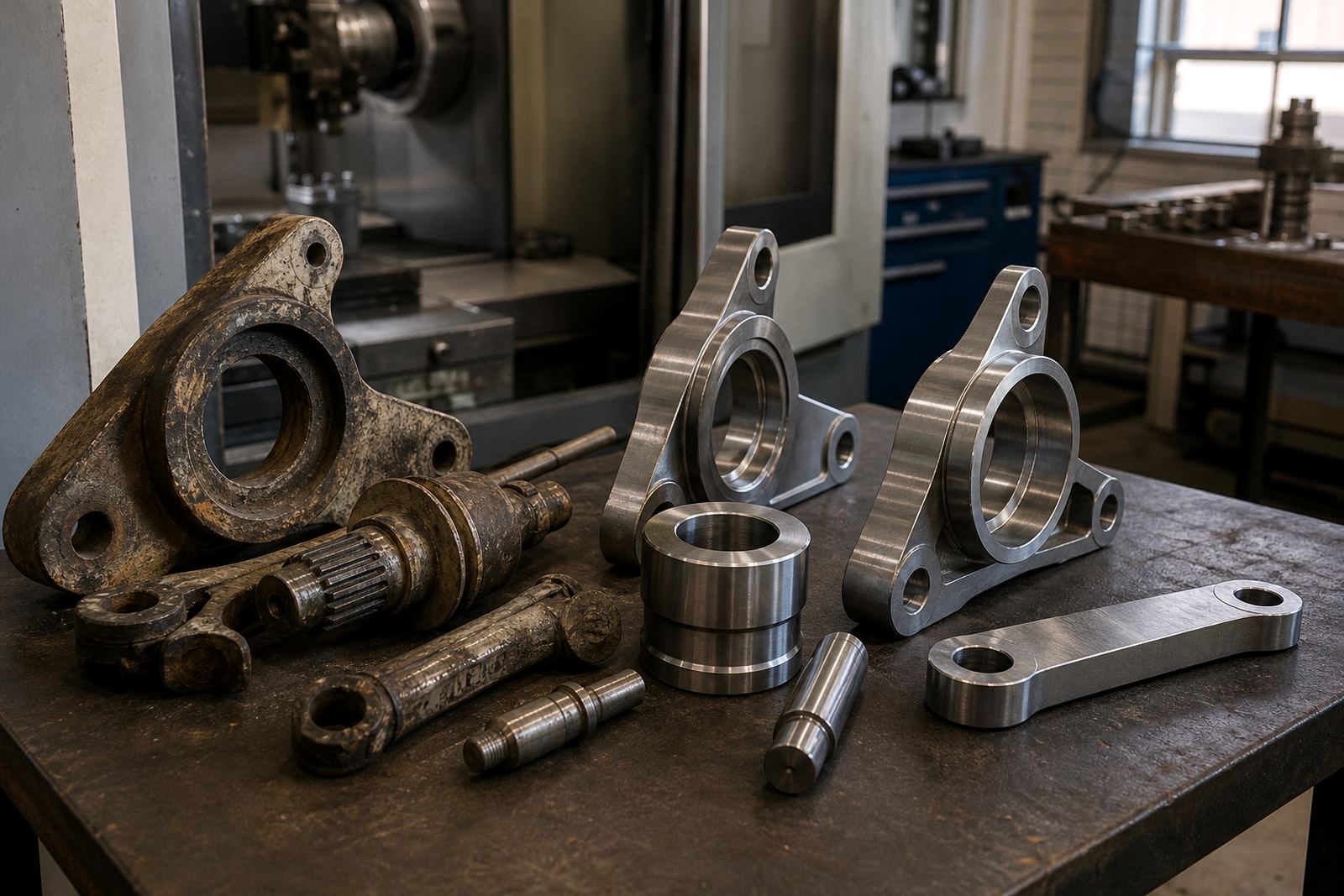
Where repeated fit-up is important, we also help with sample part remake and drawing updates after the first piece is checked. That can save time when the site team finds a small change is needed before the rest of the batch is released.
Planning The Layout Before The First Cut
Good planning saves money on energy projects because site access is often tight and the work has to happen around electricians, installers and maintenance crews. A machine shop should know whether the part is going onto a rooftop, into a containerised power room, or beside outdoor equipment exposed to dust and rain. Those conditions affect material choice, fastener access and whether the part should be made for easier inspection later.
For clients in Pinetown, Westmead and New Germany, we often start with drawing review and prototype planning. If a component will be installed in a coastal area like Durban or Umhlanga, we may look more closely at corrosion resistance, edge treatment and how water can sit on flat surfaces. If the job is for a site in Johannesburg, where transport and access times matter, batch planning and delivery coordination become part of the practical schedule too.
- Check the fixing pattern before production begins
- Allow space for tools, cable runs and maintenance access
- Confirm whether the part must fit an existing frame or a new build
- Keep hole positions and edge distances consistent across the batch
- Decide early if the part needs inspection reporting for handover
Materials And Finishes That Suit South African Conditions
Material selection is one of the biggest decisions on renewable energy hardware. Mild steel can be suitable for some indoor or protected parts, while aluminium is often chosen where weight matters. In more exposed settings, especially close to the coast, stainless materials or suitable surface protection may be needed to slow down corrosion. The right choice depends on the part, the location and how often it will be handled during service visits.
We do not assume a one-size-fits-all answer. A mounting plate for a maintenance task is not the same as a part that stays outdoors for years. Tolerance guidance also matters because even a small variation can cause a bracket to sit out of square, or a shaft to bind during assembly. For many renewable energy applications, the goal is practical fit, not overcomplication. Tight enough to work well, but not so tight that site installation becomes a struggle.
When clients send drawings, we can comment on part optimisation and suggest where a simpler shape, a changed hole size or a better setup may reduce waste. That kind of review helps when quantities are small and every part counts.
Common Mistakes On Small-Batch Energy Parts
Many renewable energy jobs go wrong before machining even starts. The usual problem is incomplete information. A sketch may leave out a thickness, a hole centre, a surface requirement or the direction a part must face during installation. Another common issue is copying an old part without checking wear. If the original was distorted or damaged, making an exact copy can repeat the problem instead of fixing it.
Another mistake is forgetting how the part will be serviced. A component that looks fine on paper may be difficult to remove once a roof is busy, or impossible to inspect without stripping too much hardware. On site, that can turn a quick maintenance task into a half-day job. We help clients avoid those problems through drawing updates, fit checks and sensible batch planning before the full order goes ahead.
- Missing dimensions on hole centres or offsets
- No allowance for corrosion or outdoor use
- Copying worn parts without checking the true shape
- Overly complicated designs that are hard to install
- Skipping a sample part remake before the batch
Budget Ranges For Renewable Energy Machining Work
Small-batch CNC work for renewable energy projects can sit anywhere from a modest one-off remake to a larger repeat order, depending on material, setup time and how much checking is needed. A simple spacer, bush or clamp piece may be budgeted quite differently from a machined bracket with multiple faces, close hole positions or a more demanding finish. There is no fair way to price these jobs without the drawing, the material and the quantity.
As a practical guide, clients often start by setting aside a few hundred Rand for a straightforward replacement part and several thousand Rand where the job involves a batch, special material or inspection documentation. If the part is holding up a wider installation, it is usually worth getting the drawing reviewed before the order is placed. A small change at that stage can save a lot later. We work with clients across Durban, Pinetown, Pietermaritzburg, Richards Bay and Johannesburg, and arrange delivery coordination where needed so the parts reach site on time.
PME CNC Machining, founded in 2008 and led by Mandla Sibusiso Mkhize, supports renewable energy clients with drawing review, prototype planning, inspection reporting and repeat order support. Our team includes Anele Nondumiso Dlamini, Johan Petrus van Wyk, Siyabonga Patrick Zulu, Naledi Refilwe Molefe and Kyle Brendan Naidoo, each focused on getting the job through cleanly from enquiry to delivery.
When To Send The Drawing In
The best time to contact us is before the installation team is waiting on the part. If you already have a drawing, sample or even a worn old component, send it through the enquiry form on our contact page so we can review the requirements properly. That is especially useful when the job involves more than one site, or when the same component needs to be made again later for another project.
For renewable energy work, early contact helps with tolerance guidance, material selection and batch planning. It also gives time to check whether the part should be remade exactly as it is, or adjusted slightly for better fit and easier maintenance. In a field where downtime can affect generation, a cleanly made small-batch component is often the difference between a quick fix and a long wait.