Parts That Keep Packaging Lines Moving
Packaging plants use a mix of driven and non-driven parts that must sit square, run true and hold their setting through long shifts. We machine small-batch components for feeders, transfer points, guide systems, spacer sets, mounting brackets, shafts, bushes and setup parts used during changeovers and maintenance work. When a line is stopping and starting through the day, even a slight mismatch can cause drift, jamming or uneven feeding.
For these jobs, accuracy matters at the fit points, bearing seats, hole positions and faces that set alignment. In practice that means working carefully from the drawing or sample, checking how the part fits into the line and confirming where a tight tolerance is needed and where a practical clearance is better.
Packaging operations in Durban, Pinetown, Pietermaritzburg, Richards Bay and Johannesburg often need a quick remake for a worn item or a small run for a new line layout. That is where a local CNC job shop helps. We handle one-off parts, trial sets and repeat batches without forcing a large order, which suits plants that are still tuning their equipment layout.
Typical Equipment Set and What We Machine
Packaging environments usually combine conveyors, feeders, rollers, guards, guides, frames and product positioning hardware. The machined parts in these systems are often simple on paper but important in service. A guide block that is off by a fraction can pull product out of line, while a roller with poor concentricity can create vibration and wear.
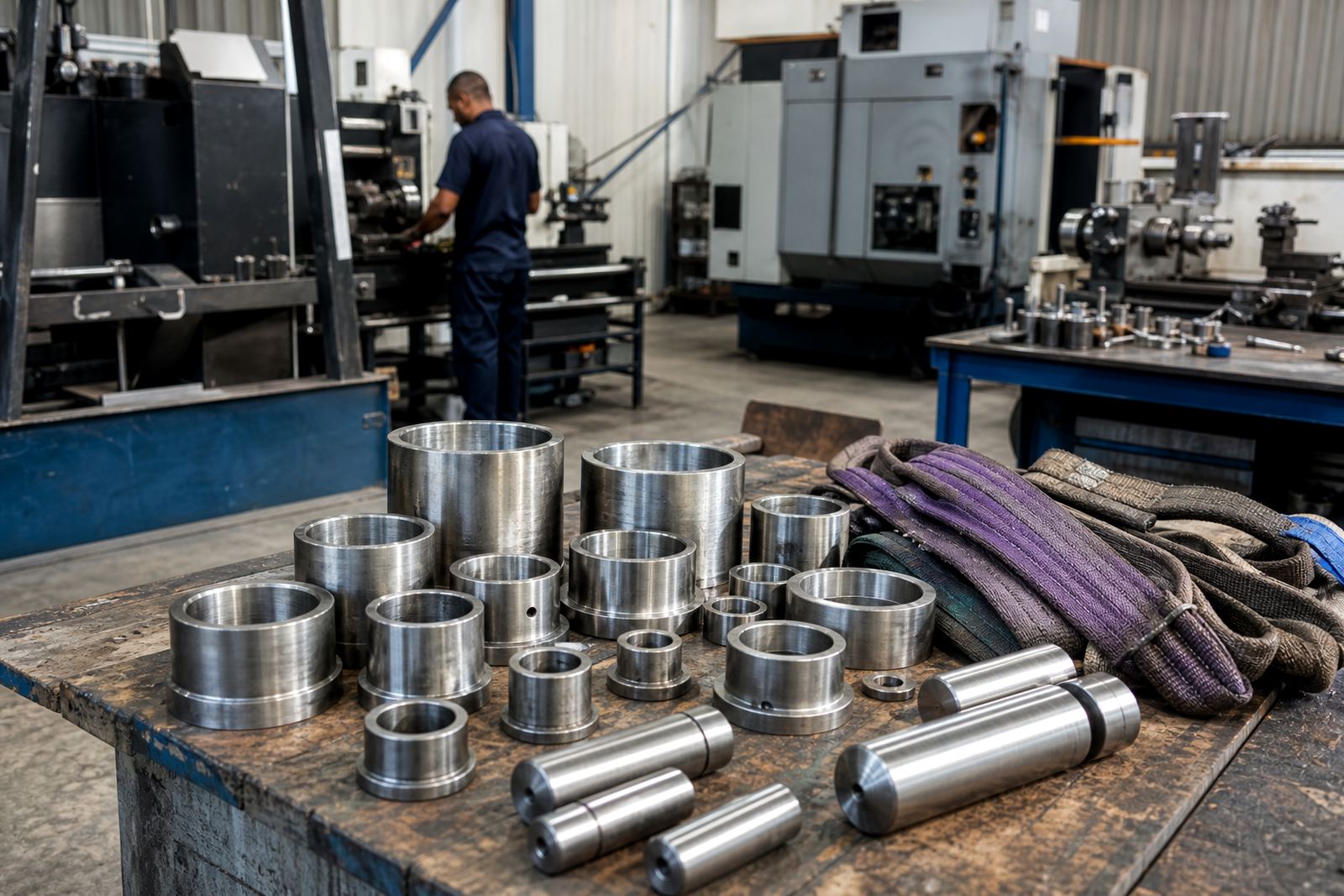
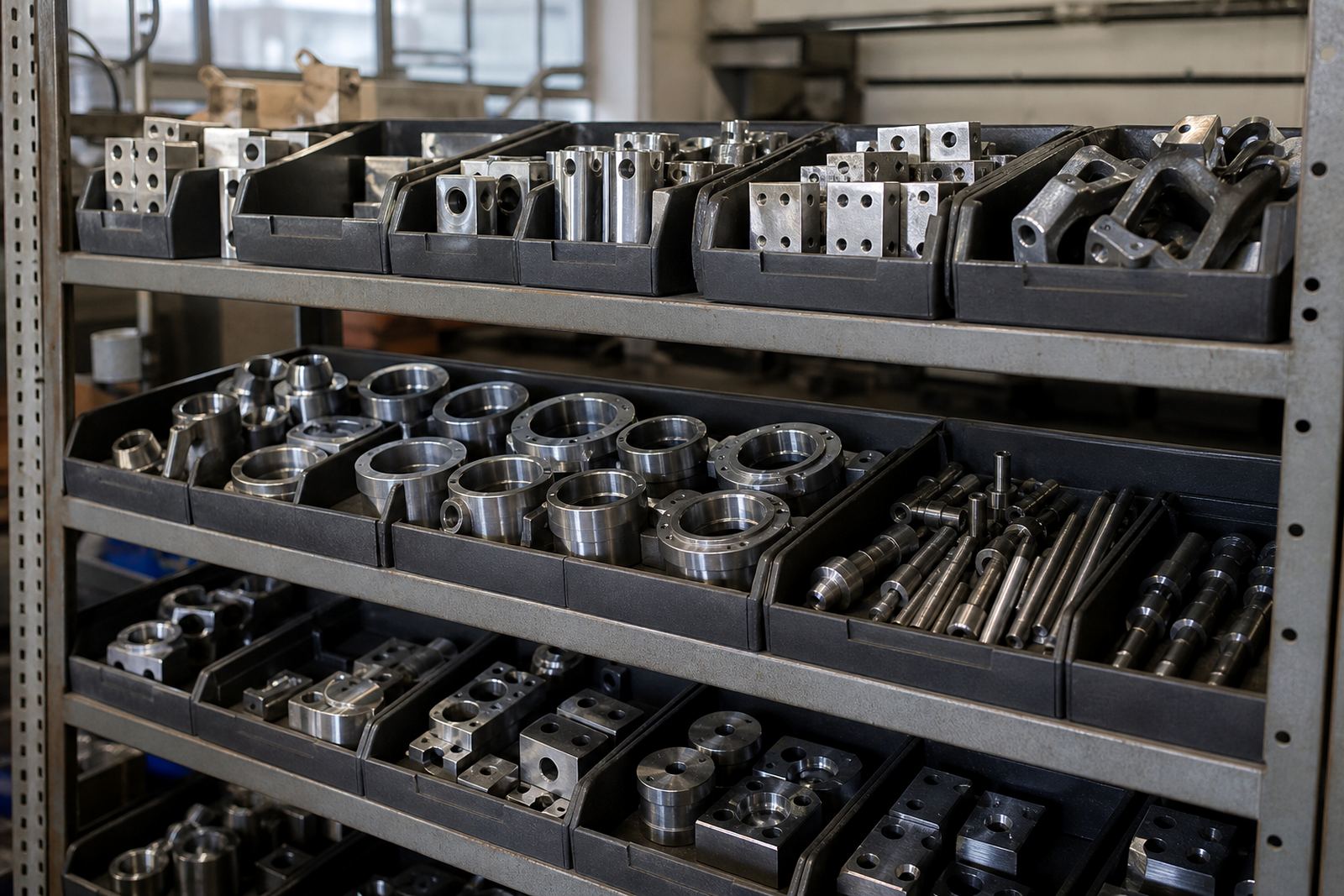
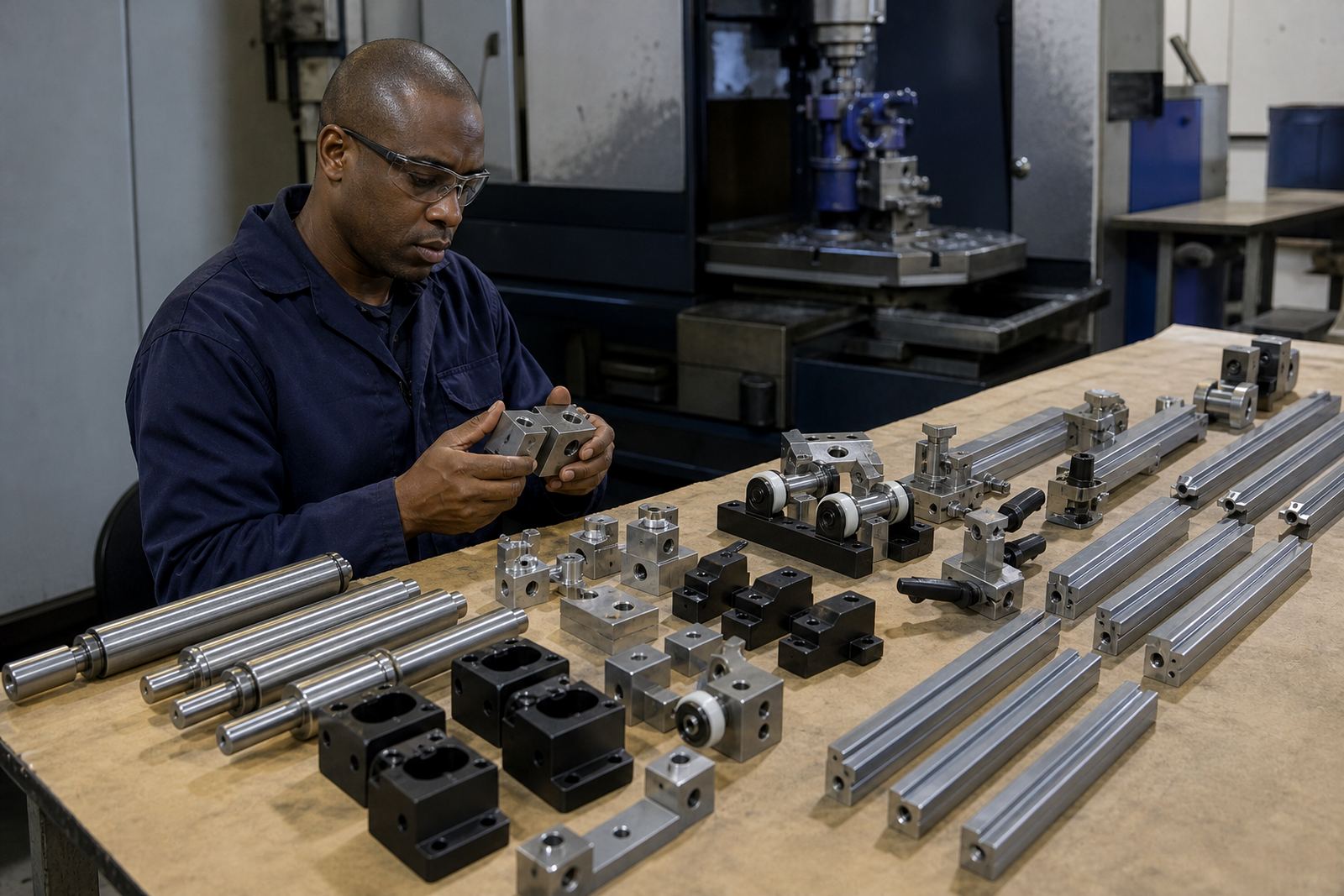
We commonly machine components such as:
- Shafts, journals and spacer rings for roller assemblies
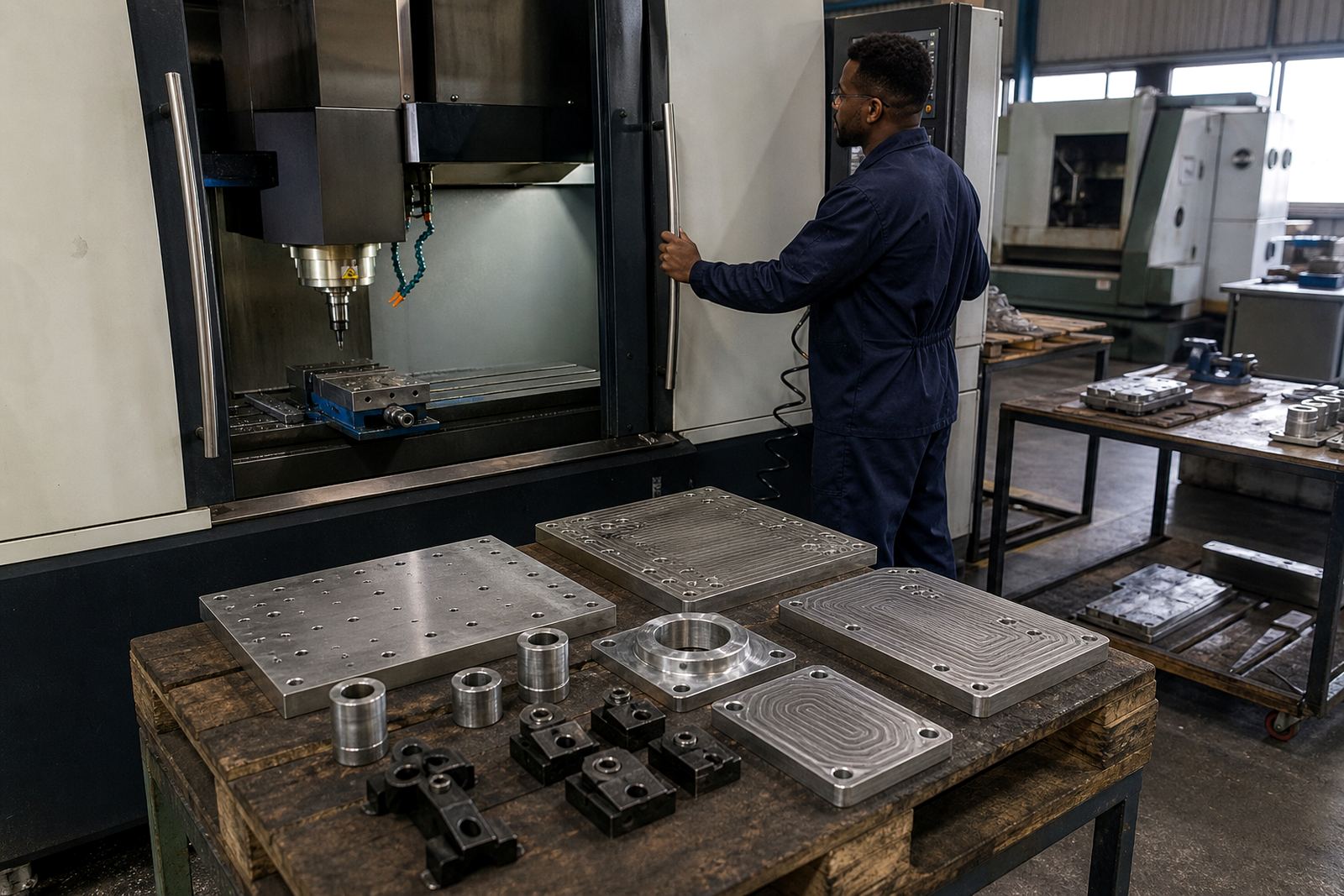
- Guide blocks, slides and mounting plates for product control
- Feed fingers, locating pins and changeover parts
- Brackets, clamps and support spacers for line setup
- Housing parts, bush carriers and inspection-fit components
Depending on the application, parts may be milled for flat faces, slots and drilled patterns, or turned for round stock, stepped diameters and bearing surfaces. Some packaging lines also need mixed work, where a turned part is later milled for keyways, flats or fixing points. That combination is common in small batch work because it lets one part do several jobs in a compact space.
Material Choice for Wear, Washdown and Continuous Use
Material selection depends on where the part sits in the line, how often it moves, and whether the environment is dry, damp or washed down. In coastal KZN, humidity can affect exposed metal parts and fasteners, so finish and material choice should be considered from the start. In some packaging rooms the issue is wear from constant contact, while in others it is corrosion from moisture, cleaning agents or product residue.
Common materials for packaging components include aluminium, stainless steel, mild steel and engineering plastics, depending on the duty. Aluminium is often chosen where weight matters and the part needs easier handling during changeovers. Stainless steel suits areas exposed to moisture or washdown. Engineering plastics can work well for guides, wear strips and low-friction contact parts when the design allows it.
We also look at machinability, lead time and repeatability. A part that is easy to machine but wears quickly may cost more over time, while a harder material may need more careful planning at the quote stage. The right choice usually comes from a drawing review and a proper discussion of how the part is used on the line.
Layout and Planning Advice for New or Modified Lines
When a packaging line is being changed, the first step is to map the fit points and the adjustment range. It helps to know where the part sits relative to the conveyor, guard, feed path and service access. If a changeover tool or spacer set is needed, the layout should leave enough room for a technician to reach fixings without removing half the assembly.
Good planning usually includes the following:
- Confirming all critical measurements from the actual machine, not only the drawing
- Checking whether the part needs a tight fit, a sliding fit or a clearance fit
- Allowing for thermal movement, vibration and wear over time
- Keeping service access open for cleaning and inspection
- Reducing the number of loose spacers and hand-fitted shims where possible
Packaging plants often make the mistake of copying a worn part exactly, even when the original issue came from poor alignment or a weak mounting point. In those cases the remake should be checked against the machine condition, not only the old part. A small drawing update can save repeat breakdowns later.
Common Mistakes That Slow Production
Many packaging jobs arrive after a part has failed in service, which means there is usually some urgency. The most common problem is incomplete information. A sketch without the fitted dimensions, hole centres, thicknesses or mating details can lead to delays. Another common issue is assuming that a worn part tells the full story. In many cases the wear pattern shows misalignment, poor support or side load that should be corrected in the new piece.
Other mistakes include using the wrong material for a wet or dusty area, ignoring surface finish on sliding faces and leaving too little space for assembly. On some lines the trouble starts with a part that is almost right but not quite square. That can create a chain of small faults, from poor feed consistency to product damage and stoppages.
For repeat work, it helps to keep a clean record of final dimensions, revision notes and any fit changes agreed during the first run. That makes the next batch faster and lowers the chance of confusion between old and updated parts.
Budget Ranges in Rand for Small Batch Packaging Work
Small batch packaging work is usually priced around the amount of machining time, setup effort, material choice and inspection needed. A simple spacer, bracket or guide component may fall into a lower budget range, while a turned and milled assembly part with closer fit requirements will sit higher. Parts that need remakes from a sample, drawing updates or tighter inspection checks also take more time.
As a practical guide, small batch packaging jobs can range from a few hundred Rand for a straightforward simple part to several thousand Rand for a more involved component or short run. If the part is in a critical position on the line, it is worth planning for proper checking rather than chasing the cheapest option. An unsuitable part costs more once the line stops.
We help clients across Pinetown, Westmead, New Germany, Durban, Umhlanga, Pietermaritzburg, Richards Bay and Johannesburg work out what is sensible for the job at hand. That may mean adjusting the material, simplifying the design or splitting the order into a sample and then a repeat batch.
Typical cost drivers include:
- Material grade and availability
- Turning, milling or a combination of both
- Tolerance needs and inspection time
- Quantity, repeatability and setup effort
How PME CNC Machining Supports Packaging Clients
PME CNC Machining is based in Pinetown, KwaZulu-Natal and has been serving small-batch machining clients since 2008. Our team includes Mandla Sibusiso Mkhize, Anele Nondumiso Dlamini, Johan Petrus van Wyk, Siyabonga Patrick Zulu, Naledi Refilwe Molefe and Kyle Brendan Naidoo. For packaging clients, that means drawing review, material selection, prototype planning, batch planning, tolerance guidance, part optimisation, sample part remake, assembly fit checks, inspection reporting, repeat order support, delivery coordination and drawing updates when needed.
Clients reach us through the enquiry form on our contact page. If you are replacing a feeder part, improving a guide set or setting up a small production change, it helps to share the existing drawing, a sample if available, and the machine conditions the part will work in. The more clear the fit and duty are, the smoother the job usually runs. In packaging work, time lost on avoidable guesswork is time the line is not earning.