When printing and labelling needs a better fit
Printing and labelling plants often bring us a simple problem that keeps causing stoppages: a part is slightly off, a guide wears too fast, or a bracket no longer matches the machine after a change in material or format. In a busy packhouse, warehouse or print room, that can mean labels drifting, cartons skewing or product arriving at the wrong angle for application. Small mechanical parts make a bigger difference than many teams expect.
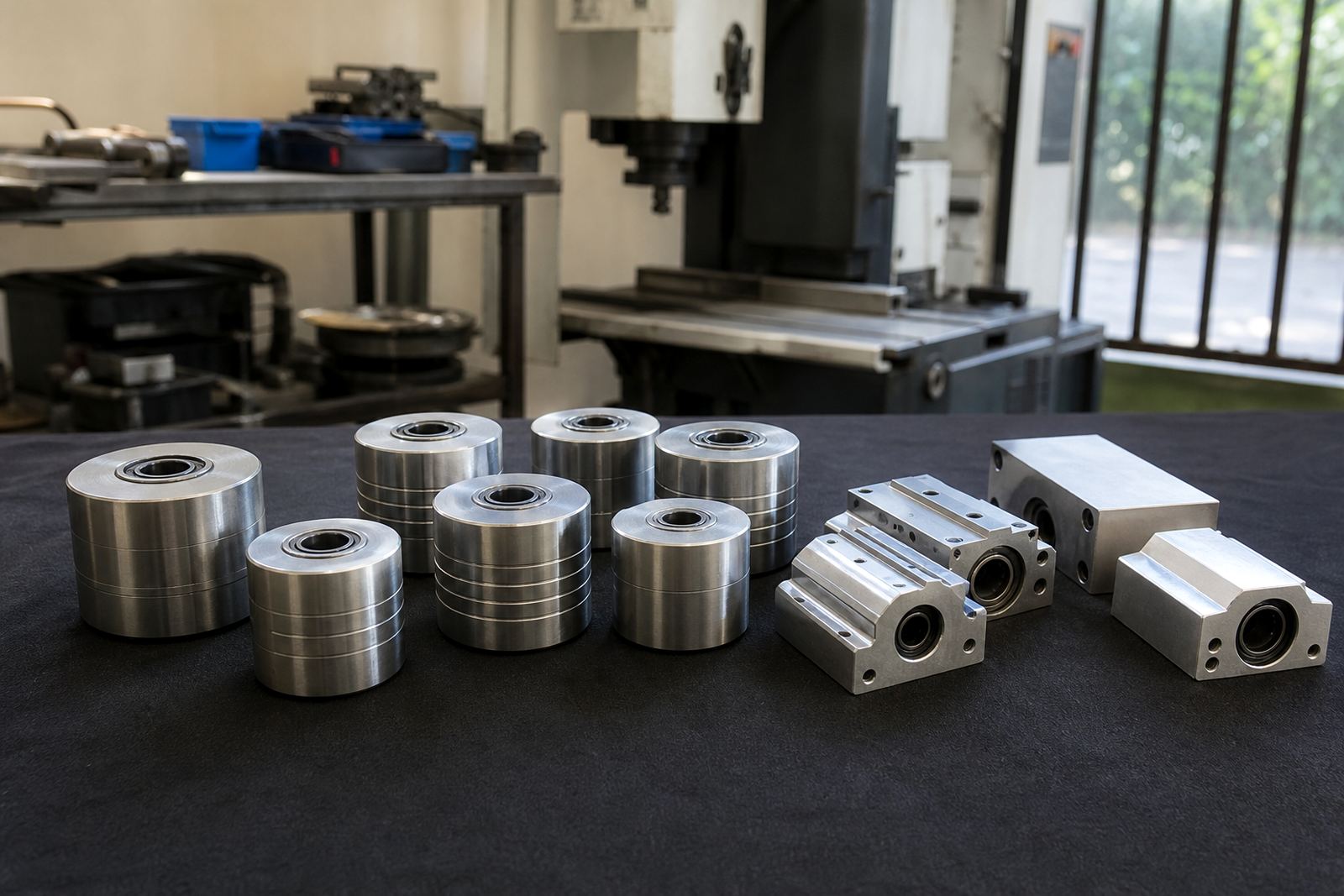
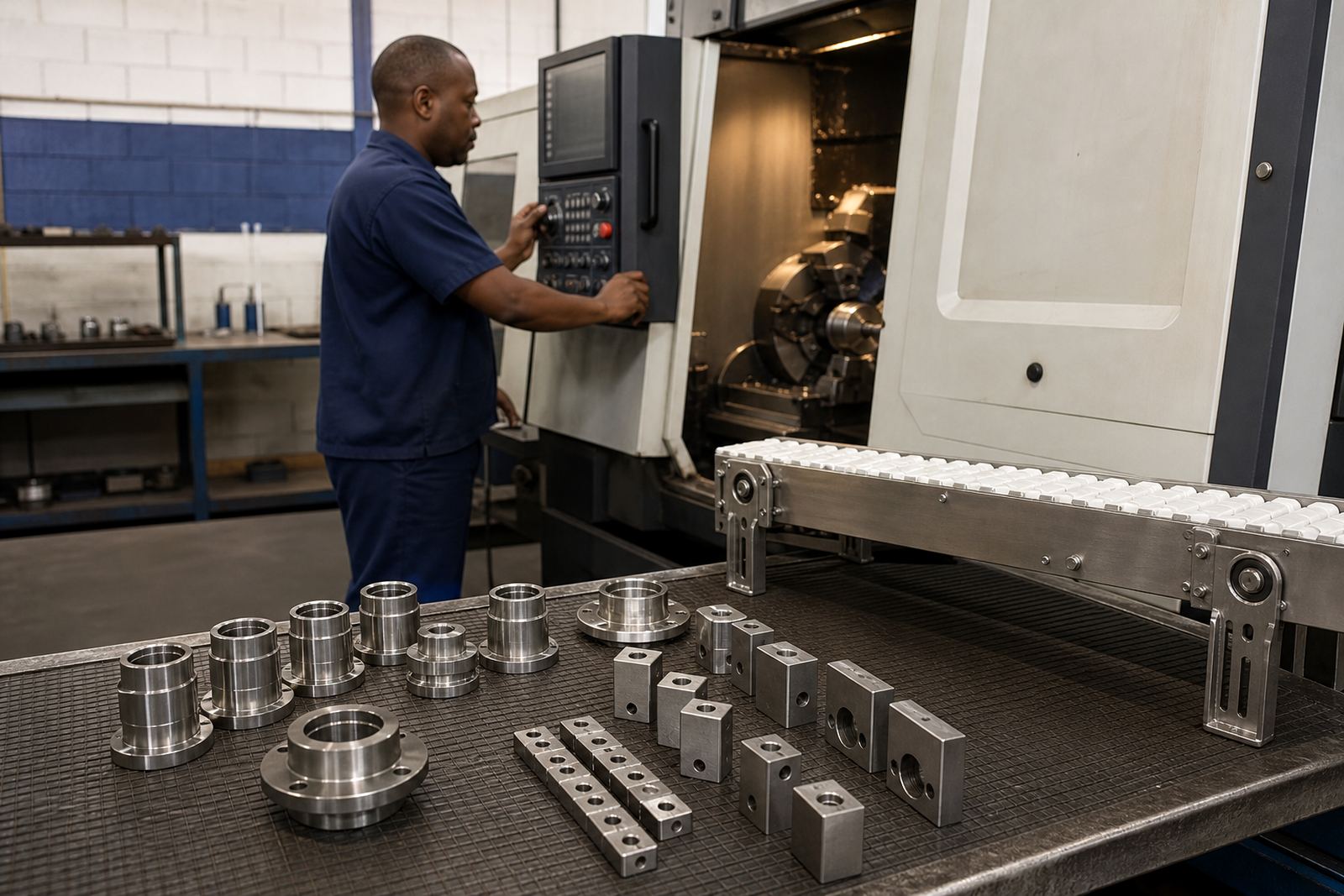
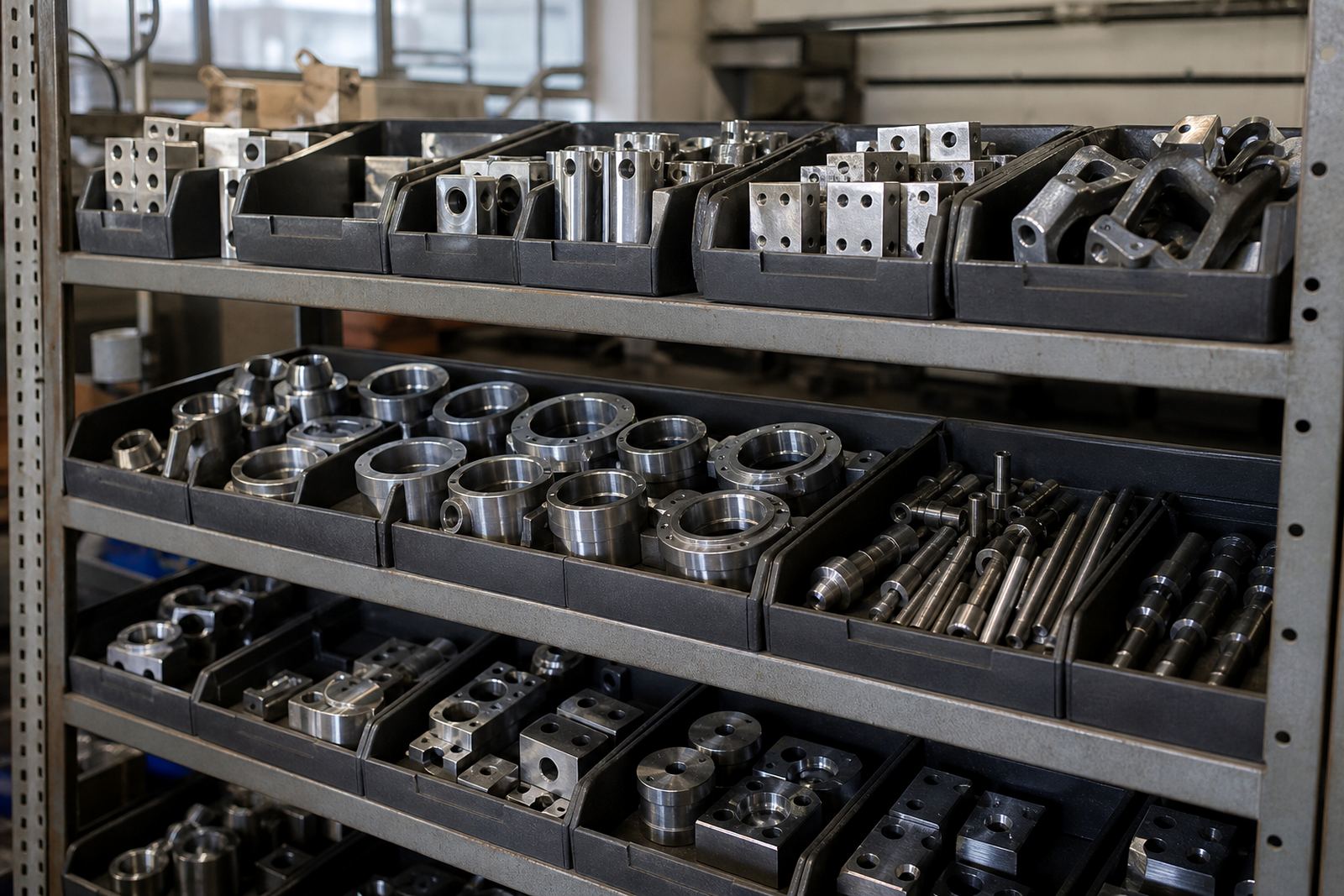
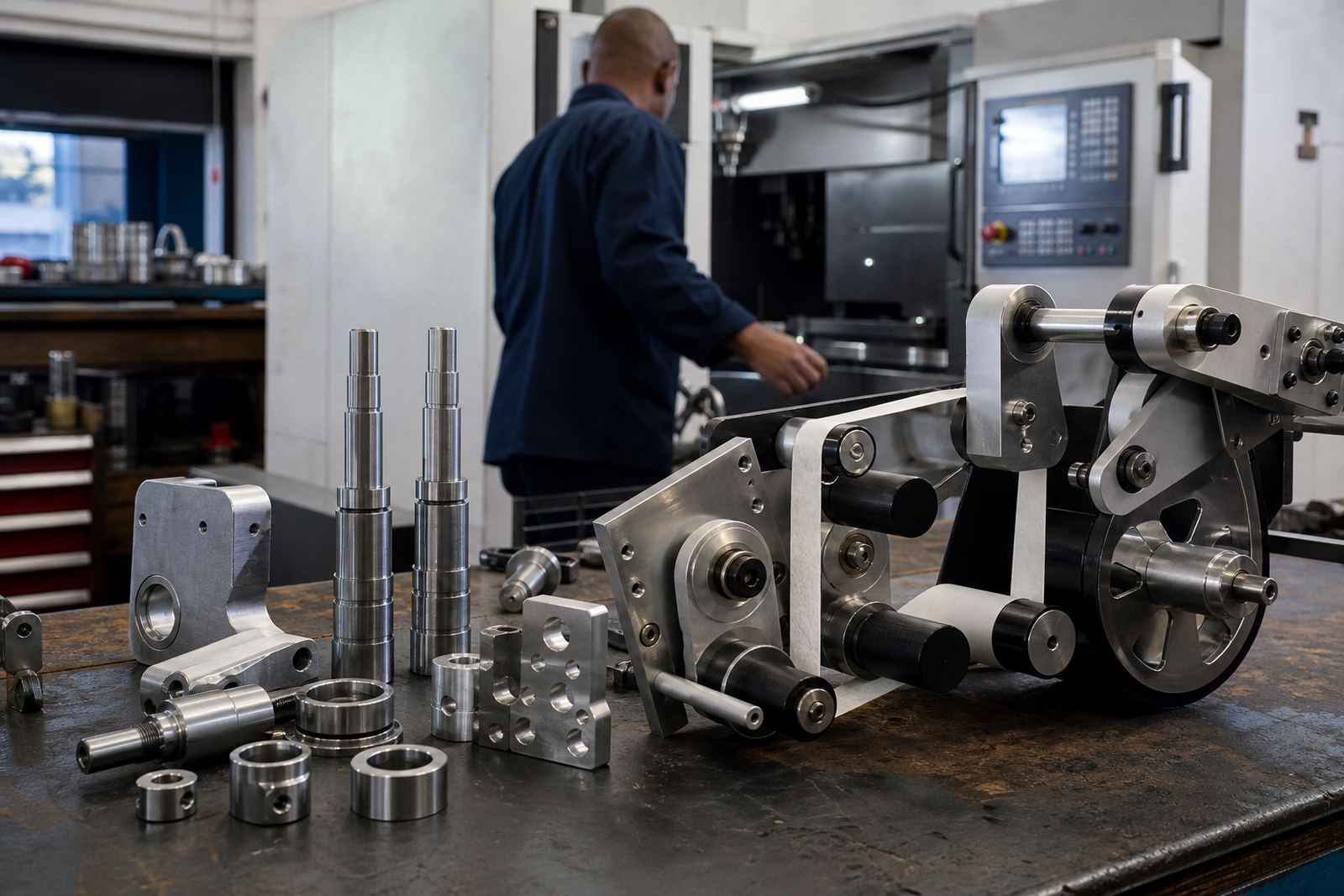
We work from drawing, sample part or measured request to produce small-batch components for reliable positioning and feeding. That can include spacers, guide blocks, shafts, bushings, clamps, rollers, mounting plates and other setup pieces used around printing and labelling machinery. For clients in Durban, Pinetown, Pietermaritzburg, Richards Bay and Johannesburg, the aim is practical: get the part to fit, keep it repeatable, and avoid unnecessary downtime.
Typical parts used around label application equipment
Most printing and labelling systems use a mix of moving and fixed parts, so the machining job is often about alignment rather than complexity. CNC milling suits flat parts, pockets, holes, slots and mounting faces. CNC turning suits round parts such as pins, sleeves, stepped shafts and rollers. Where a machine needs a precise interface between two assemblies, we can also remake worn samples to match the existing fit as closely as the data allows.
Common requests from this kind of work include:
- guide blocks for side positioning and product feed paths
- mounting brackets for sensors, rails and applicators
- standoffs, spacers and adjustment pieces for line changes
- rollers, pins and shafts for rotation or transfer support
- wear parts that help keep labels tracking straight
For packaging lines near the coast, corrosion resistance matters too. Inland sites may worry more about dust and heat, while coastal plants in Durban or Umhlanga often need material choices that cope better with humidity and cleaning cycles.
Planning the layout before the machine starts cutting
Good labelling performance starts with the layout around the machine, not only the machine itself. We often advise clients to measure the full contact path, the fixing points and the direction of feed before ordering a replacement part. If a guide is too tight it can scuff film or labels. If it is too loose, the product wanders. In practice, the part must suit the machine, the operator setup and the actual product size, not just the old drawing.
For batch planning, it helps to separate critical dimensions from non-critical ones. Hole centres, shaft diameters, face alignment and bearing seats usually matter most. Cosmetic edges can be kept simple to control cost. When repeat orders are likely, it also helps to note which dimensions need verification on every run, because a small change in the line can affect fit. PME CNC Machining offers drawing review, tolerance guidance, part optimisation and drawing updates so the next order is easier to repeat.
- measure the installed part, not only the old sample on the bench
- note the material being handled, such as cartons, sachets or wrap
- check if the machine runs continuously or in short shifts with load-shedding breaks
- confirm whether the part must be food-contact adjacent or only structural
Tolerance choices and material selection for repeatable feeding
Printing and labelling parts are often judged by how consistently they hold position over time. That means tolerances need to be set with care. Tight tolerances are useful where a shaft must run true, a bracket must locate accurately or a spacer controls gap. Looser tolerance is acceptable on non-critical faces where the part only carries load or supports an assembly. The right call depends on the function, the condition of the machine and whether the part will be removed often for cleaning or changeover.
Material choice matters just as much. Aluminium is often useful where weight must be kept down. Mild steel is common for general brackets and frames. Stainless steel can suit damp or washdown areas, while engineering plastics may be preferred for low-friction contact points or non-marking guides. The wrong choice can lead to galling, wear or faster corrosion, especially in coastal sites where humidity and cleaning chemicals can be hard on parts. We help clients weigh those trade-offs before a batch is started.
Where the original component has failed, sample part remake can save time, but the sample should be checked for wear before copying it exactly. A worn hole or flattened edge can be misleading. It is often better to restore the intended dimension rather than repeat the fault.
Common mistakes that cause jams, skew and waste
In printing and labelling work, the most common faults are not dramatic. They are small errors that build up over time: an unmarked spacer gets mixed with another one, a guide is machined to the old wear pattern, or a hole position is copied from a damaged part. Another issue is assuming the machine will tolerate a loose fit because it did before. After months of vibration, even a slight movement can become a constant source of misfeed.
We also see problems when a part is made without checking how it will be cleaned or removed during shift changes. If access is tight, the operator may bypass the intended fixing method. That leads to stripped threads, bent supports and a part that never sits quite right. A simple change in chamfer, slot width or fixing style can make maintenance easier and reduce handling damage. Good part optimisation is not about fancy geometry, it is about making the part practical on the floor.
- copying a worn sample without checking the wear
- ignoring the way the part is clamped or removed
- choosing material only on price and not on cleaning or corrosion
- leaving no note for repeat order support or future drawing updates
Budget ranges for small-batch machining in Rand
For printing and labelling setups, budgets depend on material, size, finish, tolerance level and whether the job needs milling, turning or both. A simple spacer or clamp plate costs far less than a precision shaft or a matched pair of setup parts. Small batches are usually best when you need a handful of components for one line, a spare set for maintenance, or replacement parts to keep production going during a busy period.
As a general planning guide, clients often set aside a lower budget for basic one-off support parts and a higher budget where tighter fitting, more machining time or extra inspection is needed. If the job includes prototype planning, inspection reporting, assembly fit checks or delivery coordination to Durban, Westmead, New Germany, Umhlanga or further afield, that should be factored in from the start. It is better to quote the real requirement than to chase a cheap part that needs rework later. In many cases a proper remake saves money by avoiding downtime, even if the first cost is higher.
For Johannesburg and other inland clients, transport timing and batch consolidation can matter too. A small batch sent together with repeat order support is often easier to plan than multiple urgent shipments, especially when a line is waiting on a single missing part.
How PME CNC Machining supports your line from Pinetown
PME CNC Machining operates as a job shop in Pinetown, KwaZulu-Natal, serving clients across South Africa with small-batch CNC work for practical plant needs. Under the leadership of Mandla Sibusiso Mkhize, the team includes Anele Nondumiso Dlamini on production coordination, Johan Petrus van Wyk on CNC programming, Siyabonga Patrick Zulu on machining supervision, Naledi Refilwe Molefe on quality administration and Kyle Brendan Naidoo on client support. That structure helps keep the process organised from enquiry through to delivery.
For printing and labelling use, the service usually begins with the enquiry form on the contact page, followed by drawing review, material selection, prototype planning or batch planning as needed. If the part must match an existing machine, we can work from supplied measurements and advise on tolerances and fit. If the line is changing, we can help with drawing updates and repeat order support so the next batch is simpler. The goal is straightforward: parts that fit, stay put and keep the feed moving without unnecessary drama.