Parts That Keep Treatment Systems Moving
Water treatment plants depend on parts that do not get much attention until something wears, leaks or drifts out of alignment. In practice that means machined brackets, motor mounts, pump covers, spacer rings, shaft collars, clamping parts and flow-related fittings that keep equipment positioned correctly and working as intended. We machine small batches for new builds, repairs and repeat replacements, with work handled in Pinetown for clients in Durban, Pietermaritzburg, Richards Bay and Johannesburg.
For this kind of work, the main concern is fit. A bracket that is a little off can put stress into a pump frame, a cover that does not seat properly can invite contamination or moisture ingress, and a mating face that is not flat can lead to uneven loading. We look at the drawing, the actual part requirement and how the assembly sits in service before any machining starts.
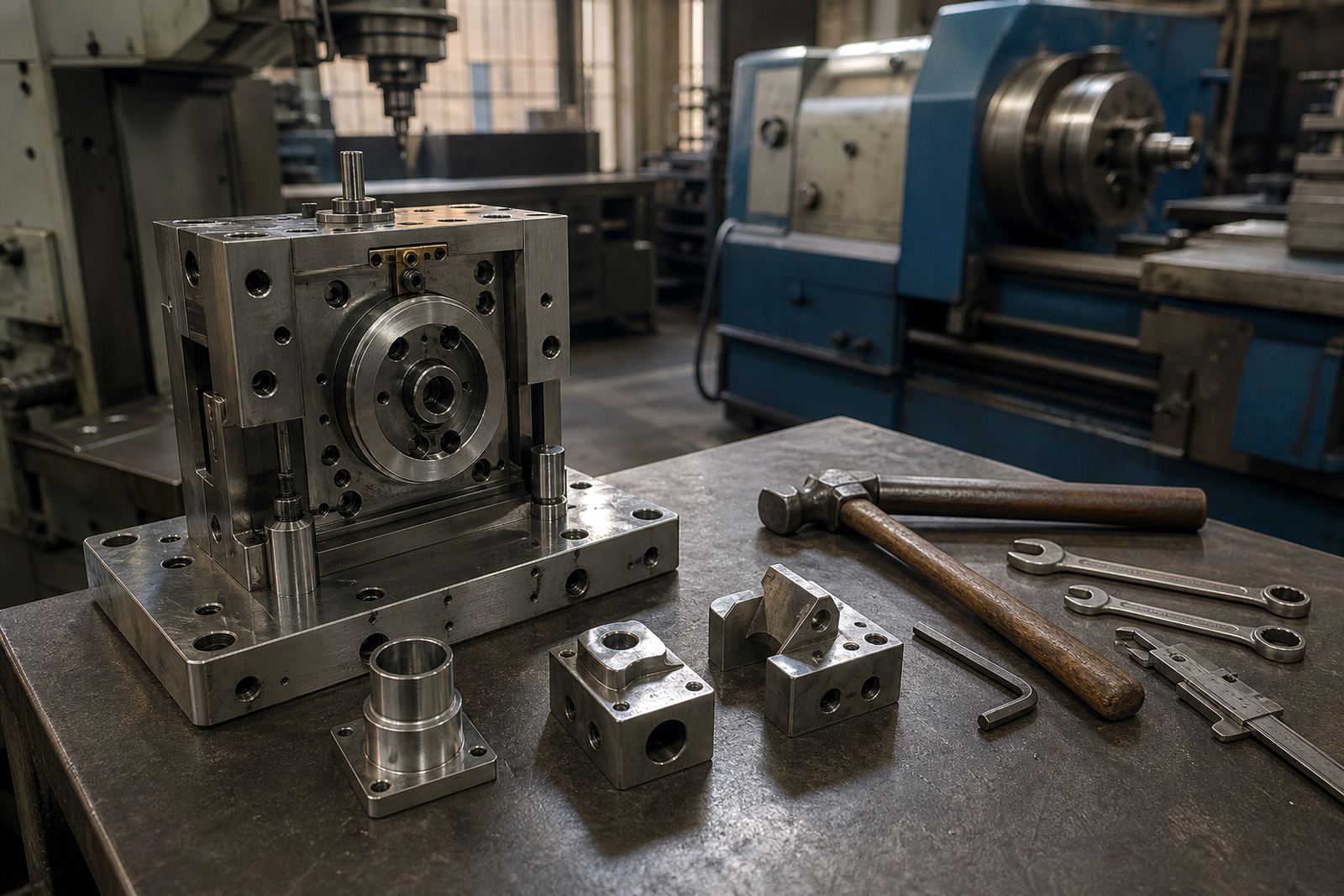
- Pump housings and covers
- Mounting brackets and support plates
- Flow path components and adapter pieces
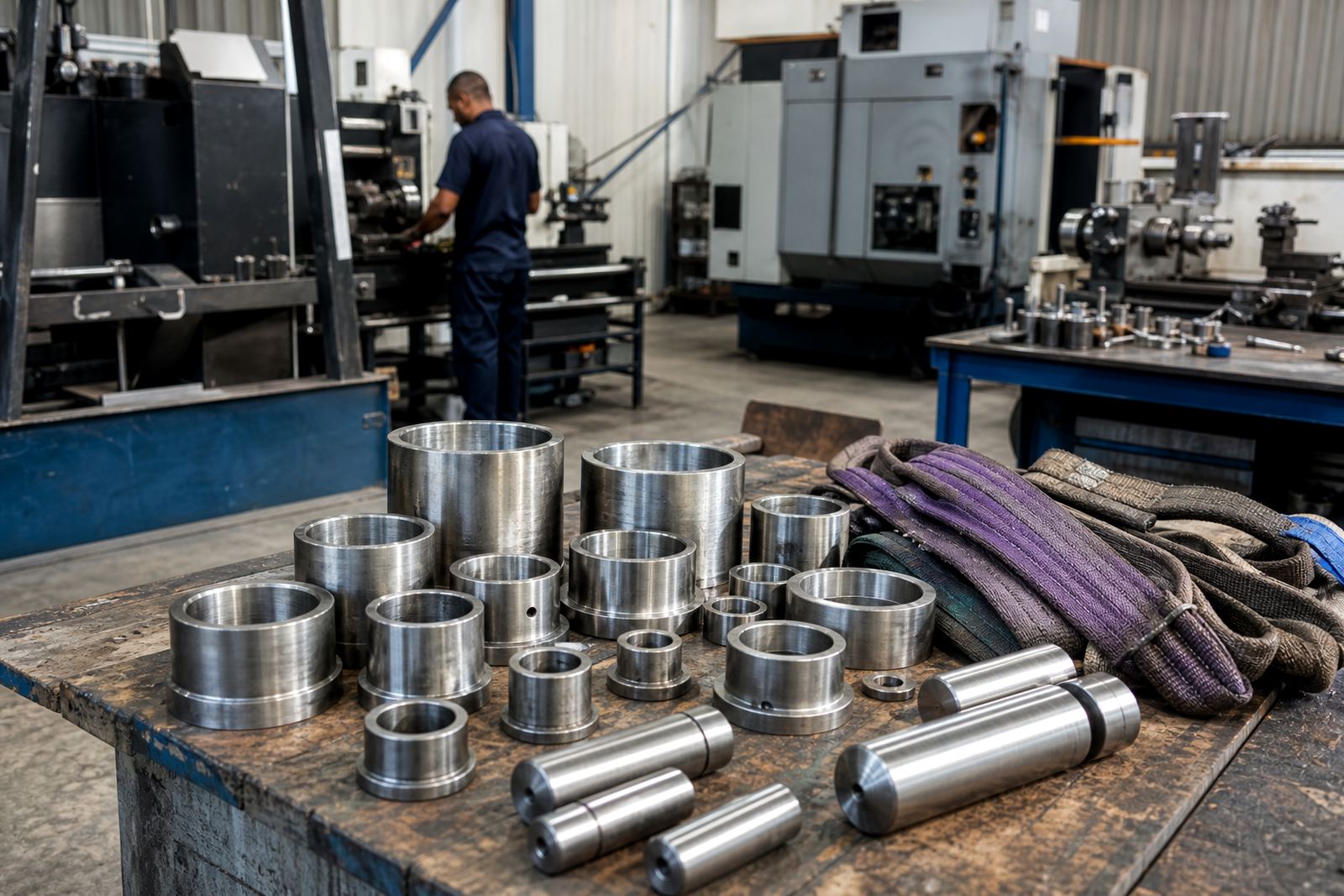
- Spacer parts, bushes and collars
- Small repair components for ageing equipment
CNC Milling And Turning For Wet Environments
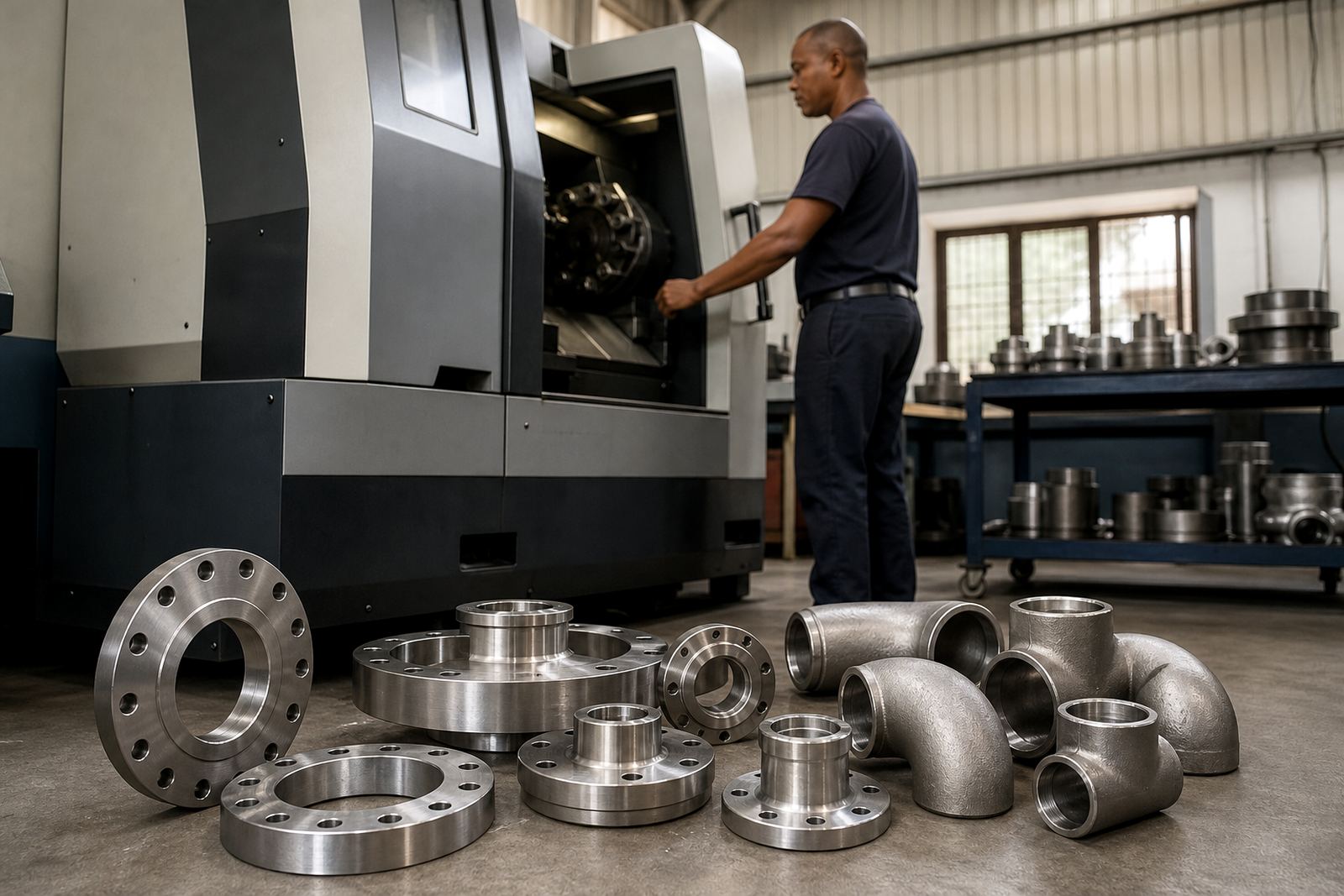
CNC milling is used where the part needs flats, slots, pockets, drilled patterns or shaped profiles. CNC turning is used for cylindrical parts such as shafts, sleeves, rings and threaded features. In water treatment work, many components combine both methods, especially where a turned body needs milled flats, cross-holes or keyways.
Material choice matters because water treatment areas can see splash, humidity, chemical exposure and regular cleaning. Depending on the application, we may work with aluminium, mild steel, stainless steel, engineering plastics or other machinable materials suited to the duty. The aim is always to match the part to the environment and the service load, not just to copy the old component exactly.
Where corrosion is a concern, details like edge finishing, hole placement and drainage matter as much as the base material. On coastal sites around Durban and Richards Bay, that extra attention helps reduce early wear caused by moisture and airborne salts. In plant rooms with load-shedding back-up arrangements, repeatable fit is also important because equipment may be restarted after interruptions and everything has to go back together quickly.
- Profiles and pockets for compact pump-room layouts
- Turned parts for shafts, sleeves and separators
- Clean edges and practical finish for safer handling
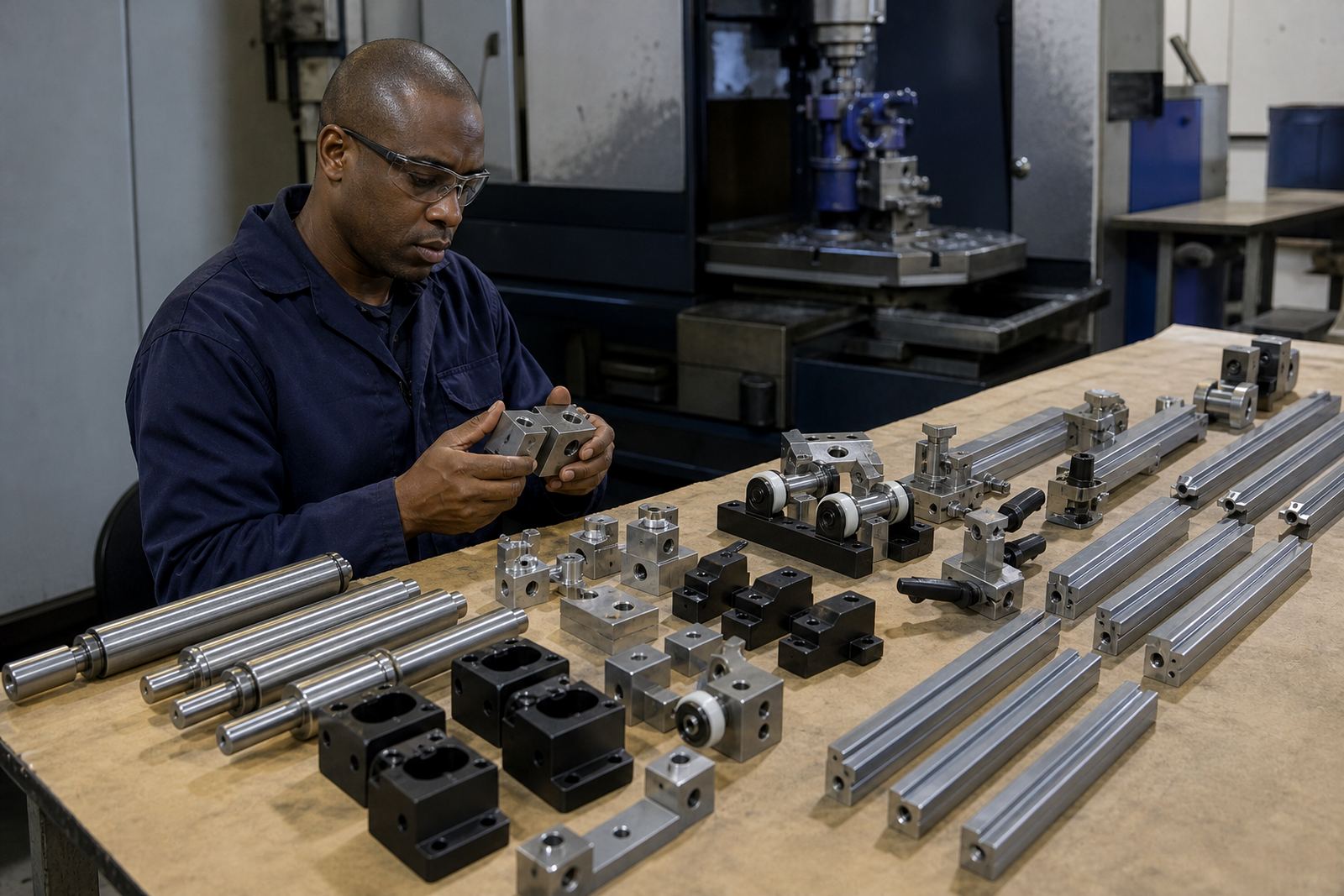
- Batch consistency for spares and replacement sets
Planning A Treatment Plant Job Properly
Many water treatment problems start long before the part reaches the machine shop. The most useful information is a clear drawing, the current sample if it exists, the working environment and how the component fits into the assembly. If the part is part of a skid or modular frame, we also look at access for tightening, removal and inspection. A piece that cannot be installed with ordinary tools becomes a maintenance problem later.
For new parts, prototype planning helps avoid expensive rework. We can help review the drawing, suggest material options and check whether the design needs an extra tolerance note, a relief cut or a small geometry change to suit the manufacturing method. If a part must line up with pumps, filters or pipe supports, tolerance guidance is useful because even small variation can affect alignment over multiple fixing points.
- Confirm the working face, fixing points and sealing surfaces
- Check whether the part sees vibration, spray or chemical contact
- Allow room for maintenance tools and safe removal
- Use sample part remake support when an existing part needs correction
- Ask for drawing updates if the original part has already changed on site
For plants in Pinetown, Westmead and New Germany, this kind of planning often saves time during shutdowns when access is limited and every hour counts.
Common Mistakes With Water Treatment Components
A common mistake is choosing a material only because it is available. In a wet process area, the wrong material can corrode faster than expected or wear badly at contact points. Another issue is ignoring how the component will be cleaned. Sharp corners, trapped pockets and poor drain paths can hold water or residue, which is never ideal in treatment equipment.
Another problem is assuming the old part is the right design simply because it was fitted before. Over time, equipment may be modified, holes may elongate, and gasket surfaces may no longer be true. A part copied exactly from a worn sample can repeat the same fault. It is often better to inspect the sample, verify the function and then remake it with the actual service condition in mind.
We also see issues where tolerances are too tight for no real reason, which can push up cost and lead time. In other cases tolerances are too loose and the assembly ends up with movement or misalignment. The goal is practical accuracy, not unnecessary precision for its own sake.
Batch Sizes, Lead Times And Budget Range
Water treatment clients often need only a few parts at a time, sometimes a single replacement or a small batch for maintenance stock. That is where a job shop approach helps. We can work from a drawing, an existing sample or a repair requirement, then plan the batch so the parts are suitable for the machine, the material and the final use. For repeat orders, it is useful to keep the drawing updated so the next batch matches the last one.
Budget depends on size, material, machining time, finish requirements and whether inspection reporting is needed. Small simple parts may sit in the lower range, while larger or more complex assemblies with several operations naturally cost more. A practical budget for small-batch water treatment components in South Africa can range from about R850 to R18 000+, depending on the part and the work involved. It is best to discuss the drawing early so the quote reflects the real job and not a rough guess.
- Single replacement parts for urgent repairs
- Small batches for planned maintenance shutdowns
- Repeat order support for ongoing stock control
- Delivery coordination to Durban, Pinetown, Pietermaritzburg, Richards Bay and Johannesburg
Working With PME CNC Machining In Pinetown
Based in Pinetown, KwaZulu-Natal, PME CNC Machining supports water treatment projects across South Africa with drawing review, material selection, batch planning, part optimisation and inspection reporting. Our team includes Mandla Sibusiso Mkhize, Anele Nondumiso Dlamini, Johan Petrus van Wyk, Siyabonga Patrick Zulu, Naledi Refilwe Molefe and Kyle Brendan Naidoo, so there is a clear path from enquiry through to production and handover.
If you need a machined part for a pump assembly, a support bracket for a treatment line or a replacement cover that must fit properly first time, send the details through the enquiry form on our contact page. We can review the drawing, discuss the fitting conditions and help you choose a practical route for making the part without unnecessary delay. For clients in Umhlanga, Durban and the wider coastal corridor, that local coordination can make a real difference when equipment is down and the schedule is tight.
Water treatment work often looks straightforward on paper, but the real test is how the part behaves in service. That is why we take the fit, finish and function seriously from the start.