Practical machining support for factory work
General manufacturing often needs parts that are not glamorous but are essential to keeping a line moving. A worn spacer, a bracket that no longer lines up, a replacement shaft or a housing that needs a tighter fit can stop a repair job in its tracks. We handle small batch CNC machining for these everyday requirements, with work arranged around maintenance shut downs, urgent repairs and repeat production support.
From our Pinetown base, we serve Durban, Westmead, New Germany, Pietermaritzburg, Richards Bay, Johannesburg and nearby areas such as Umhlanga. Clients use us when they need one-off replacements, a short run of matching components, or a cleaner version of an older part that is no longer easy to source. For many jobs, the best outcome is not a redesign, just a well made part that fits first time and holds up in service.
- Repair spares for broken or worn machinery parts
- Small batch repeat production components
- Upgrades for older plant and equipment
- Parts for maintenance teams working under time pressure
How CNC milling and turning suit everyday manufacturing parts
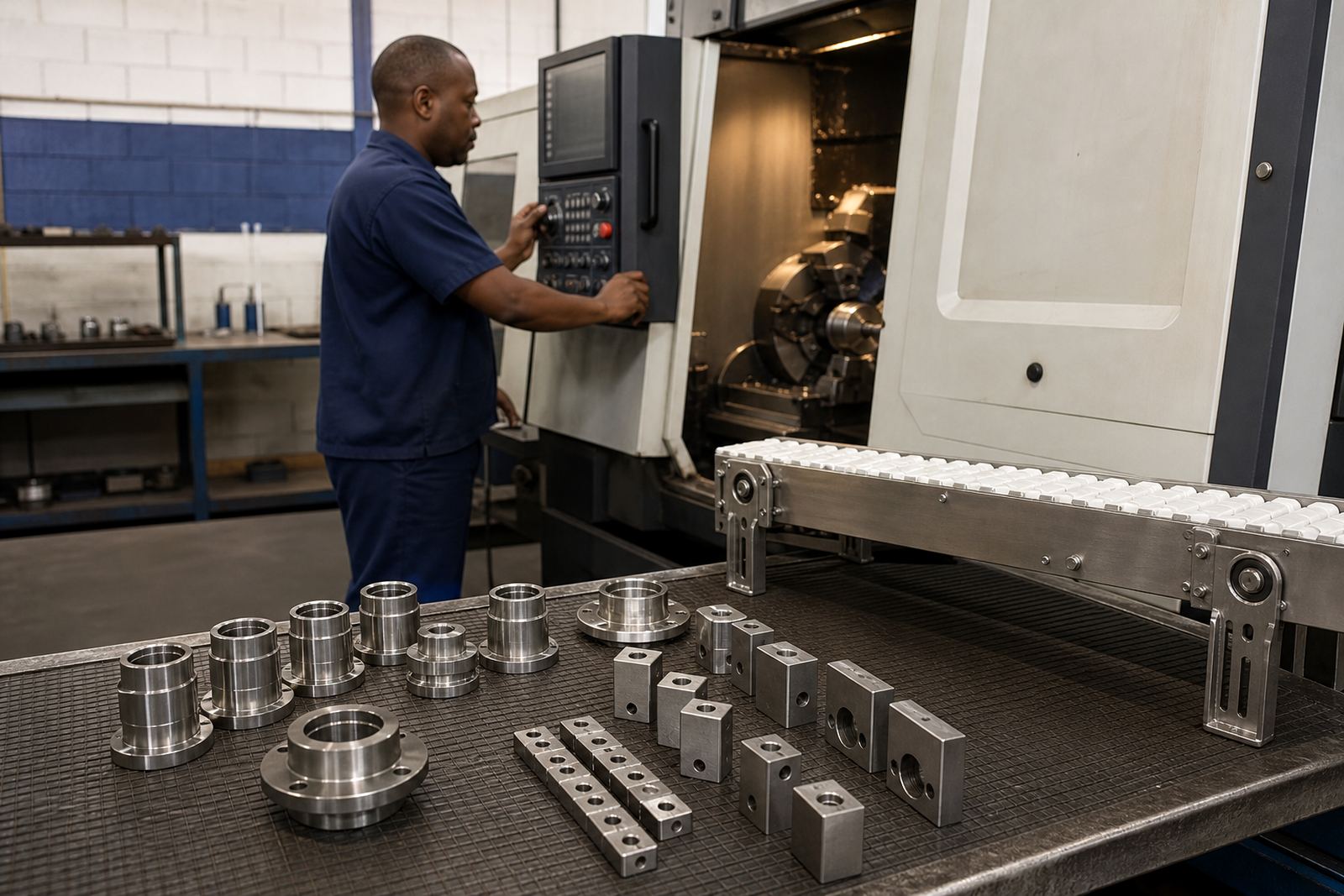
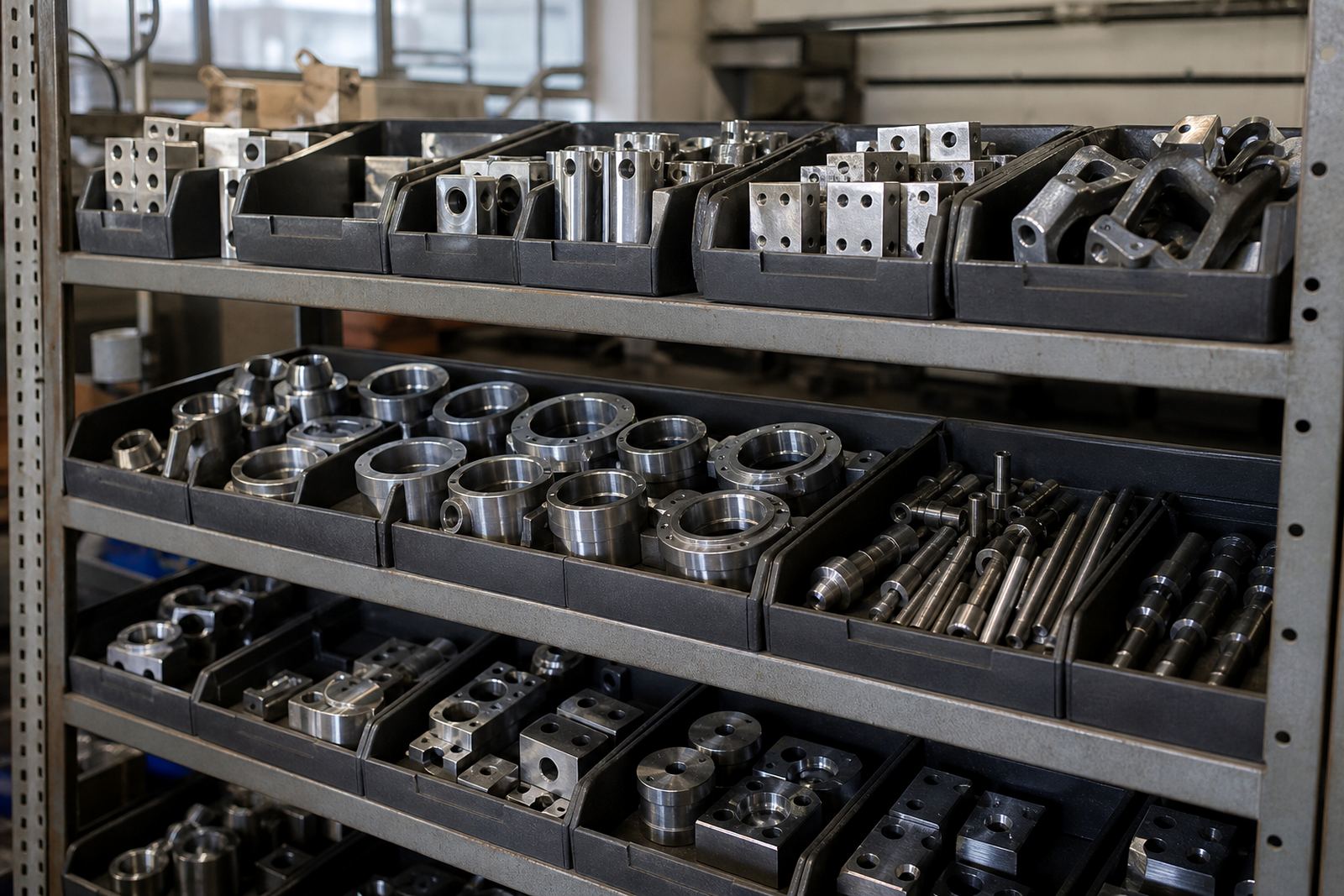
CNC milling is usually used where a part needs flat faces, slots, pockets, drilled patterns or shaped profiles. CNC turning is suited to round parts such as bushes, pins, collars, shafts and stepped diameters. In general manufacturing, many jobs use a mix of both methods, especially where a turned round section also needs machined flats or holes.
We work from drawings, samples or measured parts and then check what the part is doing in service. That might mean bearing location, alignment, clearance, heat exposure or repeated vibration. Materials are chosen to suit the job, from common engineering metals through to plastics used for wear parts, guides and covers. The right choice depends on load, corrosion risk, machinability and whether the part sits in a dry factory or a humid coastal environment.
- Round parts for rotating equipment and assemblies
- Flat or shaped parts for mounting, spacing and support
- Prototype pieces before a larger repeat run
- Part remakes when the original item is damaged or unavailable
Planning for the factory floor and the workshop
A good machining job starts with understanding how the part sits in the machine or assembly. Before cutting starts, we look at the drawing, the worn sample or the old part and check the critical dimensions. If a component must pass through a tight housing, line up with existing holes or clear a moving part, that needs to be known early. It is also worth checking if the part will be handled by maintenance staff, lifted during changeovers or exposed to coolant, oil or outdoor weather.
Where a part forms part of a larger set, we can help with layout advice so that fixing points, access for tools and service clearances are considered. In many factories around Durban and Pinetown, the practical issue is not just making the part, but making sure it can be fitted without creating extra downtime. Small changes in hole position, edge break or thickness can save a lot of rework later on.
- Confirm the mating part and any wear in the surrounding assembly
- Mark critical sizes, holes and surfaces clearly on the drawing
- Check whether the part must be removable with standard tools
- Allow space for inspection, cleaning and future maintenance
Common mistakes that cause delays or poor fit
Many manufacturing delays come from missing information rather than the machining itself. A sample part may be badly worn, a sketch may leave out thickness, or the original drawing may not show the condition that matters most. Sometimes a job is requested without stating whether the part should be a direct replacement or an improved version. That can lead to extra back and forth and wasted time.
Another common issue is assuming all materials behave the same. Some metals machine cleanly, others move a little after cutting, and some plastics need careful support to avoid distortion. Coastal humidity can also affect storage and handling, so parts should be protected after inspection and before delivery. If a job is destined for a busy plant in Johannesburg or a humid site near Richards Bay, it is worth saying so upfront.
- Giving only a rough sketch with no key sizes
- Sending a worn sample without noting wear areas
- Leaving material choice too late in the process
- Not stating whether the part is for repair, trial or repeat production
Typical equipment and part types in general manufacturing
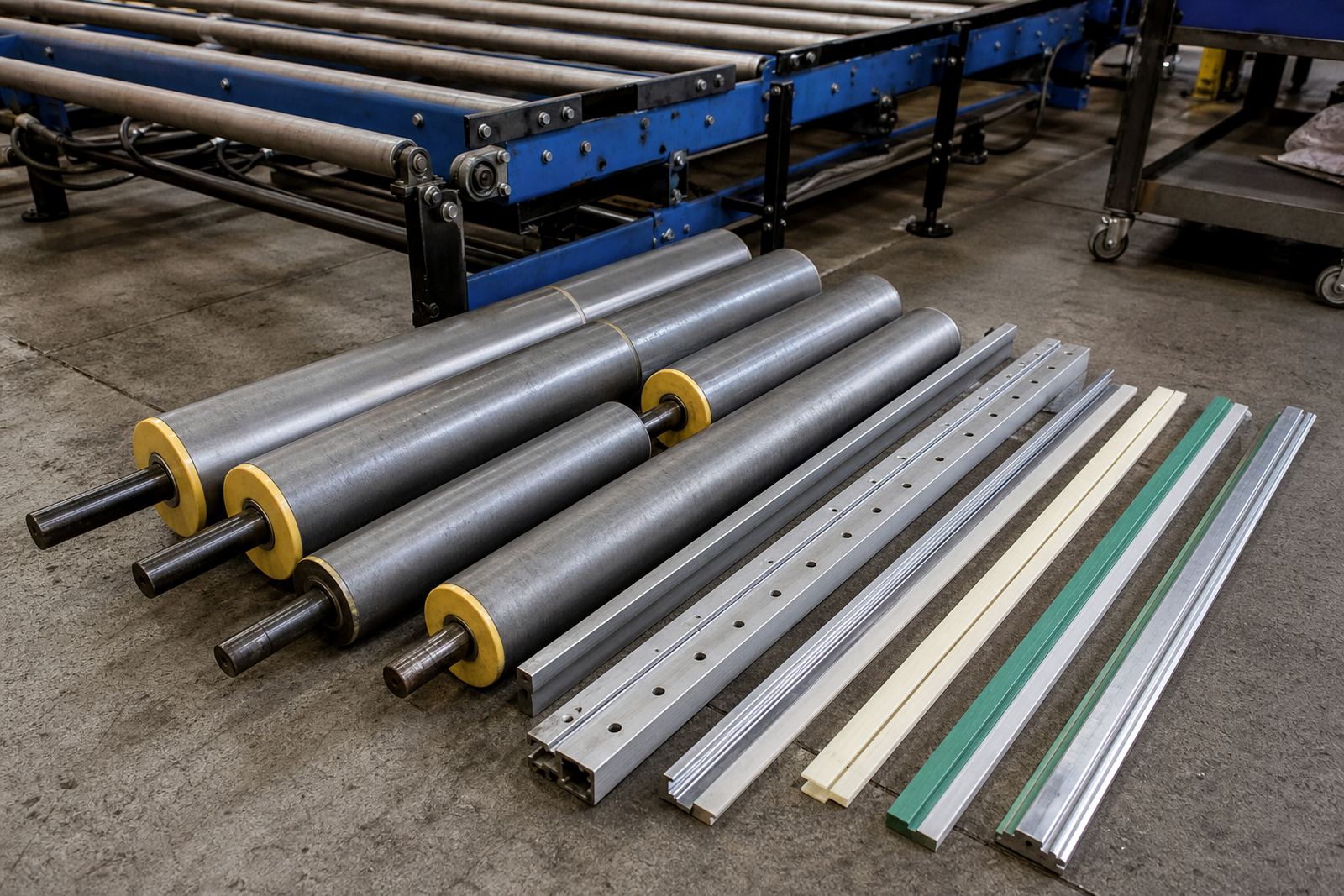
General manufacturing sites use a wide mix of equipment, and the parts we see reflect that variety. We commonly assist with components for conveyors, pumps, gearboxes, guarding, fixtures, frames, clamping systems and maintenance assemblies. Some jobs are simple spacers or bushes, while others involve matched parts that must line up with existing equipment already in service.
Because these jobs are often for active factories, the layout of the part matters as much as the cut itself. A bracket may need extra clearance for a cable route, or a cover may need access holes for inspection. Repeat orders are easier when the first set is documented properly, so we can support the next run without starting from scratch every time. That includes drawing updates, sample part remake work and inspection reporting where needed.
- Pins, shafts, collars and bushes
- Mounting plates, brackets and support blocks
- Fixture parts for production and maintenance tasks
- Replacement pieces for older machines and mixed equipment lines
Budget ranges and what affects the Rand value
For small batch machining, budget is usually shaped by material, complexity, size, quantity and the amount of checking required. A straightforward turned spacer or milled block is typically more economical than a part with several operations, tight alignment needs or repeated setup changes. One-off remakes often cost more per piece than a short repeat batch because the first job carries the setup and measuring work.
As a guide, many general manufacturing enquiries fall into low hundreds of Rand for simple parts and move into the low thousands when the part is larger, more intricate or needs inspection reporting and fit checks. We do not quote from guesses. The cleanest way is to send the drawing or sample through the enquiry form and let us assess the material, tolerance needs and delivery timing.
- Simple repeat parts usually cost less than complex one-off remakes
- Material choice can change both machining time and waste
- Urgent turnaround may affect planning and scheduling
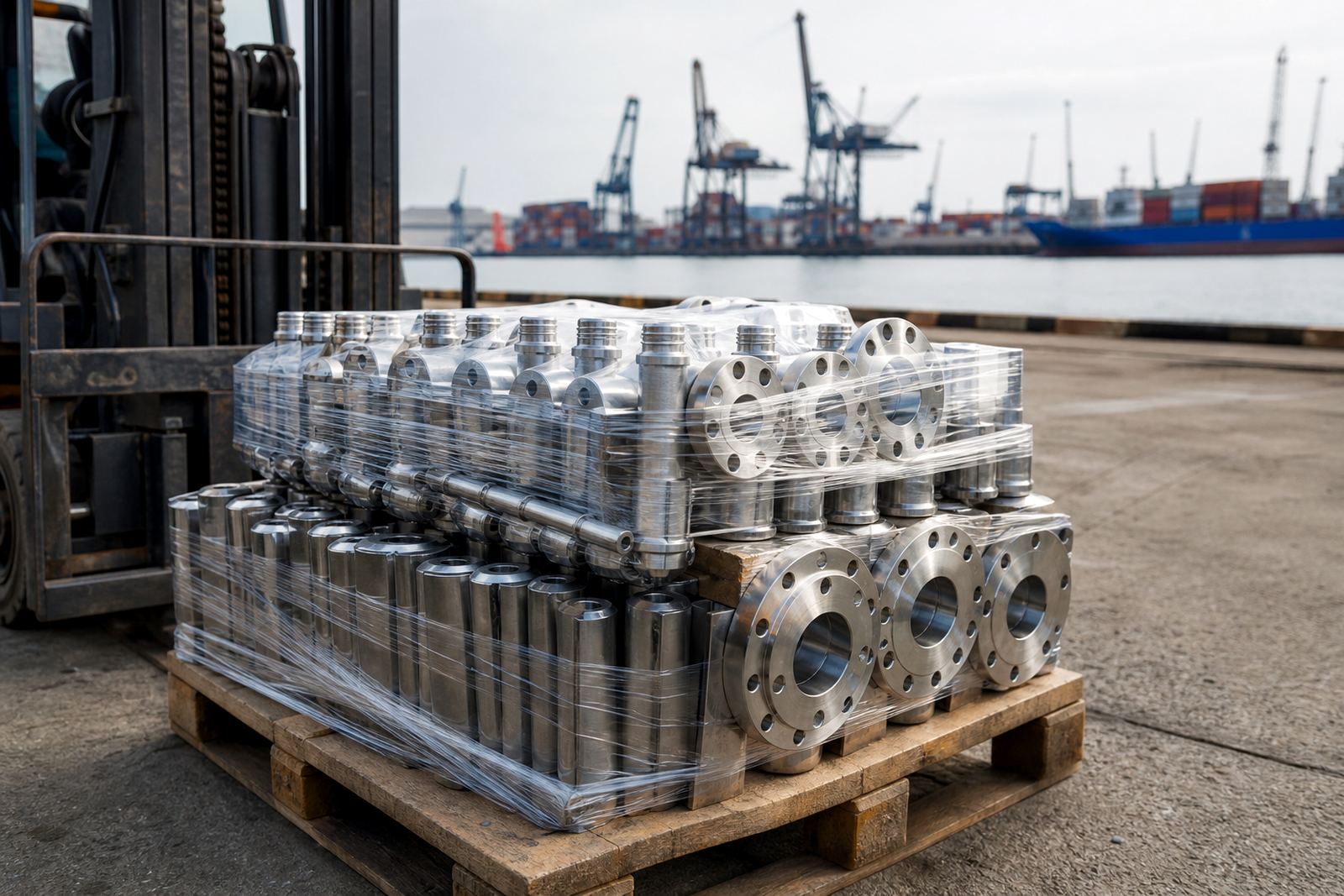
- Delivery coordination can be included for local and out of town jobs