What a tolerance actually means on the drawing
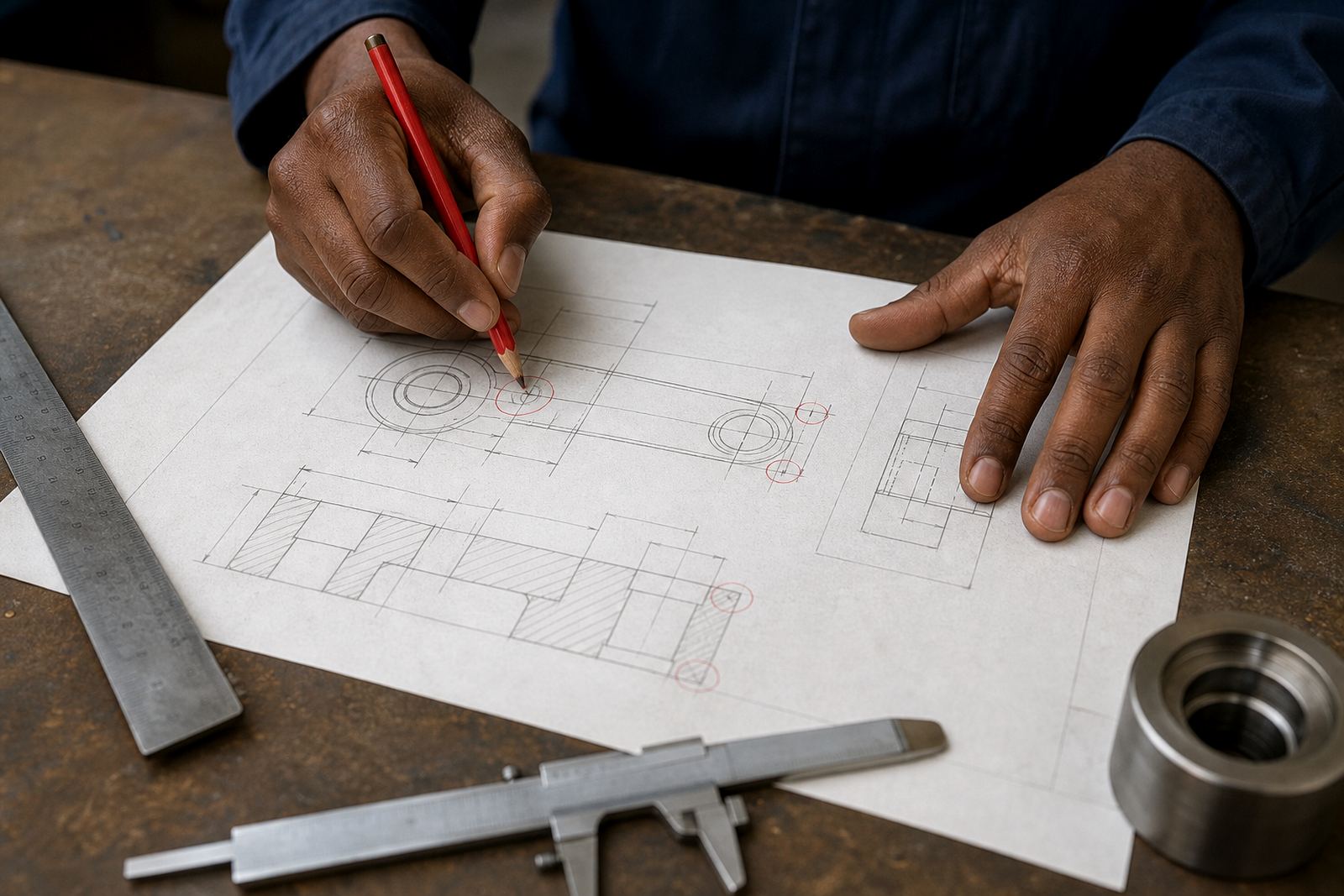
A tolerance is the allowed variation around a stated size. If a drawing calls for a shaft, hole or face dimension, the tolerance tells the machinist how close that feature must stay to the target size. It is not just a number on paper, it is the difference between a part that assembles properly and one that binds, rattles or needs hand finishing.
In CNC milling and turning, tolerances work together with surface finish, geometry and the material being machined. A part can be within size yet still not function if the hole position, squareness or concentricity is off. That is why a good drawing review starts with the question: what does this dimension do in the assembly?
Where tighter control really matters
Not every feature needs the same level of control. Some sizes are mostly for reference, while others affect fit, sealing, movement or alignment. On a small-batch job, it often makes sense to keep tight control only where it matters and allow more freedom on non-critical features. That keeps the job practical and avoids unnecessary machining time.
Common features that usually need closer attention include:
- Bearing seats and press fits
- Threaded holes that must line up with mating parts
- Spacer lengths that affect assembly stack-up
- Seal grooves and sealing faces
- Locating features for jigs, fixtures and machine parts
If a part is going into a moving assembly, a small variation can cause vibration, heat or uneven wear. If it is a static cover or bracket, the same level of control may not be necessary.
Material choice changes the tolerance conversation
Different materials behave differently under cutting, clamping and temperature changes. Mild steel, aluminium, stainless steel, brass and engineering plastics all move and machine in their own way. Softer materials may mark more easily, while harder grades may need slower feeds and careful tool selection to keep dimensions stable.
Heat also plays a part. Long jobs, deep cuts and summer humidity around Pinetown or Durban can affect how a part cools before inspection. A component that comes off the machine warm may measure slightly different once it has settled. That is why inspection timing, handling and post-machining cool down all matter.
- Aluminium can be quick to machine but is easy to mark if handled roughly
- Stainless steel may need more care to avoid heat build-up and tool wear
- Plastics can move after machining if they are stressed or clamped too hard
- Free-cutting metals can hold size well but still need proper deburring
Small-batch work leaves less room for waste
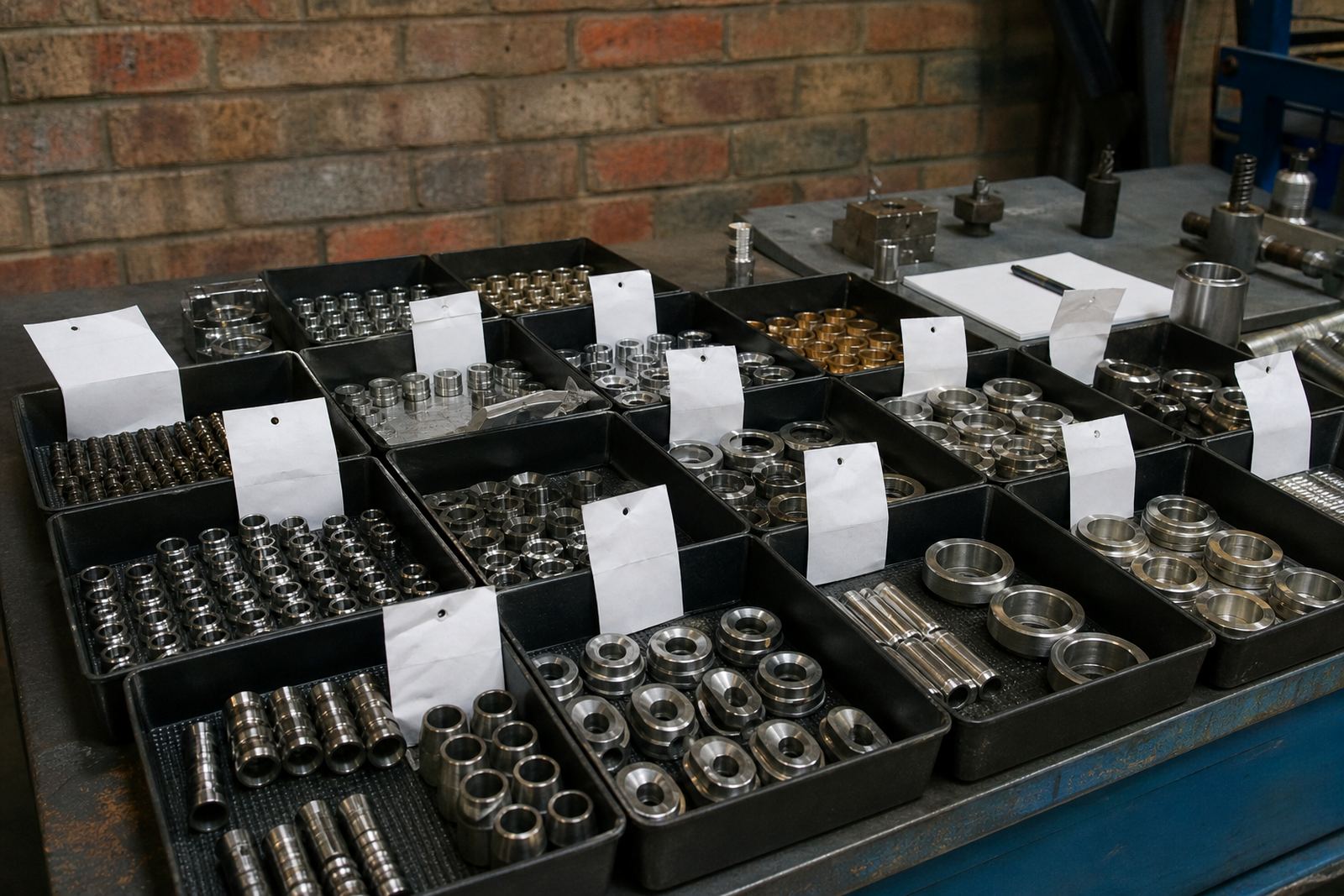
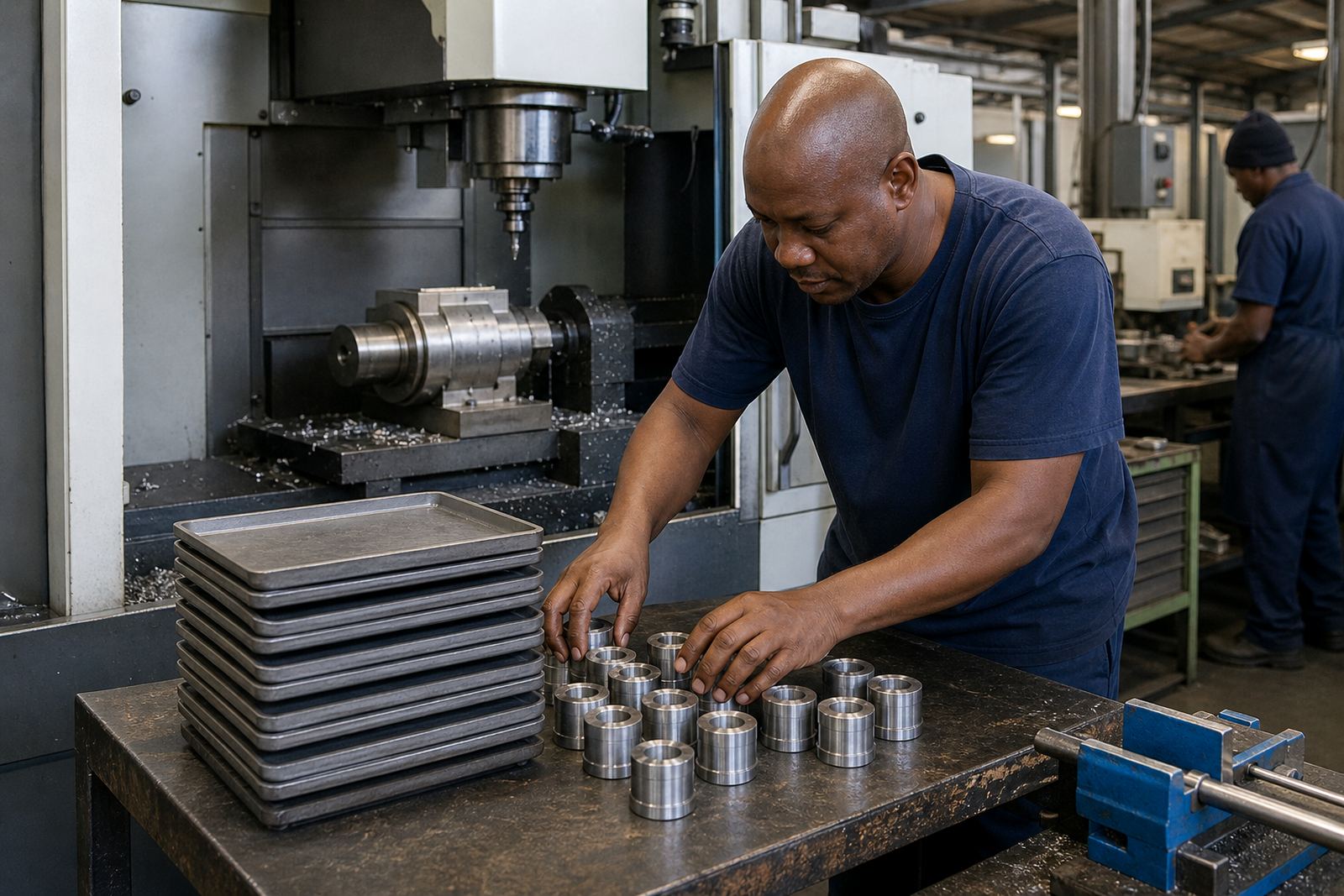
When a job is a one-off or a short run, there is not much room to absorb a mistake. A large production run can sometimes spread setup costs and allow for process fine-tuning. Small-batch CNC work does not offer that cushion. Each part has to be planned carefully, especially when the order is for a replacement component, a prototype or a repeat part that must match an older sample.
That is why tolerance guidance is so useful at the quoting and drawing review stage. It helps identify where the part must be exact and where a sensible allowance is fine. In practice, that can mean adjusting a sharp corner, changing a thread depth, or updating a dimension that is hard to hold in a thin section. It also reduces the risk of a remake, which costs time on the machine and in inspection.
A Durban to Pinetown example from the shop floor
Consider a local client in Durban needing a machined spacer and a mating bracket for plant maintenance. The bracket location is critical because it controls alignment, while the outer edge of the spacer is less important. If both dimensions are treated the same, the job can become more expensive than needed. If the fit dimension gets the tighter control and the non-critical face is opened up slightly, the part is easier to produce and usually easier to repeat later.
That kind of practical thinking matters across the region, from Westmead and New Germany through to Pietermaritzburg, Richards Bay and Johannesburg. Load shedding can also affect job timing, so parts that need a follow-up check or repeat order benefit from clear notes, saved dimensions and updated drawings. A clean record makes the next run quicker and helps avoid confusion when the same part is needed again months later.
Good tolerance control starts before cutting begins
Holding a size is only one part of the job. The rest starts with proper planning, including how the part will be held, which features are machined first and how the part will be inspected. Drawing review can catch unclear notes, conflicting dimensions or features that are awkward to reach once the job is set up. That is where a small adjustment on paper can save a lot of rework later.
Useful steps before machining include:
- Confirm which dimensions are critical and which are reference only
- Check how the part will be clamped and whether distortion is likely
- Review material availability and whether the stock size is suitable
- Plan inspection points for first-off and final checks
- Keep clear notes for repeat orders and drawing updates
When tolerance control is handled this way, the part is more likely to fit, the assembly goes together more smoothly and the client gets a result that makes sense for the job, not just the drawing.
Why fit checks and inspection reports pay off
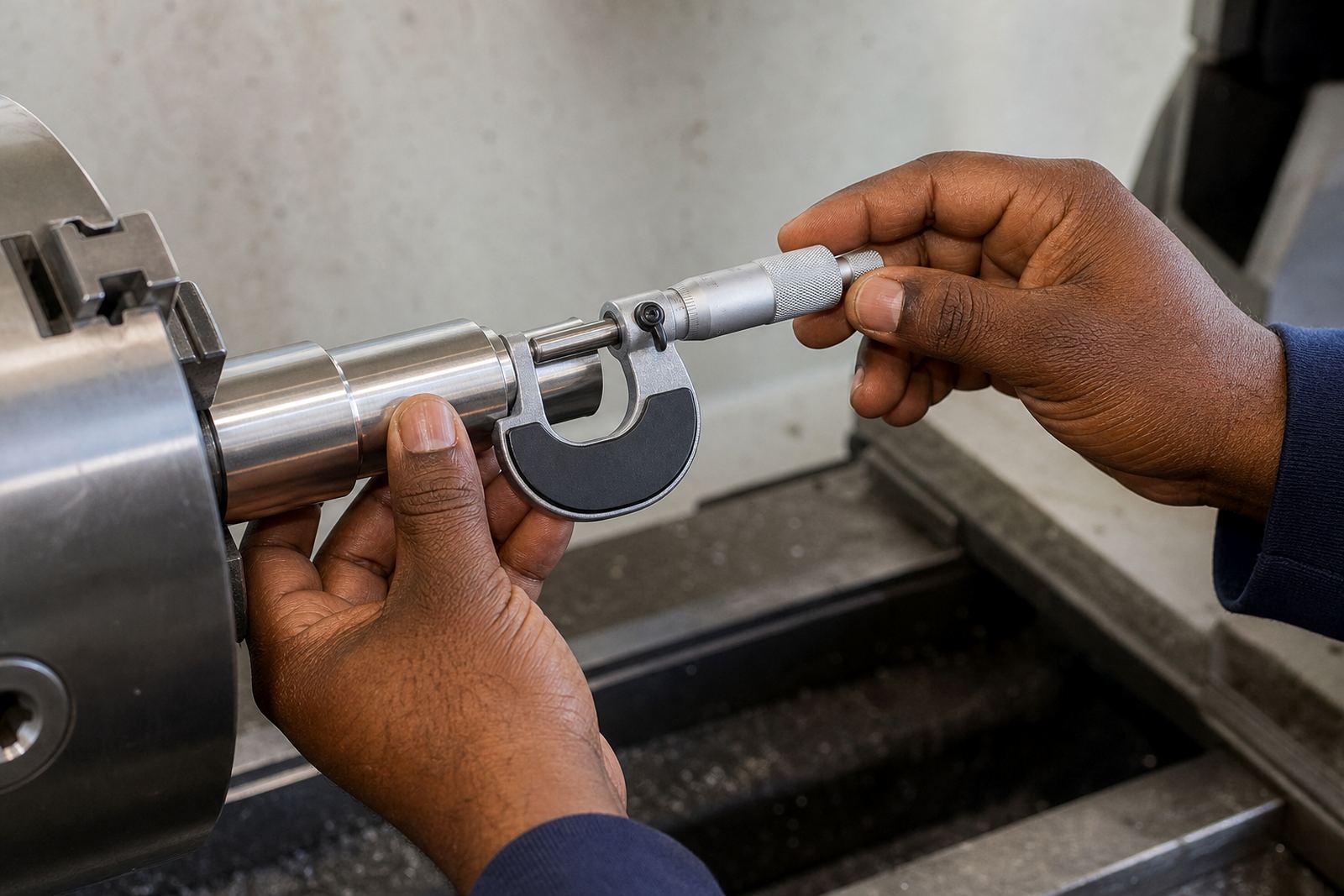
A measured part is only useful if the measurement matches the real need. That is why assembly fit checks and inspection reporting matter so much in small-batch machining. A report gives a record of what was checked, while a fit check confirms the part works with the mating component. If a change is needed, it can be caught before the next batch starts.
For PME CNC Machining, that practical approach supports clients across Pinetown, Durban, Umhlanga, Pietermaritzburg, Richards Bay and Johannesburg. When a part has to fit cleanly and work first time, the drawing, the material and the tolerance all need to be treated as one job, not three separate issues.