What milling is best at in small batch work
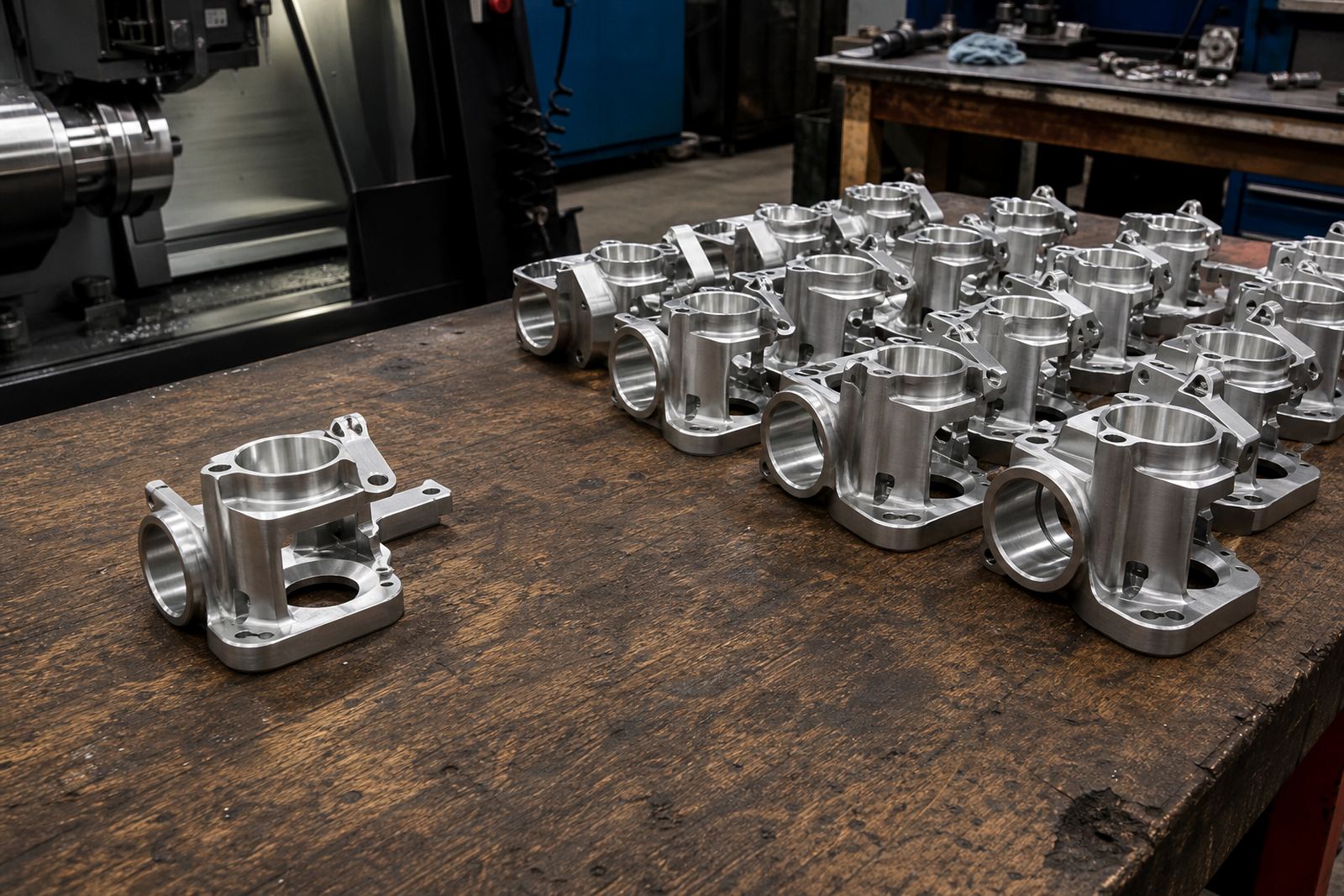
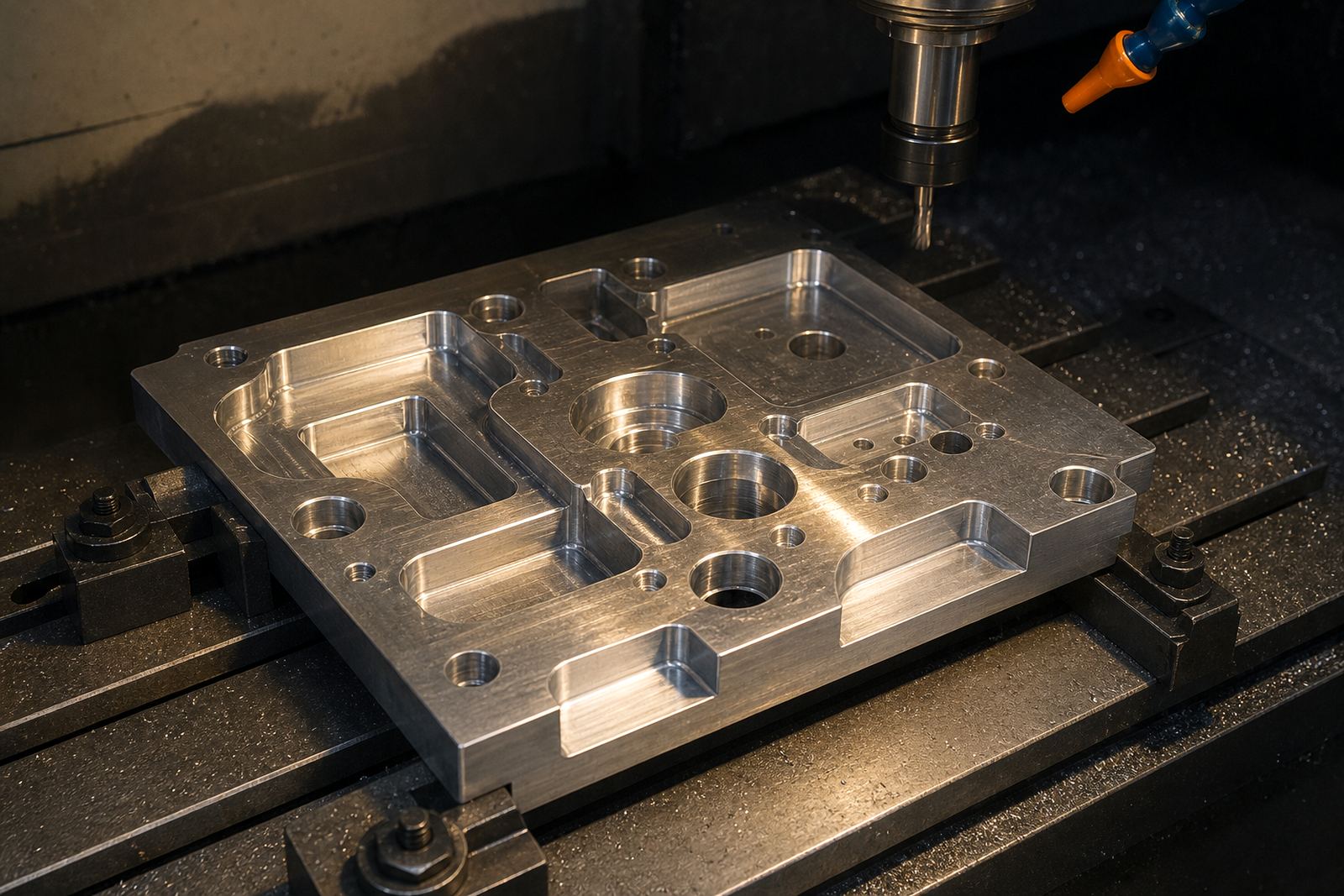
Milling is used when the job needs material removed from a block, plate or extrusion to create a shaped part. Instead of revolving the work like turning, milling uses a rotating cutter to form flats, steps, recesses, holes, channels and contours. That makes it well suited to brackets, housings, covers, fixture plates, mounting parts and components with cut-outs that are not round.
In a job shop setting, milling is often the first process to consider when the drawing shows several faces or features on different planes. A part may need a base face, side slots and a pocket in the same setup. If the geometry can be reached cleanly with a cutter, milling usually gives a practical path from raw material to finished part without unnecessary operations.
For customers in Pinetown, Durban, Pietermaritzburg, Richards Bay or Johannesburg, this matters when a part must be made in a short run and still fit into an existing assembly. Small-batch milling is commonly used for repeat production too, because once the setup is proven the same features can be produced again with good consistency.
Signs your drawing points to milling not turning
If the part is mainly square, flat or irregular, milling is usually the better starting point. Turning is better for round parts like shafts, bushes and collars. Milling becomes the stronger option when the drawing shows non-round edges, bolt patterns, pockets, slots or profiles that change along more than one face.
A simple way to think about it is this: if the workpiece must be held and cut from above, from the side or from several angles, milling is likely involved. If the main shape spins around a centreline, turning may suit it better. Some parts use both processes, especially when a turned blank needs flats, keyways or drilled features added later.
- Plates with tapped holes and locating pockets
- Mounting brackets with stepped faces
- Spacer blocks with slots or channels
- Machine parts with cut-outs and non-round outlines
- Prototype housings that need small changes after the first sample
When the drawing is not clear enough, a drawing review before cutting starts can save time. It is often easier to adjust a feature in the programming stage than to remake a part after the first sample has already been cut.
Materials that commonly suit milling jobs
Milling is used across a wide range of materials, from aluminium and mild steel to stainless steel, plastics and other engineering grades. The best choice depends on how the part will be loaded, how it will be fixed in service and whether it will face moisture, wear or repeated cleaning. In coastal areas like Durban and Umhlanga, corrosion resistance can matter just as much as strength.
Aluminium is often chosen for lighter parts and quicker machining, while steel gives strength for structural or wear applications. Stainless steel is common where moisture, washdown or outdoor exposure is expected. Engineering plastics can be useful for guides, insulators and low-friction parts. Each material behaves differently under the cutter, so feed, speed and support have to suit the job.
For small batches, material selection should be practical rather than theoretical. A part that will sit near salt air, vibration or heat should be chosen with those conditions in mind, not just the drawing. That is why a local production team will often ask where the component will run, what it will touch, and whether it needs to be remade later for a better fit.
Where milling helps with accuracy and fit
Milling is often chosen when a part must fit into an assembly with controlled clearances. That can include slot width, pocket depth, hole position and face flatness. On small batch work, the aim is not only to make one part look correct, but to make several parts behave the same way when they are installed.
Tolerances depend on the geometry, the material and the machine setup. Some features can be held tightly where the process and inspection support it, while others need a practical working tolerance that reflects the size of the part and how it will be used. Good machining is about agreeing on what matters most: location, size, finish or assembly fit.
- Locating faces that must sit flat in a frame or jig
- Slots that guide fasteners or sliding parts
- Pockets that control component depth
- Hole patterns that must line up with another part
- Edge details that affect assembly clearance
Inspection reporting becomes useful here, especially when a customer needs confirmation that the first sample is ready before a batch continues. A sample part remake can also be necessary if the fit needs a small correction after real assembly testing.
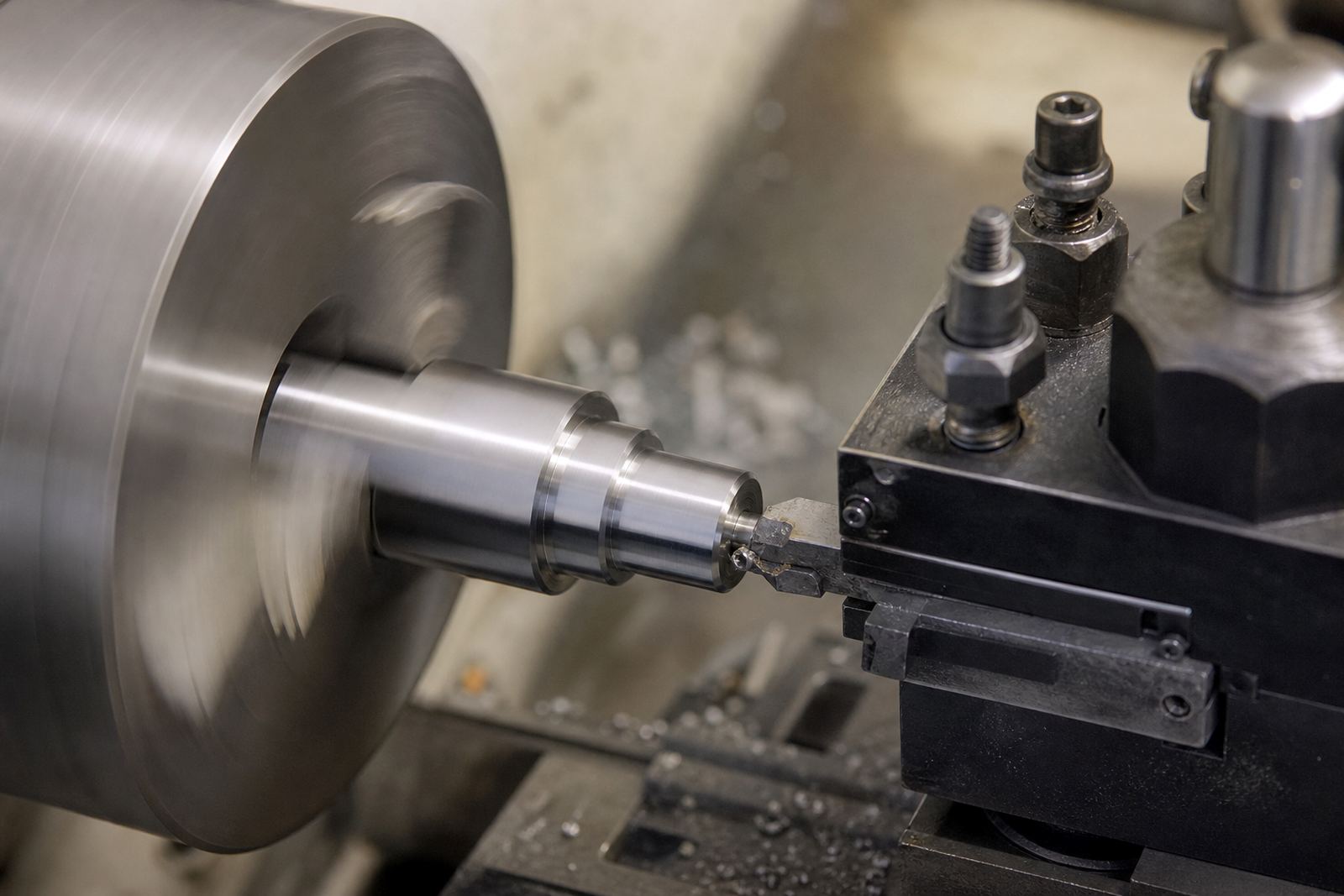
When turning is the better route instead
Turning is better when the job is mainly round and concentric. A shaft, sleeve or ring usually belongs on a turning process first, then milling can add secondary features if needed. Choosing the right process early saves material and keeps the job simpler.
If a drawing has a circular outside diameter with only one or two side features, it may be worth splitting the work between turning and milling. That way the round form is made by rotation and the extra features are cut cleanly afterwards. For many small batch jobs this is the most practical route because it reduces handling and keeps the part closer to its intended centreline.
It is also worth thinking about repeat order support at this stage. If the same component will be made again later, the process should be chosen with that future run in mind. A setup that is easy to repeat, with clear notes on material, orientation and inspection points, tends to give fewer surprises later.
A Pinetown example from local production
Imagine a fabrication customer in Pinetown needing a small run of mounting plates for a machine frame. The part is not round, it has a central pocket, four bolt holes and a side slot for clearance. Turning would not help much because the shape is driven by flats and cut-outs rather than a centreline. Milling is the natural choice.
In a job like that, the team would normally start with drawing review, then move into material selection and prototype planning. If the first sample fits the frame properly, the same setup can be used for the batch. If the part needs a slight change to the slot or pocket depth, drawing updates can be made before the repeat run continues. That approach is useful for customers across Westmead, New Germany and the wider Durban area where parts often need to fit existing equipment without delay.
It is the kind of work where careful machining matters more than talk. The part must fit, the batch must match and the delivery has to suit the client’s schedule. Load-shedding, transport delays and site access rules can all affect timing, so practical planning counts.