Why stock size matters before the first cut
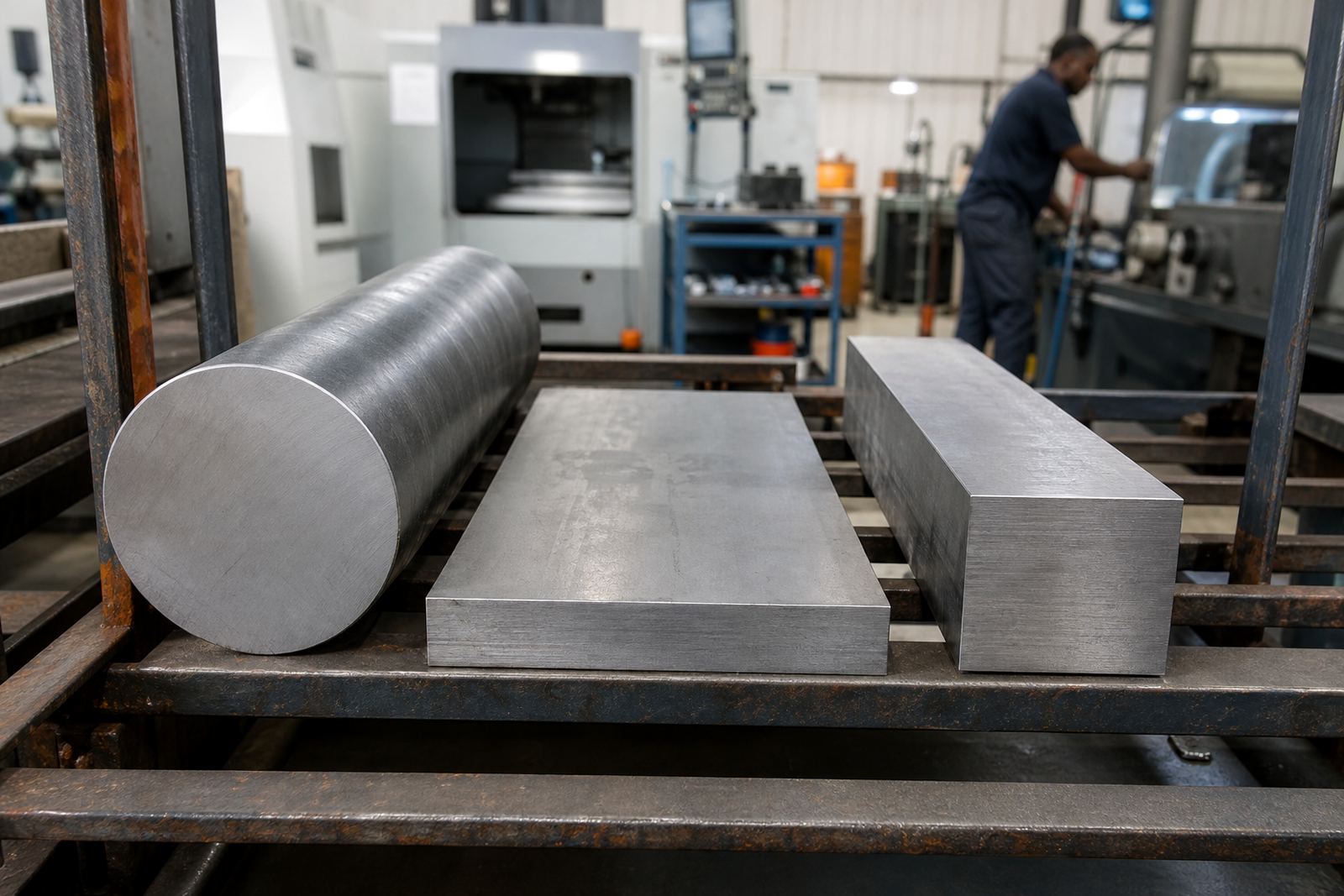
In CNC milling and turning, the starting material should suit the finished part as closely as possible without leaving the job under-supplied. If the bar, plate or billet is too large, more material has to be removed and more time is spent machining. If it is too small, the part may not be possible at all or may need a second setup that adds handling and scrap risk.
Good stock selection begins with the drawing. A sensible allowance needs to cover clamping, facing, machining allowance and any areas where the tool must clear the component cleanly. For small batch work, that balance matters even more because there is less room to absorb waste across a long run.
- Oversized stock increases machining time and offcut volume.
- Undersized stock can stop a job before it starts.
- Material that is hard to source in the right size may force a redesign or a changed process.
Part geometry can drive waste more than the material choice
Some parts are simple to machine from a tidy rectangular blank, while others create waste because of their shape. Deep pockets, thin walls, awkward profiles and stepped features often require extra machining passes or starting from a heavier block than the final part suggests. On turning jobs, long slender shafts or parts with multiple diameters can also leave a lot of swarf behind.
The aim is not to avoid complex geometry, but to plan it properly. A part that looks small on paper may need a much larger parent blank to keep it stable during machining. That is why drawing review is worth doing early. It helps to spot features that can be simplified, moved or re-sized without affecting the fit of the finished component.
- Sharp internal corners can increase tool changes and machining time.
- Very thin sections may need extra support or alternate sequencing.
- Parts with repeated cut-outs often produce more offcut than expected.
Planning the setup to reduce scrap and rework
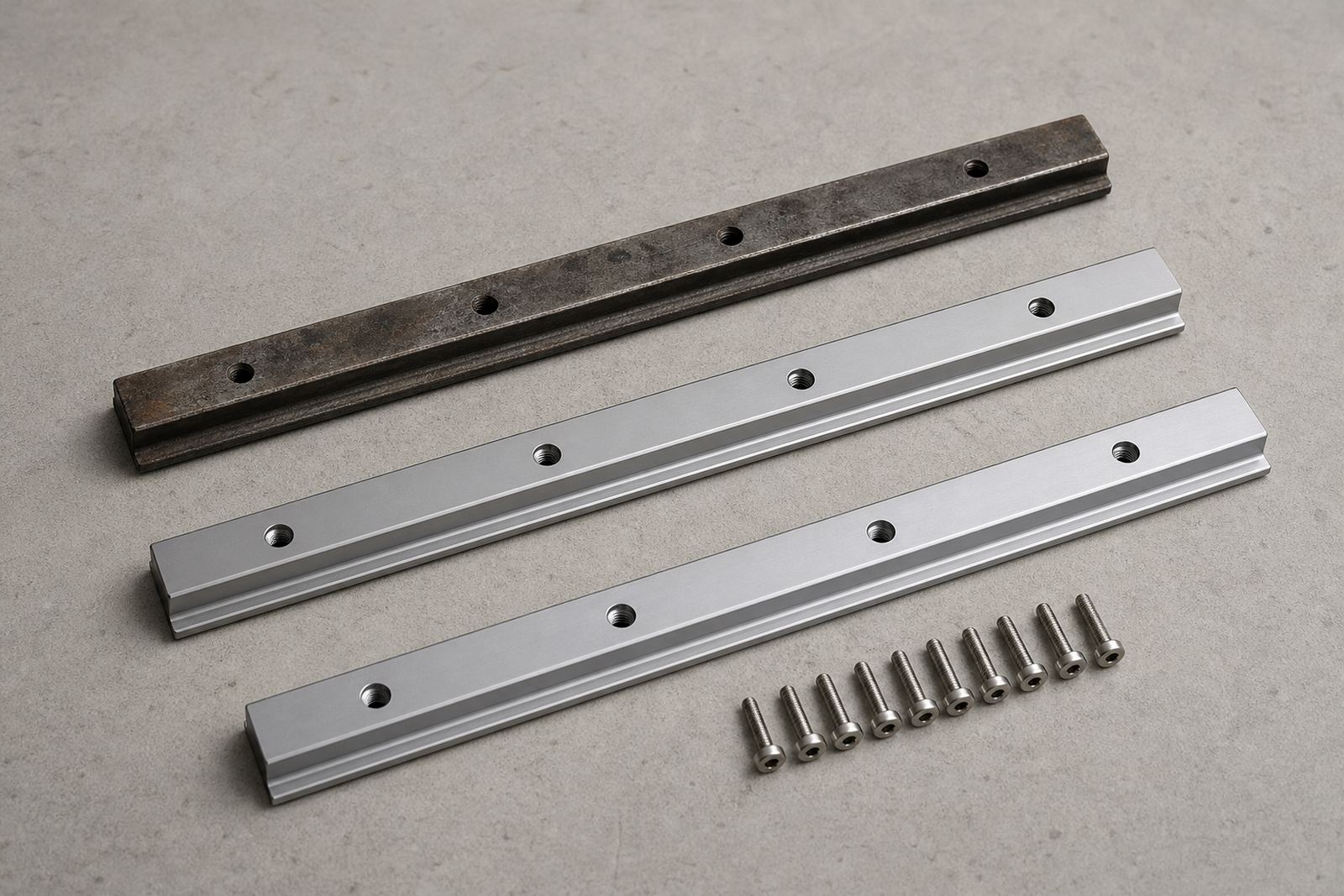
Material waste is not only about what comes off the machine. It also comes from poor setup planning, incorrect clamping and trial-and-error machining. A job that needs several resets can lose usable stock through marking, distortion or accidental overcut. That is costly on stainless steel, aluminium and engineering plastics alike, though the impact shows differently on each material.
Careful batch planning helps here. The programmer, machinist and quality team need the same understanding of the drawing, the tolerance callouts and the order of operations. If a feature must be held to a tighter tolerance, it may make sense to machine it later in the sequence, after the part has settled. That kind of planning cuts down on rework and reduces the chance of scrapping a near-finished piece.
- Plan the roughing and finishing steps so the part stays stable.
- Use the minimum number of setups that still protects accuracy.
- Check fixturing marks and tool paths before committing the full batch.
Tolerances should be tight enough, not tighter than needed
One of the fastest ways to create waste is to call up unnecessarily tight tolerances. A part does not need to be machined to a demanding finish if the mating component allows more room. When tolerances are tighter than the function requires, more time is spent measuring, adjusting and remachining. That can increase scrap even when the material itself is sound.
At PME CNC Machining, tolerance guidance starts with the part’s purpose. If a bore is only there for clearance, it should not be treated like a precision locating feature. If two parts must fit together repeatedly, then the tolerance discussion becomes more important. The right answer is usually somewhere in the middle, and it should come from the drawing, the assembly requirement and the material being used.
This is especially relevant for small-batch work where each piece carries more value. A wasteful tolerance choice on ten parts can cost far more than it would on a long production run, so the detail matters from the start.
A Pinetown example: local stock choices and transport waste
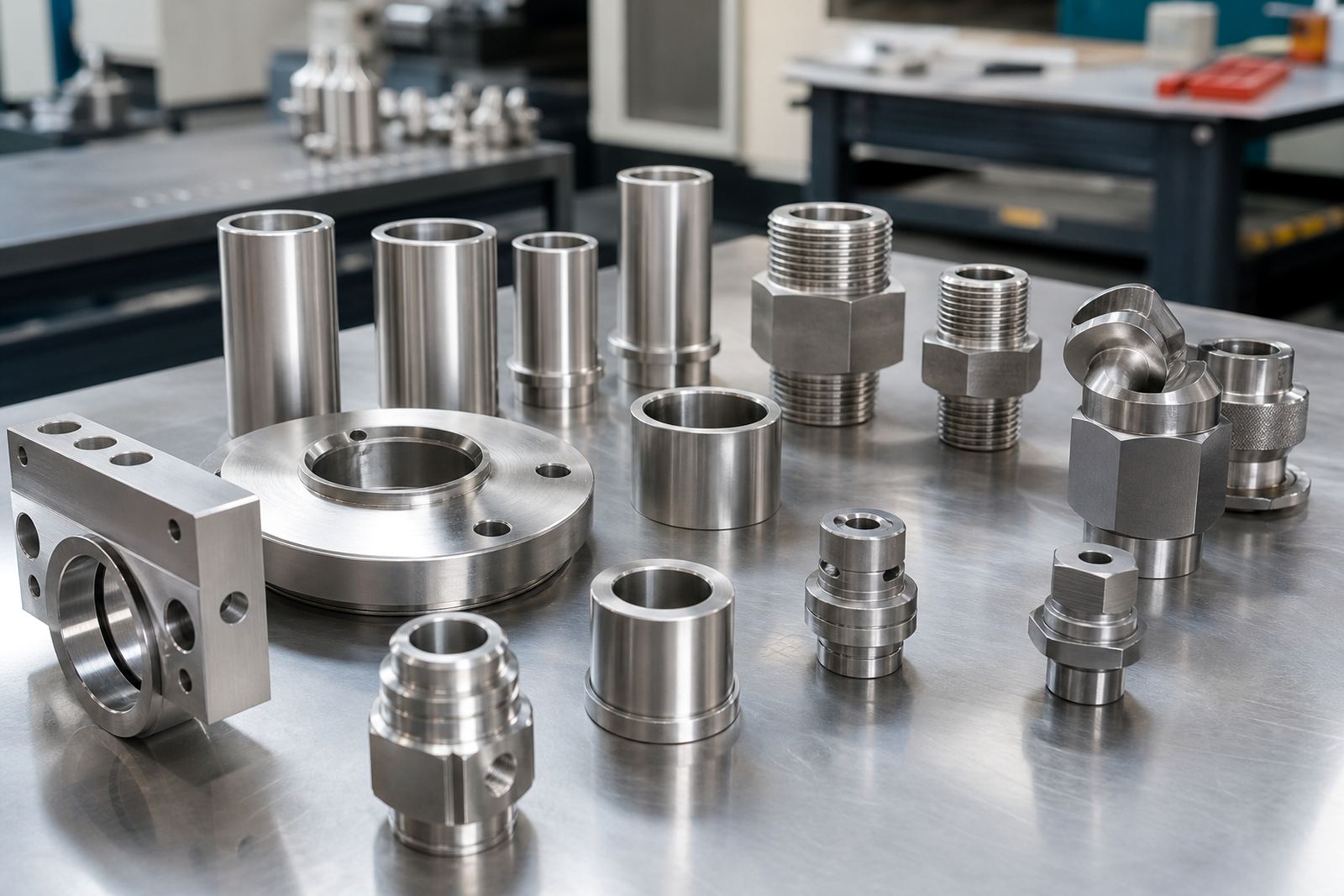
A small-batch job in Pinetown might begin as a request for turned spacers and a few milled brackets for equipment used in Durban or Johannesburg. If the stock is ordered in the wrong length, the offcut might be too short for the next job and too long to use efficiently elsewhere. If the geometry is not reviewed properly, the parts may need extra machining steps that extend lead times and increase the amount of swarf removed.
That is why local planning matters. Coastal humidity in KwaZulu-Natal can also affect how stock is stored, especially where raw material sits for a while before machining. Keeping material dry and properly labelled helps reduce corrosion, confusion and accidental waste. On top of that, delivery coordination between Pinetown, Westmead, New Germany and the wider Durban area can be planned so that jobs arrive together, which reduces handling and missed dates.
For customers in Pietermaritzburg, Richards Bay and Johannesburg, the same principle applies. A cleaner material plan means fewer surprises once the job lands in the workshop.
Simple ways to cut waste before machining starts
There are a few practical steps that usually save material on small-batch work. They do not remove scrap completely, but they help keep it under control.
- Review the drawing early and confirm the critical dimensions.
- Match stock size to the finished part with a sensible machining allowance.
- Group similar parts together so one setup does more useful work.
- Check whether the geometry can be adjusted without affecting function.
- Confirm material type before cutting, especially where strength or corrosion resistance matters.
- Ask for sample part remake support if the first piece needs fine adjustment.
These steps are basic, but they matter. Material waste is often the result of small decisions made too late. When planning is done properly, the job uses less stock, the machine spends less time removing unnecessary metal, and the finished parts are easier to repeat.
What good material planning looks like on repeat orders
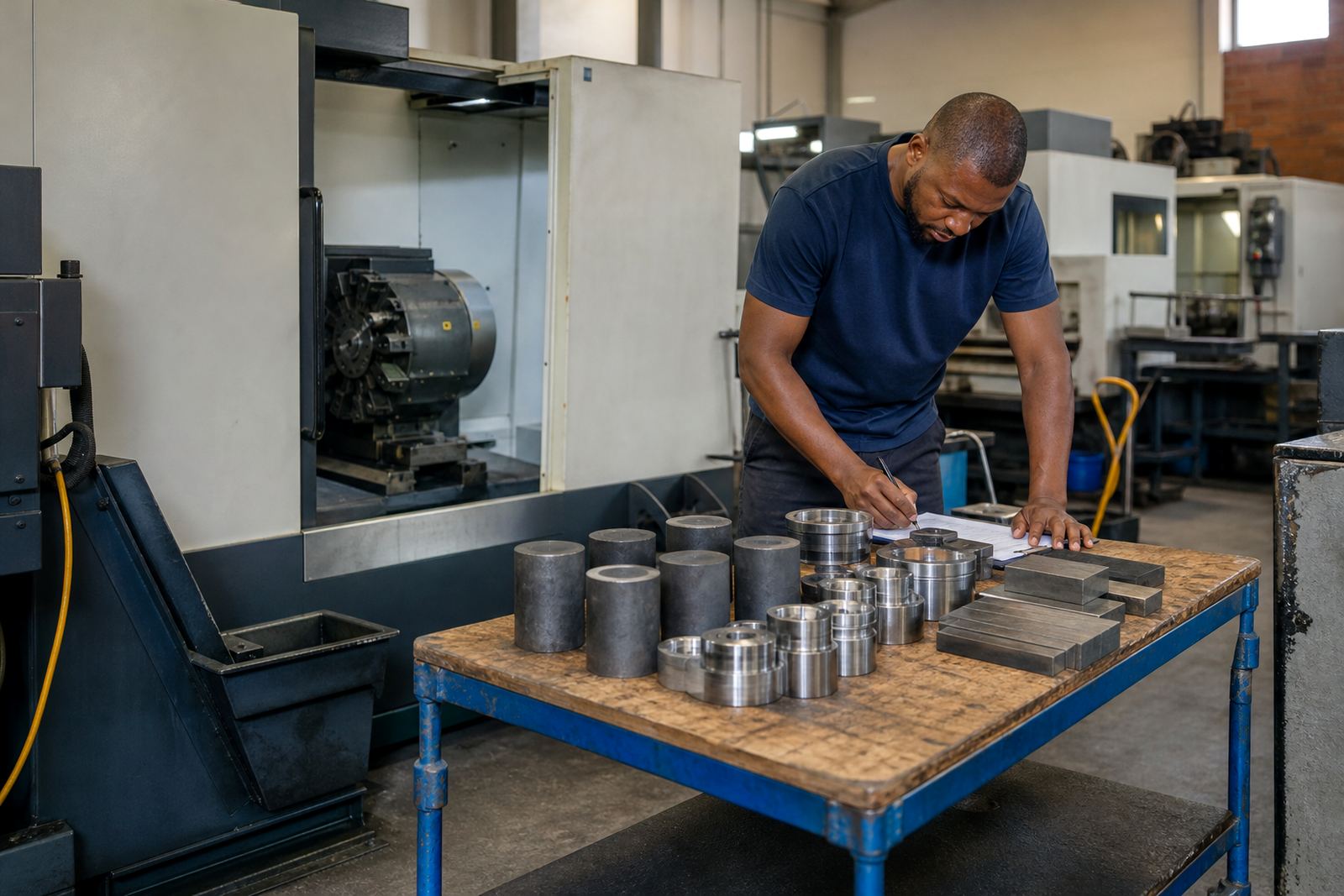
Repeat orders should become more efficient each time, not less. Once a part has been proven, the stock size, setup and inspection notes should be recorded clearly so the next batch follows the same path. That helps with delivery timing, assembly fit checks and drawing updates when a customer needs a change.
Good repeat planning also protects against drift. If a drawing changes slightly, the material allowance or machining order may need to change too. Keeping that information together means less guesswork and less scrap. For a job shop handling small batches across South Africa, that discipline is often what separates a tidy job from one that chews through stock and time. It is not glamorous, but it works.
When material waste is managed properly, the benefit shows up in the invoice, the lead time and the quality of the finished part. That is the real value of careful CNC planning.