Prototype work starts with questions, not quantity
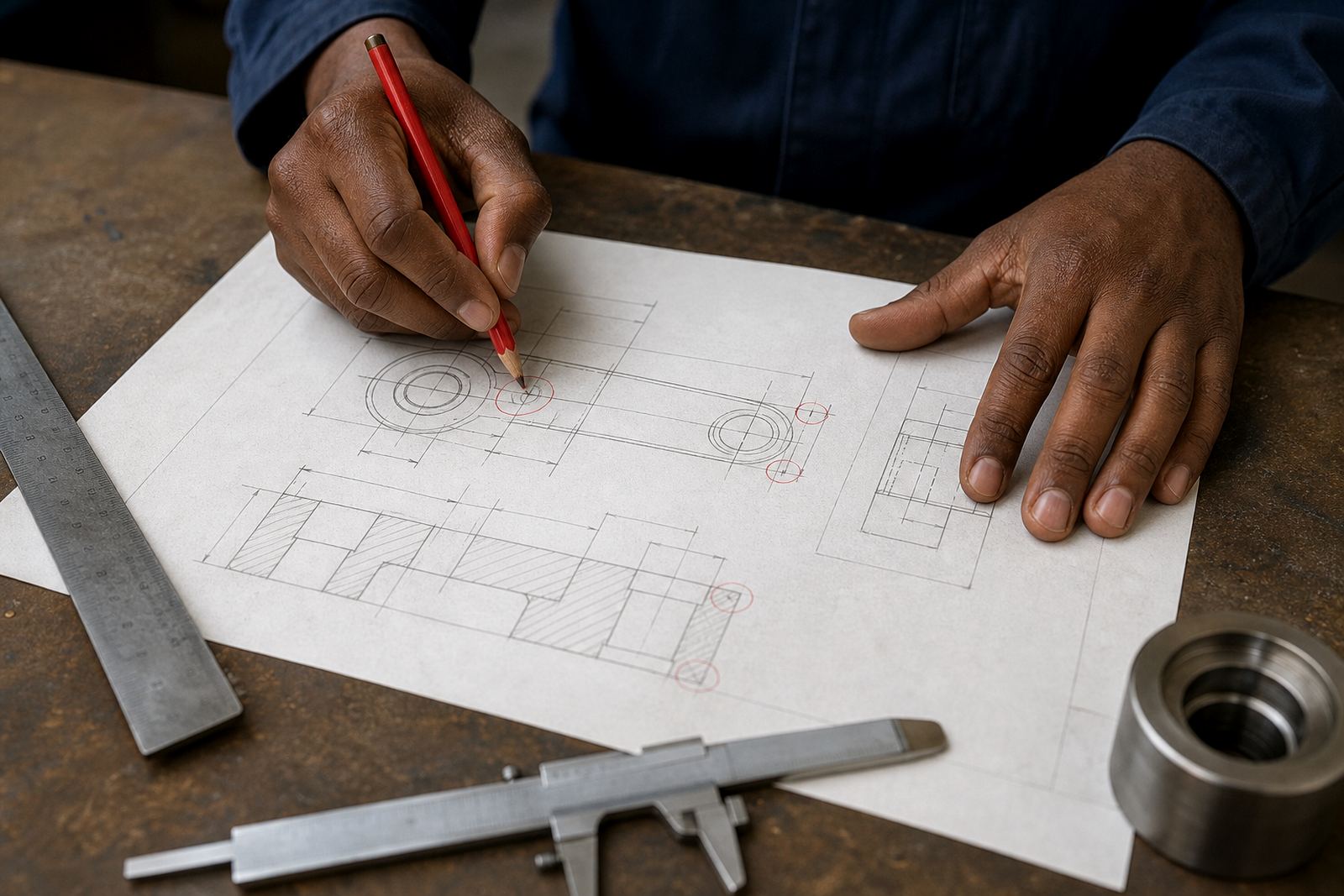
When a customer sends through a one-off part or a first-off sample, the job usually needs more discussion than a repeat run. The aim is not just to make the component, but to understand how it fits, how it will be used and what must be checked before the next step. A prototype may be for internal testing, a trial assembly or a customer approval sample, so the notes behind it matter as much as the metal itself.
For small batch work in Durban, Pinetown, Pietermaritzburg, Richards Bay or Johannesburg, that first conversation often covers drawing clarity, material choice, finishing allowance and any features that are likely to cause trouble later. If the part will be handled in a humid coastal area, or fitted into equipment that runs hot or vibrates, those conditions should be part of the discussion from the start.
- Confirm the part function and where it will be used
- Check whether the drawing is final or likely to change
- Agree which dimensions are critical and which are less sensitive
- Decide if a sample remake may be needed after the first fit check
Repeat runs need a tighter setup path
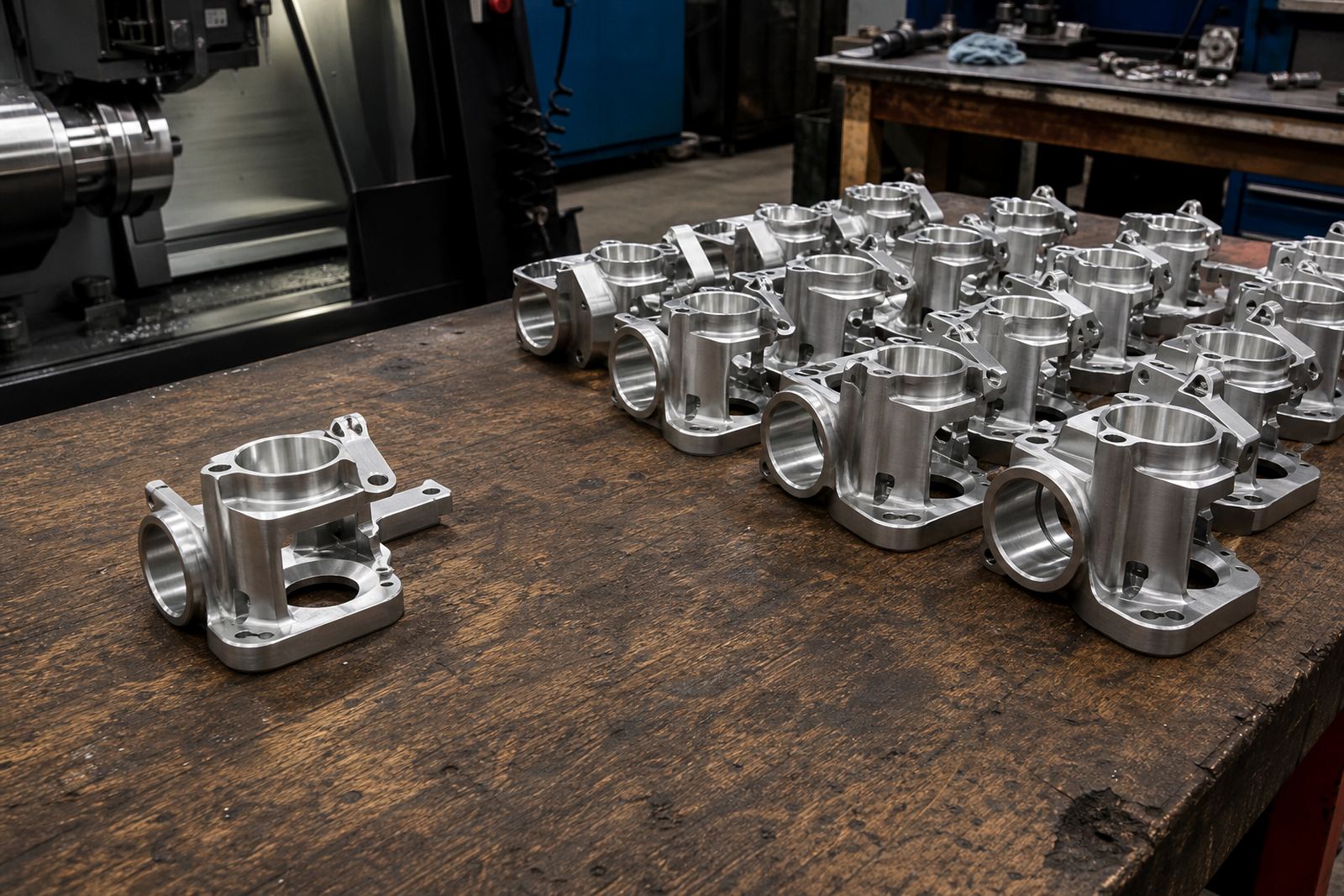
Once a part has been proven and the order comes back again, the planning changes. The setup still has to be correct, but there is usually more confidence in the toolpath, fixturing and inspection sequence. The focus moves from discovery to consistency. That means looking closely at any drawing updates, material batch changes and the way the previous run was packed, labelled and delivered.
Repeat work can seem simpler, yet it can go wrong if assumptions creep in. A small change in stock size, a slight revision on the sketch, or a different surface requirement can affect the whole job. In a job shop environment, keeping records clean helps the next run come out the same as the last one, which is thier main value to the customer.
For customers in Westmead, New Germany or Umhlanga, repeat orders often need delivery coordination as well. If the part is part of a larger assembly, timing is just as important as size. The job only makes sense when the machined part arrives ready for the next process.
CNC milling and turning solve different problems
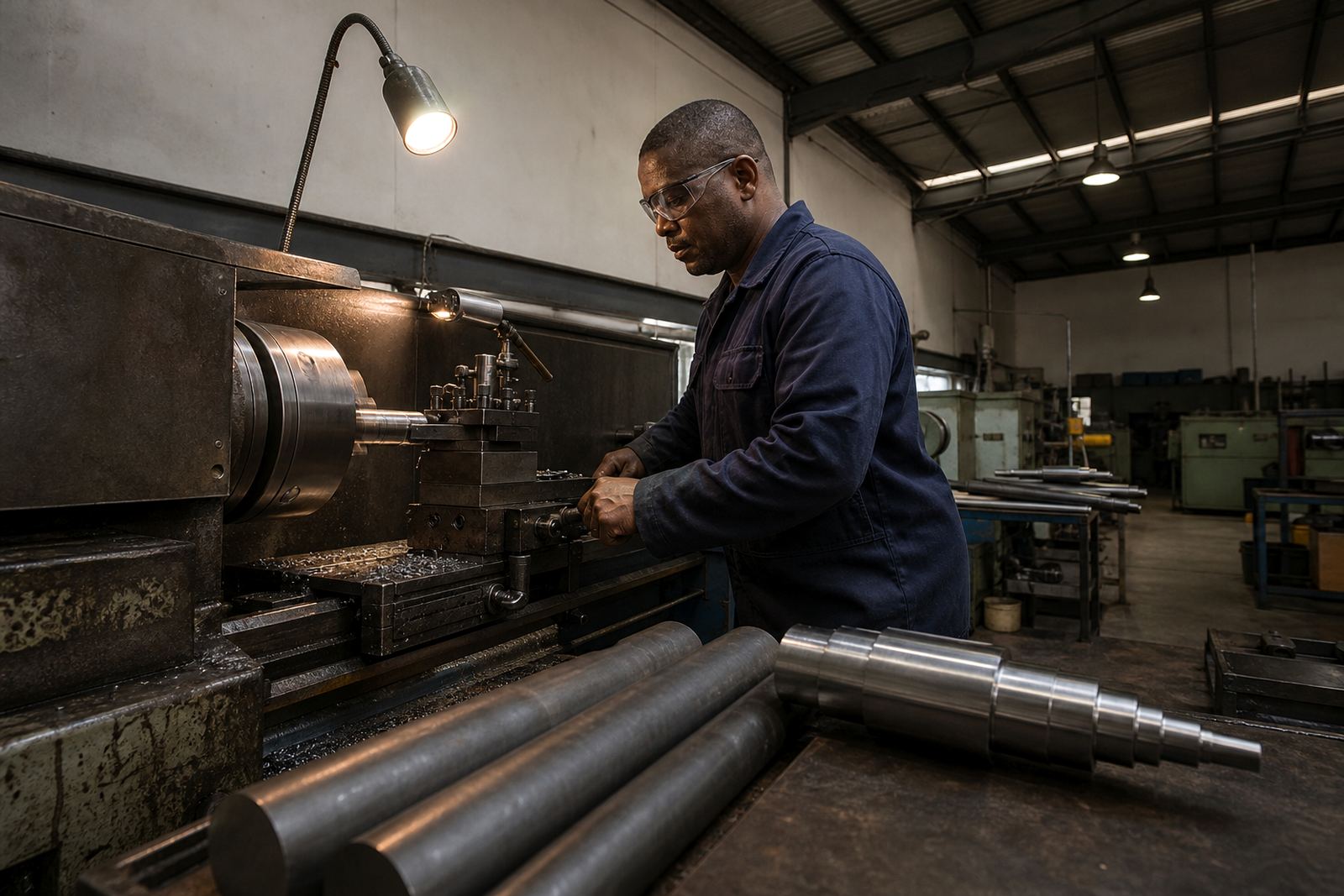
CNC milling is usually the better route where the part has faces, pockets, slots, drilled features or irregular profiles. CNC turning is suited to round parts such as shafts, bushes, spacers and threaded components. Many small-batch jobs use a mix of both, especially when the part starts round and then needs milled flats, holes or keyways.
The choice between milling and turning is not about which machine is better. It is about how the geometry can be made accurately with sensible setups and controlled handling. Fewer setups can reduce the chance of error, but sometimes a second operation is still the cleanest way to reach the final detail. Practical machining is about balancing access, finish and repeatability.
- Milling suits complex shapes and multiple flat features
- Turning suits cylindrical parts and concentric features
- Both processes may be needed for one finished component
- Setup order can affect accuracy, finish and turnaround
Tolerance guidance should match the real job
A drawing may ask for tight tolerances on every feature, but that is not always necessary or economical. Good tolerance guidance means deciding where the tight control is truly needed and where a practical range will still allow the assembly to work. That is especially important on prototype parts, where the design may still be under review.
On a first run, a few dimensions may deserve closer attention than the rest. For example, a bearing seat, locating hole or mating face may be critical while a cover edge or non-contact surface can be allowed a bit more room. In repeat work, those same critical dimensions are often the first points checked again, because they tell you whether the process is still on track.
It helps to remember that material, tooling and part size all influence what can be held reliably. Aluminium, mild steel, stainless steel and certain engineering plastics each behave differently under cutting loads and heat. Coastal humidity, transport time and storage can also affect surface condition and fit, especially on jobs moving through Durban and Richards Bay.
Inspection changes from sample approval to routine control
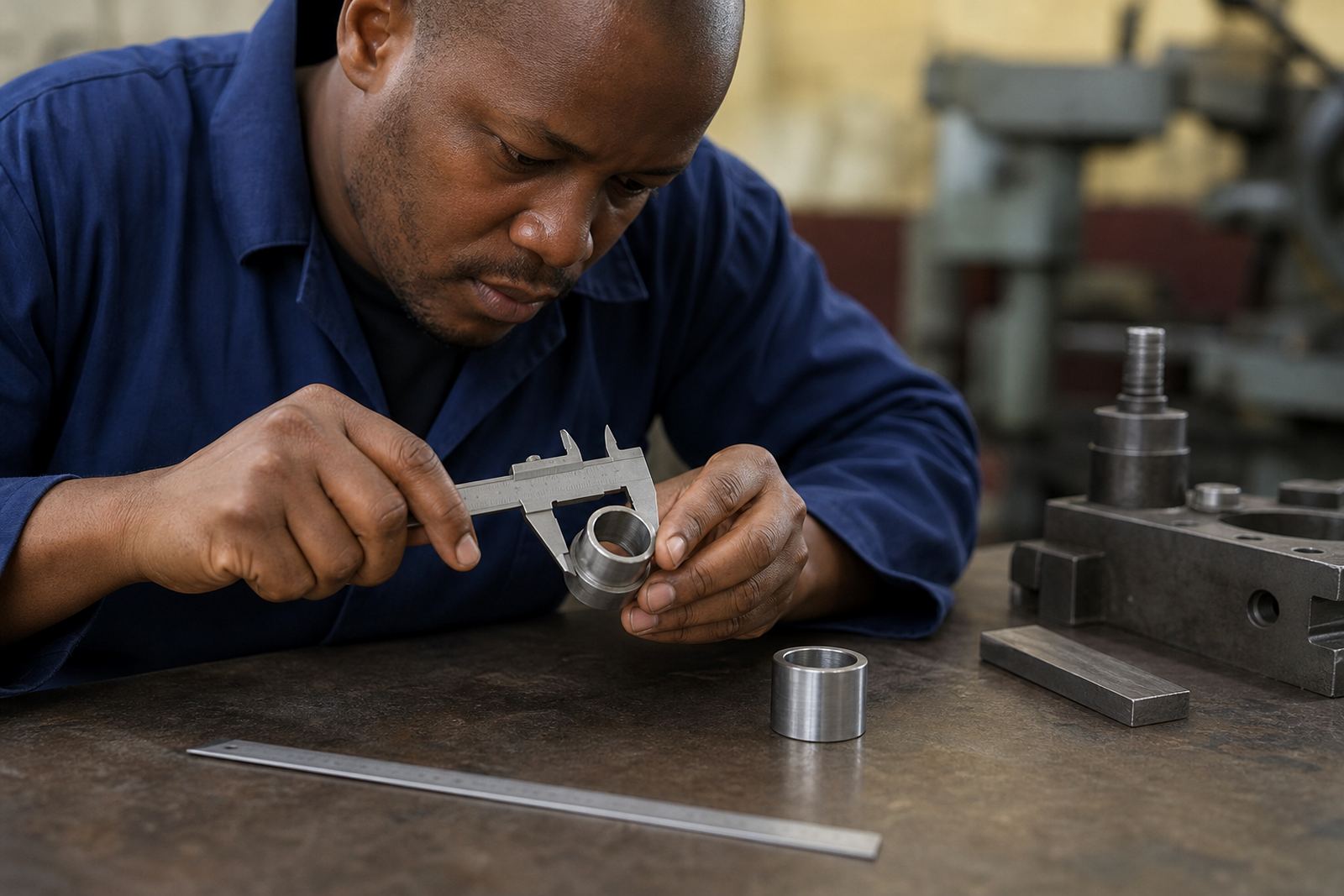
Prototype inspection is usually broader. The first part may need a full measure-up, a fit check and a review against the drawing notes. Any mismatch is useful, because it tells the customer and machinist what must be corrected before a batch starts. For repeat work, inspection becomes more targeted. The main dimensions, the critical fit points and any features that caused trouble before are checked first.
That does not mean the rest of the part is ignored. It means the inspection effort is matched to the job. On a small-batch order, this keeps the work practical and avoids wasting time measuring features that have never caused an issue. It also makes inspection reporting easier to read when the customer needs traceable records for their own assembly process.
- Prototype checks may include full dimensional review
- Repeat checks often focus on critical features and fit points
- Assembly fit checks help catch issues before dispatch
- Inspection reports support customer approval and record keeping
How PME handles small-batch work across KwaZulu-Natal and beyond
At PME CNC Machining in Pinetown, small-batch work is handled with the same practical sequence whether the order is for one prototype or a repeat run of several parts. The team reviews the drawing, checks the material choice, plans the setup, then confirms what needs to be inspected before the job moves on. That approach suits customers across Pinetown, Durban, Pietermaritzburg, Richards Bay and Johannesburg who need parts made with care, not guesswork.
Our services support that process from start to finish: drawing review, material selection, prototype planning, batch planning, tolerance guidance, part optimisation, sample part remake, assembly fit checks, inspection reporting, repeat order support, delivery coordination and drawing updates. When a first-off part exposes a weak point, the next drawing revision can be handled properly instead of being left to chance.
For a customer sending a new component into service, the real question is not whether it can be machined once. It is whether the part can be planned so the same result can be made again when needed. That is the difference between a prototype that teaches you something and a production run that gives you peace of mind.