What CNC turning does on a round part
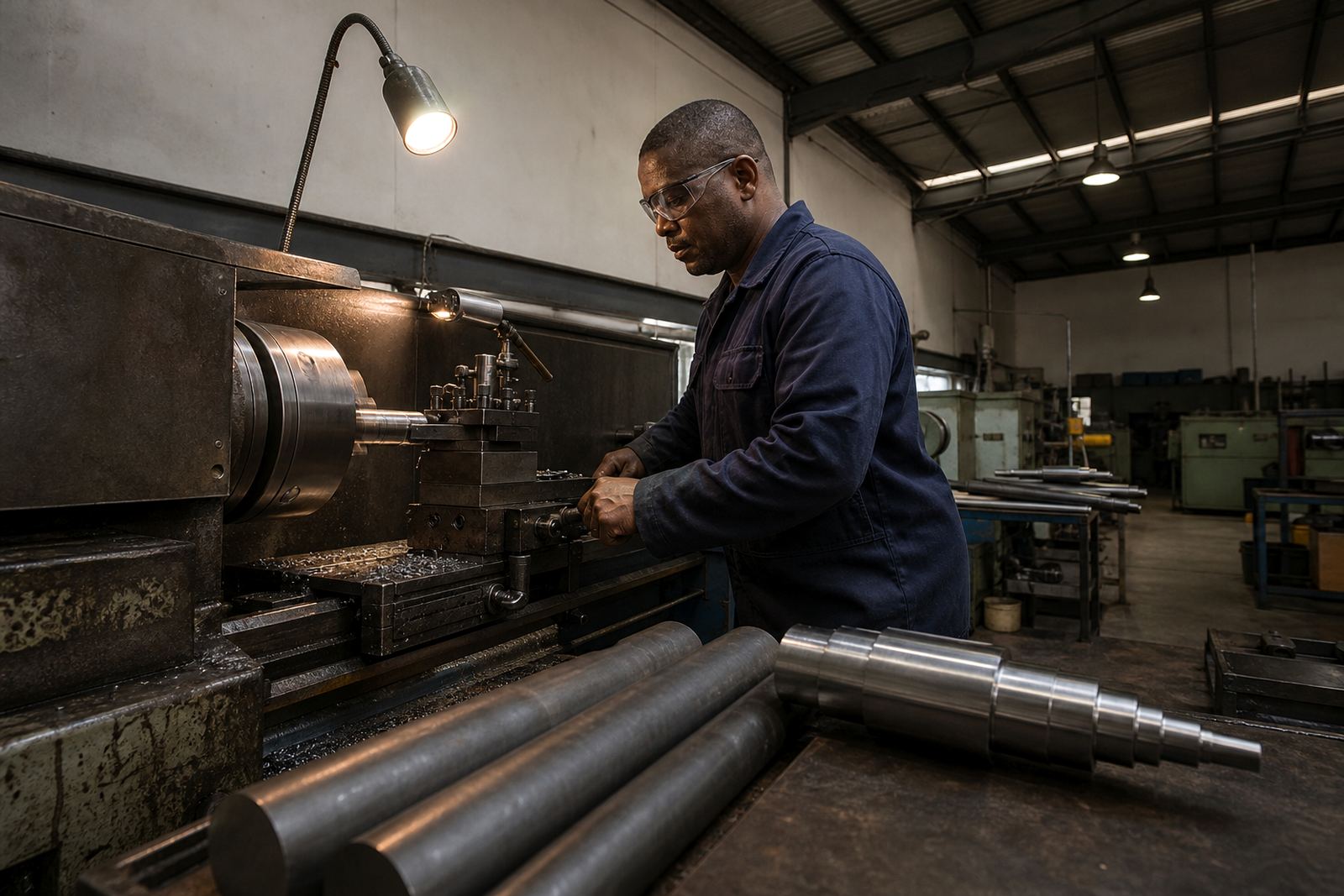
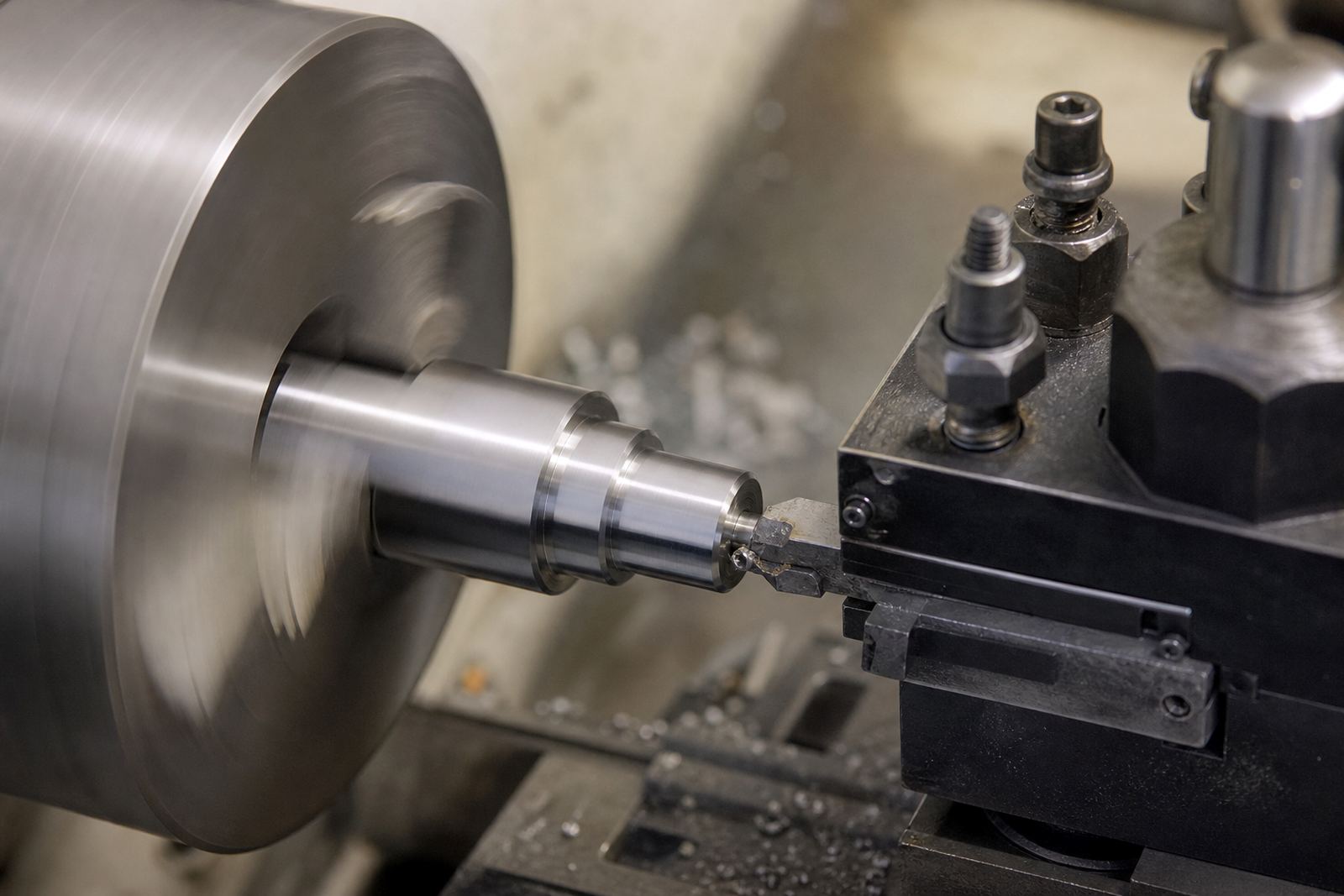
CNC turning is used when the part is mainly round and the important dimensions run along the length of the component. The material is held in a chuck or similar workholding setup, then rotated while a cutting tool shapes the outer diameter, face and any steps or grooves. That makes it well suited to parts like pins, sleeves, collars, rollers, spacers and simple shafts.
The main advantage is control. A turning job can produce repeatable diameters and shoulders, which matters when a part must slide into a housing, locate against another component or run with consistent clearance. In practice, the drawing needs to show where each diameter starts and stops, and how sharp or relieved the shoulder should be.
For small-batch work in Pinetown or Durban, turning is often the right choice when a client needs a few accurate parts rather than a large production run. It is also practical for repeat orders where the same part must match a sample from an earlier batch, even if the material changes slightly.
Diameters, shoulders and the details that make fit possible
On a turned part, the diameter is the size across the round section. A shoulder is the step where one diameter changes to another. These are simple ideas on paper, but they carry most of the fit responsibility in the finished component. If a shoulder is in the wrong position by even a small amount, the part may not seat properly in a machine, bracket or housing.
That is why drawing review matters before any cutting starts. The shop will usually check whether the part needs a tight location, a sliding fit or just a general fit. It helps to know if the part will be assembled by hand, pressed in, threaded later or matched to another machined item. A clean chamfer or edge break can also make assembly easier and reduce damage during handling.
- Outer diameters for sliding, locating or support features
- Shoulder positions that control overall length and seating depth
- Grooves, threads or reliefs where the design needs extra function
- End faces that must sit flat against another part
When a drawing leaves out one of these details, the result may still look fine but not work properly. That is where tolerance guidance becomes part of the job, because a dimension on the page only matters when it suits the assembly around it.
Materials commonly turned in small batches
Turning can be used on many common engineering materials, although the approach changes with hardness, chip behaviour and heat build-up. Softer metals machine differently from harder alloys, and plastics need careful tool choice to avoid burrs or distortion. In coastal areas like Durban and Umhlanga, material storage also matters because humidity can affect surface condition and handling, especially on unprotected stock.
Typical materials for turned parts may include mild steel, stainless steel, aluminium, brass and engineering plastics. Each one has its own practical considerations. Stainless steel can be tougher on tools, aluminium often machines cleanly but needs good chip control, and plastics can move slightly if too much heat builds up during cutting. The correct choice depends on the part function, environment and any corrosion exposure.
For clients in Richards Bay or Pietermaritzburg, it is often worth checking whether the part will live indoors, outdoors or near moisture and chemicals. A shaft used in a dry workshop has different needs from a component exposed to coastal air or regular washdown. Material selection should support the application, not just the drawing.
How tolerances are handled in real workshop work
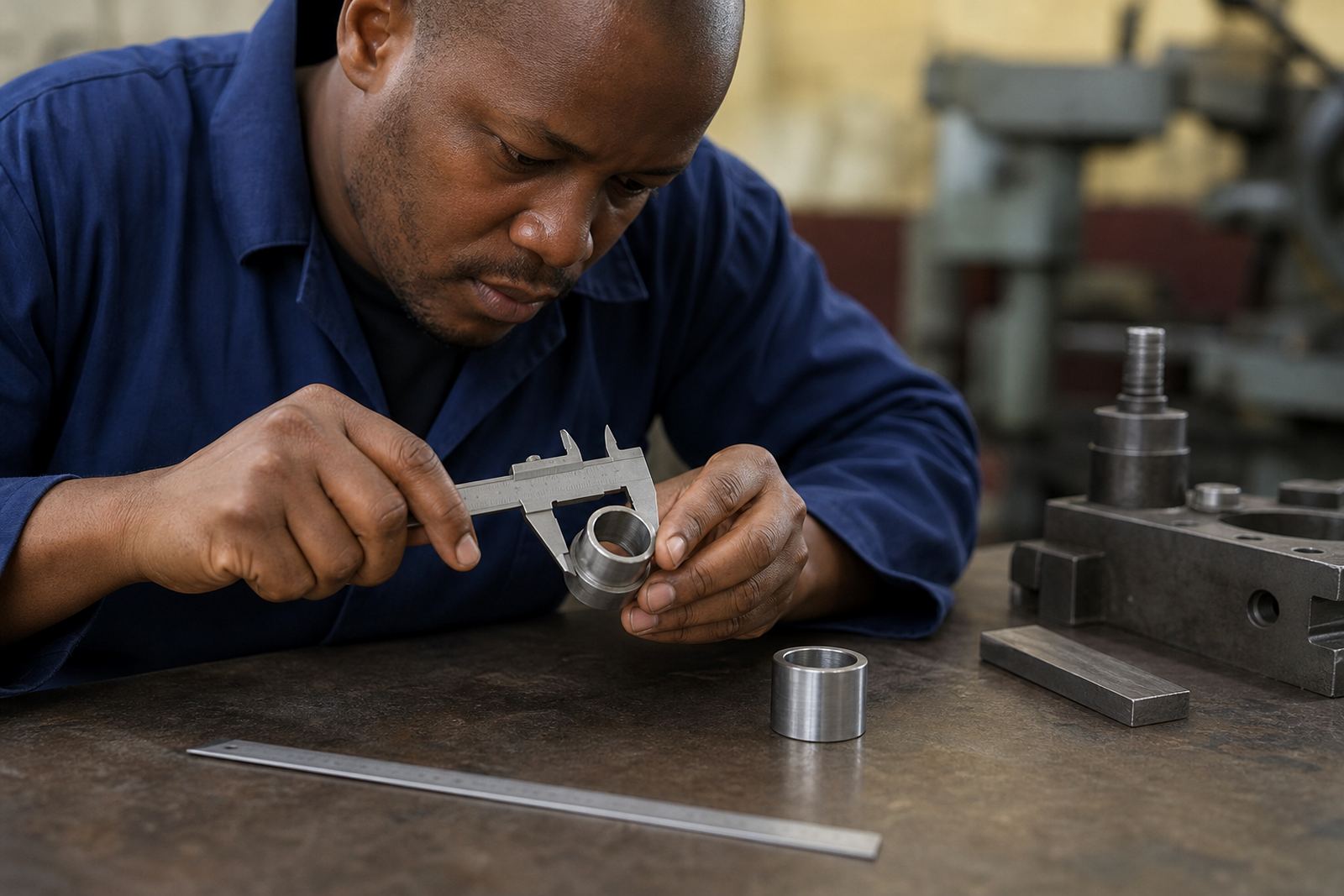
Tolerances tell the machinist how much variation is allowed. Some features need to be held closely, while others can be more relaxed without affecting function. In turning, the critical areas are usually diameter, concentricity, shoulder location and face length. The tighter the requirement, the more attention is needed on setup, measurement and tool condition.
It is important not to assume every dimension needs a very tight finish. A sensible tolerance can save time and cost while still giving the part what it needs. For example, a spacer that only sets a gap may not need the same control as a shaft journal that runs inside a bearing. Good tolerance guidance helps the client avoid over-specifying where it is not necessary.
Inspection reporting becomes useful here. If a batch has several turned parts, the measurements should confirm that the main features are within the agreed limits and that the parts are repeatable across the batch. That record is especially helpful for repeat orders or when a drawing update is needed after the first sample.
- Confirm the critical dimensions before work starts
- Identify which faces or diameters control the fit
- Separate cosmetic needs from functional needs
- Check the sample before approving the full batch
A local example from Pinetown to Johannesburg
Consider a small batch of stepped shafts for a conveyor or packaging setup. The part may need one diameter to fit a bearing, another to take a coupler and a shoulder to set the position. The client might be based in Westmead, New Germany or Johannesburg and need the same part to match existing equipment already in use. In that case, a sample part remake and assembly fit check are often the first steps before the full batch is released.
At PME CNC Machining in Pinetown, the process typically starts with the drawing review, followed by material selection and prototype planning. If the part is likely to repeat later, batch planning helps keep the work organised and makes repeat order support easier. Delivery coordination also matters when parts need to move between Durban, Richards Bay or further inland to Johannesburg, because downtime on a line can cost more than the part itself.
Load-shedding can affect production timing, so practical scheduling is part of the job too. A good turning order is planned around the actual sequence of cuts, inspection points and finishing steps, with enough allowance for rechecking where needed. That way the work stays controlled and the part arrives ready for use not just ready for collection.
What to send with a turning enquiry
The more complete the drawing and background notes, the easier it is to turn the right part first time. Even for a simple round component, details about the application, mating part and environment can change the approach. If the part is part of an assembly, mention whether it must be free running, tight fitting or aligned to another feature.
Useful information includes the material preference if known, the quantity required, and whether a sample already exists. A photo of the old part can help, but a dimensioned drawing is still better. If the part has to match a worn item, drawing updates may be needed so the remake reflects the real working size rather than the worn size.
- Drawing or sketch with key dimensions marked clearly
- Quantity needed for the small batch
- Material preference or service environment
- Any fit issues, wear points or assembly concerns
For clients across Pinetown, Durban, Pietermaritzburg, Richards Bay and Johannesburg, this is usually the quickest path to a practical result. Turning is straightforward in principle but the detail decides whether the part fits well and lasts as expected.