Why aluminium suits small batch machining
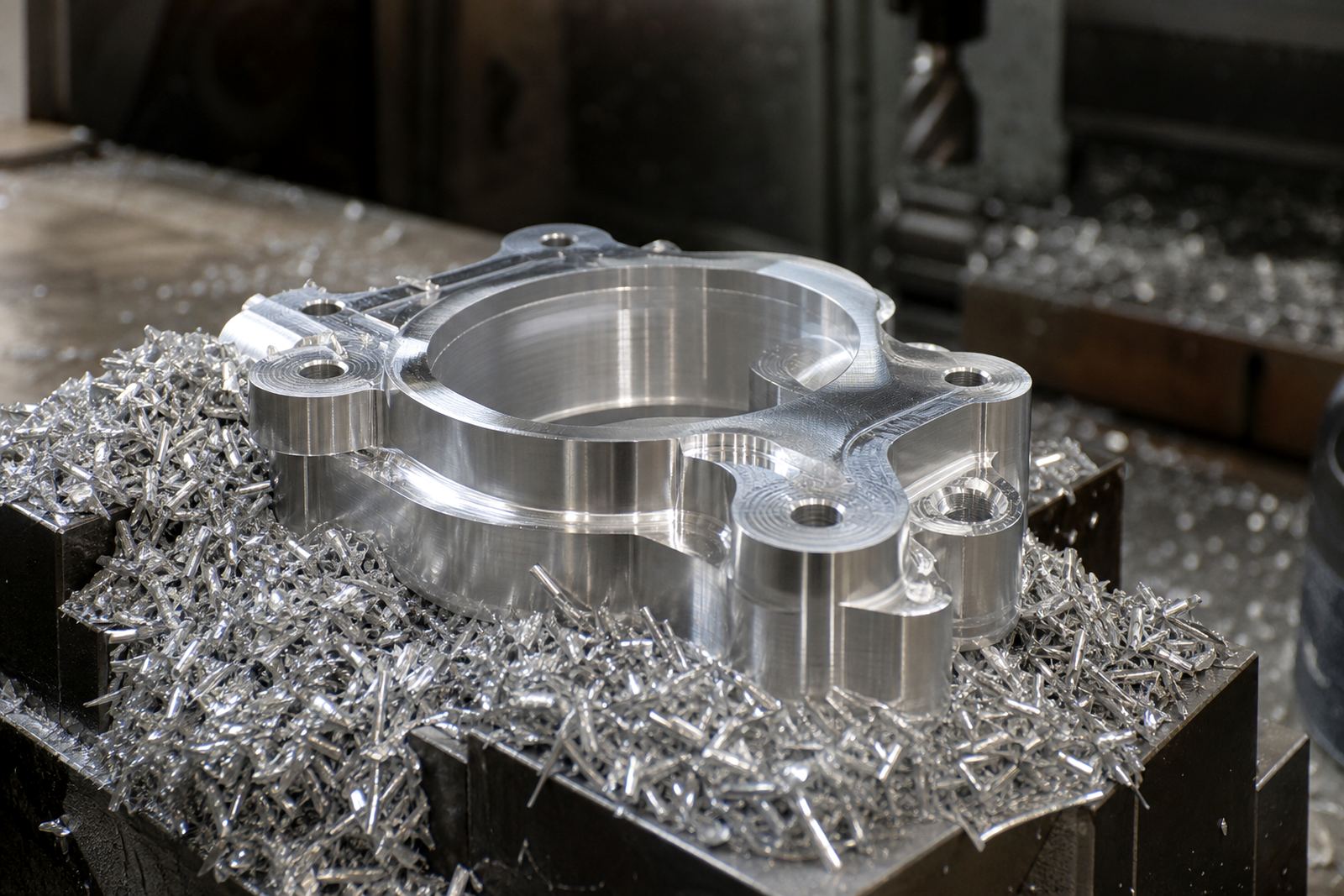
Aluminium is often the first material people ask about for brackets, covers, housings and prototype parts because it offers a good balance of strength, weight and machinability. It is lighter than steel, it cuts cleanly on CNC milling and turning equipment, and it can often be finished neatly enough for parts that will be seen in use, not just hidden inside a machine or cabinet.
For small batch work, that matters. A client may need 5, 10 or 20 pieces for testing, repair or a short production run, and aluminium helps keep the job practical. It machines quicker than many harder metals, tools last well when the setup is correct, and the finished parts are easier to handle on site. In places like Durban and Richards Bay, where corrosion resistance and coastal humidity both come into play, aluminium is also a sensible starting point for many applications.
Where aluminium works best in real jobs
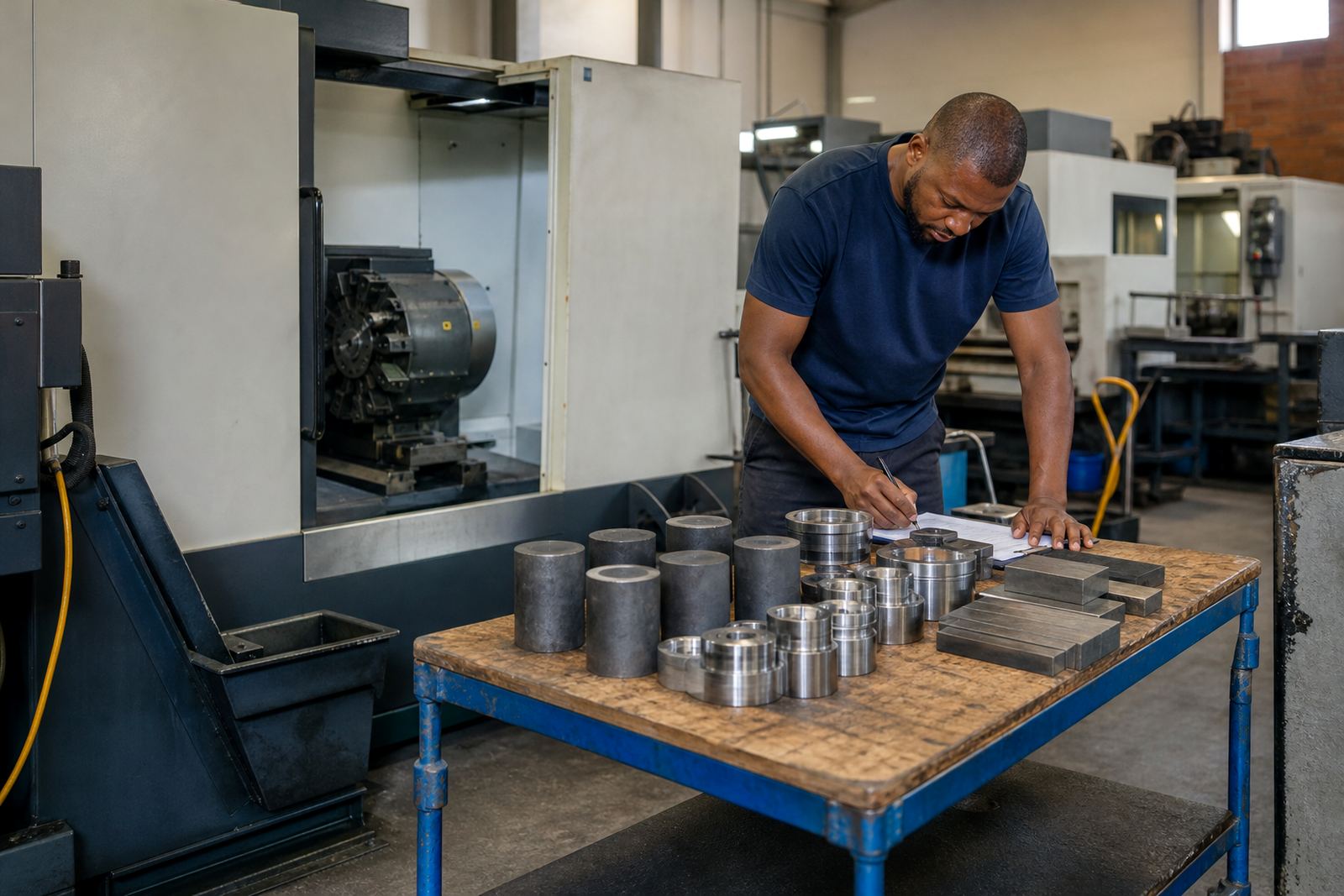
We see aluminium used most often where a part must stay light but still hold shape under load. It is common for machine brackets, mounting plates, inspection covers, electrical housings, jigs, guards and custom adapters. It is also useful for prototypes because it lets engineers test fit and function before moving into a larger run.
- Light-duty structural brackets and support plates
- Precision covers, lids and housings
- Spacer blocks, bushings and adaptor pieces
- Prototype components for fit testing and assembly checks
- Replacement parts for older equipment where drawings need updating
When a part has to fit around existing holes, shafts or frames, the drawing review becomes just as important as the cutting itself. A good aluminium job often starts with checking the mating parts, fixing unclear dimensions and deciding whether the item needs to be milled, turned or done as a combination of both.
CNC milling and turning for aluminium parts
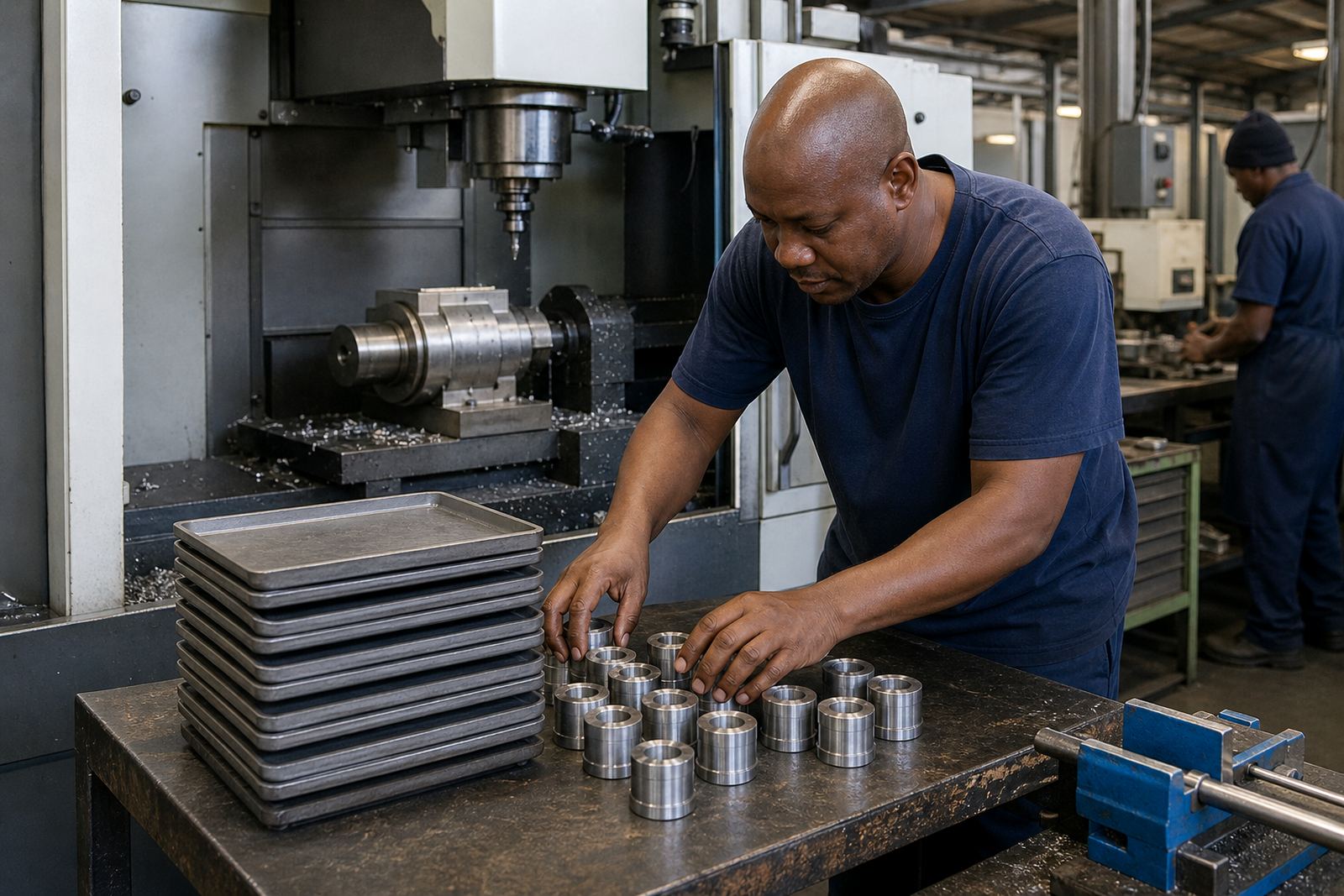
Aluminium is well suited to CNC milling for flat parts, pockets, slots, contours and drilled features. Turning is used where the component is round, such as spacers, sleeves, bushes, collars and stepped shafts. In many jobs, the best result comes from combining both processes so the part can be held securely, machined accurately and then finished to the required form.
Because aluminium cuts quickly, the setup needs care. Tool path planning, chip clearing and workholding all matter. If the part is thin, it can move during cutting and this leads to poor finish or dimensions drifting out. That is why prototype planning and part optimisation are important before the first piece is made. A small change in wall thickness or corner radius can make a big difference to how the part behaves on the machine.
For clients in Pinetown, Westmead and New Germany, this practical planning is often the difference between a part that needs one remake and a part that runs properly from the first sample. It is not just about cutting metal, it is about getting the job to fit the application without waste.
Choosing the right aluminium grade and finish
Not all aluminium behaves the same. Some grades are better for machining, some are better for appearance, and some are better where corrosion resistance matters more than surface finish. The right choice depends on whether the part must be anodised, painted, assembled with other metals, or used outdoors where moisture and salt air may be a factor.
As a general rule, we guide clients on material selection based on the part function, the working environment and the required finish. In coastal KwaZulu-Natal, that can be important for covers and housings near water, dust or condensation. If the part will sit beside steel fasteners or a mixed-metal assembly, the mating faces and sealing points need extra thought so the job does not give trouble later.
- Check if the part will be indoors or outdoors
- Confirm whether appearance matters or only function
- Allow for finishing, coating or anodising where needed
- Consider galvanic issues when aluminium joins other metals
Tolerances, fit and the reality of aluminium
Aluminium can hold tight dimensions, but the final result still depends on the design, the size of the part and how it will be used. A small precision spacer is not treated the same way as a large machine cover or a long bracket. We give tolerance guidance based on practical machining knowledge, then check whether the required fit is realistic for the shape and the material thickness.
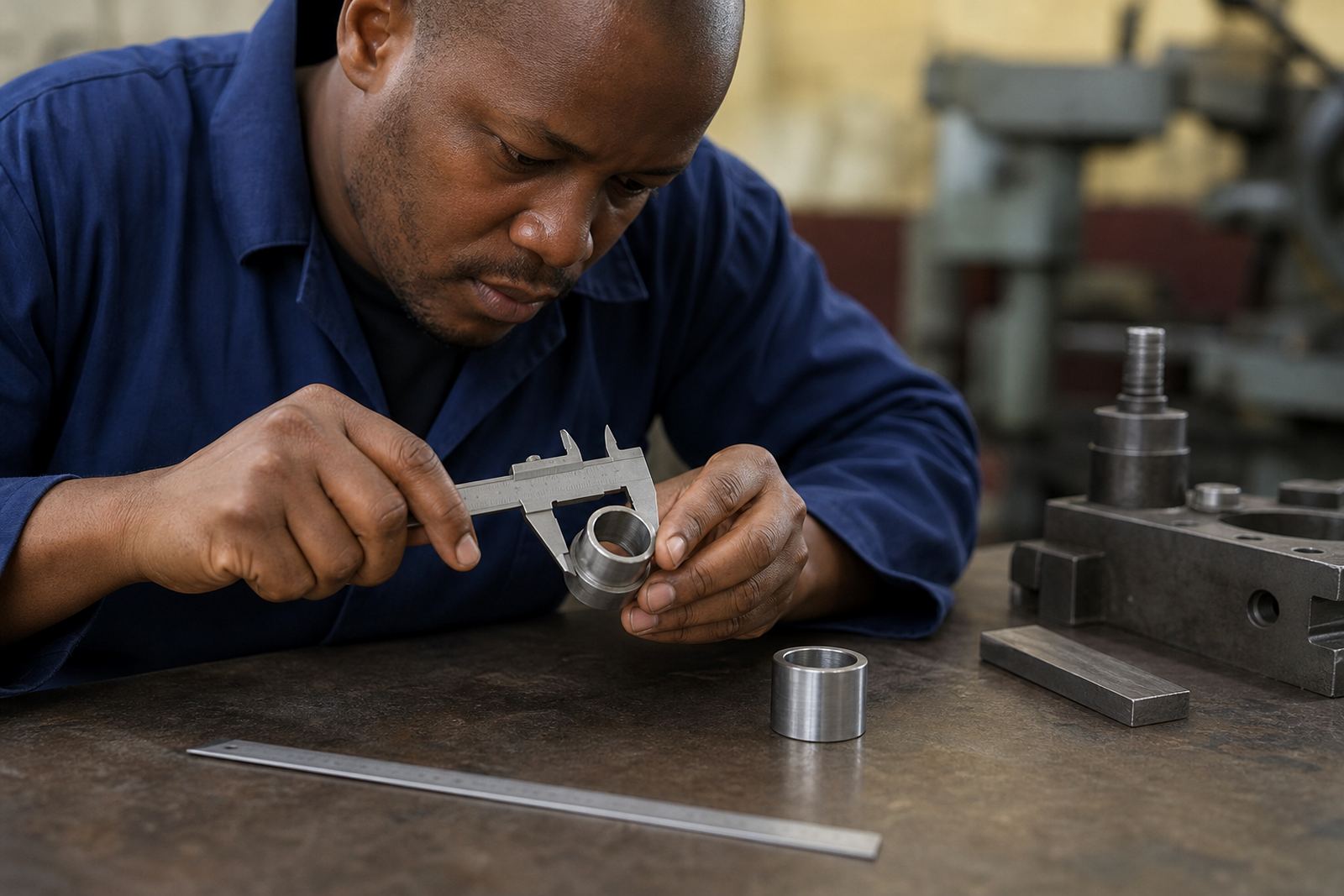
For some parts, a close fit around a shaft, bearing or mating plate matters more than a polished outer edge. For others, a slightly looser fit is better because the part will expand and contract with temperature or be assembled on site under less than ideal conditions. That is where inspection reporting and sample part remake support help, because the first sample can confirm if the drawing is right before the rest of the batch goes ahead. It saves time when a job is meant for a team in Johannesburg, Durban or Pietermaritzburg and the fitting window is tight.
How PME supports aluminium jobs from drawing to delivery
Our work in aluminium usually starts with drawing review, then material selection, followed by batch planning and machining. If a drawing needs clarity, we can help with drawing updates and part optimisation so the job is easier to manufacture and easier to repeat later. For clients who need a test piece before the full batch, we can do sample part remake and assembly fit checks before moving on.
We also help with repeat order support and delivery coordination for clients across South Africa, including Pinetown, Durban, Umhlanga, Richards Bay, Pietermaritzburg and Johannesburg. That is useful when a production line is waiting on one part that has to arrive clean, measured and ready for assembly. On the contact page, clients send through the enquiry form and we take it from there, whether the job is a one-off cover, a short run of brackets or a refined prototype that needs another pass.
At PME CNC Machining, aluminium work is about practical outcomes. The part must fit, the finish must suit the job and the batch must be manageable. If the setup is right, aluminium gives good results without unnecessary fuss, which is exactly why so many small-batch jobs start there.