Start With the Old Part, Not Guesswork
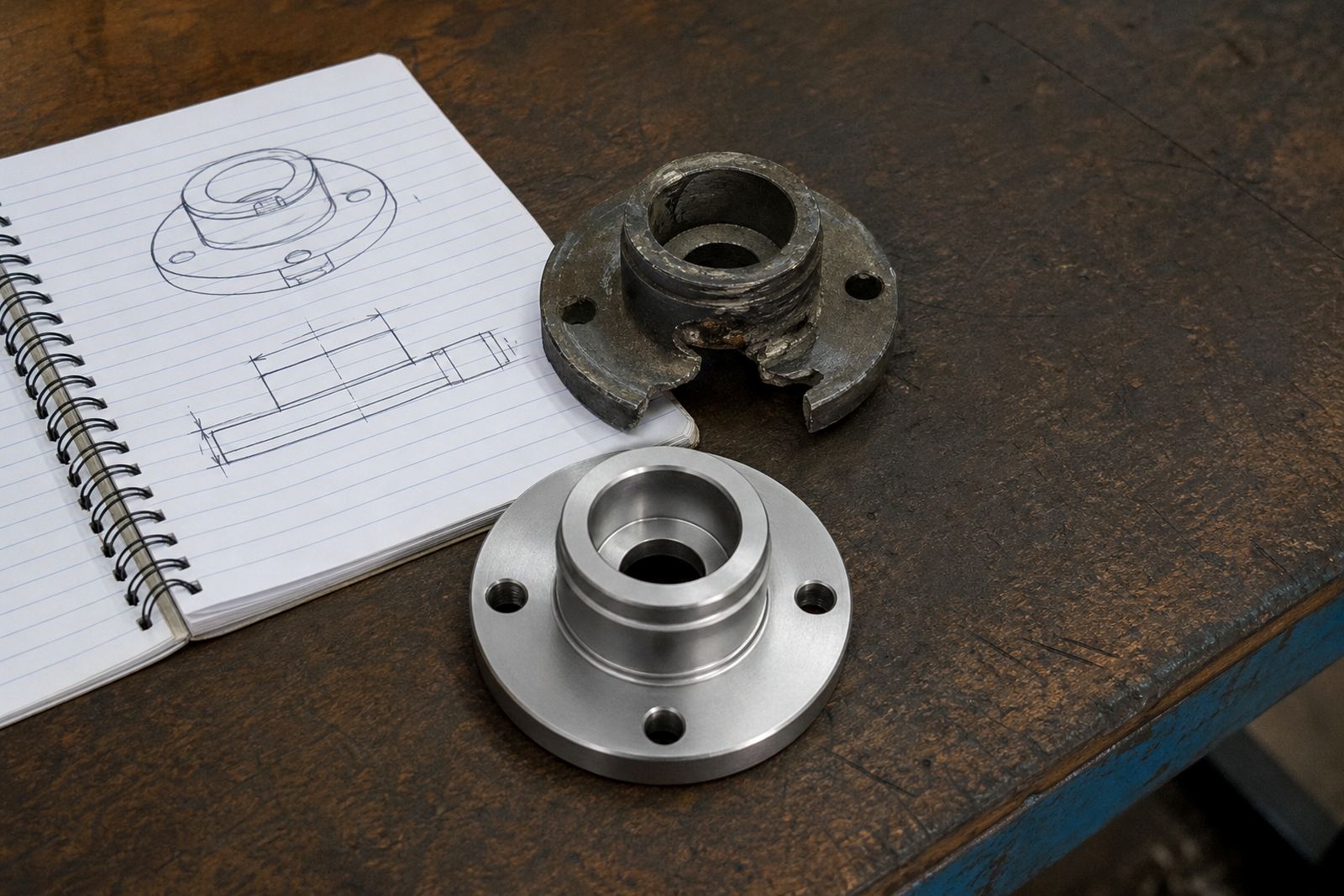
If the original drawing is missing, the worn part becomes your starting point. Clean it first, then check for damage, previous repairs, bent edges, oval holes and wear on contact faces. A part that has been in service for years often looks right at a glance but is no longer true to size.
For replacement part planning in Pinetown and across KwaZulu-Natal, that first inspection matters because the issue is often not the whole component, only one section of it. A bearing seat may be worn, a slot may have opened up, or a threaded hole may have stretched after repeated maintenance. If you copy every visible flaw, the new part will repeat the fault.
- Clean off oil, scale and paint before measuring
- Compare both sides of a part where possible
- Mark worn areas separately from original geometry
- Take note of any previous drilling, welding or machining
Measure in More Than One Place
Good replacement work depends on more than one reading. Measure diameters, lengths, hole centres, thread sizes and thicknesses in several positions. If a shaft journal or bushing seat shows taper, record the range rather than one single figure. This helps with tolerance guidance and avoids ordering or machining a part to the wrong assumption.
Where drawings are limited, measurement should be cross checked against how the part functions in the machine. Does it slide, clamp, rotate or seal? That will tell you whether a few tenths of a millimetre matter or whether a looser fit is acceptable. In machining, fit and function go together, not just dimensions on paper.
- Use the same measuring method every time for consistency
- Check both imperial and metric marks if the part is older equipment
- Note the condition of threads, keyways and locating faces
- Photograph the part with a ruler or calliper for reference
Choose the Right Material for the Job
Material selection can make the difference between a part that lasts and one that fails quickly. A replacement made from the wrong material may fit on day one, then wear fast under vibration, moisture or heat. Coastal humidity in Durban and Richards Bay can be hard on untreated steel, while machinery in dusty or hot industrial areas may need better wear resistance or easier maintenance.
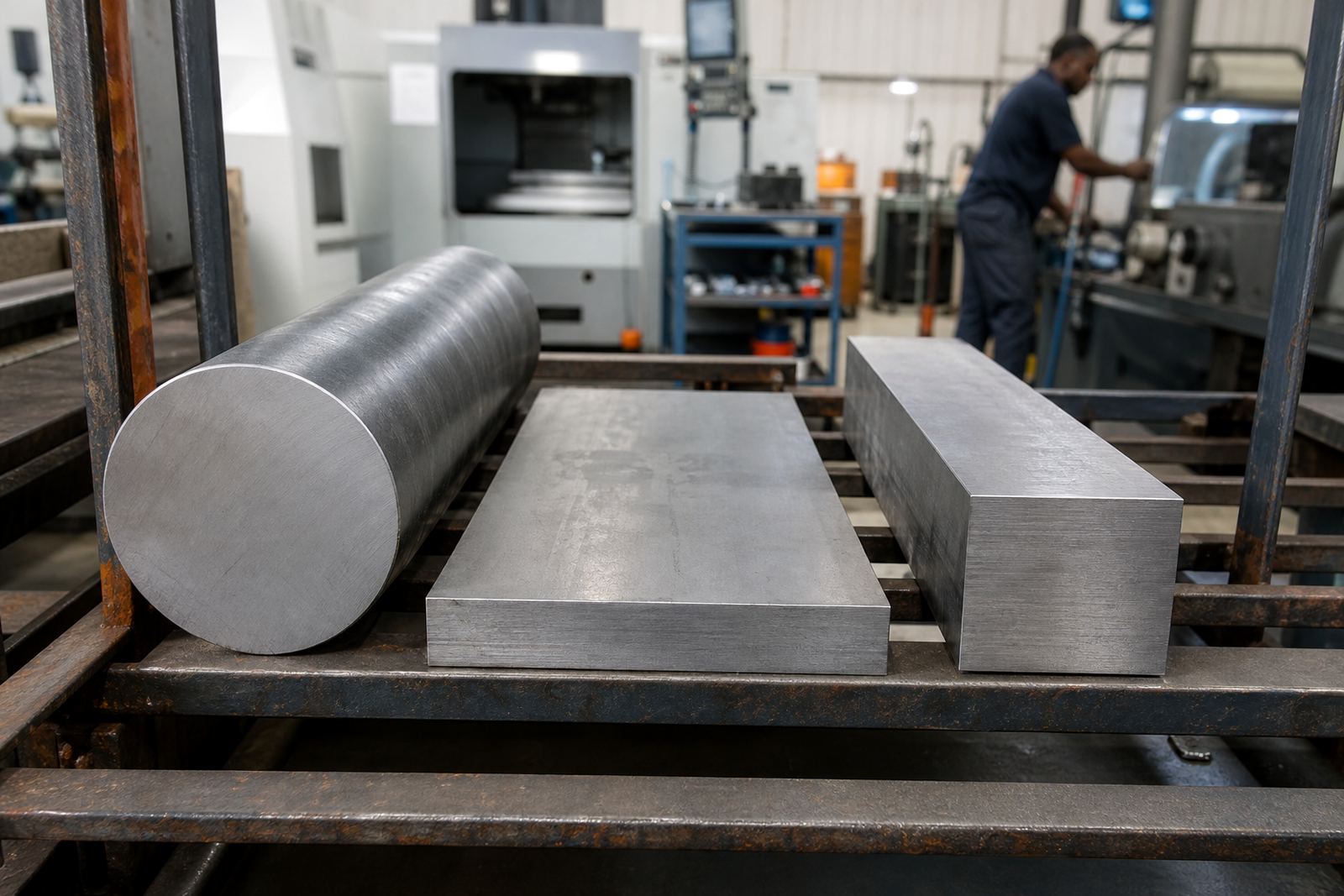
Common machining choices include aluminium for lighter components, mild steel for general brackets and housings, stainless steel where corrosion is a concern, and engineering plastics for some wear or guide parts. The right option depends on load, temperature, exposure and how the part is used in the assembly. If the original material is unknown, a careful material selection discussion before machining can save time and avoid remaking the same part twice.
When the Drawing Is Missing, Build a Working Record
For obsolete parts, the best outcome is not only a replacement part but a useful record for the next repair. A simple working record can include key measurements, material notes, a sketch of critical features and the latest revision of any updated dimensions. That way, the next time the part wears, the job starts from solid information instead of memory.
This is especially helpful for batch planning, because small-batch parts often come back for repeat order support after a machine is restored. If a part is used on equipment that runs daily, one minor change like an improved clearance or stronger corner radius can help the replacement perform better than the original. It also makes assembly fit checks quicker when several related parts need to work together.
Plan the Replacement Around the Machine, Not Only the Part
A replacement part must suit the full assembly. If a bush, spacer or plate is being remade, check surrounding components for wear as well. A perfectly machined new part can still fail to fit if the mating part is damaged or if the machine has shifted over time. That is why part optimisation often includes the surrounding housing, shaft or mounting face.
In practical terms, this means asking how the machine is actually used on site. A part on a plant in Johannesburg may see different duty cycles to one in Pietermaritzburg or Westmead. If the old part failed because of misalignment, vibration or poor lubrication, the fix should address that cause too, not only the dimension on the broken item.
- Check for alignment issues before approving a remake
- Inspect mating parts for scoring, ovality or fretting
- Confirm fastener sizes and tightening space
- Review whether minor drawing updates are needed for future orders
Local Example: A Worn Spacer in a Durban Line
A common situation is a worn spacer on production equipment where the original drawings are missing. The old spacer may still measure close to size, but one face is worn and the centre bore has opened slightly. In that case, the correct approach is to measure the non worn areas, confirm the fit in the housing, and then remake the part to suit the assembly rather than copying the damage.
For a client in Durban or Pinetown, this kind of job usually benefits from sample part remake support and inspection reporting. The job can be checked against the old component, then verified against the machine before the part goes into service. That saves downtime and avoids the common mistake of making a replacement that looks right but does not sit properly under load.
What to Send for a Faster Quote and Better Fit
The more useful the information you send, the easier it is to plan the job. Even without a drawing, a clear set of photos, rough dimensions and a description of the machine environment can help. Include whether the part is for a prototype, one-off replacement or a small batch for several machines. If there are assembly constraints, say so early, because access and clearance can affect the machining approach.
Useful details for replacement part planning include:
- Photos from several angles, including the worn area
- Any measurements taken from unworn sections
- Notes on material if known
- Information on heat, moisture, vibration or chemical exposure
- Whether the part needs delivery coordination to Durban, Richards Bay, Pietermaritzburg or Johannesburg
When the request comes through the enquiry form on the contact page, it helps to mention if the part is urgent, how many are needed, and whether any drawing updates should be recorded for the next order. That way the replacement is planned with the same care as a fresh machining job, and not treated like a rough copy.