Start With the Part, Not the Material Rack
When a drawing lands on the table, the first question is not which metal is available, but what the part actually needs to do. A long round shaft, a flat mounting plate and a compact housing each suit different stock shapes because the starting form changes how many sides need to be machined and how the job is held in the machine.
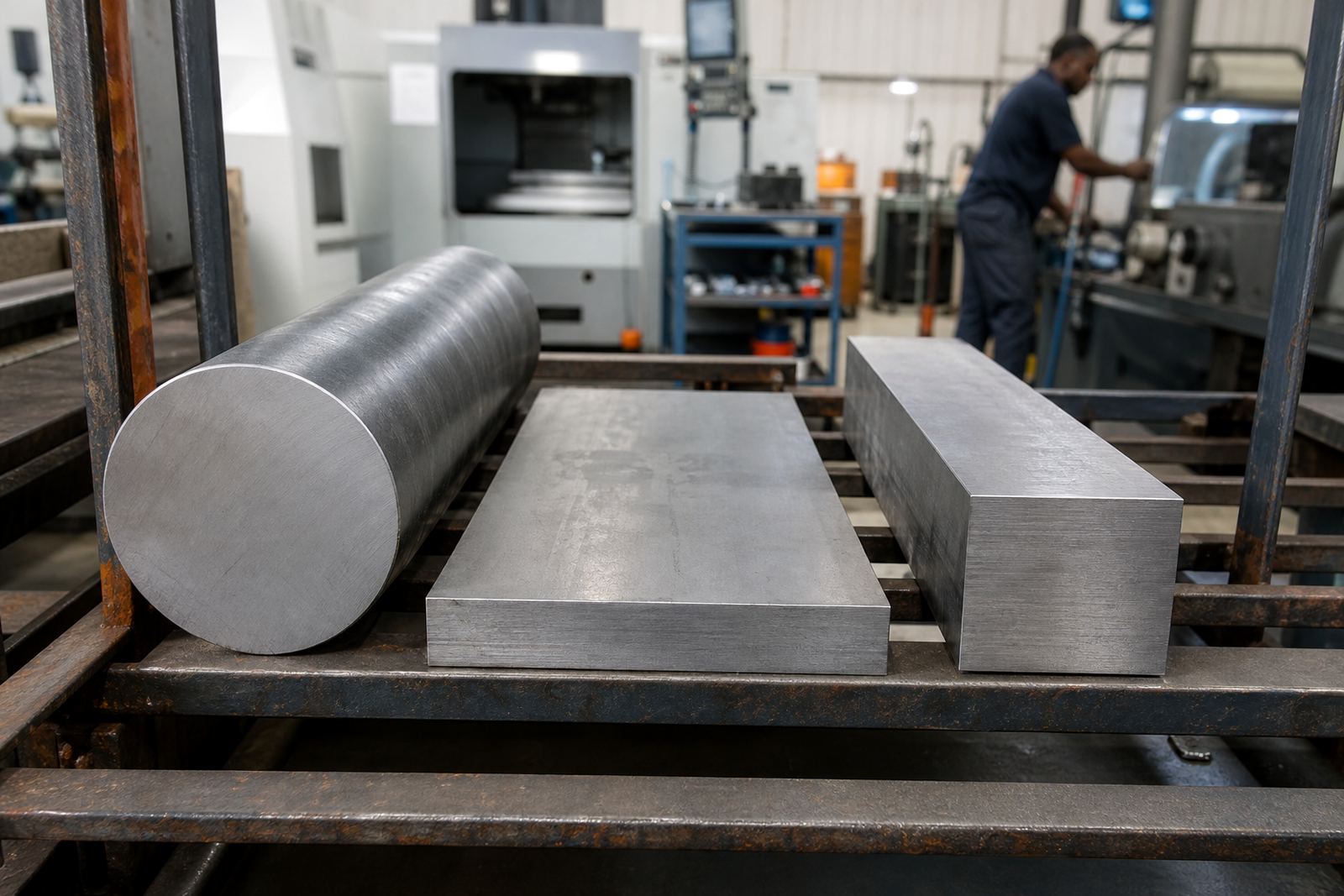
Bar stock is usually the practical choice for round or spindle-shaped parts. Plate stock suits flat components with pockets, cut-outs or bolt patterns. Block stock is better where the finished part has several machined faces or a deeper 3D profile. If the stock shape fights the geometry, the job takes more setups and the risk of error rises, especially on a repeat order where consistency matters.
In small-batch work, that decision also affects lead time. Fewer setups normally mean less handling and less chance of marking a part before final inspection. For a job shop in Pinetown, where clients often need a mix of prototype planning and repeat order support, that practical thinking saves time all round.
When Bar Stock Makes Sense for Turning and Light Milling
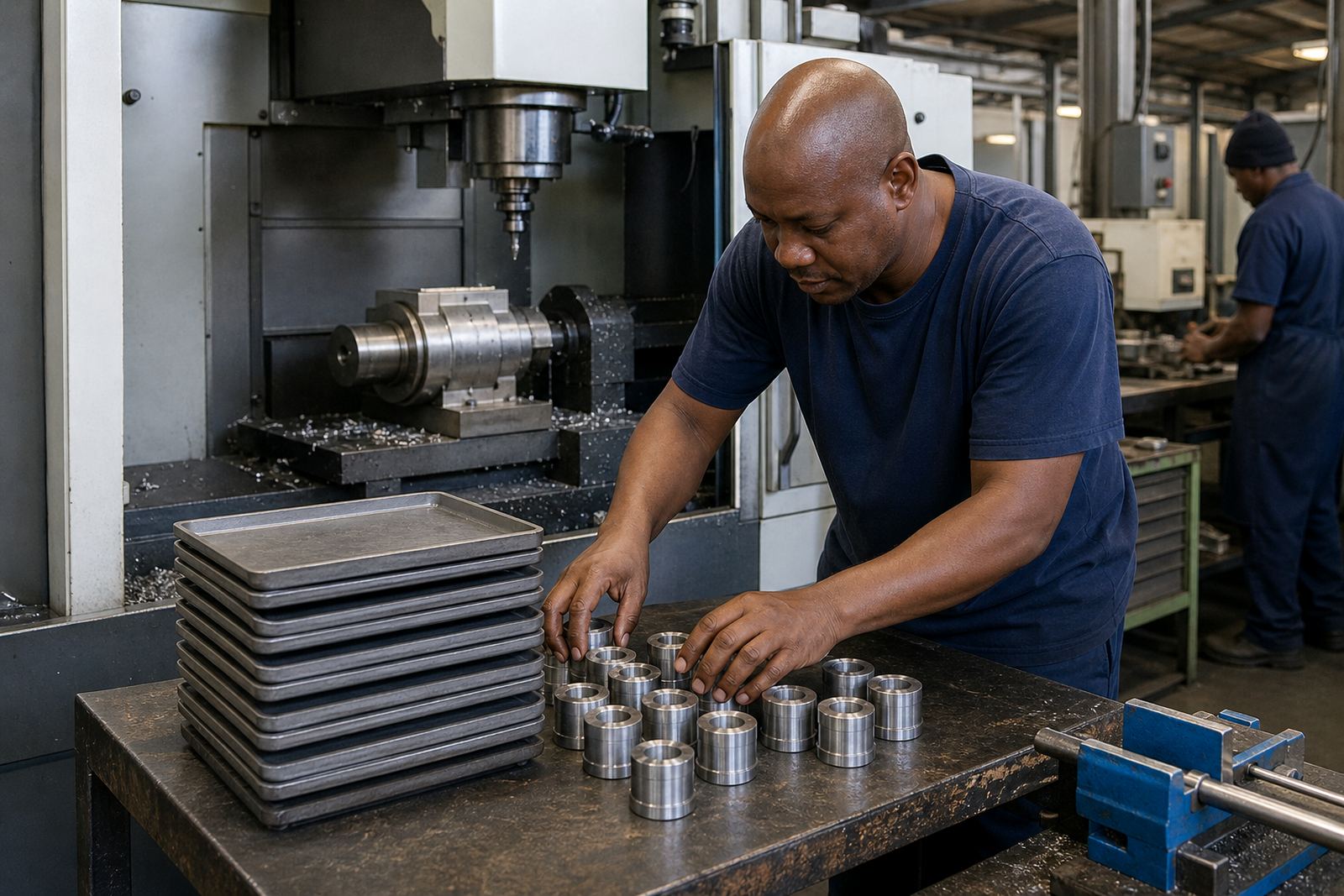
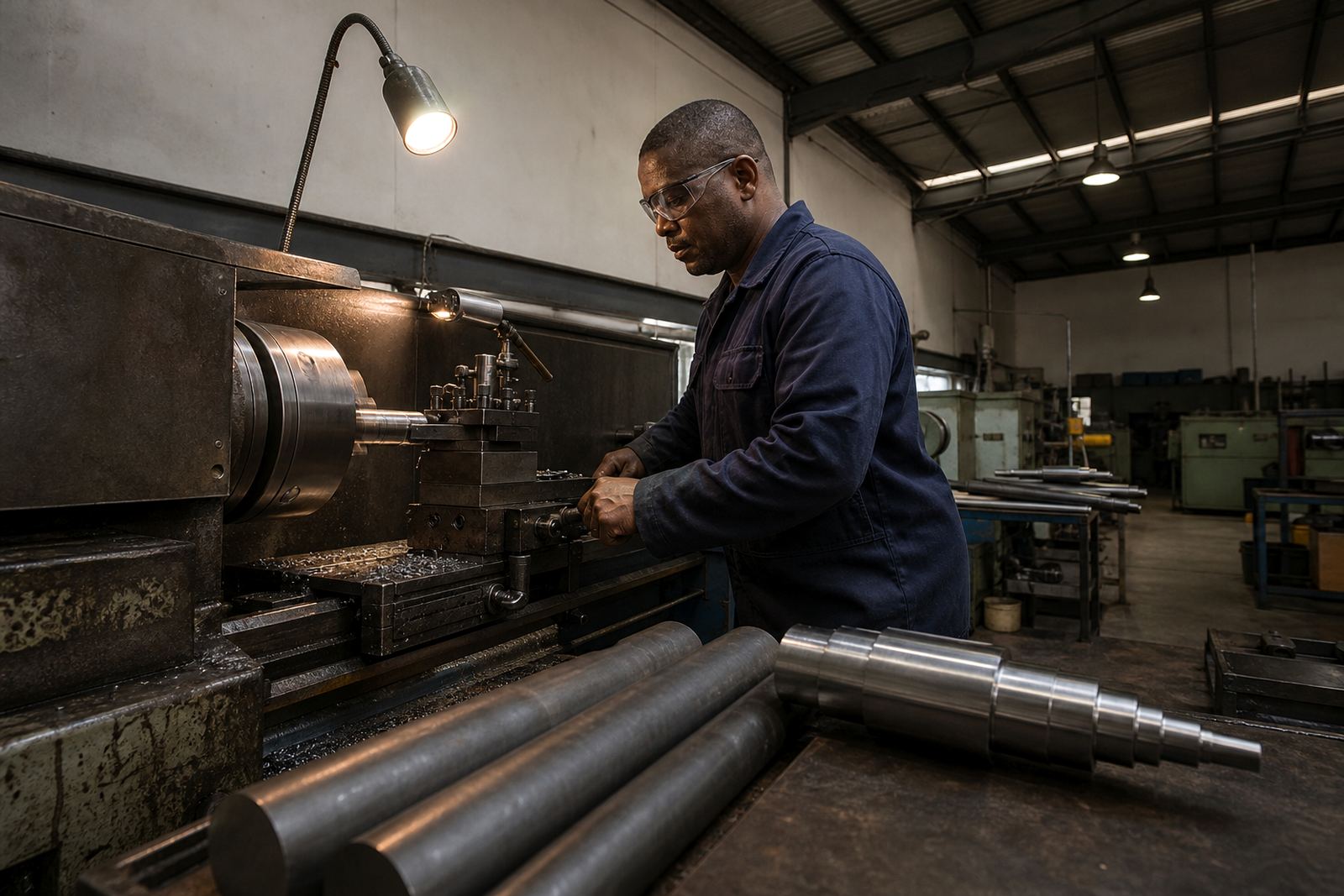
Bar stock is the natural starting point for CNC turning because the material already matches the rotating motion of the lathe. Round bar, hex bar and sometimes square bar can be turned down to size, then faced, grooved, drilled or lightly milled as required. It works well for bushes, pins, spacers, sleeves, stepped shafts and similar parts.
Bar stock is often chosen when the finished diameter is close to the supplied size and the machining allowance is manageable. That said, the choice still depends on material grade and the final tolerance. A part that needs a close fit with a bearing or housing may need extra allowance for finishing passes and inspection. If the bar is too small, there is no room for correction later, and that can turn a simple job into scrap.
- Best suited to round or rotational parts
- Reduces waste when the finished diameter is close to the raw size
- Works well for turning first, then secondary milling if needed
- Useful for small batches where quick setup matters
On coastal work, especially around Durban and Umhlanga, material condition also matters because humidity can affect storage. Bar stock kept properly dry is easier to machine cleanly, with fewer surface marks and less handling damage.
Why Plate Stock Fits Flat Parts and Pockets
Plate stock is the go-to starting point for flat parts that need profile cutting, slots, surface milling or pockets. Think of base plates, mounting plates, covers, flanges and bracket-style components. Because plate already offers a broad flat face, the machinist can establish a solid datum quickly and work from there.
This shape can be efficient when the final part is wider than it is thick. It also suits parts that need a consistent thickness across the full face. If the drawing calls for multiple holes, threaded features, counterbores or shallow recesses, plate stock often reduces the amount of rough removal compared with starting from block. That can help with both cost and cycle time.
Plate stock does have one point worth watching: flat material can move slightly after heavy machining if the internal stress is high. Good process planning helps here. A sensible approach is to leave material for finishing, machine in stages and check the part between operations. In places like Pinetown and Westmead where many jobs are time-sensitive, that kind of planning keeps the part within the drawing rather than chasing corrections later.
Block Stock for Multi-Face Parts and Deeper Features
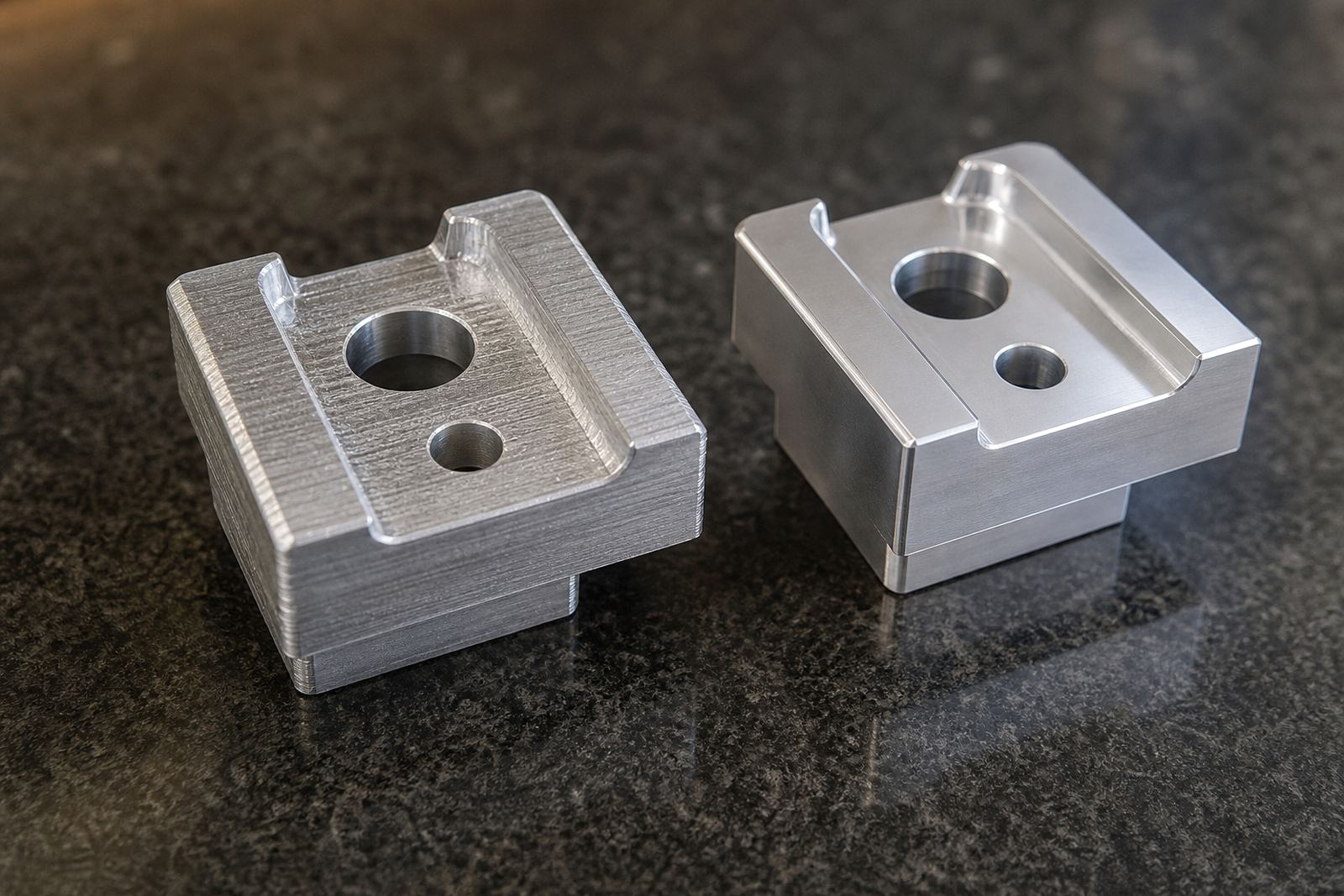
Block stock is useful when a component needs machining on several sides, or when the finished shape is more like a solid body than a flat plate. It gives the machinist enough material to square the part, create locating faces and cut deeper features without running short of stock. Housings, small manifolds, stepped blocks and compact fixture parts often start this way.
The advantage of block stock is control. There is usually enough allowance to machine reference faces first, then move through the remaining operations in a logical sequence. That makes it easier to hold positional accuracy between holes, pockets and outside edges. For tolerance guidance, the stock shape should support the method, not force a rushed setup that leaves little room for correction.
- Suitable for parts needing several machined faces
- Helps with alignment when reference faces must be created first
- Offers more allowance for deep pockets and reliefs
- Often used where the part is compact but geometrically busy
For clients sending work from Johannesburg or Richards Bay, this approach is useful on parts that must fit after transport and assembly. The aim is not just to machine the shape, but to leave the part ready for the next step with no unnecessary rework.
Match the Stock to the Material and the Finish
Choosing between bar, plate and block is not only about shape. Material behaviour matters too. Aluminium machines differently from stainless steel. Free-machining grades cut more easily, while tougher materials may need slower feeds, better chip control and more careful clamping. The stock form should suit both the geometry and the material choice.
For example, a long shaft in a harder material is usually better from bar stock because the turning operation follows the geometry naturally. A compact corrosion-resistant bracket may be more practical from plate if the part needs flatness and bolt-hole accuracy. A small enclosure or valve body might suit block stock because the blank needs room for pockets and intersecting features.
It is also worth thinking about the finish surface the client expects. A visible face on a customer-facing assembly may need a cleaner starting condition and fewer clamp marks, while an internal functional surface may allow more freedom in selection. An experienced job shop will review the drawing, ask where the load is carried and decide which stock shape gives the best path to the finished part.
A Pinetown Example: Choosing the Right Blank Before Cutting Starts
Consider a client in Pietermaritzburg needing a small batch of mounting parts for a machine frame. The part has a flat base, two through-holes and one shallow pocket. If the team starts from bar stock, there is too much wasted cutting and the part would need extra setups. Plate stock is a better fit because the base is already close to the finished form and the holes can be positioned off a stable face.
Now change the part slightly. If the same client later needs a compact spacer body with four machined faces and a recess on top, block stock becomes the sensible option. The machinist can create reference faces, inspect between stages and keep the final geometry under control. That is the sort of practical decision that saves time, reduces scrap and keeps delivery coordination straightforward.
At PME CNC Machining in Pinetown, this is the sort of thinking that sits behind drawing review, material selection, prototype planning and batch planning. The stock shape is not a small detail. It is the starting point that shapes the whole job, from the first cut to the final inspection report.