Why Packing Matters After Machining
Freshly machined parts can pick up damage long after they have passed inspection. A clean bore, a turned shoulder or a ground face may still be affected by rubbing, moisture, dust or movement in transit. That is why packing should be treated as part of the job, not as an afterthought.
For small-batch work, the risk is often not dramatic breakage but small problems that add up. A nick on an edge can affect fit. Light corrosion can spoil a finished surface. A mixed-up set of left and right parts can cost hours at assembly. In a place like Pinetown, where parts may leave for Durban, Pietermaritzburg, Richards Bay or even Johannesburg, the trip can be long enough for poor packing to show its weaknesses.
At PME CNC Machining in Pinetown, packing is considered alongside the drawing review and inspection process. If the part has a fine finish, a close fit or a matched sequence, the packing method should reflect that from the start.
Packing for CNC Milling and Turning Parts
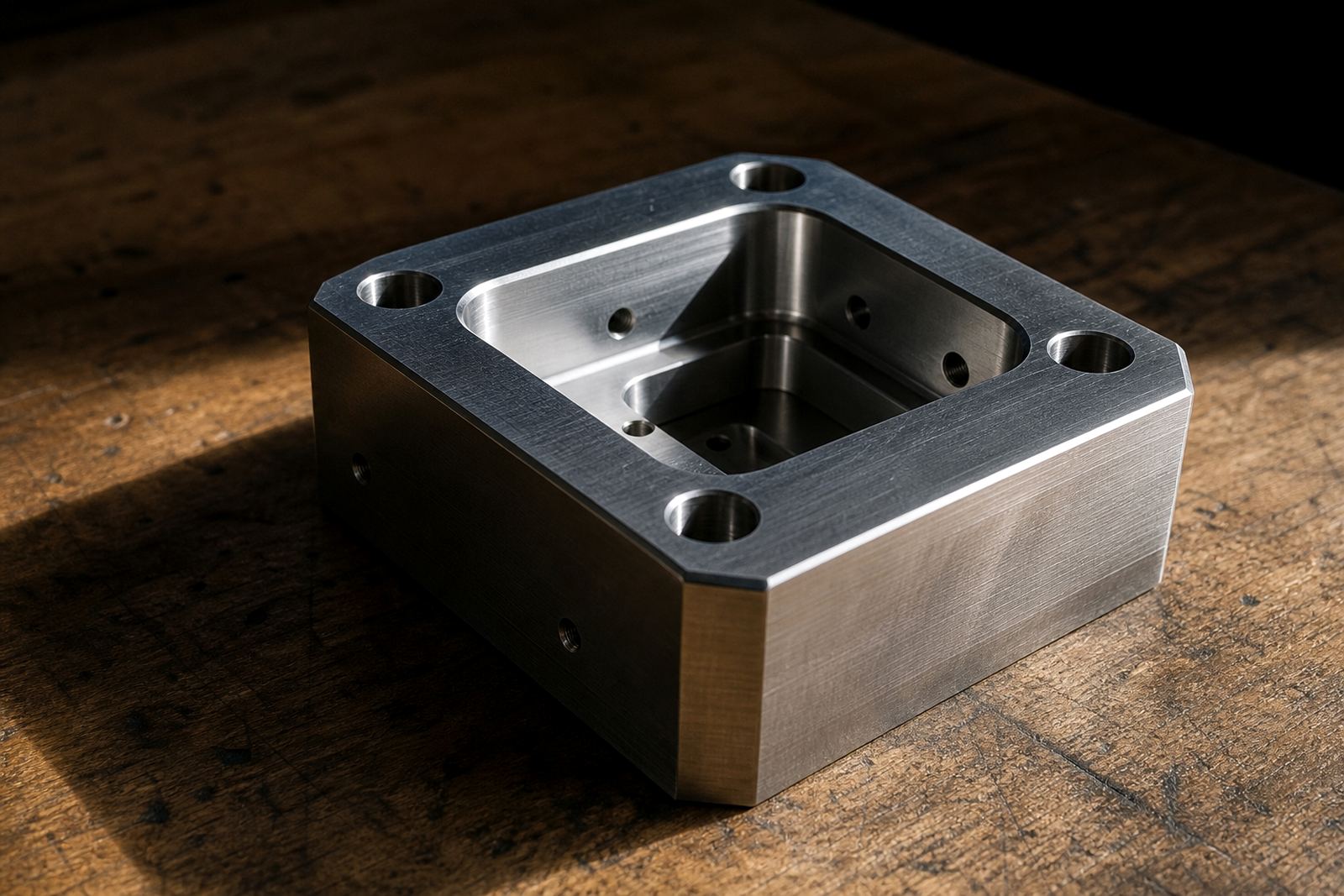
CNC milled parts and turned parts often need different packing choices. Milled components may have corners, pockets and thin walls that can chip if they move against each other. Turned parts often need protection for diameters, threads and precision faces, especially where parts are stacked or nested in trays.
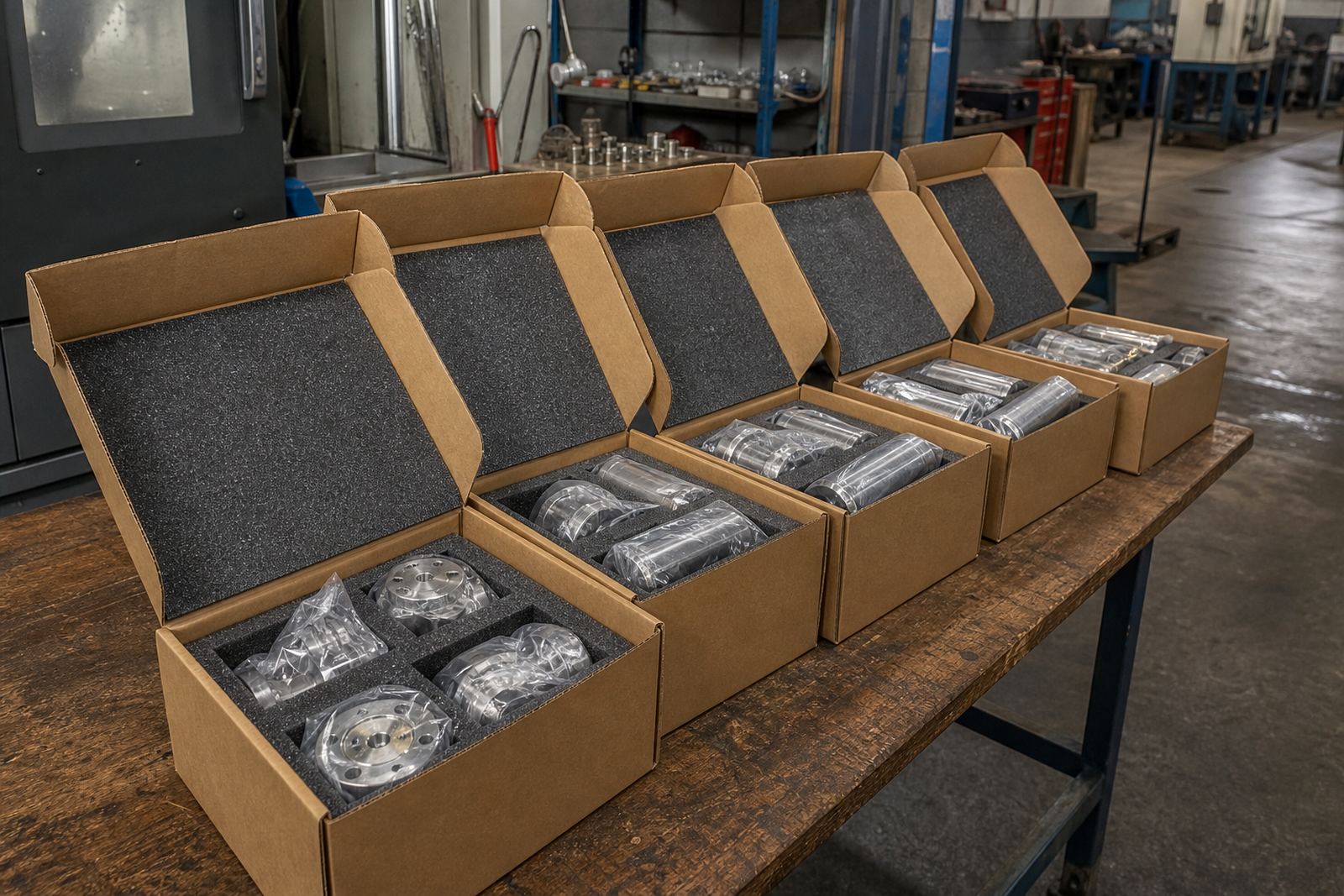
Generic wrapping is usually not enough on its own. The packer should think about the shape of the part, the finish on the surface and how the item will be handled at each stage. A simple part may only need individual wrap and a sealed carton. A more sensitive component may need separators, foam support or compartmented boxes. If a batch includes mating pieces, each item should stay clearly identified and separated so there is no mix-up at the receiving end.
- Use individual wrapping for parts with polished or visible surfaces.
- Keep threads, bores and seal faces protected from knocks and dust.
- Separate mating parts so they do not rub against one another.
- Mark cartons clearly when a job contains left and right hand pieces.
Protecting Tolerances, Surfaces and Fit
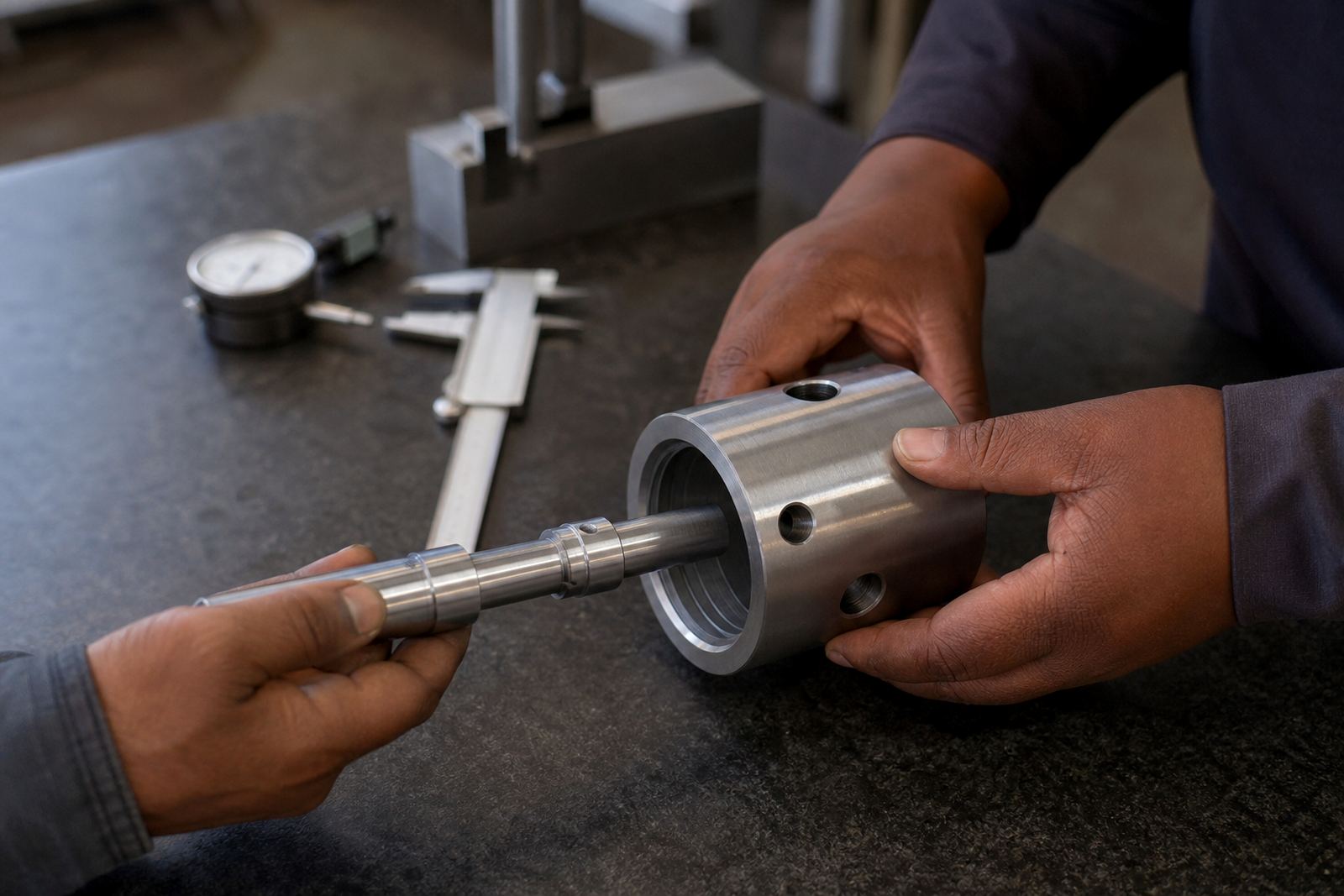
Very tight tolerances can be lost in a careless minute. A small ding on a locating face or a burr raised during handling can change how a component seats. Even when the dimensions are correct, contamination from dust, oil, condensation or steel swarf can create problems during assembly. That is why packing should match the functional requirement of the part.
If the part will be assembled soon after delivery, the packing can focus on cleanliness and clear identification. If it may sit in storage for a while, moisture control matters more. Coastal humidity in Durban and Umhlanga can be hard on bare steel, and parts sent out in the wet season need extra thought. A light protective coating, sealed wrap or moisture resistant pack may be the difference between a usable part and a return trip.
It also helps to pack inspection notes with the parts. A simple report or label set can show which batch the components came from, what was checked and how the parts should be handled. That makes the receiving process easier for the client and reduces calls about missing items or uncertain orientation.
Match Sets Need Order, Not Just Protection
Some jobs are not just about single components, but about parts that must stay together as a set. This can include mirrored pieces, parts with sequential numbering, or components that are machined in matched pairs. In those cases, the packing plan should preserve order from the moment the parts leave the machine.
Labelling is not only for convenience. It helps the receiver understand what belongs where, and it supports repeat order work later on. For example, if a client in Johannesburg needs multiple small-batch assemblies every month, the next order is easier to manage when the previous pack format is clear and consistent.
- Group matched parts by set number before final sealing.
- Use clear internal labels if there are multiple similar components.
- Keep fasteners, inserts or loose fittings in separate marked packets.
- Record any special assembly sequence or orientation note on the pack.
Local Delivery Conditions Change the Packing Choice
Not every delivery faces the same road conditions. A short local run from Pinetown to Westmead or New Germany may be straightforward, but a long route to Richards Bay or Johannesburg can mean more vibration, more handling and more exposure to weather. If the parts are fragile or finely finished, the pack should be able to cope with that journey.
Load-shedding also affects packing in indirect ways. If a job is delayed before dispatch, parts may sit longer than planned. That makes corrosion protection and storage discipline more important. A batch left near an open doorway or on a damp floor is at risk before it even reaches the courier. Good workshop practice means keeping parts off the floor, dry and labelled until they are loaded.
Where a client has specific municipal or site entry rules, packaging can help there too. Neat outer labels, sealed cartons and clear documentation make delivery easier at industrial gates and receiving bays that ask for order references, item counts or proof of contents.
Practical Packing Methods That Work
The best packing method is usually the simplest one that fully protects the part. That may mean individual sleeves for turned shafts, dividers for small milled brackets, or foam support for components with exposed features. The aim is not to overpack every item, but to match the level of protection to the work itself.
For small-batch machining, repeatability matters. If a packing method works for one order, it should be easy to repeat on the next. This is useful when a client wants repeat order support or a remake of sample parts. A familiar packing method makes reordering easier, helps the production team stay organised and gives the client the same unpacking experience each time.
At PME CNC Machining, services such as inspection reporting, assembly fit checks and delivery coordination support the same goal: parts should arrive in the condition they were checked in. That means the final step should be as considered as the first drawing review. A clean part is only useful if it arrives clean, identified and ready for use.
What Clients Should Ask For When Ordering
When placing a machining order, clients should say how the parts will be used and how they need to arrive. If the parts are for immediate assembly, packing can be kept simple but tidy. If they are for spares stock, export handling or long storage, the packing needs more protection. Clear instructions at the start prevent guesswork later.
It helps to state whether items must be packed individually, grouped by set, or protected against moisture. If there is a special label format or a specific count per carton, that should be noted with the order. For clients across Durban, Pinetown, Pietermaritzburg, Richards Bay and Johannesburg, this is especially useful when several jobs are moving through the same production schedule.
Protective packing is not only about avoiding damage. It supports accuracy, preserves finishes and keeps the job organised from workshop to receiving bay. When a machined part arrives ready to fit, the packing has done its job properly.