Why keyways and grooves matter in working parts
Keyways and grooves are usually small features, but they affect how a part transmits torque, locates a seal or holds another component in place. A shaft with a keyway needs the slot to line up with the matching hub, while a groove may need to accept an O-ring, retaining ring or sealing element without pinching or movement. If the feature is wrong, the whole assembly can become noisy, loose or difficult to maintain.
In CNC machining, these features are often produced after the main turning or milling work, then checked carefully against the drawing. That matters because a groove that is too shallow may not seat properly, while one that is too deep can weaken the part or affect how the seal performs. For small-batch work, this attention to detail is often what keeps a repeat order consistent from one run to the next.
For clients in Pinetown, Durban and further afield, keyways and grooves are common on parts used in equipment maintenance, motion transfer, pumps, gear assemblies and general plant support. They may look straightforward, but their role is practical and specific, and the machining has to match that job.
How CNC milling and turning are used on grooves
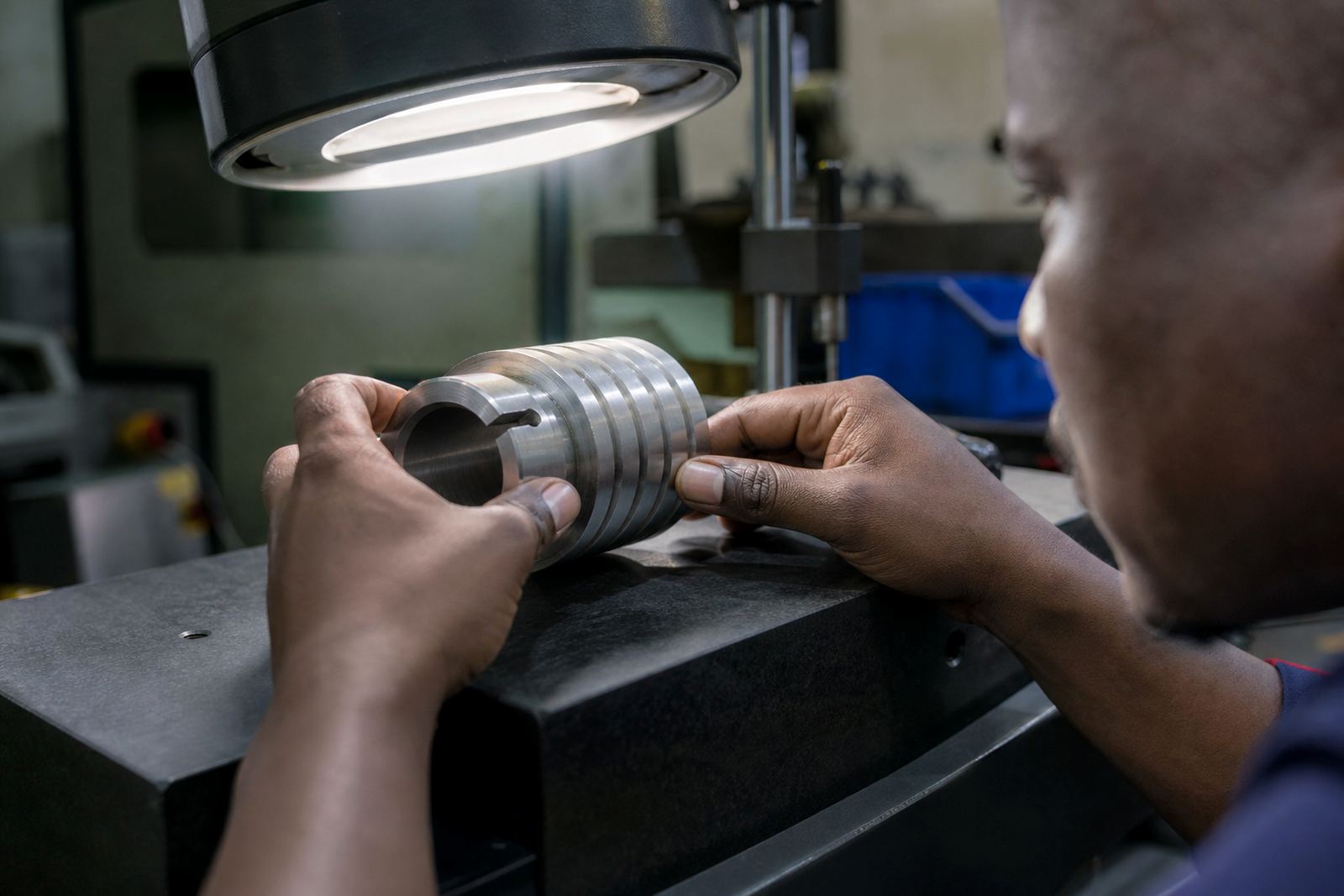
Keyways and grooves can be machined in different ways depending on the component shape. On a shaft or round part, CNC turning is often used for external diameters, shoulders and circumferential grooves. On flat faces, blocks or flanges, CNC milling is normally used to cut straight keyways, slots and pockets with clean edges and controlled depth.
The right method depends on the drawing, the material and the way the part will be loaded in service. A groove for sealing on a turned component needs a smooth finish and accurate position. A keyway for drive transfer needs width, depth and length that suit the mating component, with enough care taken around the ends so there are no stress points that could cause trouble later.
- Turned grooves are common on shafts, sleeves and circular fittings.
- Milled keyways are used on hubs, blocks and mounted parts.
- Finish and edge condition matter because burrs can affect assembly.
- Feature position must suit the mating part, not only the drawing in isolation.
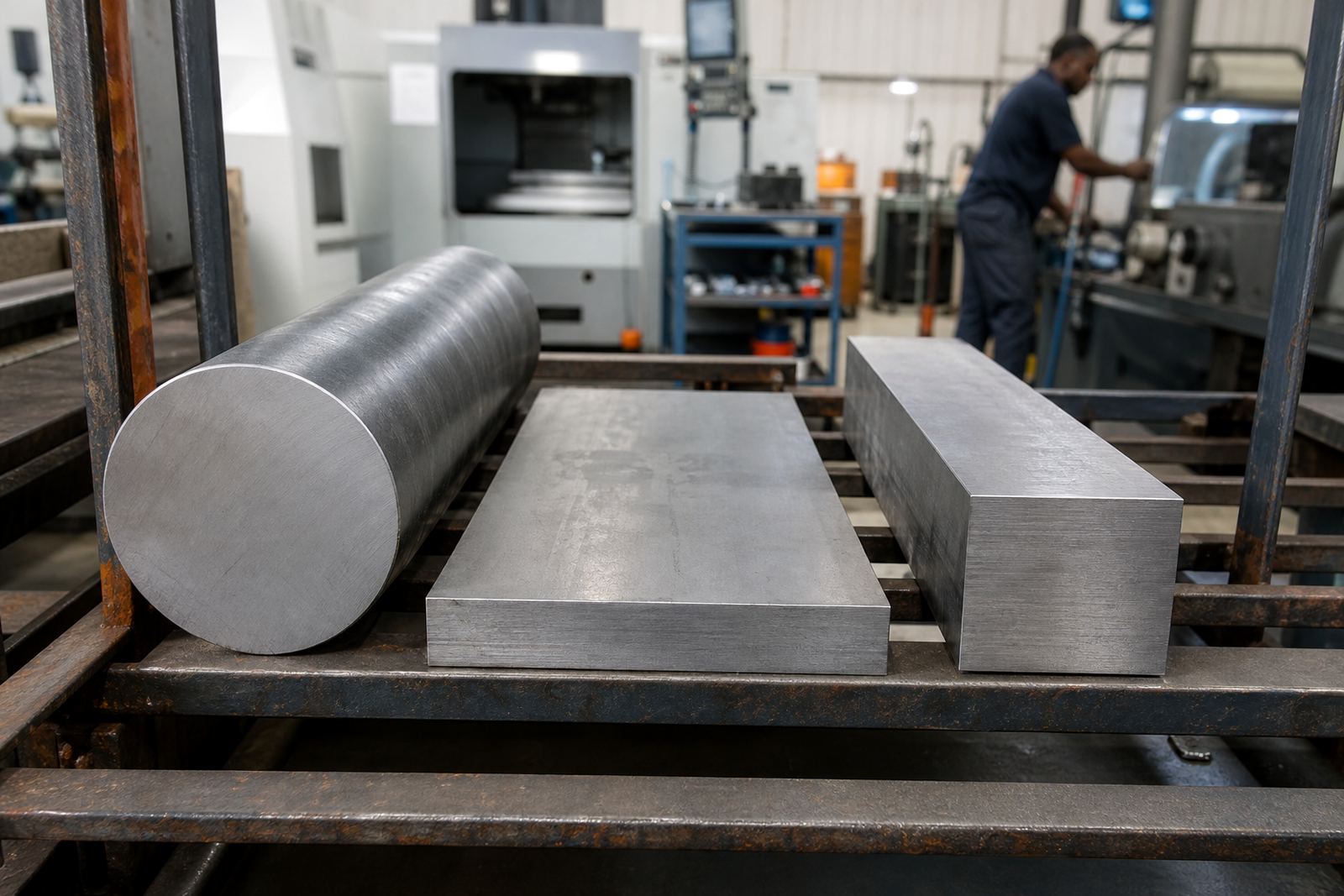
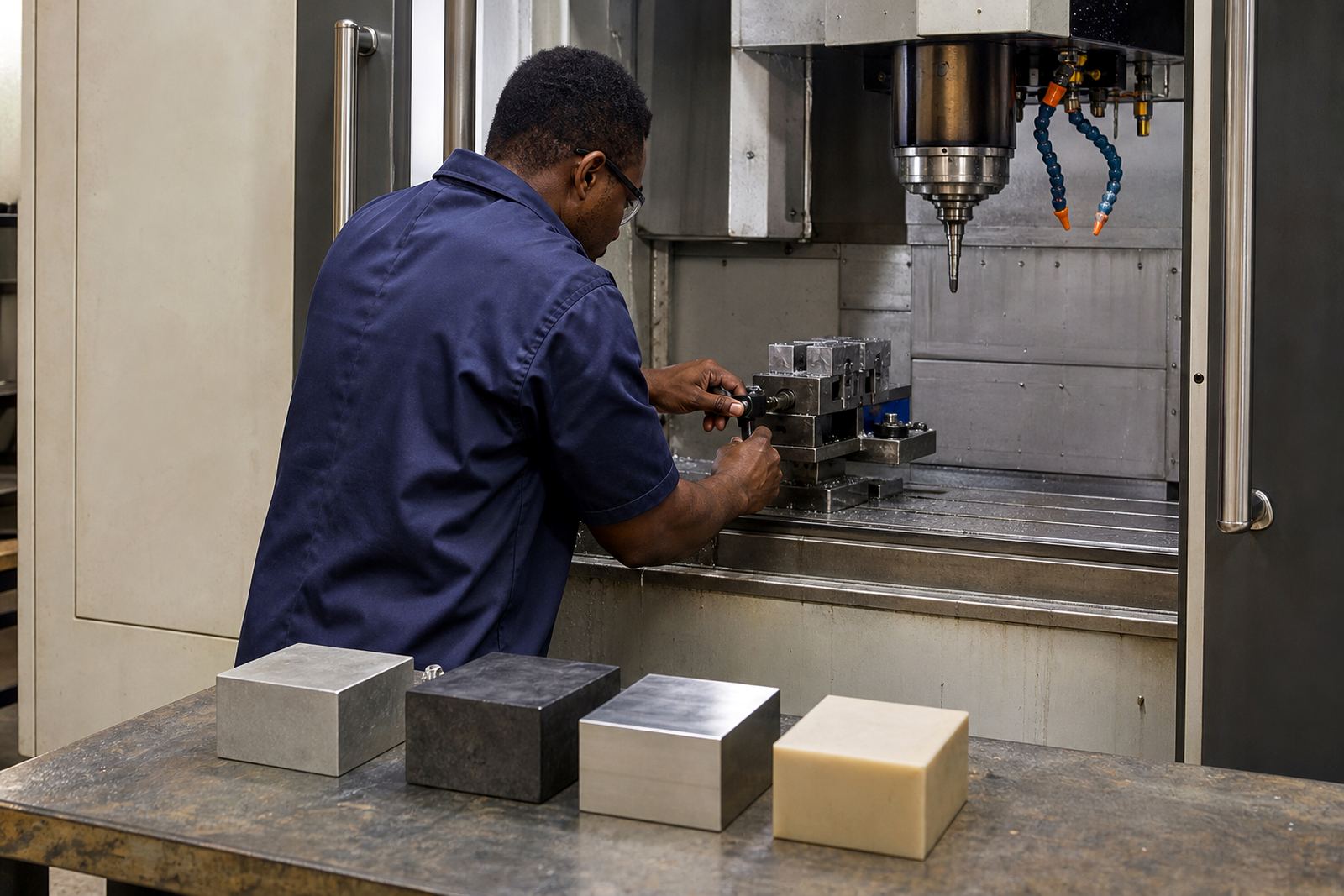
In a job shop setting, the same type of feature may be needed on different materials from one week to the next, so process planning is important. Mild steel, aluminium, stainless steel and engineering plastics all cut differently, and each one needs the right feed, tool choice and inspection method.
Tolerances that keep drive and sealing features usable
For keyways and grooves, tolerance is not just a numbers exercise. It is about how the part fits and works once it is installed. A drive key must sit correctly in the shaft and hub, while a groove for a seal must hold the seal in place without overstretching or crushing it. Even a slight variation can change how the assembly behaves under load or vibration.
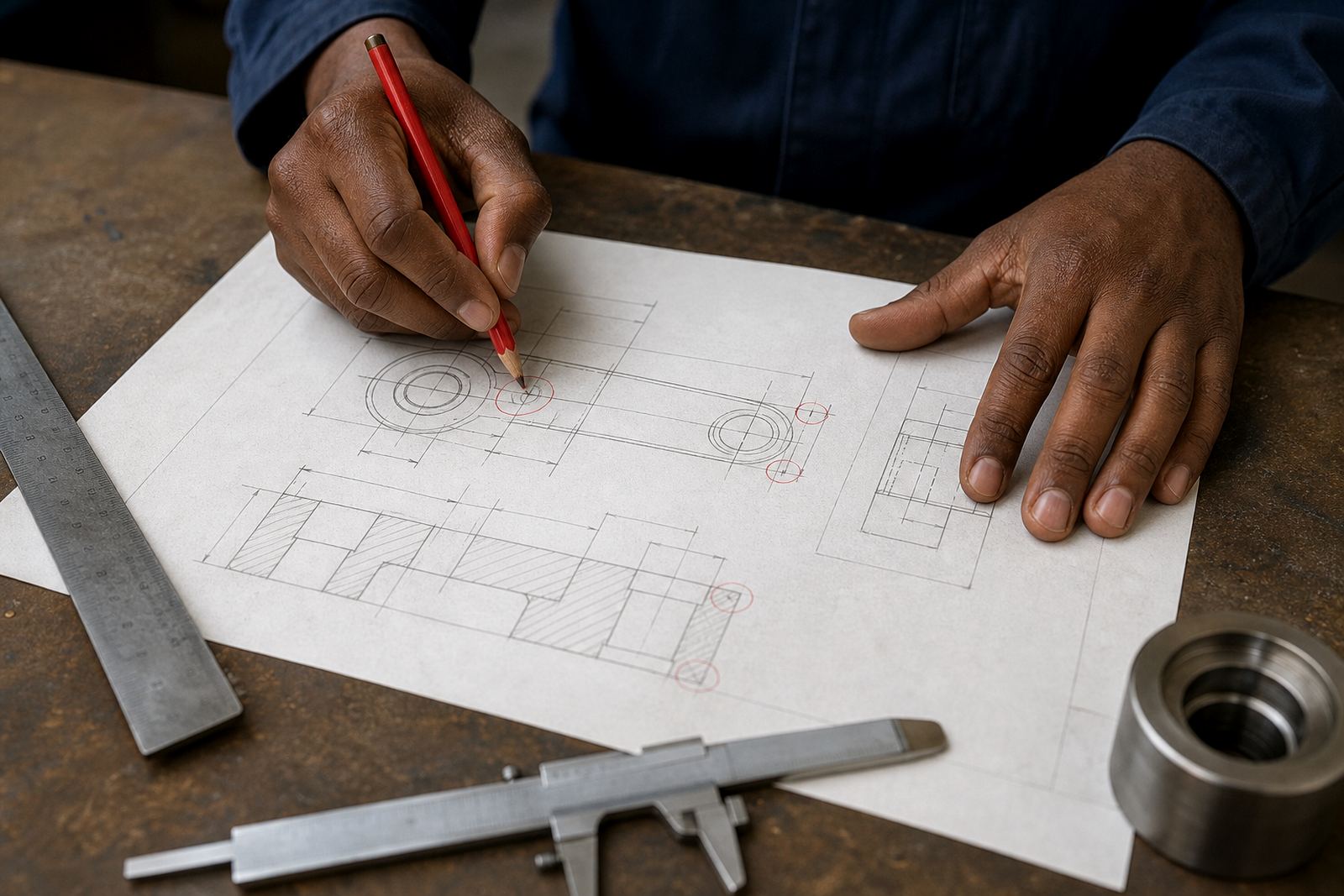
Good machining practice starts with clear drawing review. If a drawing leaves too much room for interpretation, the machinist may need to confirm the feature depth, width, corner condition or the relationship to another face. That is especially important on repeat orders where the part must match an earlier sample. In practical terms, tolerance guidance and sample part remake support help reduce wasted time and keep the assembly process moving.
For customers in Durban or Johannesburg, where equipment often needs to go back into service quickly, a groove that is accurate the first time saves downtime at fitting stage. It also helps when parts need to be inspected against a mating component rather than only against the paper drawing.
Material choice changes the way a groove performs
Material selection affects both machining behaviour and service life. A keyway in aluminium machines differently from one in stainless steel, and a groove in a polymer part will behave differently again. The cutting action, chip control and finish all change with the material, as does how the feature wears once the part is in use.
Some materials are easier to machine cleanly, while others may need slower cutting, sharper tools or more careful handling to avoid burrs and surface tearing. On thin sections, groove depth can also influence part strength. That is why part optimisation matters before production starts, especially when the job is a prototype or a small batch with a tight turnaround.
- Mild steel is common for general drive components and fixture parts.
- Stainless steel is often chosen where corrosion resistance is important.
- Aluminium suits lighter parts and can reduce machining time.
- Engineering plastics may be used where low friction or electrical isolation is needed.
Along the coast, humidity can also influence storage and handling before assembly, particularly with untreated steel components. For customers in Pinetown, Westmead and New Germany, that means parts should be protected and clearly identified so they arrive ready for fitting, not needing extra cleanup on site.
Practical checks before a part goes to machine
Keyways and grooves are easier to get right when the job starts with clear information. A proper drawing review should confirm the feature location, the mating part, the material and whether the feature is for drive, sealing or retention. If the assembly includes a key, seal or ring, that detail needs to be known before any cutting begins.
It also helps to think about the way the part will be handled after machining. A sharp internal corner may be acceptable in one situation and a problem in another. A groove near a thin wall may need a different approach than one on a solid section. Where needed, drawing updates can be used to clarify the feature so the same mistake is not repeated on the next batch.
Useful checks before production include:
- Confirm the mating component and how it will fit.
- Check whether the groove is for a seal, ring or locating feature.
- Review the material and whether it needs extra surface care.
- Confirm batch size, turnaround and any repeat order requirements.
This kind of planning is especially useful for small-batch work, where one overlooked note can affect the whole order. It is better to sort out the detail upfront than to remake parts after fitting tests fail.
A local example from a Durban-to-Pinetown repair job
Think of a maintenance team in the Durban area needing a small run of shaft components for equipment that cannot sit idle for long. The original part may have a keyway that has worn slightly, plus a retaining groove that keeps the assembly in place. If either feature is off, the replacement may feel correct in the hand but fail when installed.
In that kind of job, the most useful approach is usually a clear drawing review, followed by sample part remake if needed, then a confirmed batch once the fit has been checked. That process reduces guesswork and helps avoid back-and-forth during installation. It also lets the client coordinate delivery, inspection and assembly around actual site needs rather than assumptions.
For customers across Pinetown, Pietermaritzburg, Richards Bay and Johannesburg, that is the value of a job shop that understands these features as working geometry, not just cut-outs. Keyways and grooves are small details, but they carry the load in drive, sealing and retention applications.