Why stainless gets specified for working parts
Stainless is common in parts that face moisture, washdown, food contact, coastal air or regular handling. In Durban and along the KwaZulu-Natal coast, that usually means brackets, housings, shafts, clamping parts, fittings and guards that need to stay presentable as well as functional.
It is not chosen just for looks. Stainless can help reduce rust staining, support cleaner surfaces and last longer where plain steel would need more maintenance. The exact grade depends on the job, the environment and the finish required, because not every stainless material behaves the same way in the machine shop or on site.
- Use stainless where corrosion resistance matters more than low material cost.
- Allow for the surface finish needed after machining and deburring.
- Check whether the part will see salt air, chemical contact or frequent cleaning.
CNC milling and turning on stainless parts
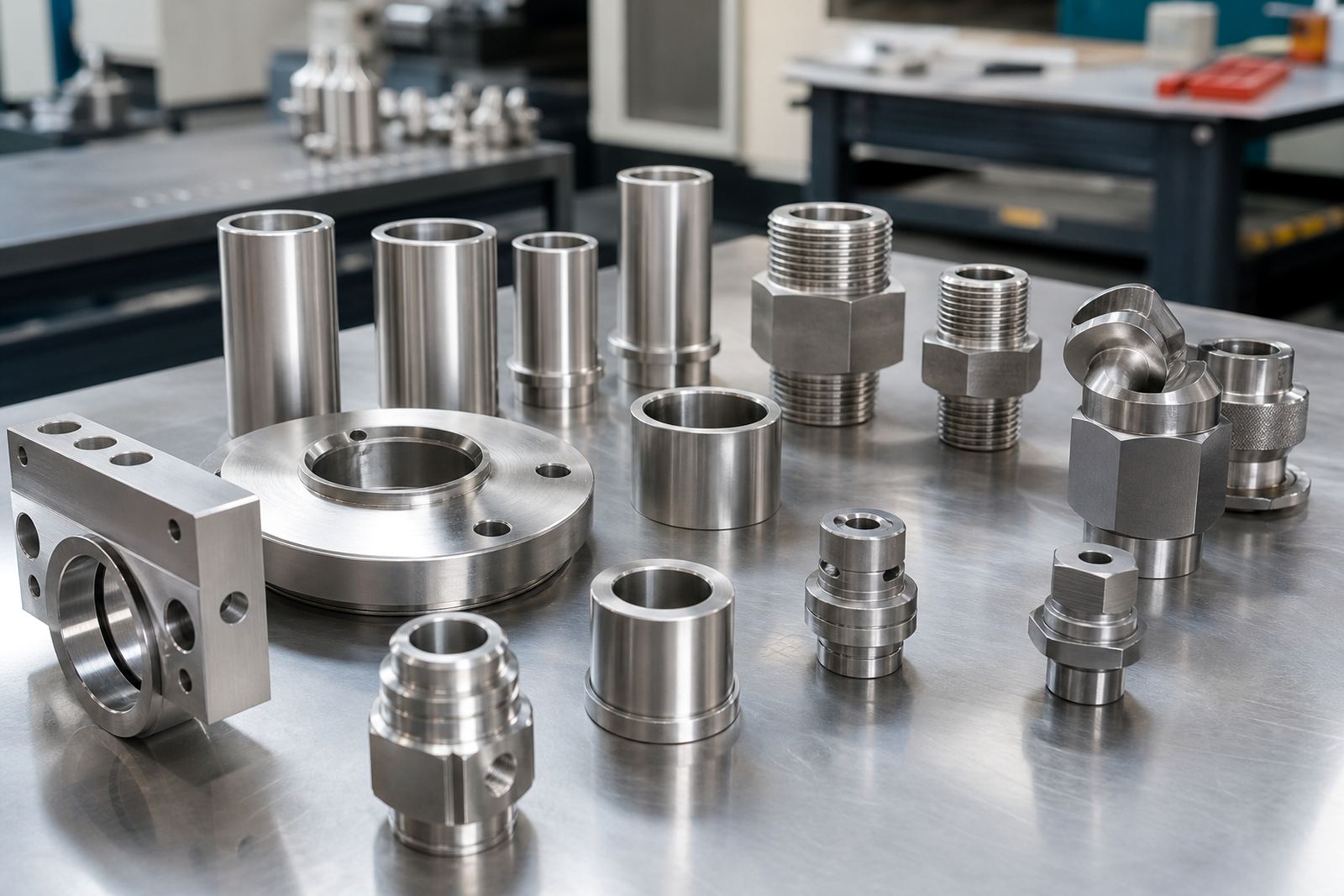
Stainless can be machined by both milling and turning, depending on the shape of the part. Turning suits round components, stepped shafts, spacers, bushes and sleeves. Milling is better for blocks, plates, slots, pockets, mounting faces and parts with holes or flats.
With stainless, tool choice, feed rates and chip control matter. The material can work-harden if it is rubbed instead of cut cleanly, so the process has to keep moving and keep the tool engaged. Heat build-up can also affect surface quality and size, especially on longer runs or on parts with thin walls. A good setup helps prevent chatter and keeps edges consistent, which is important when a part has to assemble with another component on site.
- Turning is useful for circular parts with close diameters.
- Milling is better for flats, slots and mounting features.
- Thin sections often need extra care to avoid distortion.
Tolerance guidance without overpromising
Stainless parts often need a careful balance between tight fit and practical manufacturability. If a drawing calls for a close fit, it helps to review which dimensions are truly critical and which can carry a wider band. That keeps the job realistic and can reduce rework later.
We regularly help with tolerance guidance on small-batch jobs where the part must fit a mating component, seal properly or move smoothly without binding. For stainless, the drawing needs to consider heat, finishing steps and whether the part may be assembled with other metals. In some cases a small change to a shoulder, hole size or edge break can make the whole job easier to produce and easier to fit.
Clear notes on the drawing are worth a lot. If a face must be true, a bore must be concentric or a slot must line up with a mating pin, that should be called out plainly so the machining plan supports it.
Which stainless material suits the application
There are several stainless families used in machining, and the right choice depends on exposure and function. Some grades are better for general corrosion resistance, while others are selected for strength, wear or improved machinability. The wrong choice can lead to unnecessary cost or a part that does not hold up in service.
In practice, we look at the operating conditions first. Will the part sit outdoors in Pinetown humidity, near the coast in Umhlanga, or in a washdown area where cleaning chemicals are used regularly? Will it be handled often, welded later, or assembled with aluminium, mild steel or plastic? Those details matter because stainless can still discolour or pick up tea staining if the environment is harsh and the finish is not suited to the job.
- Match the grade to the environment, not just the drawing note.
- Consider whether the part will be polished, passivated or left with a machined finish.
- Check if the component will contact other metals that may cause staining or galling.
Small-batch planning for Pinetown and beyond
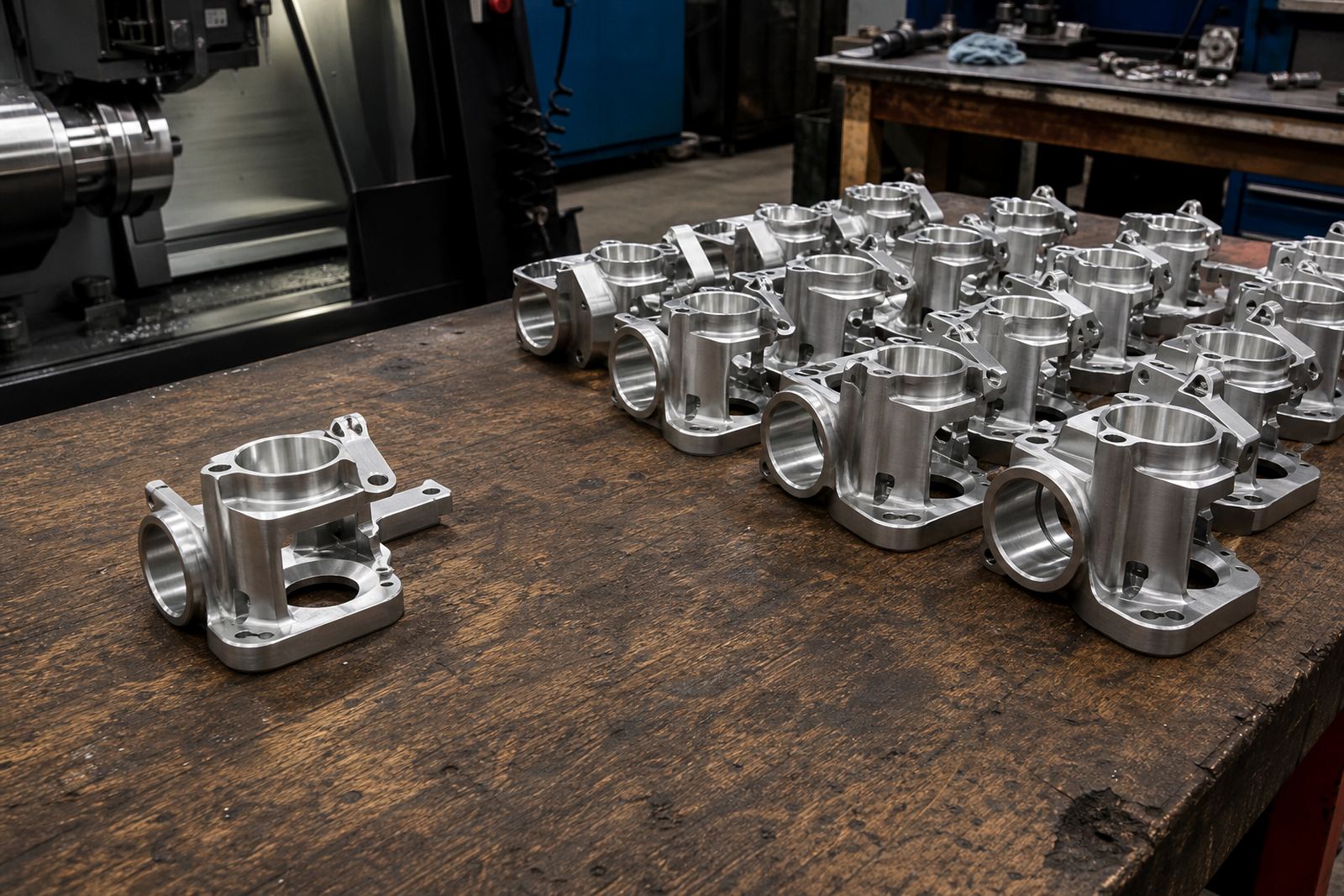
Small-batch work needs a different approach from mass production. A job shop has to plan each part carefully because there may only be a few pieces, yet they still have to meet the same standard as a larger run. That is why drawing review, prototype planning and sample part remake support matter so much.
From Pinetown, we regularly handle jobs for Durban, Westmead, New Germany, Pietermaritzburg, Richards Bay and Johannesburg. For local customers, delivery coordination can be organised around site access, municipal rules and the realities of a busy production floor. If a replacement part is urgent, repeat order support helps keep the next run consistent with the first one. That saves time when a machine is waiting and the line cant stop for long.
Small batches also benefit from part optimisation. A few changes in thickness, edge breaks or hole spacing can reduce scrap and improve fit without changing the function of the component.
Inspection, fit checks and clean finishing
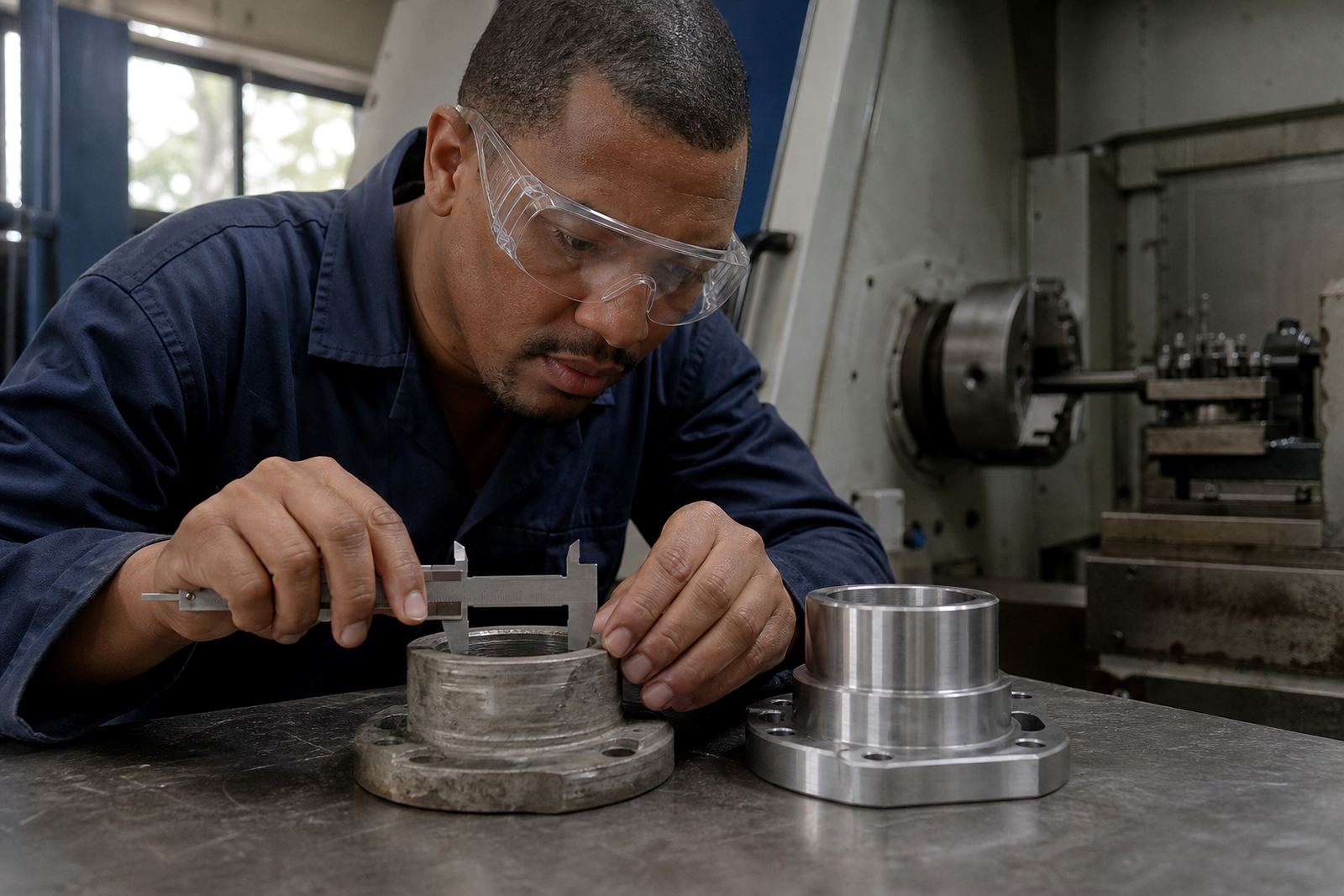
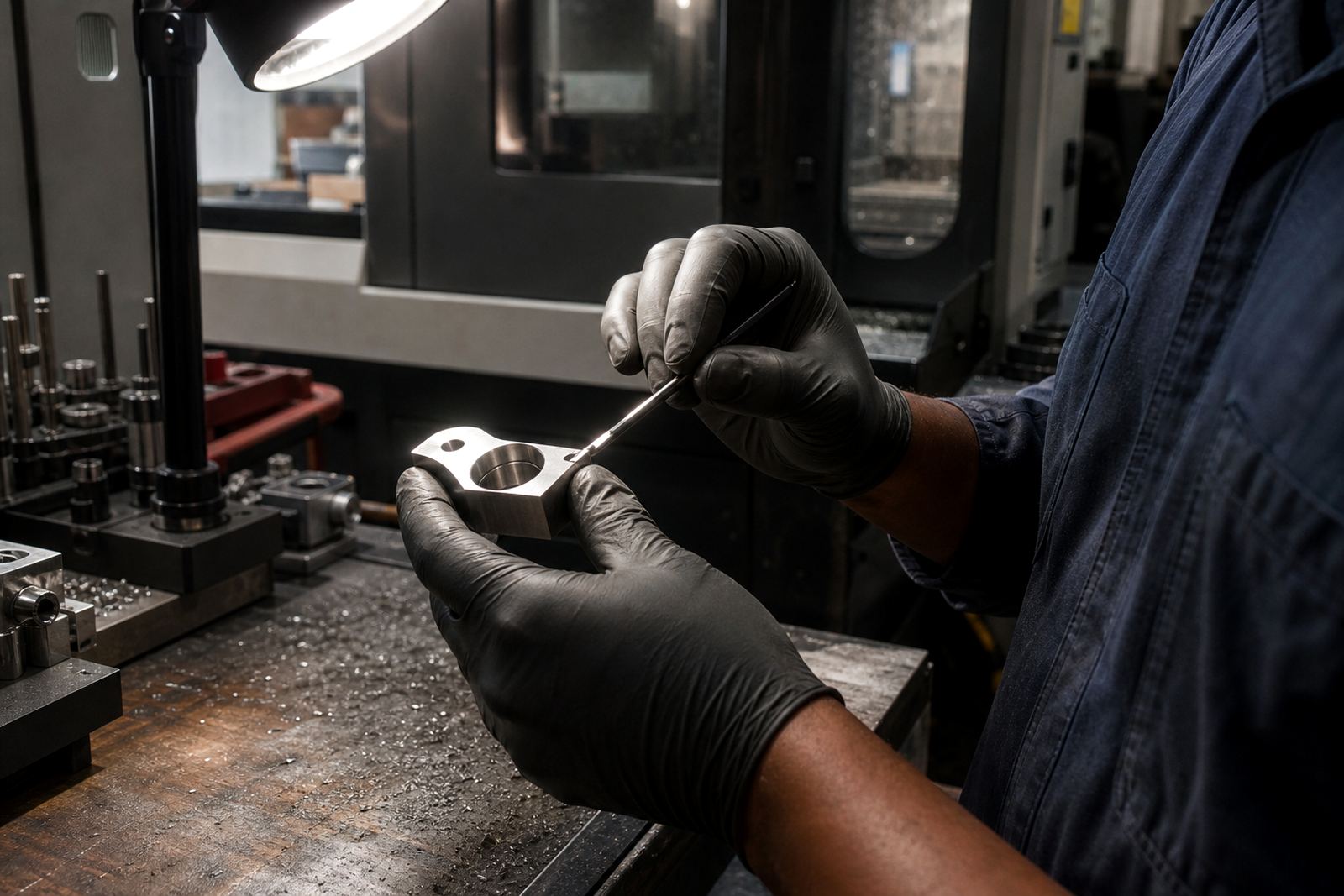
Stainless work only finishes properly when inspection is part of the process. That means checking dimensions, verifying the fit against the mating part and making sure burrs are removed from edges, slots and drilled holes. A clean finish is important for both appearance and function, especially where the part will be handled or cleaned often.
We also support inspection reporting and assembly fit checks where a customer needs confirmation before the job leaves the workshop. If a drawing update is needed after the sample has been checked, that can be recorded for future repeats so the next batch starts from the correct revision. It is better to sort that out early than to force a part into position on site and only then find the issue.
- Inspect critical faces, holes and bores before sign-off.
- Deburr thoroughly so the part is safe to handle and assemble.
- Keep drawing updates together with the accepted sample for repeat work.
A practical example from the coastal belt
A stainless mounting part used near the coast faces a mix of salt air, vibration and frequent handling. If the component is too rough, it can trap dirt and show staining sooner. If the hole pattern is not true, assembly becomes a problem and the installer has to rework it on site. That is where careful milling, turning and inspection make the difference.
For a job like that, the best result usually comes from a simple plan: review the drawing, confirm the material, agree the critical sizes and make the first sample with the final use in mind. In the KwaZulu-Natal climate, that practical approach helps the part last longer and keeps the clean surface the client expected. It also avoids unnecessary back-and-forth when the job is already under time pressure.
PME CNC Machining has been handling this kind of work since 2008, from its Pinetown base under the direction of Mandla Sibusiso Mkhize and the workshop team led by Johan Petrus van Wyk and Siyabonga Patrick Zulu. For stainless parts, the value is not in making noise about the process, but in getting the fit, finish and repeatability right from the start.