Start With the Part’s Job, Not the Metal
When a customer asks for a machined part, the first question is not usually what material is cheapest, it is what the part must do. Will it carry load, slide against another part, live outdoors, sit near chemicals, or need to hold a close fit after repeated use? Those questions shape the material choice more than anything else.
For short runs and replacement parts, a drawing review helps narrow the options early. A bracket that lives in a dry factory in Pinetown may suit a very different material from a component that sits in salty air near Durban’s coast. Heat, vibration, corrosion and expected service life all matter. If the wrong material is chosen, the part can be difficult to machine, too soft in service, or costly to remake.
In practice, good material selection is about matching the machining process to the end use. Some materials cut cleanly and give a tidy finish. Others need slower feeds, sharper tooling or more careful deburring. That affects lead time and repeatability, especially on small batch work where every piece still needs to fit correctly.
Common Metals Used in CNC Milling and Turning
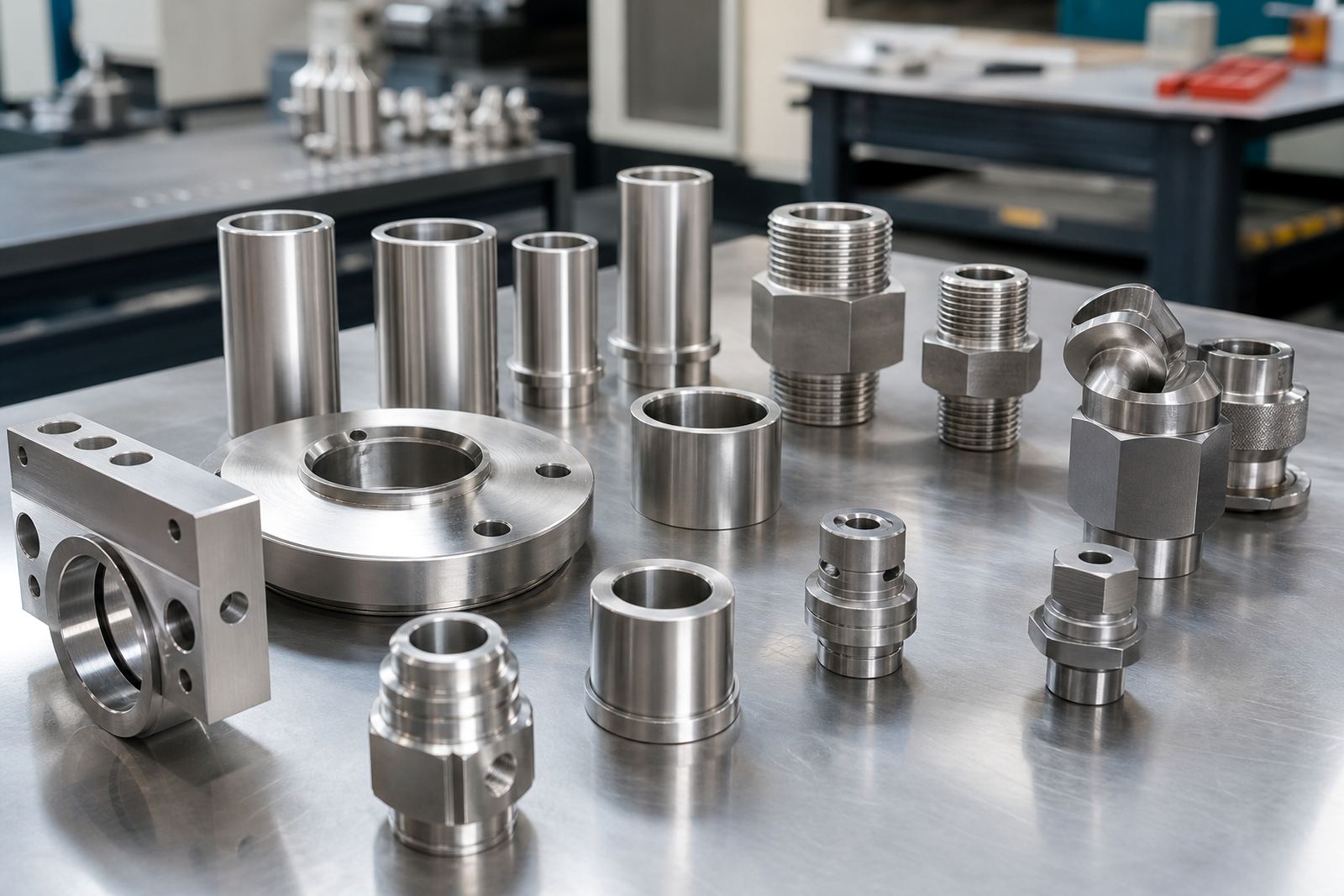
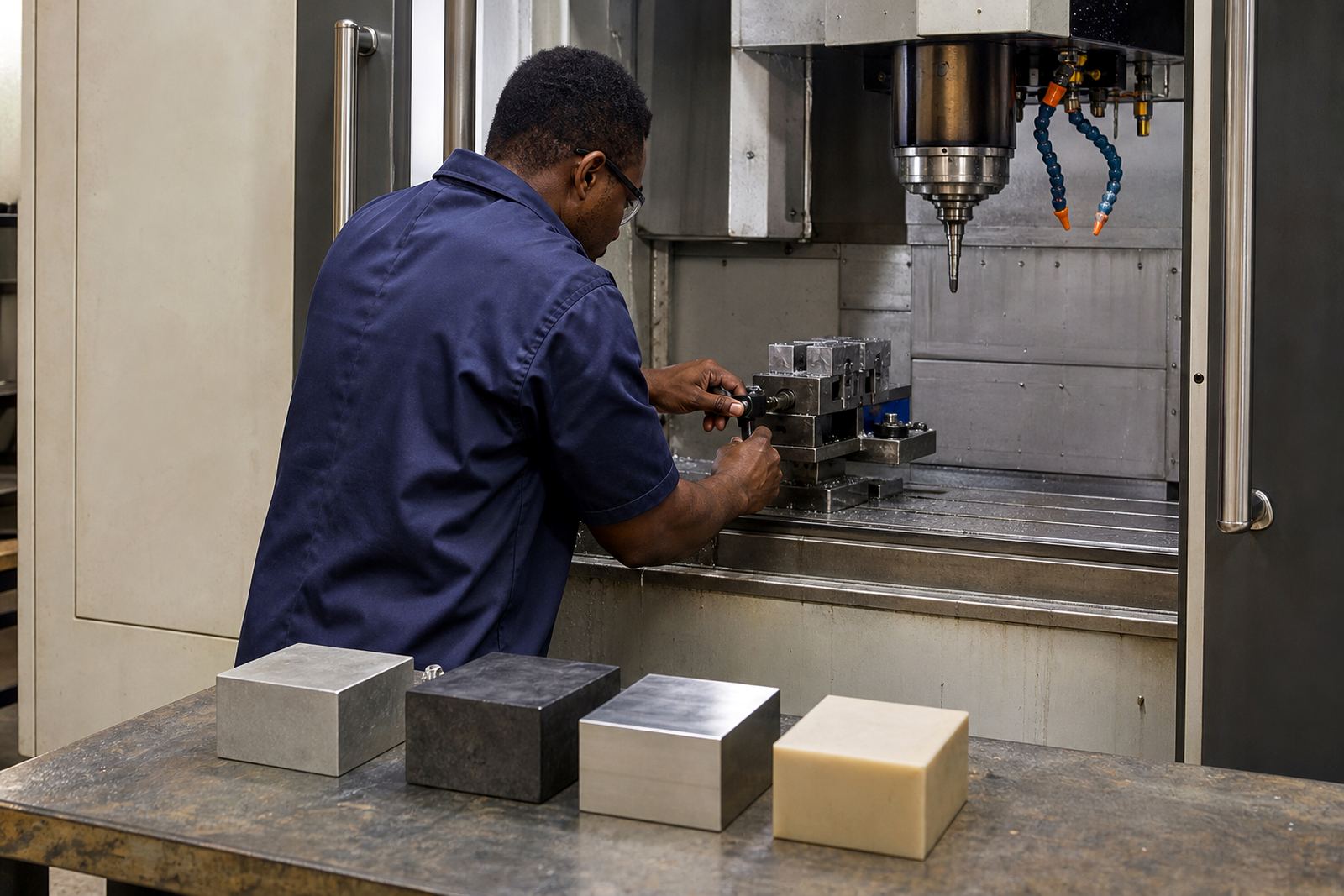
Metal parts are still the backbone of most industrial machining jobs. The most common choices are selected because they balance machinability, strength and availability in bar, plate or round stock. For milling and turning, each material behaves a little differently on the machine and in service.
- Aluminium is often used for housings, light brackets, covers and general purpose parts. It machines well and is useful where weight matters.
- Mild steel suits general engineering parts, fixtures and shafts where strength is needed without moving into specialty grades.
- Stainless steel is chosen for corrosion resistance, washdown areas and parts exposed to moisture or coastal humidity.
- Brass is common for fittings, small turned components and parts that benefit from good machinability and a neat finish.
- Tool steel is used where wear resistance is important, though it usually needs more care during machining and heat treatment planning.
For turning jobs, round stock is often the most efficient starting point. For milling, plate or block material is common where the part needs pockets, slots or mounting features. A production coordinator and programmer will usually look at stock size, wastage and the number of operations before confirming the best route. That is where a careful batch plan saves time and material.
How Plastics Fit Into Industrial Parts
Engineering plastics are not only for light duty work. In many small batch applications they replace metal where weight, noise or electrical insulation matter more than sheer strength. They also help where a part must wear against another surface without galling. In a job shop, plastics are useful for spacers, guides, bushings, protective covers and non load bearing fixtures.
Common machinable plastics include acetal, nylon, PTFE, HDPE and polycarbonate. Each one behaves differently. Nylon is tough but can absorb moisture, which is worth considering in coastal KZN. PTFE has excellent chemical resistance but can creep under load. Acetal is popular for accurate moving parts because it machines cleanly and holds shape well. Polycarbonate is chosen where impact resistance matters, while HDPE is often used for low friction components and protective items.
Plastic selection needs real care because some grades move after machining, especially if the part has thin walls or tight fits. That is why sample part remake work is common in this category. A first article can reveal whether the fit needs a slight adjustment before the full batch is cut, which avoids waste and keeps the job on spec.
Tolerance, Finish and Material Behaviour
Different materials hold tolerance differently. A part that holds a clean fit in aluminium may need more careful handling in stainless steel or engineering plastic. Material choice affects heat build-up, cutter wear and how much a part moves after machining. Even the same drawing can behave differently depending on stock quality and section thickness.
For close fits, the team needs to think about the complete process, not only the final cut. That includes roughing, finishing, deburring and inspection reporting. It also includes how the part will be used, because a pressed fit, slip fit or threaded assembly all place different demands on the material.
- Thin sections may warp if the material is too soft or the cut sequence is not planned carefully.
- Long shafts and slender parts often need extra support during turning.
- Some materials burr easily and require more finishing time.
- Plastic parts can relax after machining, so final checks matter before dispatch.
For clients in Durban, Richards Bay and Johannesburg, this is often the difference between a part that installs first time and one that needs rework. Tolerance guidance is therefore not a side note, it is part of the material decision from the beginning.
Choosing Material for Coastal, Industrial and Indoor Use
KwaZulu-Natal jobs often need extra attention because humidity and salt air can change what is suitable. A part that works fine indoors in New Germany may not last as long near the coast unless the material is selected with corrosion in mind. Likewise, industrial areas with heat, dust and vibration call for materials that resist wear and maintain their fit.
For outdoor or coastal use, stainless steel or suitable coated metals are often considered first. For indoor machine parts, aluminium or mild steel may be a better balance of cost and machinability. In settings where electrical isolation is important, plastics may be the better option. If the part is exposed to frequent cleaning, chemical resistance becomes a bigger factor than appearance.
A practical local example is a replacement component for a conveyor or guarding system serving a Pinetown factory and then going to a Durban site. The team may review the drawing, confirm the load, check the mating parts, then decide whether a metal or plastic is the better call. That saves time later and reduces the chance of fit issues during assembly.
What PME CNC Machining Looks at Before Cutting
Good material choice is not only about the grade name. It is also about stock availability, part size, machining sequence and repeat order needs. For small batch production, the process is usually more controlled when the material, drawing and end use are reviewed together at the start.
- Drawing review to check dimensions, threads, features and any unclear notes.
- Material selection to match strength, corrosion resistance and machinability.
- Prototype planning for first offs and sample part remake if needed.
- Part optimisation to reduce waste and simplify machining steps.
- Repeat order support so the same part can be made again with less delay.
Based in Pinetown, PME CNC Machining supports customers across Durban, Westmead, New Germany, Pietermaritzburg, Richards Bay, Umhlanga and Johannesburg. The best outcome usually comes from clear drawings, sensible material choice and realistic tolerance guidance. That is especially true when load-shedding or delivery timing can affect planning and collections, so a well thought out job helps keep things moving, no matter the run size.