What Wear Strips Do In A Machine Assembly
Wear strips are sacrificial components fitted where moving parts rub, slide or carry repeated contact. Their job is to take the wear so the parent frame, guideway or slide face does not need frequent repair. In a shop setting they are often used to keep movement straight, reduce metal-on-metal scuffing and help parts track properly under load.
Because these parts work in contact areas, the material choice and the finished size matter. A strip that is too tight can bind, while one that is too loose can chatter or accelerate wear. We machine wear strips to suit the drawing, the machine layout and the actual service condition, whether that means dry running, light lubrication or an environment with dust, coolant or coastal humidity.
Common Sizes, Profiles And Material Choices
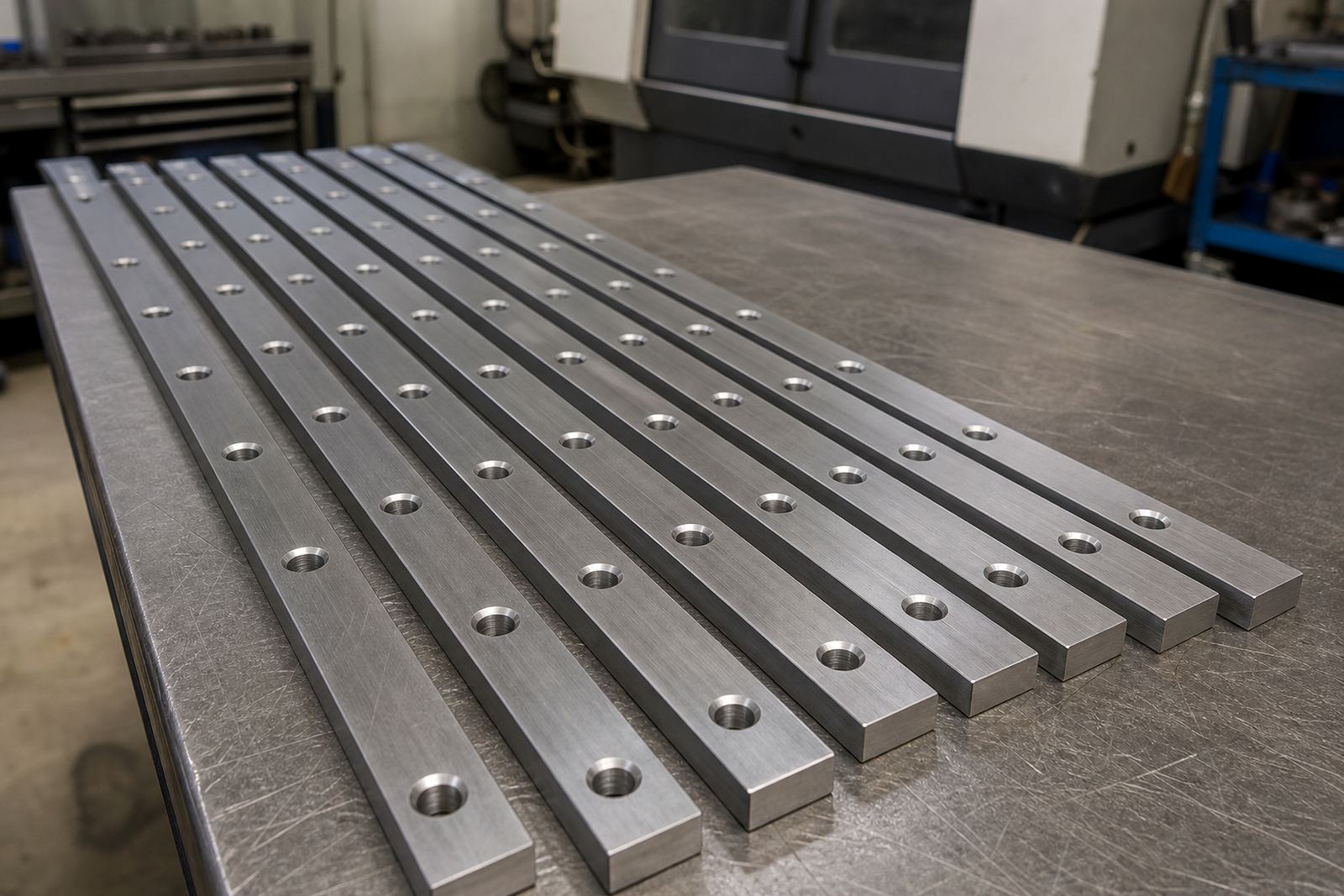
Wear strips are usually made to order in short runs, so the size depends on the machine and the contact pattern. We can machine flat strips, stepped strips, profiled edges, countersunk fixing points and simple location features where required. Lengths and widths are cut to the job, with thickness selected to match the wear allowance and the fit-up on site.
Materials are chosen for the working condition. In many cases that means engineering plastics, bronze, aluminium or mild steel, but the right answer depends on load, sliding speed, temperature and whether the area sees coolant, oil or washdown. For machines in Durban or other coastal areas, corrosion resistance and moisture handling can be important, especially where salt air and condensation are part of daily use.
- Flat or profiled wear strips for guide rails and slides
- Machined holes, slots, counterbores or countersinks where needed
- Short production runs for replacement sets or matched pairs
- Surface finish selected for smoother contact and easier fitting
- Material matched to the job, not just to nominal dimensions
Where Wear Strips Are Used On Shop Floor Equipment
Wear strips suit many kinds of industrial machinery, especially where a component moves back and forth or needs a controlled running surface. They are used on linear guides, transfer equipment, loading systems, conveyors, clamping units and general machine frames where contact surfaces need regular renewal.
They are also useful when a machine is still serviceable but showing wear in one local area. Rather than removing a full assembly, a replaceable strip can restore alignment and reduce downtime. That is often the practical answer for small-batch production where the machine must stay in service and the maintenance window is tight.
- Guide and slide interfaces
- Contact faces on moving fixtures
- Support points on handling and transfer equipment
- Wear-prone areas on repeat-cycle machinery
- Replacement parts for maintenance and repair teams
Installation, Fixing Methods And Power Needs
Wear strips are normally installed as mechanical parts, so they do not need electrical power or gas in service. What matters is the fit, the fixing method and the surface they run against. Depending on the design, they may be secured with bolts, screws, dowel location or a combination of fixings and mating pockets. Some assemblies need clearance for grease points or access for inspection.
Before fitting, the mounting surface should be clean, flat and checked for burrs, high spots or damage from the old strip. If the parent surface is worn, the new component can inherit the fault and fail sooner than expected. In many cases it is worth checking the mating part, alignment and fastener condition at the same time so the repair actually lasts.
Care, Servicing And Replacement Timing
A wear strip should be checked as part of routine machine maintenance, especially on equipment that runs daily or carries variable load. Look for thinning, grooves, edge chipping, loose fasteners, heat marks or changes in machine travel. If movement starts to feel rough or noisy, the strip may already be beyond practical service.
For machines exposed to dust, washdown or coastal air, regular cleaning helps prevent trapped grit and corrosion at the fixing points. Light lubrication can assist where the design allows it, but it should not be applied blindly if the machine is meant to run dry. If a strip is replaced early, the parent structure often stays in better condition and the repair cost remains manageable.
What To Send When Ordering Wear Strips
Clear ordering information saves time and avoids rework. If you have an existing part, a clean sample or accurate measurements help us confirm the shape and the fit. If the old strip is worn unevenly, we may need both the removed part and the mating surface details to work out the original dimensions correctly.
Useful information includes the machine location, the wear pattern, material preference if known and whether the part must match an existing assembly. If the job needs a close fit, give us the drawing notes or the critical dimensions so we can guide the machining approach. We also assist with drawing review, tolerance guidance and repeat order support for parts that need to be made again later.
- Overall length, width and thickness
- Hole positions, slot sizes and edge details
- Material or performance requirement if known
- Machine make-up and where the strip fits
- Quantity needed for one-off repair or small-batch replacement
Small-Batch Wear Strip Supply From Pinetown
PME CNC Machining works from Pinetown, KwaZulu-Natal and supplies small-batch CNC machined parts across South Africa, including Durban, Westmead, New Germany, Pietermaritzburg, Richards Bay, Umhlanga and Johannesburg. Our team handles drawing review, prototype planning, sample part remake, inspection reporting and delivery coordination so the order moves in a practical way from enquiry to dispatch.
With Mandla Sibusiso Mkhize leading the business and a focused shop team handling programming, production, quality and client support, the aim is straightforward: make the right part to the right fit and keep your machine moving. For wear strips that need accurate sizing, repeatability and sensible material choice, we work on the real details, not guesswork.
Key facts
| Product type | Replaceable CNC machined wear strip for guides, slides and contact surfaces |
|---|---|
| Typical formats | Flat, stepped or profiled strips with holes, slots or counterbores |
| Common materials | Engineering plastics, bronze, aluminium and mild steel, subject to application |
| Fit targets | Made to drawing or sample with tolerance guidance for the critical features |
| Service conditions | Suitable for dry running, light lubrication, dust exposure and coastal humidity |
| Supply area | Pinetown, Durban, Pietermaritzburg, Richards Bay, Johannesburg and nationwide |