What Precision Spacers Are Used For
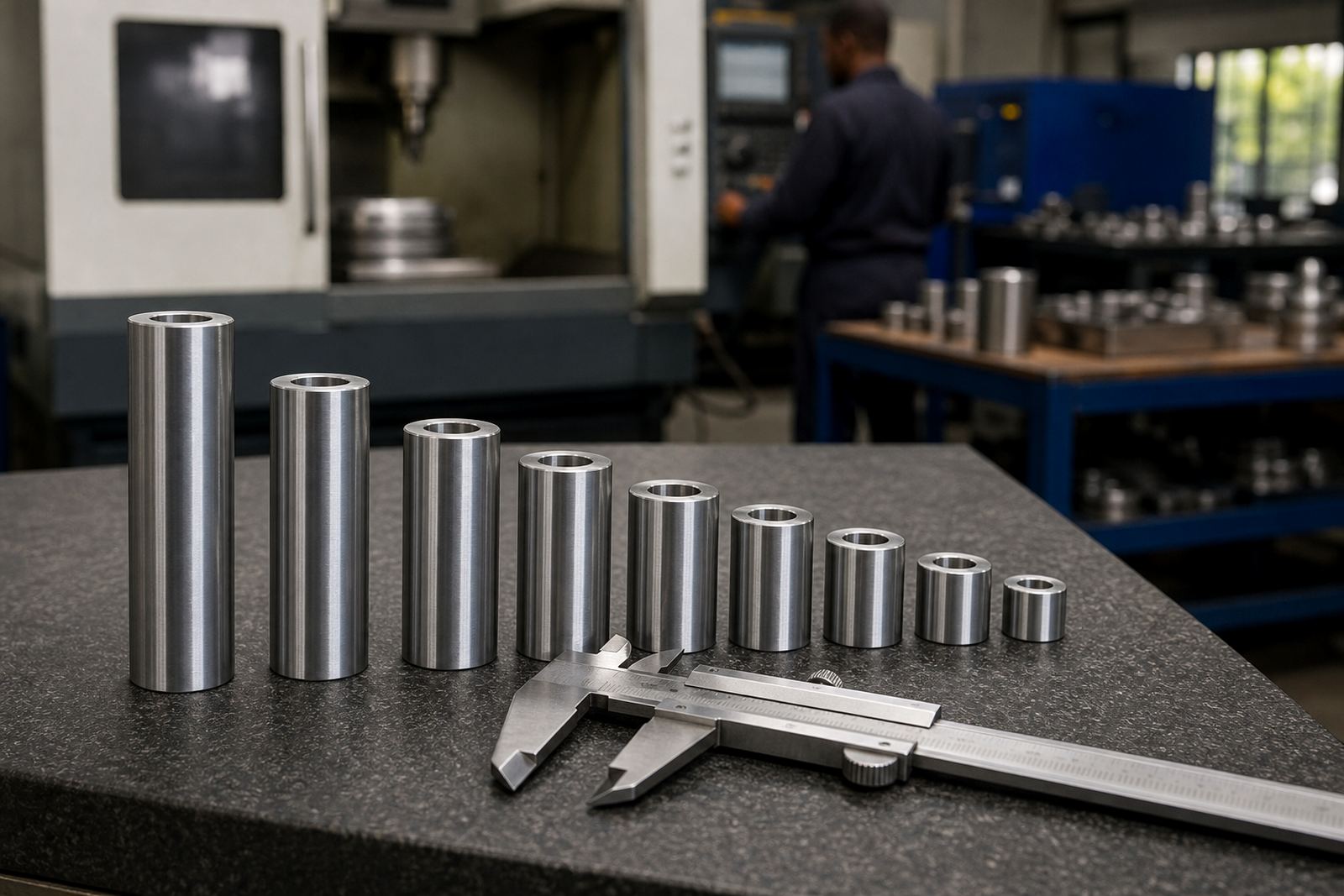
Precision spacers are simple parts with a critical job: they hold two surfaces apart by a set amount so an assembly sits where it should. They are used where bolt tension, bearing spacing, shaft alignment, panel gaps or stack-up control matter. In practice, that can mean round spacers for shafts and brackets, or square spacers where flat faces and anti-rotation features are needed. The size may look plain, but the result has to be consistent from one part to the next.
For small-batch work, spacers are often made after drawing review and material selection so the finished part suits the load, environment and installation method. A spacer used indoors in a dry factory does not always need the same material or finish as one fitted near spray, heat or coastal humidity. For customers around Durban and Richards Bay, that detail matters because corrosion and contamination can shorten service life if the wrong stock is chosen.
Typical Sizes, Shapes and Material Options
Spacer work normally starts with the required length, outer profile and bore size. Round spacers are common where a through-bolt, stud or shaft passes through the centre. Square spacers are often chosen where the part must sit flat against a plate or prevent turning during tightening. Depending on the assembly, we can also machine shoulders, chamfers, counterbores or reliefs so the spacer fits cleanly without binding.
Material choice is driven by the application. Common machining stock includes aluminium for lighter assemblies, mild steel for general structural use, stainless steel where corrosion resistance is needed, and engineering plastics for electrical isolation or low-friction applications. For some jobs a free-machining grade is suitable, while other jobs need tougher material for clamping pressure or wear. The right choice keeps the part practical to machine and fit, without over specifying it.
- Round or square form, depending on assembly layout
- Through-hole, blind bore or stepped features where required
- Lightweight, corrosion-resistant or wear-focused material selection
- Short-run batches for replacements, repairs or repeat production
How We Machine Spacers for Fit and Repeatability
Precision spacers are usually made by a mix of CNC turning and CNC milling. Turning is suited to round spacers, collars and sleeves where concentricity and outside diameter matter. Milling is used for square profiles, flats, slots and features that need precise orientation. When a part has to align with another component, both methods may be used in sequence so the spacer keeps its form and sits properly in the assembly.
We work to the drawing and the fit requirement, with tolerances guided by the application rather than by a one-size-fits-all promise. Some spacers only need a general fit, while others need tighter control on length, bore size or face squareness. Surface finish also matters, because a rough cut can affect stacking accuracy and clamp load. If a batch needs matching length across all pieces, that gets checked during production and again in final inspection.
- Length control for stack-up and spacing consistency
- Concentricity support for round bores and turned diameters
- Face squareness for clean seating against mating parts
- Deburring to help safe handling and easier assembly
Where Spacer Parts Suit Best
Precision spacers suit machine frames, brackets, guards, jigs, fixtures, enclosures, mounting plates and repair assemblies. They are also useful in equipment rebuilds where the original spacer is worn, missing or no longer available in the exact size needed. In those cases, a sample part remake or drawing update can save time by confirming the measurements before machining starts. That is often helpful for clients who need a quick replacement but still want the fit checked properly.
For customers across Pinetown, Westmead, New Germany and Umhlanga, spacers are often ordered in small batches for maintenance and production support. They may be part of a larger assembly, or they may stand alone as a critical set piece in a stack of washers, sleeves and fasteners. Because the part is simple, it is easy to overlook; because it controls spacing, it is often the difference between a clean fit and a stubborn one.
Installation, Handling and Site Requirements
Most precision spacers do not need special power or gas once supplied, because they are fitted as a machined component rather than installed equipment. The practical considerations are the fastening method, access to the assembly and whether the spacer sits in a dry, oily or exposed area. If a spacer is used in a bolted joint, the installer should check that the mating faces are clean and that any washers or bushes are used as intended. A spacer that is slightly out on length can affect clamp load, so fit-up should be checked before final tightening.
For assembly work on site, it helps to keep the parts labelled by size and position, especially when there are several spacers in one machine or frame. If the area is coastal or subject to washdown, material and finish need to be matched to the environment. Load-shedding also affects some workshop jobs, so we plan batch work around available machine time and delivery timing where needed. That keeps the order moving without unnecessary hold-ups.
- Check the bore, length and face condition before fitting
- Confirm whether the spacer is load-bearing or only for alignment
- Keep parts separated by size if multiple spacers are used in one build
- Use suitable fasteners and washers for the assembly design
Care, Inspection and Repeat Orders
Spacers do not usually need ongoing servicing, but they should be inspected when the machine or assembly is opened for maintenance. Look for fretting marks, galling, corrosion, crushed edges or any change in length from overtightening. In high-vibration applications, it is also worth checking that the spacer has not worked loose or picked up damage from surrounding components. If the part is reused after removal, a quick visual check and measurement is worth doing before refitting it.
For repeat orders, we keep the drawing history and part notes in order so the same spacer can be made again without guessing. If an assembly changes, drawing updates can be done first so the next batch reflects the latest fit or material requirement. This is useful for maintenance teams in Durban, Pietermaritzburg and Johannesburg who want the same part supplied again, with the same practical details, not just a similar shape.
What To Check When Ordering Precision Spacers
Before placing an order, it helps to confirm the exact length, outside size, bore size and the number of pieces needed. Also note whether the spacer is round or square, whether it needs any steps, and if there is a finish requirement such as deburring, light polishing or protection against corrosion. If there is a mating part, send the drawing or a sample so the fit can be checked against the actual application. A small detail like chamfer size or shoulder depth can make a difference to final assembly.
Our services for spacer work include drawing review, material selection, prototype planning, batch planning, tolerance guidance, part optimisation, sample part remake, assembly fit checks, inspection reporting, repeat order support, delivery coordination and drawing updates. Clients reach us through the enquiry form on our contact page, and from there we can confirm the next step for a one-off repair batch or a small production run. When the part is meant to hold everything else in place, accuracy is not optional, it's the whole point.
Key facts
| Product type | Precision spacers for controlled clearances and assembly stack-up |
|---|---|
| Shapes | Round and square spacers |
| Common materials | Aluminium, mild steel, stainless steel and engineering plastics |
| Typical machining methods | CNC turning and CNC milling |
| Fit control | Length, bore size, face squareness and concentricity guided by drawing |
| Batch size | Small-batch production, prototypes and repeat orders |