What keyway components are used for
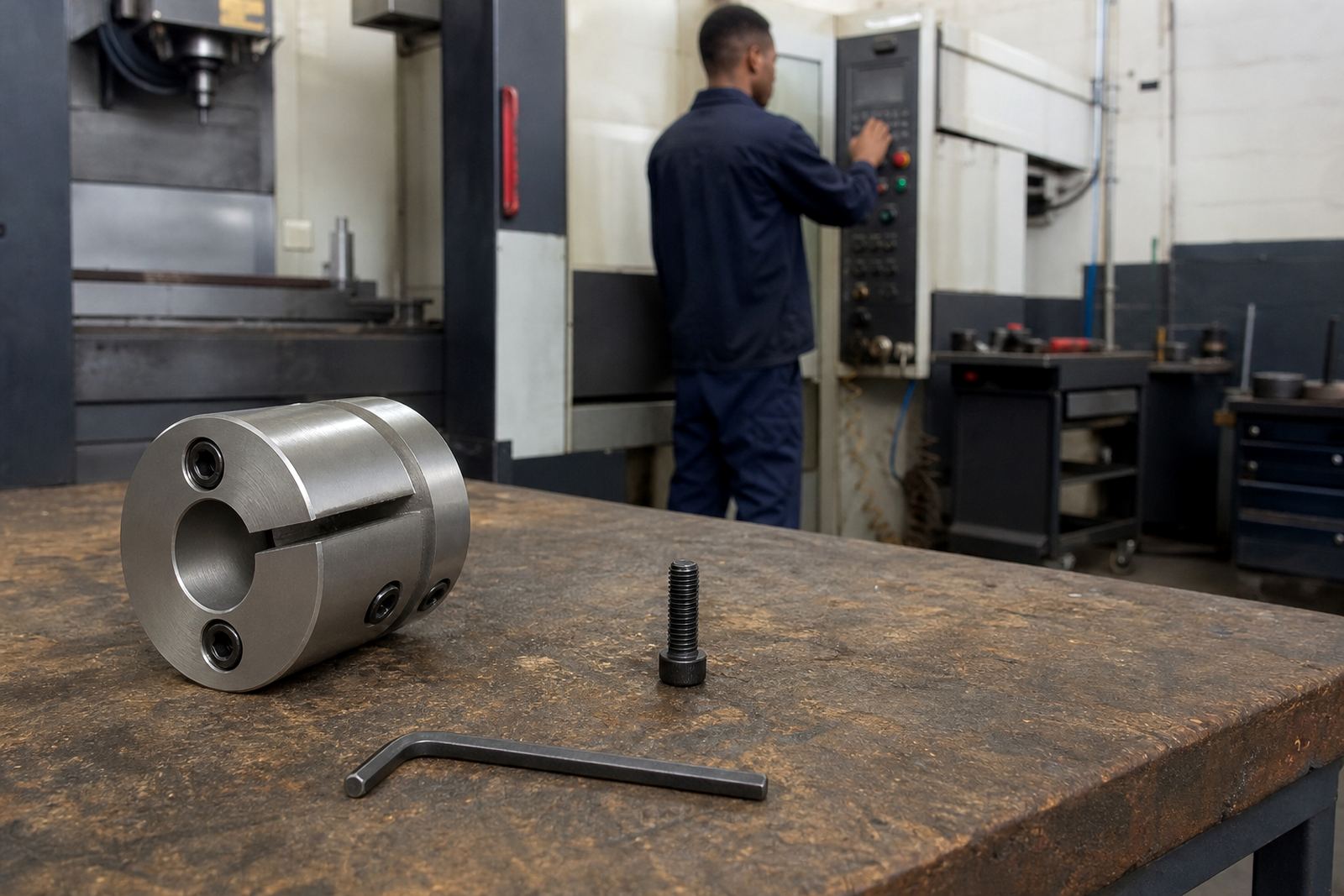
Keyway components are parts that carry a machined slot, keyseat or related feature so a shaft and hub can lock together and transmit torque without slipping. In practice that means the component must be machined to suit the mating shaft, key and assembly arrangement, with enough attention to fit that the part locates properly but still assembles on site.
These parts are used in drive assemblies, coupling points, pulley hubs, sprockets, gear interfaces and other rotating equipment where positional location matters. For many workshops in KwaZulu-Natal and Gauteng, the need is simple: the part must fit first time, hold alignment and survive repeated use in service.
Sizes, materials and machining options
Keyway work can be supplied on small parts or larger components depending on the drawing and the final application. Common stock shapes include round bar, plate, block and turned blanks, with the key feature added after the basic form is prepared. We work from customer drawings or can help with drawing updates where a section needs clarification before machining starts.
Material choice depends on duty, wear and the surrounding environment. Typical selections include mild steel, carbon steel, stainless steel, aluminium and engineering plastics where suitable. Coastal humidity around Durban and Richards Bay can influence material choice, while indoor plant equipment in Johannesburg may prioritise wear resistance and repeatability over corrosion exposure.
- Outside diameter, face width and overall length as per drawing
- Standard or custom keyseat width and depth
- Through bores, blind bores or turned locating surfaces
- Chamfers, reliefs and edge breaking for safer assembly
Where this part suits best
Keyway components suit repair work, prototype builds and small production runs where a reliable torque connection is required but full volume manufacturing is not necessary. They are often ordered for maintenance replacements, machine refurbishments, and new equipment builds where only a few pieces are needed at a time.
For clients in Pinetown, Westmead and New Germany, this is useful when a plant needs replacement parts without long delays. It also suits out-of-town clients in Pietermaritzburg, Durban or Umhlanga who want practical support from drawing review through to delivery coordination. One small batch can cover a machine repair this week and a repeat order later if the setup proves out.
How the part is installed and powered
Installation is normally mechanical and depends on the mating shaft, key and retaining method. In many assemblies the key is fitted into the shaft keyway, the component slides over it and a fastener, collar or retaining feature holds the position. The fit should be checked before final assembly because a keyway that is too tight can mark the mating parts, while one that is too loose can introduce movement under load.
CNC-machined keyway components do not require electricity, water or gas once they are installed in service, but the equipment they join may rely on electric drive, hydraulic power or pneumatic control. Where a client is replacing a worn part, it helps to confirm the power source and operating duty of the machine so the replacement can be matched to the actual load, not just the old sample. This avoids repeat failure when the machine is brought back into use after load-shedding interruptions or stop-start operation.
- Check shaft diameter and key size before ordering
- Confirm whether the bore is parallel, tapered or stepped
- Note any retaining groove, grub screw, collar or locking feature
- Allow for access space around the assembly during fitment
Tolerance guidance for a practical fit
For keyway work, tolerance is not about guessing a perfect number, it is about matching the fit to the function. A drive part that moves under load may need tighter control of the bore and keyseat geometry, while a non-critical location part may allow a broader manufacturing range. We review the drawing and the mating parts before cutting, especially when the part is replacing an existing component that already shows wear.
Where the drawing is incomplete, tolerance guidance can help define the areas that matter most, such as bore size, flatness, concentricity, parallelism and the position of the key feature. That is often the difference between a part that installs cleanly and one that has to be reworked on site. For batch work, we keep the first sample under close check so repeat pieces stay consistent across the run.
Care, servicing and repeat order support
Keyway components usually need only basic care, but they should be inspected during planned maintenance because wear often starts at the contact face or along the keyseat edges. If the component runs in a dusty, wet or coastal environment, check for corrosion, fretting marks and any signs of movement after start-up. A small nick at the keyway can become a bigger issue if it is left in service too long.
We can support repeat order work, sample part remake and drawing updates when a part proves successful in use. That is useful when the original sample needs a slight change after trial fitment, or when the client wants to standardise a part across several machines. A clear record of measurements and inspection results also helps when a maintenance team needs the same item again months later, maybe with no spare on the shelf.
- Wipe off cutting fluid, dust and metal fines before storage
- Keep machined faces protected from rust and handling marks
- Inspect after a short trial run for any fretting or loosening
- Store with the matching drawing, size notes and revision detail
What to check when placing an order
When ordering keyway components, the most useful starting point is a clear drawing or a measured sample. Please include the shaft size, bore size, key dimensions, overall size, material preference and the function of the part in the assembly. If the part must fit into an existing machine, share the wear condition too, because an old worn sample may no longer reflect the original size.
It also helps to say whether the item is for prototype planning, batch planning or replacement work, since that affects how we set up the job. Clients across South Africa can send enquiries through the contact page, and our team will help with drawing review, part optimisation, inspection reporting and delivery coordination from Pinetown. We keep the process practical and straightforward, with enough detail to avoid a bad fit or a second round of machining.
Key facts
| Product type | Machined keyway component for torque transfer and location |
|---|---|
| Primary process | CNC milling and CNC turning where the geometry requires it |
| Typical materials | Mild steel, carbon steel, stainless steel, aluminium and suitable engineering plastics |
| Typical format | Small batch, prototype and repeat order work |
| Fit factors | Shaft size, key width, key depth, bore type and retaining method |
| Service area | Pinetown, Durban, Westmead, New Germany, Pietermaritzburg, Richards Bay, Johannesburg and Umhlanga |