What adaptor plates do on a working machine
An adaptor plate is a machined interface part used to bridge two components that do not share the same bolt pattern, footprint, centre distance or mounting face. In practical terms, it allows one item to sit securely on another without forcing holes, packing with loose washers, or leaving the load sitting off-centre. That matters on equipment that sees vibration, repeated start-stop use, coastal humidity, or cleaning with water and chemicals.
We machine adaptor plates for small batch production where a standard off-the-shelf plate will not suit the job. The work is usually based on a drawing, a sample part, or an existing item that needs a better fit. Common uses include mechanical assemblies, frames, covers, motor mounts, housings, jigs and service replacements. For many jobs, a well made adaptor plate is the cleanest way to keep the original equipment in service instead of modifying the full assembly.
Sizes, thicknesses and machining options
Adaptor plates can be cut to suit compact mounting jobs or larger industrial interfaces. The right size depends on the load, the hole spacing, the edge distance available, and whether the plate must also act as a spacer or reinforcing piece. Thickness is selected to suit the application, with enough material to keep the fixing area stable and avoid flexing under tightening force.
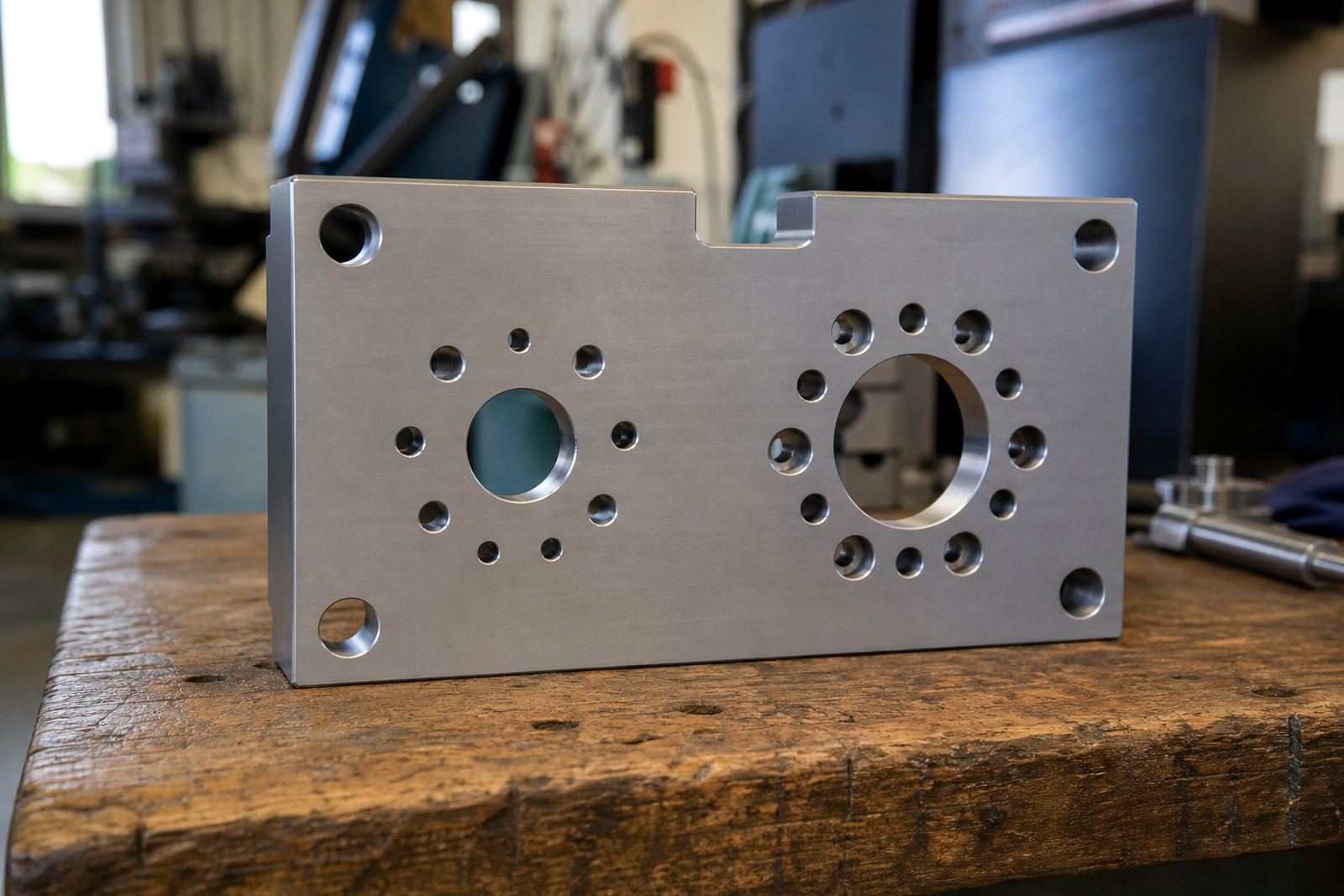
- Rectangular, square or irregular plate shapes
- Through-holes, counterbored holes, tapped holes or slotted fixing points
- Offset patterns for mismatched centres
- Raised steps, recesses or locating faces where required
- Edge radii or chamfers for handling and fitment
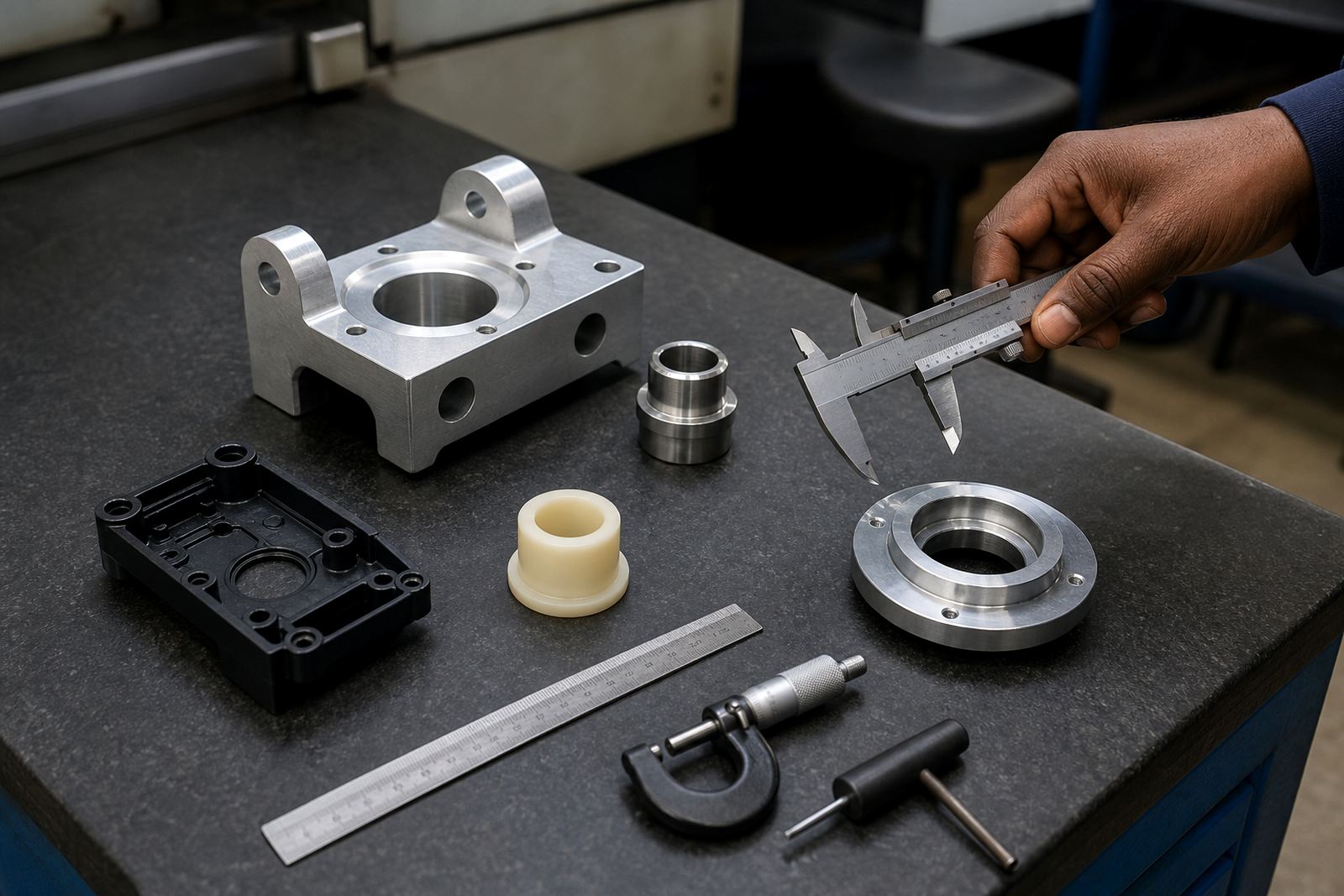
Material choice is guided by the environment and the load path. Mild steel is commonly used for general fabrication work. Aluminium suits lighter parts where weight matters. Stainless steel is often selected where moisture, washdown or coastal exposure are a concern. Brass or engineering plastics may suit lighter-duty or special-contact applications. We can also work from an existing sample plate if the job needs a like-for-like remake or a better fitting replacement.
Where adaptor plates suit best
Adaptor plates are useful anywhere two mounting standards need to meet without altering the main machine frame. That includes plant rooms, workshop equipment, assembly fixtures, conveyor supports, service brackets and custom retrofit work. They are also common when replacing older imported equipment with locally available parts that do not share the same fixing layout.
In KwaZulu-Natal, corrosion resistance and drainage around the mounting face often matter just as much as the hole pattern. On coastal sites near Durban or Richards Bay, trapped moisture can shorten the life of poor-fitting parts. A well machined plate helps keep fasteners seated properly and reduces movement under load, which is especially important where vibration or heat cycling is part of the operating conditions.
- Equipment retrofits and replacements
- Machine frames and support brackets
- Jigs, fixtures and assembly aids
- Pumps, motors and drive components
- Control boxes, guards and service mounts
Installation fit, power requirements and site conditions
Adaptor plates themselves do not need power or gas. What matters is how they are installed and what the plate will support once fitted. The installer should check the mating surfaces are flat, clean and free of burrs before tightening. If the original equipment uses vibration, a suitable locking method should be specified so fasteners do not work loose over time.
Where the plate is being fitted near live plant, the job should be isolated and made safe before any drilling or alignment work begins. If the assembly sits outdoors or in a washdown area, drainage, sealant lines and exposed fasteners should be considered at the ordering stage not after installation. For heavier items, lifting points and access for a spanner or socket also matter, because a plate that is difficult to tighten properly tends to give trouble later.
We provide drawing review and tolerance guidance before machining where needed, so the fixing face, hole locations and material thickness are matched to the actual installation conditions. If the job is going onto a machine with limited clearance, that should be noted early because a few millimetres can make the difference between a clean fit and a rework.
Tolerances, inspection and repeat-order consistency
Adaptor plates often need closer control than people expect, because small errors in hole position or thickness can throw out the full assembly. Tolerances are set according to function and material, and we work to the drawing or sample part rather than assuming one size fits all. Where a plate must line up with existing holes, centre distances and edge spacing need careful checking to avoid binding or side loading.
Inspection may include dimensional checks, hole location verification and fit checking against the mating part. If a plate is part of a repeat job, we keep the order details consistent so future batches match the approved setup. That is useful for clients who need the same plate for service stock, production support or multiple sites across South Africa. A tidy first sample saves a lot of time on the second batch, and less chance of a costly remake.
- Drawing review before machining starts
- Sample part remake when an existing plate needs correction
- Inspection reporting for critical dimensions
- Repeat order support for ongoing production needs
What to check before you send an enquiry
To quote and machine an adaptor plate properly, we need the mounting pattern, overall size, thickness, material and the function of the part. If a sketch is all you have, that can still be enough to start the conversation, but the more accurate the information the better the fit. A clear photo of the mating faces helps too, especially where there are odd offsets or non-standard hole centres.
- Overall plate length, width and thickness
- Hole sizes, positions and whether any are tapped or counterbored
- Material preference, or the service conditions if you are not sure
- Whether the plate carries load, seals a face, or only acts as a spacer
- Any coating, finish or corrosion protection needed
If the adaptor plate is going into a machine that is already in service, please mention any clearance limits, access issues or known wear on the mating part. That helps us suggest material options and machining details that suit the job first time. We can also assist with drawing updates, part optimisation and delivery coordination for clients in Pinetown, Durban, Westmead, New Germany, Pietermaritzburg, Richards Bay, Johannesburg and Umhlanga.
How PME CNC Machining handles small-batch plate work
PME CNC Machining is based in Pinetown, KwaZulu-Natal and has been supporting small-batch machining work since 2008. The team includes Mandla Sibusiso Mkhize, Anele Nondumiso Dlamini, Johan Petrus van Wyk, Siyabonga Patrick Zulu, Naledi Refilwe Molefe and Kyle Brendan Naidoo. For adaptor plates, the focus is on practical fit, dependable finish and a clear handover so the part can go straight into service.
We handle CNC milling and turning where the job requires it, then check the result against the drawing or sample. For plate work, that usually means accurate hole positions, clean edges and the right thickness for the load. Clients across Durban, Pietermaritzburg, Richards Bay and Johannesburg can send an enquiry through the contact page form when they need a single replacement, a prototype or a small production run.
Key facts
| Part type | CNC machined adaptor plate for mismatched mounting patterns |
|---|---|
| Common materials | Mild steel, aluminium, stainless steel, brass, engineering plastics |
| Typical features | Through-holes, tapped holes, counterbores, slots, steps and recesses |
| Typical use | Retrofits, equipment mounting, service replacements and fixture work |
| Finish options | As machined, deburred, or prepared for coating by others |
| Location | Pinetown, KwaZulu-Natal with supply across South Africa |