What a machined pulley does in a drive system
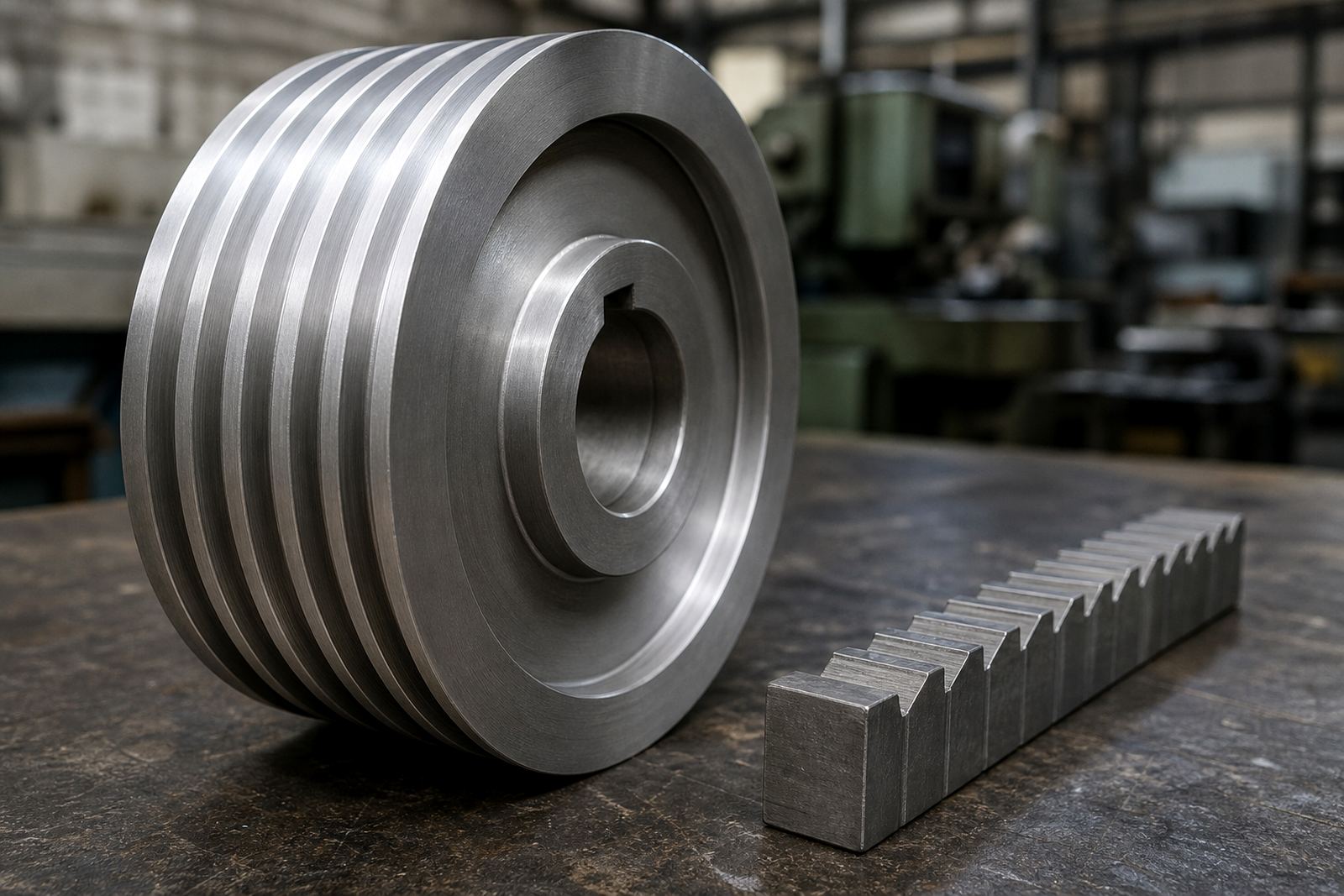
A machined pulley transfers motion from a motor or engine to another shaft by means of a belt. The groove profile helps the belt sit correctly, while the bore, keyway or other drive feature allows the pulley to mount securely on the shaft and transmit power without slipping.
For many users, the main value is control. A pulley can alter speed, torque and direction in a compact setup, which is why it is common on pumps, fans, conveyors, compressors, workshop machinery and general plant equipment. When the dimensions are right, the drive runs smoother and the belt wears more evenly.
We make pulleys to drawing or from a clear sample, and we can work from replacement part measurements if the original part is worn. That is often useful on older equipment where the exact pulley is no longer easy to source.
Grooves, bores and key features made to fit
Machined pulleys are not one-size-fits-all. The groove form depends on the belt type, the bore must match the shaft, and the hub or face thickness needs to suit the mounting space available. Some jobs call for a single groove, while others need multiple grooves for heavier duty drives or matched belt sets.
Typical details we work with include outside diameter, pitch diameter, groove angle, bore size, keyway width, hub length and face width. If the drawing calls for a grub screw, taper lock arrangement or set screw feature, that can also be included where suitable.
- Single groove and multi-groove pulleys
- Plain bore, keyed bore or stepped bore options
- Custom hub length and face width
- Groove dimensions matched to the belt section
- Finishing to suit the application and handling needs
For tighter fitting parts, we also guide on the practical tolerance needed for the bore and shaft interface so the pulley can be fitted correctly without unnecessary rework.
Where machined pulleys suit best
These parts are well suited to small batch replacement work, maintenance shutdowns and equipment upgrades where the machine must go back into service quickly. In Pinetown, Durban and Westmead, we often see pulley work linked to plant maintenance, packaging lines, workshop machinery and general fabrication jobs. Further afield, clients in Pietermaritzburg, Richards Bay and Johannesburg use machined pulleys when they need a part that matches an existing drive setup rather than changing the whole system.
Pulleys can also be made for equipment exposed to coastal conditions. In places close to Durban and Umhlanga, salt air and humidity can affect finish and wear, so material choice and surface protection matter. For inland use, dust and vibration are common considerations, especially where machinery runs for long periods or starts and stops often.
- Conveyor and material handling drives
- Pumps and process equipment
- Fans, blowers and ventilation units
- Workshop and maintenance machinery
- Replacement parts for older equipment
Material choices and practical sizing guidance
Pulleys can be machined from a range of materials depending on load, speed, environment and budget. Common choices include aluminium for lighter duty use, mild steel for general purpose work and selected engineering plastics for certain low load applications. The right material depends on belt tension, shaft size, operating speed and whether the part will run in a dry, dusty or humid setting.
As a guide, small pulleys may be made for compact machinery with modest shaft diameters, while larger items are often required for slower drives or heavier plant. We can also work with replacement dimensions where the original part has wear on the groove, bore or keyway. If needed, we help check whether the existing belt type still suits the drive, or whether the pulley should be adjusted to suit a new belt section.
Material selection matters when the job must handle repeated starts, vibration or long operating hours. A pulley that is too light for the application can wear quickly, while one that is too heavy can place unnecessary load on bearings and shafts.
Installation, power requirements and setup checks
Most machined pulleys do not need special power or gas supply on the customer side. They are fitted into the drive system and then aligned with the mating pulley or sheave, using the correct belt tension and shaft mounting method. The main requirement is accurate installation, because poor alignment can lead to belt wear, noise and early failure.
Before fitting, the shaft, key and mounting surface should be clean and free from burrs. The pulley should seat fully without rocking, and the fasteners must be tightened to the appropriate level for the assembly. Where a keyway is used, the fit must be checked carefully so the key sits correctly and the pulley does not move under load.
- Check shaft diameter and key size before ordering
- Confirm groove type and belt section
- Measure available face width and hub clearance
- Allow for access to fasteners and puller points
- Verify rotation direction and belt alignment on site
If the drive runs on existing equipment, it helps to inspect the adjacent bearings, belt condition and shaft wear at the same time. That saves time later when the machine is brought back into service.
Care, servicing and wear signs to watch for
With regular service, a machined pulley can give dependable operation for a long time. Basic care includes keeping the groove clean, checking for belt dust build-up and making sure the set screws or hub fasteners remain secure. In dusty environments, a quick inspection during planned maintenance can prevent a lot of belt damage.
Watch for shiny groove surfaces, belt slip marks, chipped edges, wobble on the shaft or unusual noise. These are often signs that the pulley is no longer running true, or that the belt and pulley are no longer matched properly. If the bore or keyway shows wear, the pulley may need repair or replacement rather than another belt change.
For coastal sites, cleaning and inspection are especially useful because moisture and salt can speed up surface wear. In inland workshops, the usual causes are misalignment, vibration and over-tensioning. A good fit at the start normally saves cost later, and it also reduces downtime.
What to send when ordering a replacement pulley
To quote and machine the right part, we need the key dimensions and the operating details that affect fit. A clear drawing is best, but a sample pulley or a set of careful measurements can also work if the original is no longer available. If the part is being replaced in a hurry, send as much detail as possible from the start so the job can move without delay.
Useful information includes the belt type, outside diameter, groove count, bore size, keyway size, hub length, face width, material preference and whether the pulley must match an existing installation. If there is a physical sample, note any wear on the bore or groove so the replacement is made to the correct working size, not the worn size.
- Overall diameter and face width
- Belt section and number of grooves
- Bore size and keyway details
- Hub length, offset and any fixing method
- Material preference and finish requirement
- Whether the part must match an existing unit
Once we have the drawing or measurements, we can advise on practical tolerances, material selection and any changes needed to improve fit or ease of installation.
Key facts
| Product type | Machined pulley for belt-driven equipment |
|---|---|
| Typical features | Grooves, bore, hub, keyway and mounting details |
| Size range | Made to drawing or sample in small batches |
| Common materials | Aluminium, mild steel and selected engineering plastics |
| Fit guidance | Bore, key and groove dimensions checked to application |
| Service area | Pinetown, Durban, Pietermaritzburg, Richards Bay and Johannesburg |