What a simple jig does on the shop floor
A simple jig is a purpose made fixture that holds, locates or supports a part so the next operation can be done more consistently. In small batch work that often means quicker set-up, less handling and fewer mistakes during manual assembly or checking. The aim is not complexity, it is repeat positioning that saves time and helps each part sit where it should.
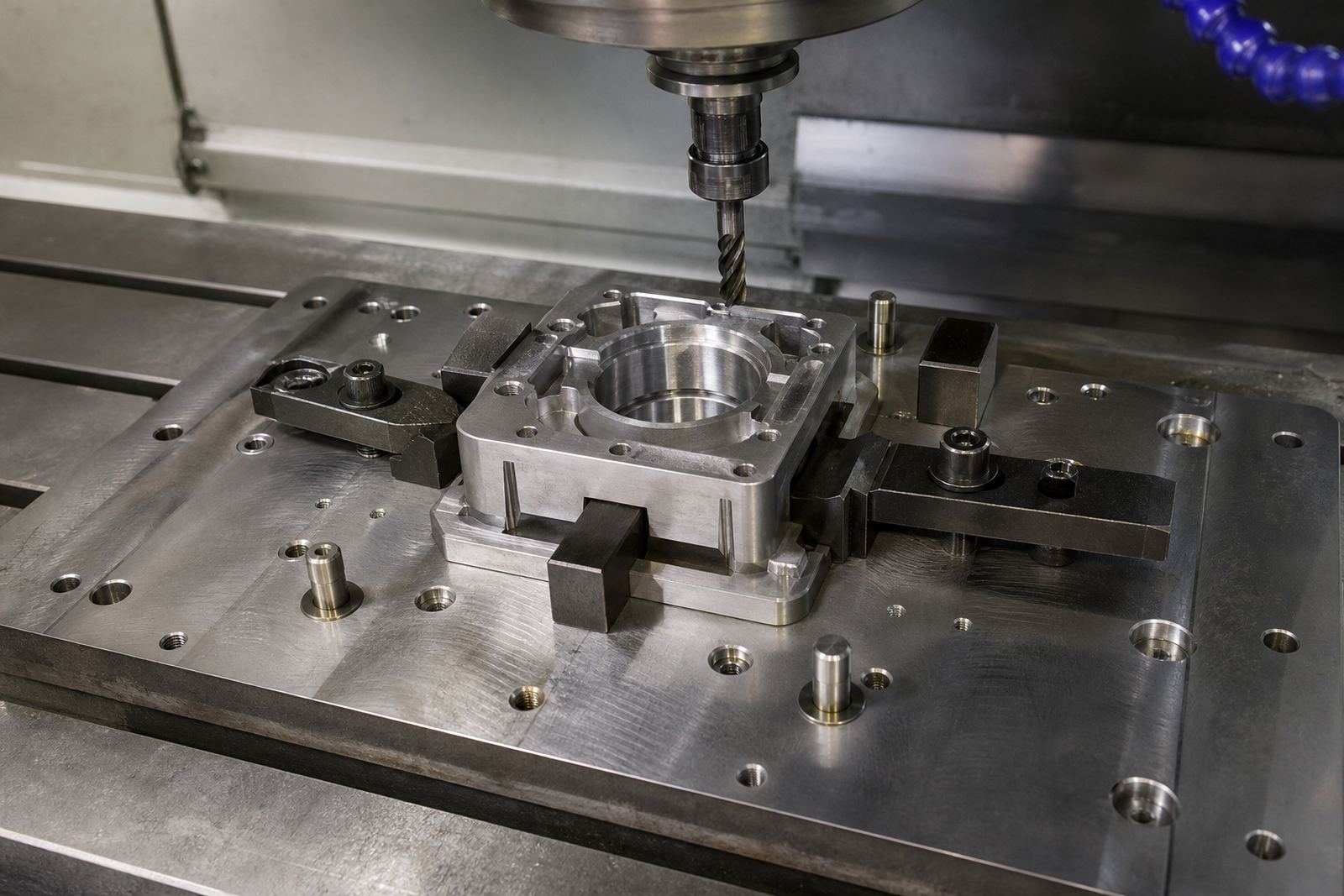
We commonly make jigs for repetitive location, hole alignment, drilling support, inspection location, light assembly and repeat-fit checks. For CNC milling and turning related work, a jig can help a machinist or operator position a blank, sub-assembly or finished component in the same way every time. That matters when parts must match drawings, fit mating components or stay within practical tolerance for the job at hand.
Because PME CNC Machining works on small batches, the jig needs to suit the actual run size and the way the part will be handled on the day. A good jig should be easy to load, easy to clean and simple enough that a shop floor team can use it without fuss.
Common sizes, options and material choices
Simple jigs are usually sized around the part rather than around a standard catalogue dimension. We can work from a client drawing, a sample part or a basic sketch and then build the locating points, stops, clamps and guide faces around the application. Some jobs need a compact hand-held fixture, while others need a larger base plate with multiple location points for repeat checks.
Material choice depends on wear, handling, corrosion risk and budget. For indoor dry use, aluminium can be a sensible choice where weight matters. For higher wear or rougher handling, steel is often preferred. In coastal KwaZulu-Natal, some clients ask for better corrosion resistance because humidity can affect unprotected metal over time. Where a jig is for a clean inspection area or light assembly table, the finish and surface care can matter just as much as the base material.
- Base sizes can be made to suit small handheld parts or larger table mounted fixtures
- Location features may include pins, stops, guides, bushes or simple nest pockets
- Surfaces can be machined for easier cleaning and better part seating
- Openings and clearances can be added to suit clamps, bolts or operator access
Where simple jigs suit best
These jigs suit production spaces where repeat work needs to be consistent but the batch size does not justify a fully automated system. That includes job shops, maintenance teams, light manufacturing, assembly benches and inspection stations. We also see demand from clients who need a practical fixture for remaking sample parts or verifying fit before a larger repeat order.
In Durban, Pinetown, Westmead and New Germany, many customers want a straightforward jig that can stand up to daily use and still be easy to store when not needed. For Pietermaritzburg, Richards Bay and Johannesburg clients, transport and handling are also part of the brief, so the fixture may need a more compact form or a base that protects sensitive faces during delivery.
- Manual assembly where parts need to locate the same way each time
- Inspection tasks where the same orientation reduces measuring errors
- Drilling or marking operations where repeat hole position is important
- Prototype or sample work where fit checks must be quick and repeatable
Installation, setup and utility requirements
Most simple jigs do not need power or gas. They are mechanical tools, so the main requirement is a suitable work surface, a clean area and enough space for the operator to place the part safely. If the jig is bolted down, the table or base should be stable and level. If it is a portable fixture, it should still have enough weight or grip to stay steady during use.
For installation, we normally check how the operator loads the part, where hands need access and whether there is room for clamps tools or measuring equipment. A jig that is awkward to load will slow the job instead of helping it. On the shop floor that can matter more than a fancy finish. In some cases we will suggest locating holes, dowel positions or marked reference faces so the user can set it up the same way every time.
If the jig will be used near coolant, cutting fluid or washdown areas, tell us up front. We can then allow for drainage, easier cleaning and better material choice. That helps especially where humidity, dust or light oil contamination is common.
Care, servicing and practical lifespan
A simple jig lasts longer if it is cleaned after use, stored properly and checked for wear on the contact points. Buildup of swarf, oil or dust can change how a part seats and that can lead to repeat errors. If a locating pin, stop face or bush starts to loosen, the fixture should be inspected before the next batch runs.
Servicing is usually straightforward. Depending on the design, this may involve replacing a worn insert, rechecking alignment, touching up a contact face or updating a reference point after a drawing change. For repeat orders, PME CNC Machining can support drawing updates and sample part remake if the original setup needs a correction. That is often quicker than starting from scratch.
- Keep location faces clean and free of burrs
- Store the jig away from moisture where possible
- Inspect clamps, pins and fasteners before repeat runs
- Report any change in part fit early so the fixture can be adjusted
What to send us when ordering a jig
The more detail we have at the start, the better the jig can suit the real job. A drawing is useful, but a sample part and a short note on the process can be just as important. If the jig is for inspection, tell us what must be checked. If it is for assembly, tell us what has to line up, where the operator will hold the part and whether the job is done by one person or two. A small note about the work area can also help, especially if space is tight.
When clients contact PME CNC Machining through the enquiry form, we review the drawing, material choice and repeat-use needs before we plan the build. We work with customers in Pinetown, Durban, Pietermaritzburg, Richards Bay and Johannesburg, so delivery coordination can be included where needed. If the job may change later, mention that too. A jig with a little adjustment room can save time on the next batch.
- Part drawing, sample or sketch with key dimensions
- Material preference and any corrosion concerns
- How the part is loaded and removed
- Required repeat position, fit or inspection points
- Expected batch size and whether the order will repeat
Key facts
| Product type | Custom simple jigs for small-batch repeat positioning |
|---|---|
| Typical use | Manual assembly, inspection, drilling support and fit checks |
| Build method | CNC machined components assembled to suit the application |
| Material options | Aluminium, mild steel, stainless steel or mixed material builds |
| Power or gas need | None for standard mechanical jigs |
| Location | Pinetown, KwaZulu-Natal with supply across South Africa |