What connector blocks are used for in special assemblies
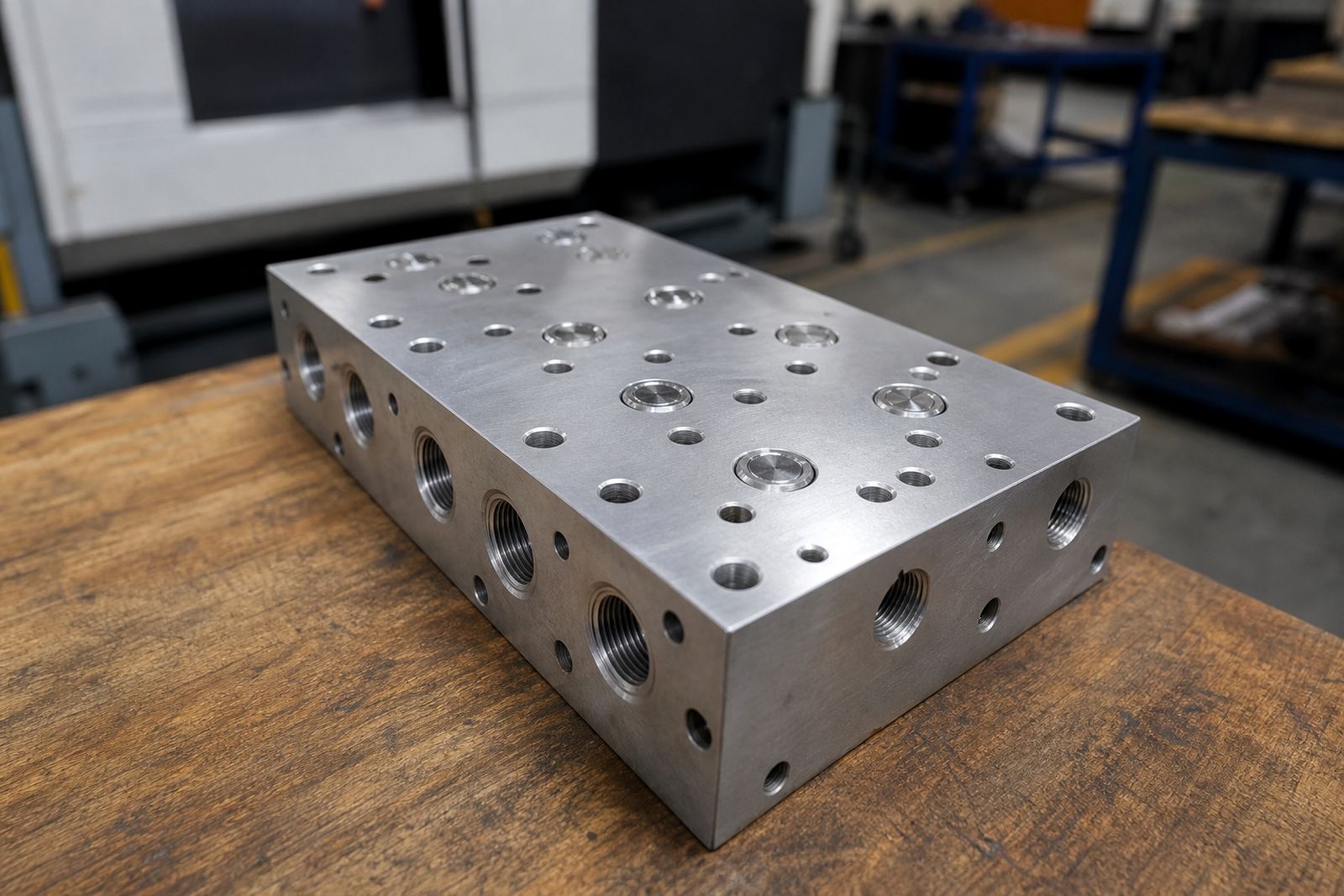
Connector blocks are machined components that bring several functions into one solid part. They may carry ports for air or fluid, provide a mounting face, hold alignment between parts, or create a clean interface between hoses, pipes, sensors and machine fittings. In many assemblies the block is easier to manage than a cluster of separate brackets and fittings, because the geometry is fixed in one piece and the interfaces can be controlled from the start.
We machine connector blocks for small batch work where fit, repeatability and service access matter. That includes custom equipment, repair parts, plant upgrades and special-purpose assemblies used in workshops, production lines and field systems. Because every project starts from a drawing or sample, the final part can be matched to the way your team actually installs and maintains it.
- Used for fluid passage, air routing and mechanical connection points
- Suitable for compact assemblies where space is tight
- Can combine ports, faces, bores and mounting holes in one part
- Often made as one-off, prototype or short-run components
Typical sizes, shapes and machining options
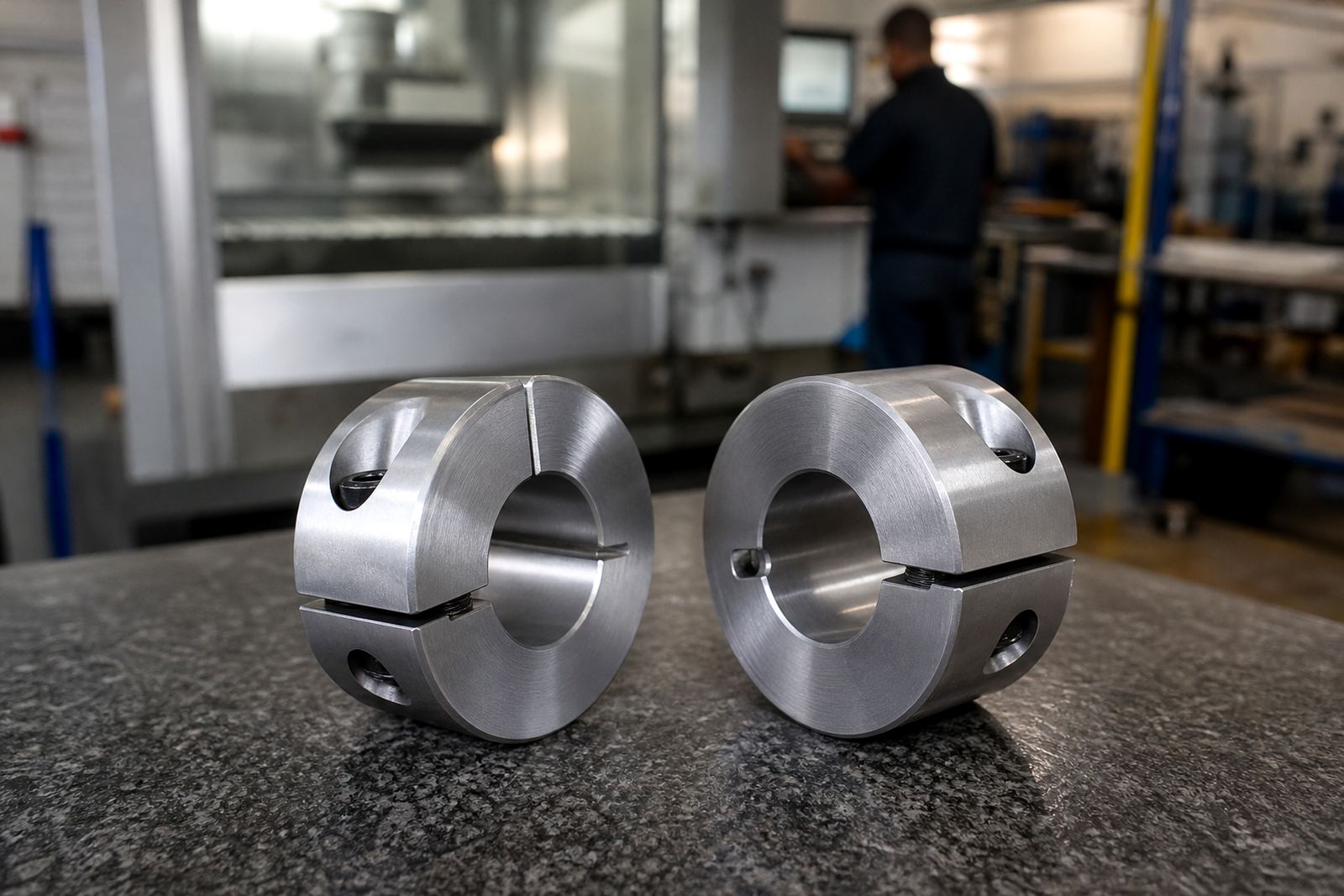
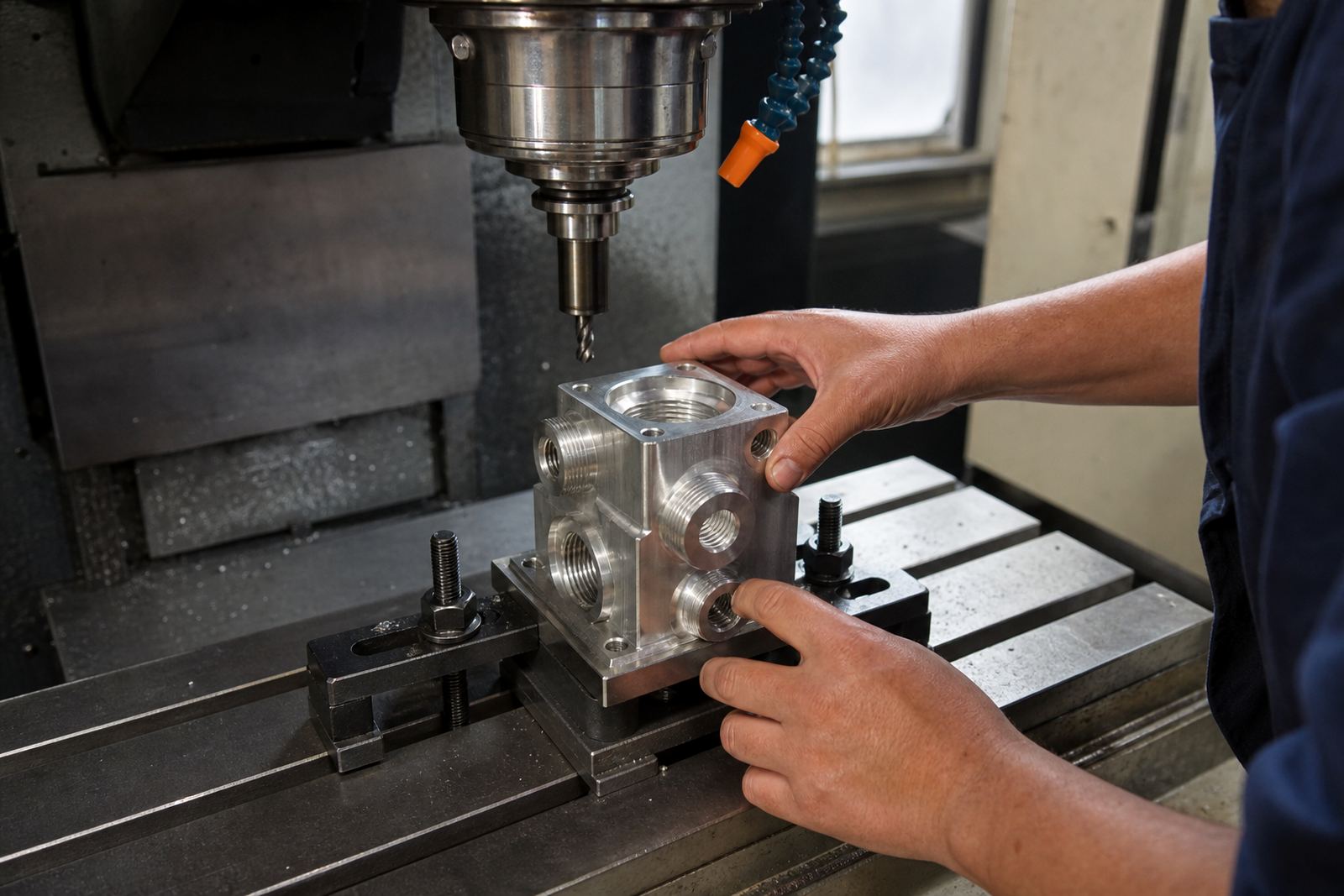
Connector blocks can be small hand-sized parts or larger blocks with multiple faces and machined features. Common forms include rectangular blocks, stepped blocks, L-shaped pieces, drilled manifolds and interface plates with pocketed sections. The right shape depends on port layout, hose direction, clamp space and how the assembly will be accessed during service. A neat design on paper still needs proper tool access and clean chip evacuation, so we check the drawing before machining begins.
Sizes are normally set by the application, not by a standard stock range. We machine from the material size required for the finished part and allow for the needed wall thickness, sealing area and thread depth. If a part needs deep holes, close spacing or multiple tapped positions, those details are considered in the planning stage so the block stays practical to machine and fit.
- External profiles, faces and step features
- Drilled, tapped and counterbored holes
- Bore work for passages and inserts
- Pocketing, slotting and alignment features
Materials suited to connectors in South African conditions
Material choice depends on what the block must carry, where it will work and how often it will be handled. For many connector blocks, aluminium is a common option where weight matters and corrosion exposure is moderate. Mild steel can suit general industrial use, while stainless steel is often selected for harsher conditions, washdown areas or coastal work near Durban, Richards Bay and other humid locations. Engineering plastics may suit lighter duty applications where chemical resistance or electrical isolation is needed.
We also consider local service conditions. Coastal humidity, dust, vibration and load-shedding related restart cycles can all affect how assemblies wear or loosen over time. If a block is part of a machine that sees frequent cleaning, outdoor exposure or transport between sites, the material and finish should be chosen with that in mind.
- Aluminium for lighter weight parts and easier handling
- Mild steel for general industrial connector blocks
- Stainless steel for tougher environments and corrosion resistance
- Engineering plastics for selected low-load or isolating uses
Tolerance guidance, sealing faces and fit checks
Connector blocks often need more than just the right dimensions. The sealing faces, port spacing, thread quality and perpendicularity all matter when the part is installed. Tolerances are guided by the function of the assembly, the material being machined and the amount of repeat fit-up needed. We do not promise one fixed tolerance for every job, because the correct figure depends on the drawing and the use case, but we do focus on practical accuracy where it affects assembly and performance.
For parts with seals, O-rings or gasket faces, surface condition and flatness can be just as important as size. Where a component must mate to another part, assembly fit checks help confirm that bolt holes line up, ports clear correctly and the block sits square. If a drawing needs adjustment to improve manufacturability, we can assist with drawing updates before the next run.
- Drawing review before machining starts
- Tolerance guidance based on function and fit
- Assembly fit checks for mating parts
- Inspection reporting where required for repeat orders
Installation needs, power use and service access
Connector blocks themselves do not need power or gas once installed, but the machines used to produce them do require stable shop power and careful process control. For the end user, the installation needs are usually about access, sealing and maintenance space. It helps to know whether the block will be mounted in a fixed cabinet, on a machine frame or in a serviceable position where technicians can reach the fasteners and ports without stripping the whole assembly down.
Before ordering, check how the block connects to the rest of the system. Thread type, port size, fastener pattern, mounting orientation and clearance around the part all need to be confirmed. If the block is used with air or fluid, also confirm pressure, media compatibility and whether the design needs a face seal, thread seal or gasket arrangement. A small detail missed early can cause a lot of rework later and nobody wants that on site.
- Confirm port sizes, thread types and sealing method
- Check clearance for spanners, hoses and inspection access
- Allow room for maintenance and replacement
- Confirm pressure, fluid type and mounting orientation
Ordering checks for repeat parts and small-batch work
When you order connector blocks, the clearest starting point is a drawing, a marked-up sketch or an existing sample part. If you have a worn item, we can help assess whether a sample remake is suitable or whether the geometry should be improved for easier machining or better service life. For repeat work, keeping the same revision number and material specification avoids confusion between batches.
Useful checks before sending a job include the overall size, hole pattern, thread details, any required finish, and whether the part must match an existing assembly exactly. It also helps to note how many pieces are needed now and what future repeat orders may look like. That allows planning for batch size, material use and delivery coordination to Durban, Pinetown, Pietermaritzburg, Richards Bay or Johannesburg. Our team in Pinetown handles drawing review, prototype planning, batch planning and repeat-order support for clients across South Africa.
- Overall size and all critical dimensions
- Material, finish and thread specification
- Quantity now and likely repeat demand
- Existing sample, sketch or drawing revision
Key facts
| Product type | Machined connector blocks for fluid, air or mechanical interfaces |
|---|---|
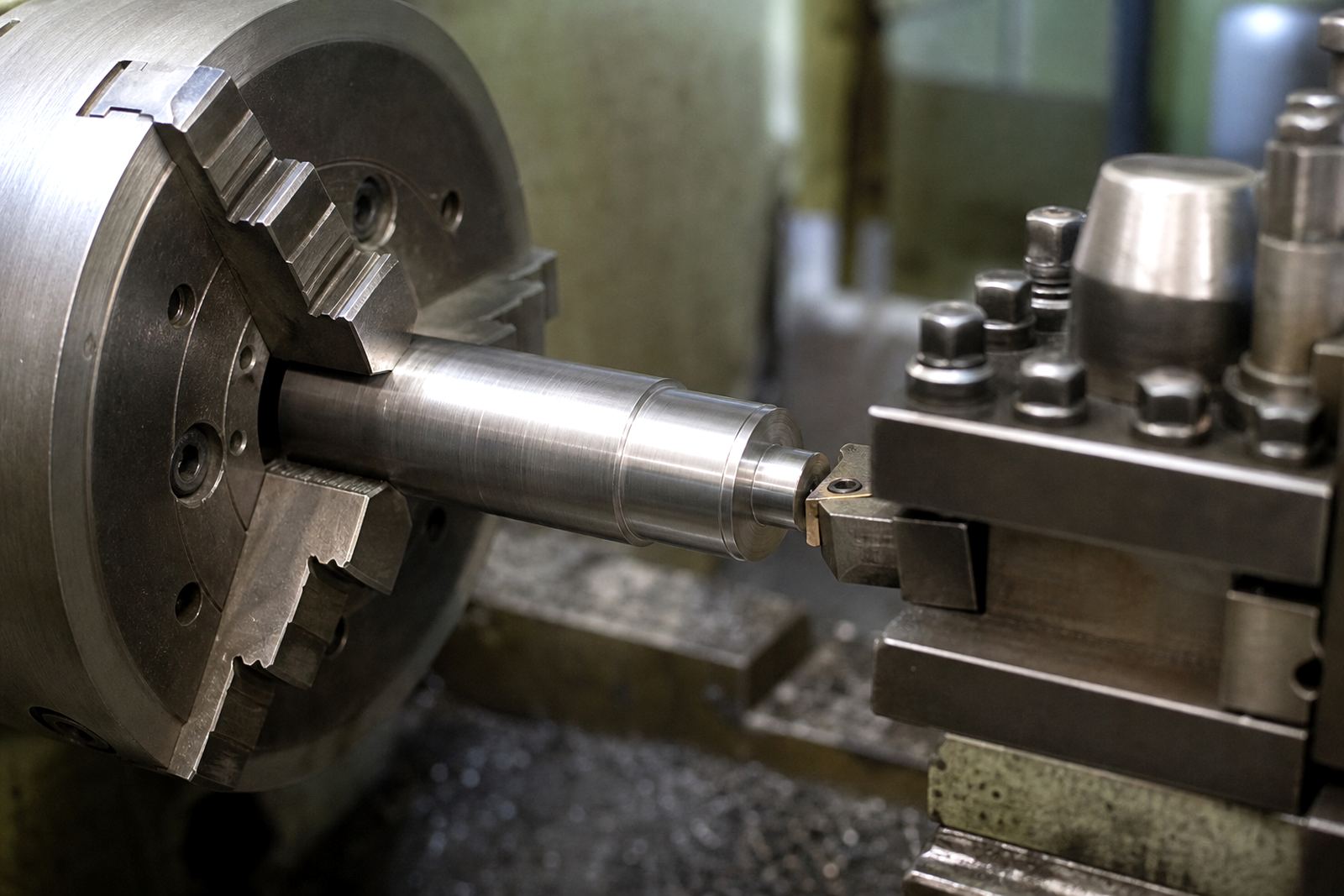
| Process | CNC milling and turning for small-batch production |
| Materials | Aluminium, mild steel, stainless steel and selected engineering plastics |
| Common features | Faces, ports, bores, tapped holes, pockets and mounting points |
| Typical use | Custom assemblies, repair parts, prototypes and short runs |
| Service area | Pinetown, Durban, Westmead, New Germany, Pietermaritzburg, Richards Bay and Johannesburg |