What guide rails do in a machine or assembly
Guide rails keep a moving part travelling in a straight line and help it return to the same path from one stroke to the next. In practical terms, that means less side play, better alignment and more predictable movement in jigs, sliding mechanisms, transfer systems and support frames.
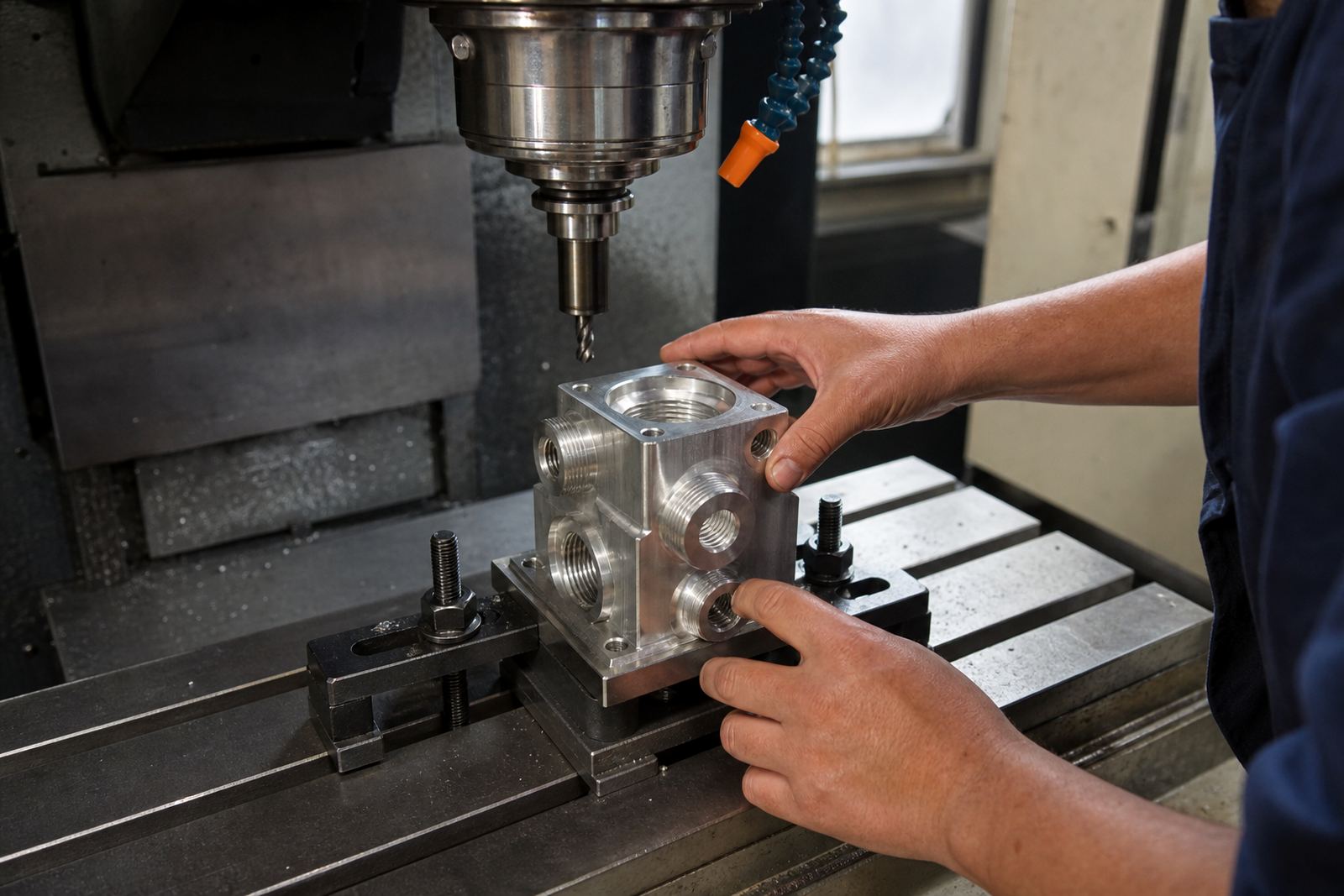
For a rail to work well, the machined faces need to stay consistent along the length. That calls for careful milling and turning where applicable, plus proper edge finishing so the rail seats cleanly on its mounting surface. In coastal areas like Durban and Umhlanga, material choice and surface protection matter because humidity can affect exposed steel over time.
Common sizes, profiles and material options
Guide rails are usually made to drawing, but the most useful starting point is the running length, cross section and fixing pattern. Small-batch work is often suited to one-off replacements, prototype builds and spare parts for existing equipment where the original rail is worn or no longer available.
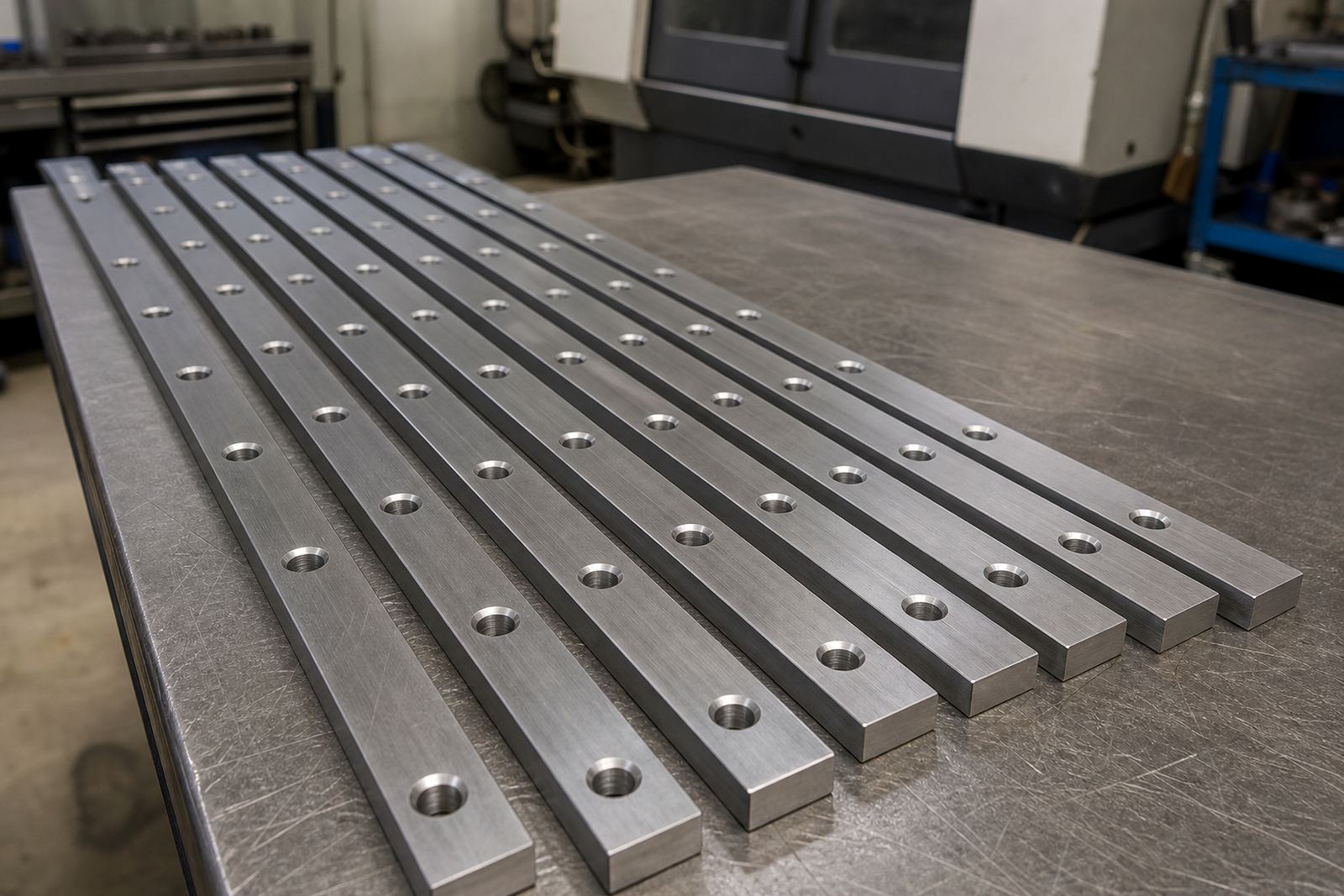
- Lengths cut to the required travel or support span
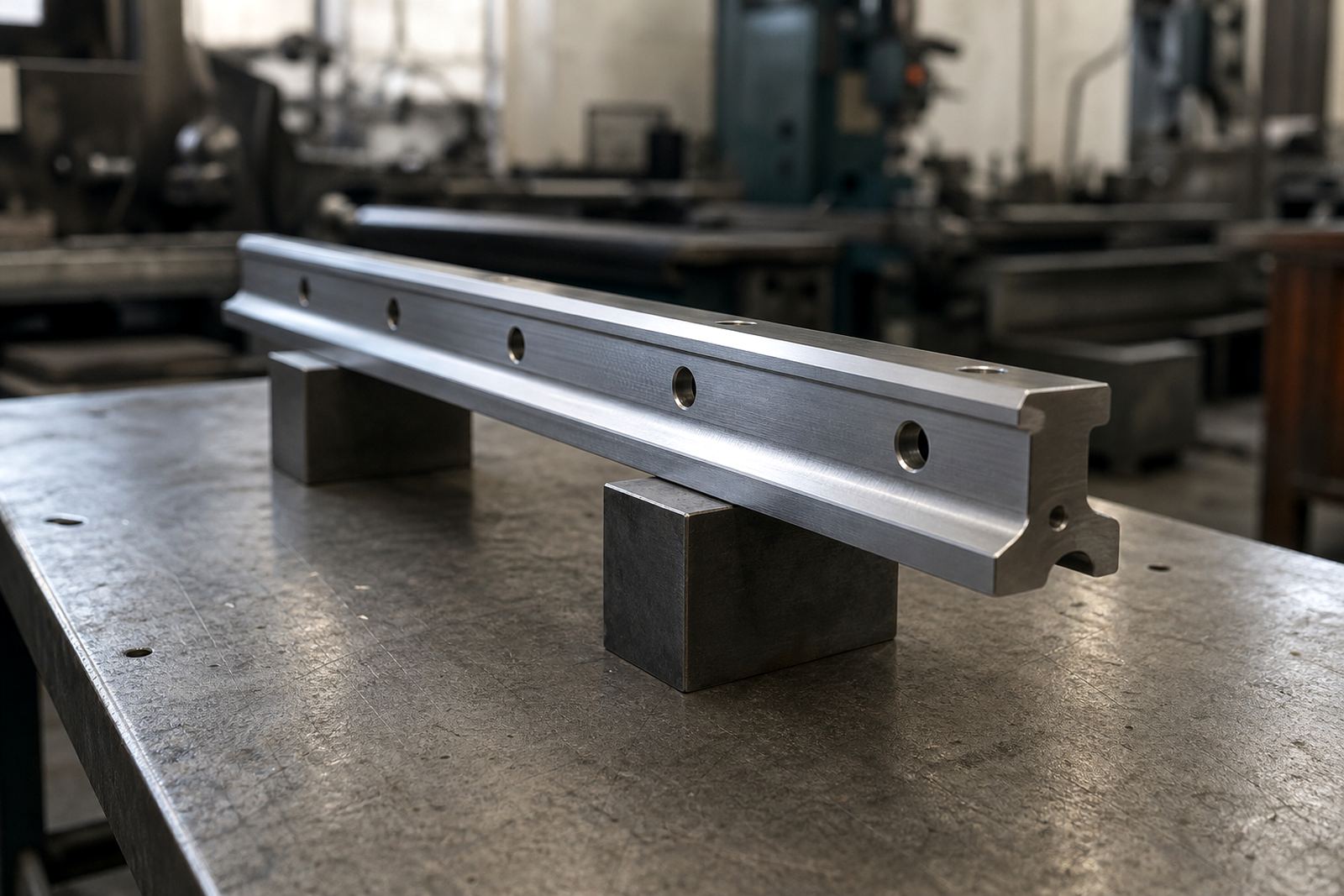
- Flat, square or stepped profiles depending on the mounting style
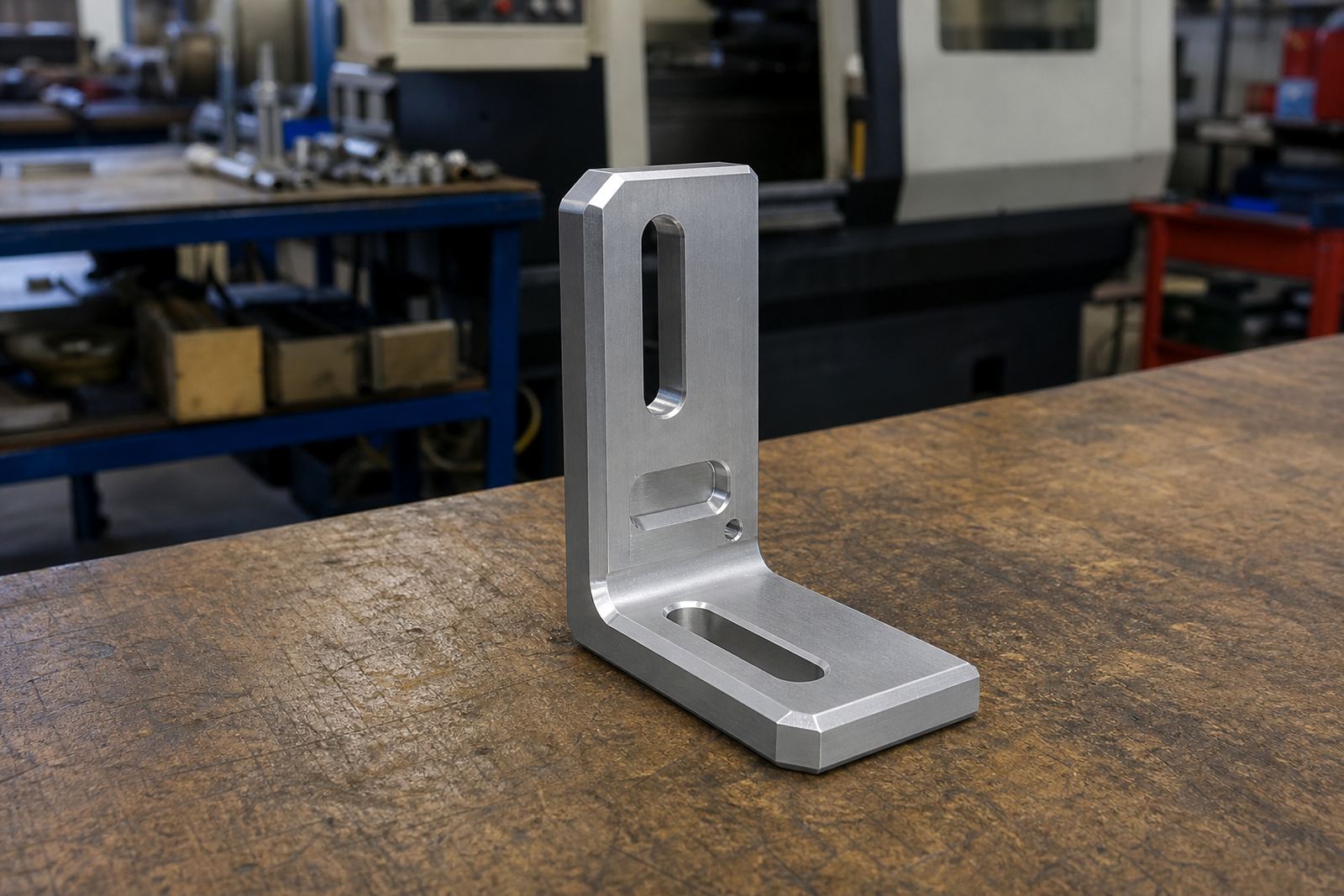
- Holes, slots, counterbores or tapped features where the design calls for them
- Material options chosen for wear, rigidity and environmental exposure
We commonly work from carbon steel, stainless steel or aluminium depending on the load, corrosion risk and surrounding components. A rail used indoors in Pinetown may suit a different finish to one running near sea air in Richards Bay or on a workshop floor in Johannesburg with dust and coolant around it.
Where these rails suit best
Guide rails suit any application where movement needs to stay controlled and repeatable. They are used in machines, fixtures, sliding carriages, inspection setups, handling equipment and support structures that rely on accurate travel rather than free movement.
They also suit repair work when an existing system needs a replacement rail machined to match an older assembly. That can save time on rework and help keep a production line or workshop job moving without a full redesign.
- Sliding and guided travel assemblies
- Fixture bases and repeatable location systems
- Support rails for moving components
- Prototype machines and small production runs
Installation, mounting and power needs
Guide rails are installed mechanically, so they do not need gas or electrical supply on their own. The important part is a clean, flat mounting surface and correct fixing so the rail does not twist under load. If the mounting face is bowed or dirty, the rail can wear unevenly even if the machining itself is correct.
Before fitting, check the frame, the fixing pattern and the travel path. On site in Westmead or New Germany, it often helps to dry-fit the rail first, then verify spacing, alignment and end stop positions before final tightening. If the system uses a mateing slide or carriage, that matching part should be checked at the same time.
- Use a flat, prepared mounting surface
- Check bolt spacing and hole positions before installation
- Allow clearance for the moving part and any stops
- Confirm no burrs or raised edges will interfere with travel
Care and servicing for longer service life
Routine care is simple but important. Keep the rail clean, lightly protected where suitable and free from chips, grit and dried coolant. In a shop environment, fine swarf can score a running surface quickly if it is left in the travel path.
If the rail is exposed to moisture or coastal air, inspect for staining, surface rust or pitting. Recheck fixing bolts after the first period of use and again during planned maintenance, especially on equipment that sees vibration or repeated starts and stops.
- Wipe down after use and remove abrasive debris
- Inspect running faces for wear marks or scoring
- Check for loose fasteners and movement at the mounts
- Recoat or protect exposed steel where needed
What to send with your enquiry
To quote and machine guide rails properly, we need the drawing if you have one, plus the rail length, width, thickness and any special features. If there is an existing part, clear photos and a few measured dimensions help us compare the old rail against the new one.
Please also tell us what the rail carries, how it is fixed, and whether the part must match an existing assembly exactly or can be improved for easier fitting. If you are in Pietermaritzburg, Durban or Johannesburg and working from an older machine, even a rough sample part can give us enough detail to check the tolerances and mounting points.
- Overall length and cross section
- Hole pattern, slots or tapped features
- Material preference and surface condition
- Required fit, movement and any critical dimensions
Small-batch machining for rail replacements and repeats
PME CNC Machining handles drawing review, prototype planning, batch planning, tolerance guidance, part optimisation and repeat order support from our Pinetown base. That makes it practical to supply one rail, a small set or repeat batches for customers across Durban, Richards Bay and Johannesburg without changing the job every time.
We also assist with sample part remake, inspection reporting, assembly fit checks and drawing updates where a rail needs to match existing equipment more closely. Founded in 2008 and led by Mandla Sibusiso Mkhize, our team works through each job carefully so the finished part suits the actual machine not just the drawing.
- Managing Director: Mandla Sibusiso Mkhize
- Production Coordinator: Anele Nondumiso Dlamini
- Lead CNC Programmer: Johan Petrus van Wyk
- Machining Supervisor: Siyabonga Patrick Zulu
- Quality Administrator: Naledi Refilwe Molefe
- Client Support Lead: Kyle Brendan Naidoo
Key facts
| Product type | Straight machined guide rails for guided movement and repeatable travel |
|---|---|
| Typical manufacture | Small-batch CNC milling and turning to drawing |
| Material options | Carbon steel, stainless steel or aluminium depending on use |
| Length range | Made to order from short replacement lengths to longer support spans |
| Critical features | Fixing holes, slots, counterbores, tapped holes and bearing or slide faces |
| Finish options | Machined finish, deburred edges and surface protection where required |