CNC Turning for Round Parts and Close Fits
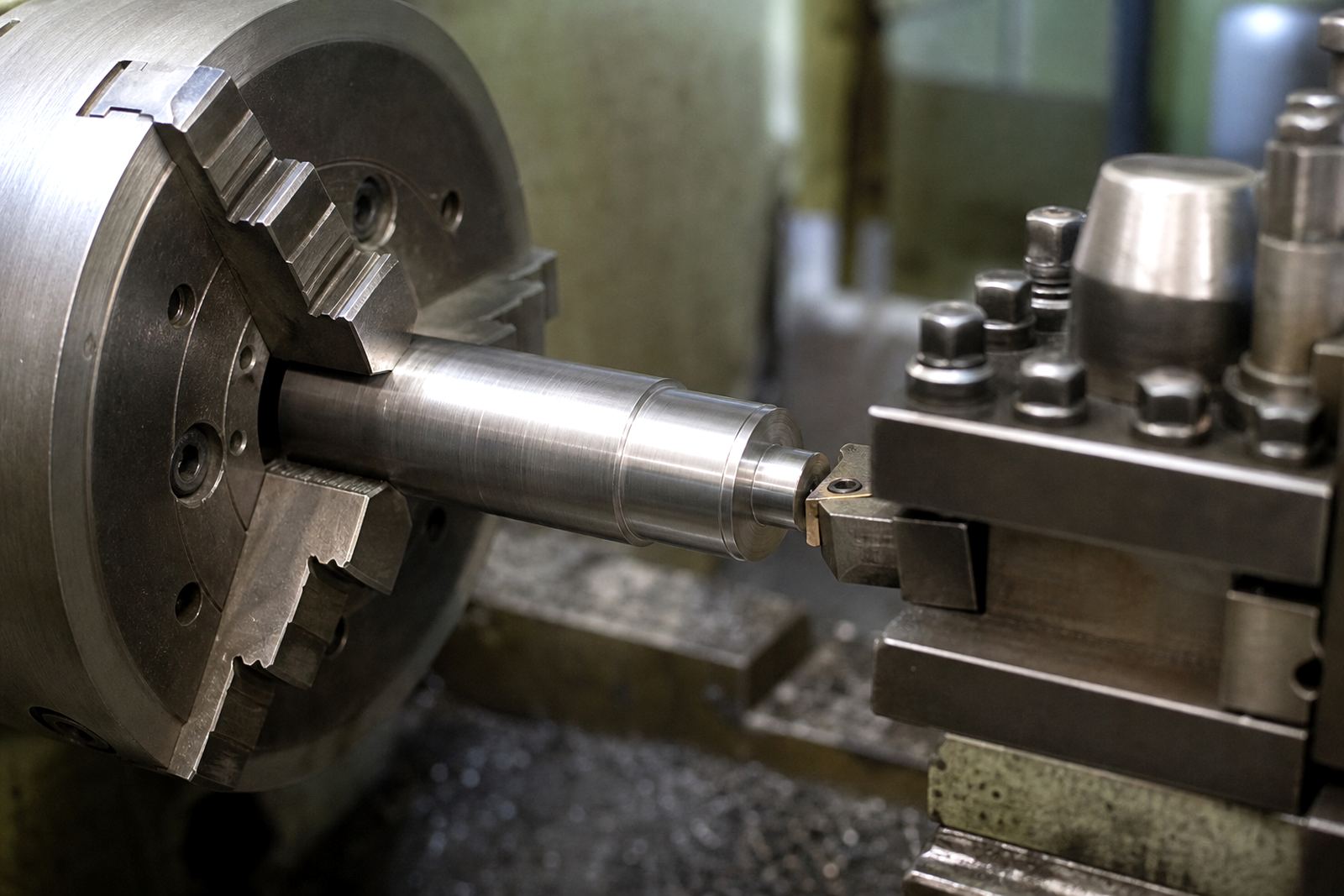
CNC turning is used to machine round components by rotating the workpiece while a cutting tool shapes the outside or inside diameter. It suits shafts, bushes, spacers, collars, sleeves, pins and other parts where the key requirements are concentricity, diameter control and a dependable surface finish. For many jobs the aim is not only to make one part fit, but to make the same part again later with the same dimensions.
At PME CNC Machining, turning work is commonly used for replacement parts, prototypes and small production runs. We handle drawings that call for stepped diameters, shoulders, grooves, threads, tapers and bored internal features. Where a drawing needs a tighter fit, we can review the machining sequence and flag areas that may need extra care during finishing or inspection.
Turning is often chosen when the part will run in a bearing, seal or mating bore. It is also a practical option for components that need balanced shape and easy assembly. If a job is going into a humid coastal area around Durban or a dusty industrial site inland, material choice and finish matter just as much as the basic dimensions.
Typical Sizes, Features and Tolerance Control
Small-batch turning work is usually about matching the part to its function rather than chasing unnecessary extras. Depending on the drawing and material, jobs may include short batches of simple spacers or more detailed parts with multiple diameters, grooves and internal bores. We work from supplied drawings, sketches or sample parts that need to be remade, and we can help assess whether a feature should be left as a machined finish or taken further.
Turning work may suit components with the following features:
- External diameters and stepped shafts
- Internal bores and counterbores
- Threads, grooves and parting features
- Shoulders, chamfers and radii
- Repeat parts that must match an existing sample
Tolerances depend on the material, the size of the part and how it will be used. Close fits are possible when the drawing and process allow for it, but we do not promise a single tolerance for every job. A sensible approach is to define the critical dimensions first, then check where the non critical surfaces can be opened up a little if that saves time and cost.
Materials Used in Turning Work
CNC turning can be carried out on a wide range of materials, provided the drawing, tool path and finishing method are suited to the stock on hand. Common options include aluminium, mild steel, stainless steel, brass, bronze and selected engineering plastics. The right choice depends on wear, corrosion resistance, load, heat and whether the part will be exposed to coastal humidity, coolant or outdoor conditions.
For example, a shaft used in a general mechanical assembly may need a different material from a bush running in a wear point or a spacer sitting inside a corrosive environment. If a part is going into a food, marine or chemical setting the material and surface condition should be checked early, not after the batch has been started. That is usually where a clear drawing review saves time.
We also look at how the material machines. Some materials cut cleanly and leave a tidy finish. Others can move, smear or chatter if the setup is not handled properly. That is normal in machining, and it is why the job setup matters just as much as the cutter itself.
Where CNC Turning Suits Best
Turning is well suited to parts that need to be round, straight and consistent from one piece to the next. It is commonly used in automotive repair, general engineering, plant maintenance, machine building, conveyor parts, agricultural equipment and custom replacement components. Small batches are especially useful when a customer needs ten, twenty or fifty parts and does not want to over order.
In and around Pinetown, Westmead and New Germany, turning work often supports maintenance teams that need quick replacement parts with proper fit. Across Durban, Umhlanga and Richards Bay, customers may need parts that stand up to salt air, washdown or regular handling. Inland jobs from Pietermaritzburg and Johannesburg often focus more on wear resistance, alignment and delivery on time. Each region has its own conditions and the part should be made with that in mind.
- Replacement shafts and coupling parts
- Machine bushes and bearing sleeves
- Spacer rings and locating parts
- Prototype components for testing and fit up
- Repeat order parts where consistency matters
What To Check Before Sending a Turning Job
A clear order saves back and forth. The main thing is to send enough detail for the part to be machined correctly the first time. If a drawing is available, it should show the critical sizes, material, quantity and any surface finish requirements. If the part is being copied from a sample, the sample should be in usable condition and any worn areas should be pointed out. A damaged sample can lead to the wrong dimensions being carried forward.
Useful items to confirm before production include:
- Material grade or a suitable substitute if the exact grade is unavailable
- Finished dimensions and the dimensions that must be held most tightly
- Quantity needed now, plus whether repeat orders are likely
- Thread details, handedness and any mating parts involved
- Whether a press fit, sliding fit or clearance fit is needed
- Any special marking, deburring or packaging needs
If there is a drawing update after the first sample, let us know before the next batch starts. It is better to correct a note on paper than scrap a run of parts because the hole depth changed or the shoulder moved by 0.5 mm.
Installation, Power Needs and Ongoing Care
CNC turning itself does not require gas on site for the customer, and there is no installation work for the end user beyond fitting the finished part into the assembly. What matters is how the turned component is installed in the final machine. A shaft should run true, a bush should seat properly and a spacer should not create unwanted preload or side play. If the fit is wrong, the problem often shows up as heat, noise, vibration or early wear.
For care and servicing, the turned part should be kept clean and checked during normal maintenance intervals. Any surface that runs against a bearing, seal or mating part should be inspected for scoring, corrosion or ovality. In coastal areas, a light coating or the correct material can help slow surface rust. In dusty workshops, keeping swarf out of the assembly matters just as much. If a part is worn beyond recovery, we can remake it from the sample or revised drawing. No point forcing a bad fit when a fresh part will save time.
Repeat orders are easier when the first job is well documented. Keeping the same drawing notes, material and revision details helps maintain consistency across later batches, especially when the part is used in a production line or maintenance stock.
Key facts
| Service type | CNC turning for small-batch round parts |
|---|---|
| Common parts | Shafts, bushes, spacers, collars, sleeves and pins |
| Material range | Aluminium, mild steel, stainless steel, brass, bronze and engineering plastics |
| Typical work | External diameters, internal bores, threads, grooves, tapers and shoulders |
| Fit and finish | Built around the drawing, application and required mating fit |
| Areas served | Pinetown, Durban, Westmead, New Germany, Pietermaritzburg, Richards Bay, Umhlanga and Johannesburg |