What machined bushes do in a part assembly
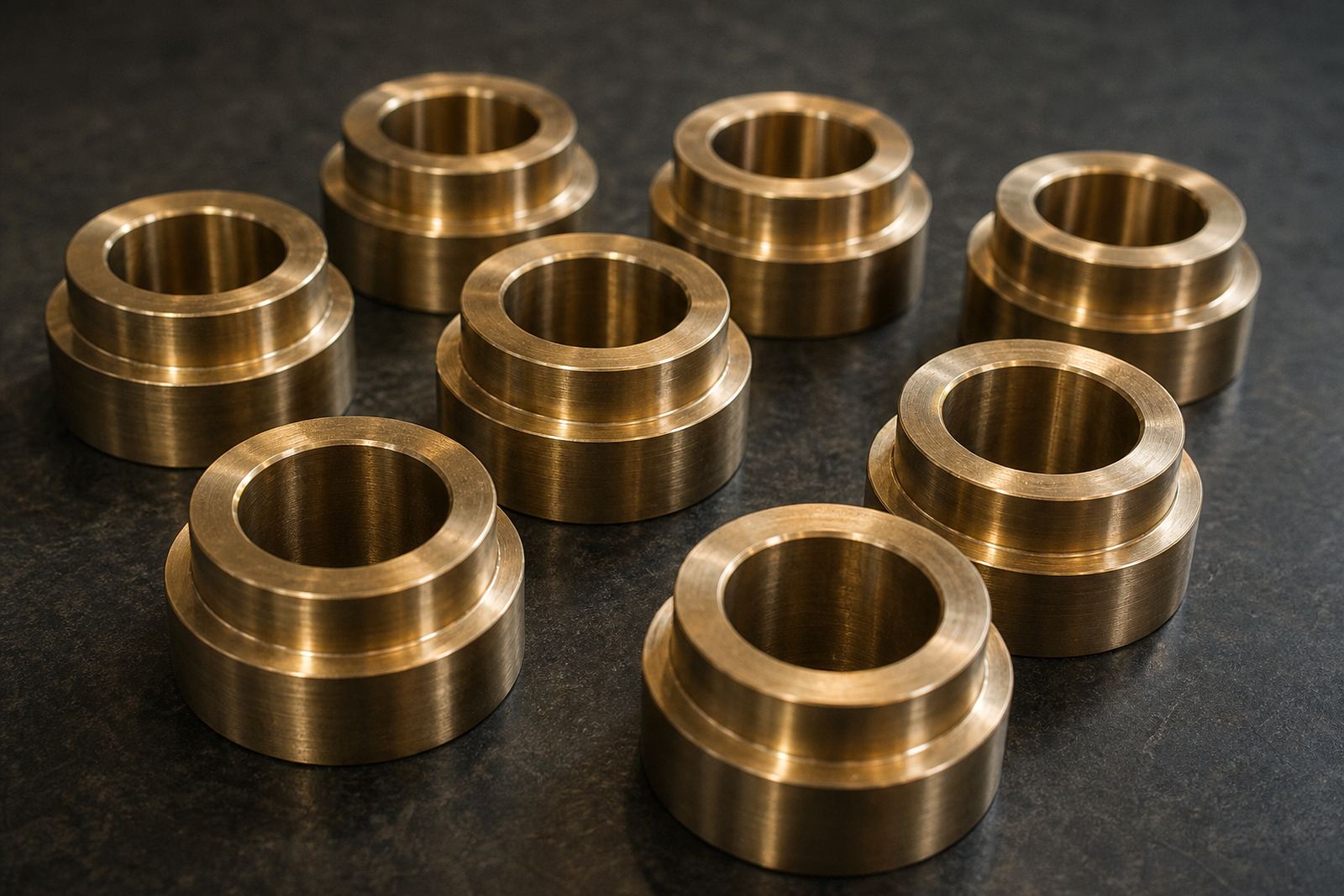
A machined bush is a cylindrical component fitted into a housing or bracket to guide movement, reduce wear and help keep parts concentric. In practical use, it can act as a bearing surface, a spacer, a wear sleeve or a location sleeve depending on the design. The main aim is a controlled fit between the bore and the mating shaft or pin, with enough accuracy to support movement without unnecessary play.
For small batch work, bush dimensions are usually set from a drawing or from an existing sample that needs replacement. We review the fit, the material and the working conditions before machining, because a bush that suits a dry indoor mechanism may not suit a dusty or corrosive environment. In coastal areas such as Durban and Richards Bay, material choice and surface finish matter because humidity can affect corrosion and long-term wear.
Sizes, bore options and machining choices
Machined bushes can be made in a wide range of diameters and lengths, from small light-duty sleeves to larger components used in plant, transport, packaging and general mechanical equipment. Common options include plain cylindrical bushes, stepped bushes, flanged bushes and bushes with internal or external grooves where the design calls for lubrication retention.
Typical machining decisions include:
- External diameter to suit a press fit, slip fit or interference fit in the housing
- Internal bore sized for running clearance or close location
- Face length set for load spread and correct shoulder contact
- Chamfers to help with insertion and reduce edge damage
- Surface finish suited to sliding contact and inspection requirements
Where a customer needs repeatable replacements, we can keep the drawing details consistent so later batches match the first batch as closely as possible. If a part is being remade from a worn original, allowance for wear can be discussed during drawing review.
Materials used for bushes and when each suits
Material selection depends on load, speed, lubrication and the environment around the part. Machined bushes are often made from engineering metals or polymers selected for wear resistance, machinability and fit stability. In South African workshops, the most common choice is not always the hardest material, but the one that suits the application, the duty cycle and the cost of replacement over time.
Material suitability can vary as follows:
- Free-machining steels for general mechanical use where strength and easy machining are needed
- Stainless grades for humid, wet or coastal conditions where corrosion resistance is important
- Bronze types for sliding applications where wear performance is a priority
- Aluminium where weight reduction matters and the duty is lighter
- Engineering plastics where quiet running, low friction or chemical resistance is useful
For jobs moving between Pinetown, Umhlanga and Johannesburg, we often help with material choice based on the working environment, not just the drawing size. That can avoid repeated failures caused by the wrong combination of shaft material, lubrication and bush material.
Where machined bushes are commonly fitted
Machined bushes suit assemblies that need controlled movement, accurate location or a replaceable wear surface. They are used in many workshop and industrial settings, especially where a simple replaceable part is better than remaking a larger and more costly component. A well-made bush can protect the parent part from damage and keep the system running more consistently.
Typical applications include:
- Rotating shafts in light machinery and plant equipment
- Pins and pivots in linkages, hinges and actuators
- Sliding guides where smooth linear movement is needed
- Spacer and alignment duties in assemblies with close fitting parts
- Replacement wear parts where a housing has to be preserved
For clients in Pietermaritzburg, Westmead and New Germany, small batch bushes are often ordered as part of maintenance work, production support or machine repair. Where the original component is unavailable, a remake can be based on measurements from the worn part and the surrounding assembly.
Installation, power needs and site conditions
Most machined bushes are installed by press fit, slip fit or by using retaining methods specified on the drawing. The correct method depends on the housing material, the shaft finish and whether the bush must remain fixed or rotate in service. Careful handling during installation matters because a small burr or a misaligned press can change the fit and shorten service life.
Power and gas requirements depend on the wider assembly, not the bush itself. A bush does not need a power supply or gas connection, but the machine or equipment it goes into may rely on electric drive, pneumatic control or hydraulic movement. Before ordering, it helps to know whether the part sits inside equipment exposed to load-shedding, outdoor dust, washdown, vibration or coastal moisture, because these conditions affect the choice of material and finish.
- Check the housing bore before pressing in a new bush
- Confirm the shaft diameter and surface condition
- Allow for lubrication access where the design needs it
- Make sure the bush orientation is correct if there is a flange or shoulder
Care, servicing and what to check when ordering
Machined bushes usually need little day-to-day attention, but their service life improves when lubrication, alignment and load are kept within the intended range. In dusty plant areas or in wet coastal conditions, regular inspection helps spot wear before it spreads to the shaft or housing. If a bush begins to show scoring, oval wear or looseness, it should be checked together with the mating parts rather than replaced in isolation.
When ordering, please check the following:
- Outer diameter, inner diameter and overall length
- Fit type required, such as press fit or running fit
- Material preference and any corrosion concerns
- Working load, speed and lubrication method
- Whether the part needs a flange, groove or shoulder
- Drawing revision or sample part notes if this is a repeat order
Our team in Pinetown supports drawing review, tolerance guidance, sample part remake, inspection reporting and repeat order support for customers across Durban, Pietermaritzburg, Richards Bay and Johannesburg. If the bush is part of a larger assembly, we can also check fit details before production so the finished part matches the intended use.
Key facts
| Product type | Machined bush for rotating or sliding applications |
|---|---|
| Common forms | Plain, flanged, stepped and grooved bushes |
| Typical use | Wear reduction, location, spacing and guided movement |
| Material options | Engineering steel, stainless grades, bronze, aluminium and engineering plastics |
| Fit control | Made to drawing with bore and outside diameter set for the required fit |
| Production scope | Small batch machining from a single sample or approved drawing |