Start with the function of the thread
A threaded hole or stud does more than hold a fastener in place. It affects assembly, service access, torque, sealing, and how the part will stand up to repeated use. Before anything is cut, confirm what the thread must do in service. Is it for a cover plate, a mounting point, a maintenance access hole, or a load bearing connection? The answer changes the depth, the engagement length and sometimes the material choice.
For small batch work, clear thread information saves time on the machine and avoids rework later. If the job will be fitted by hand on site, allow for practical access around the head of the fastener. If it will be assembled in a cramped enclosure, consider whether a hex socket, cap screw, or stud arrangement makes more sense. In coastal areas like Durban and Umhlanga, corrosion exposure may also affect the thread material and any protective finish.
- Confirm whether the thread is internal or external
- State the purpose of the fastener and the assembly method
- Check if the part needs future stripping and reassembly
- Note any space limits around the fastener head or nut
Choose the thread form and size with the final fit in mind
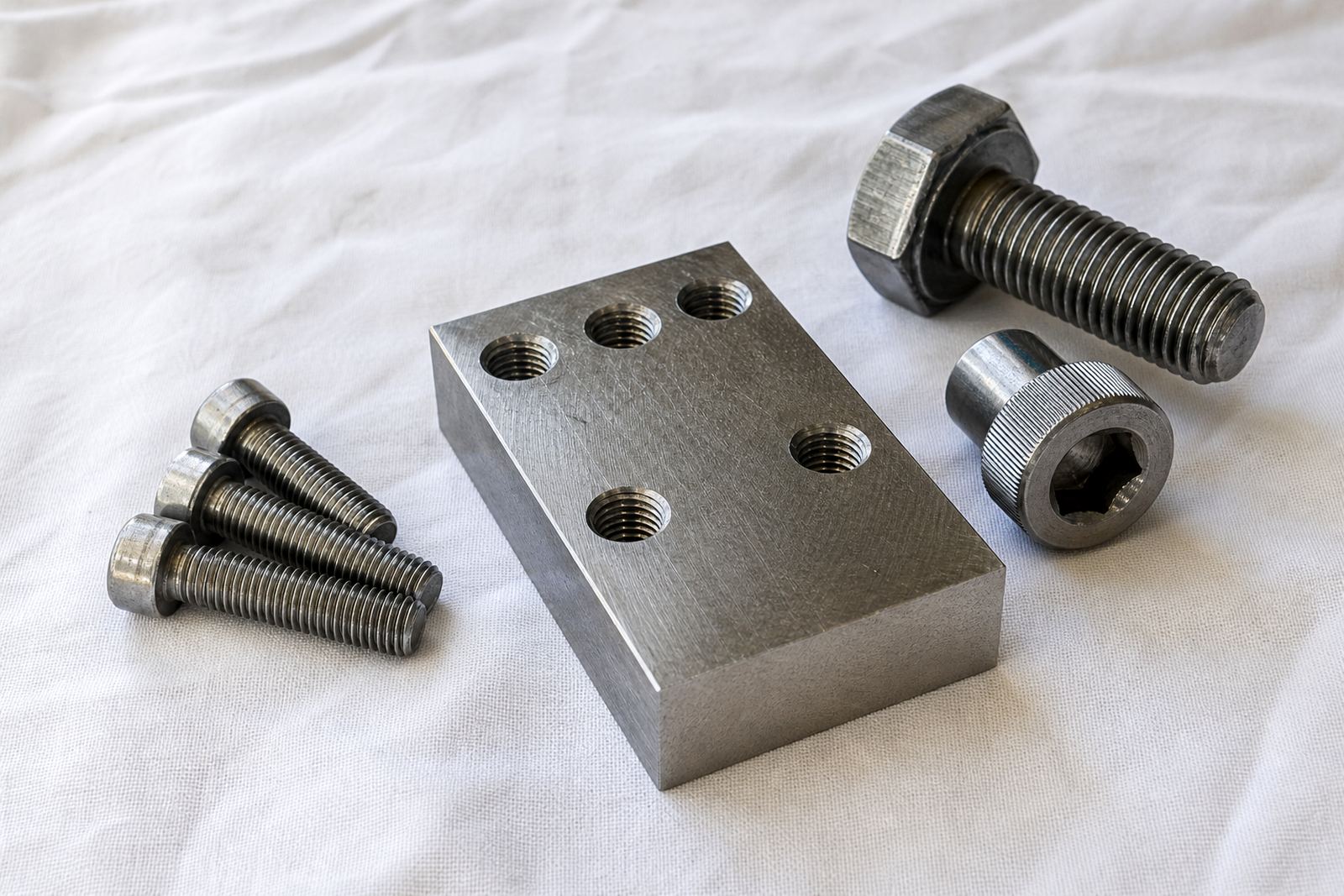
Thread form and size should match the part, the load and the available material thickness. In general, coarse threads are often preferred where quicker assembly, better tolerance to minor damage, or softer material is involved. Fine threads can suit applications where adjustment or higher clamping control is needed, provided the material and engagement length support it. The exact choice must always follow the drawing and the application.
When a part is being machined from bar, plate or billet, wall thickness around the thread matters. Thin sections can distort during tapping or threading, especially on long runs or on parts that are interrupted by slots, flats or cross holes. That is why thread guidance early in the process is useful, even for short prototype runs or small batches.
- Confirm the thread size and pitch from the drawing
- State whether a standard or special thread is required
- Check the wall thickness around the threaded area
- Allow enough engagement length for the material being used
If a thread is there for a fastener that will be removed often, the part may need extra attention to wear. In that case, the best answer may be a different material, a deeper engagement, or a revised feature altogether. That sort of change is easier to plan before cutting starts than after the first sample is already made.
Confirm materials before the first toolpath is written
Material choice affects how a thread is cut, how it feels during assembly, and how long it lasts. Aluminium machines differently from mild steel. Stainless steel can behave differently again, especially when heat build up or galling becomes a concern. Brass, plastics and other engineering materials each need their own approach. There is no single setting that suits every job.
For small batch machining, the material should be matched to the service conditions as well as the drawing. A dry indoor assembly in Pietermaritzburg is not the same as an outdoor fitting near the coast in Richards Bay. Corrosion, temperature, vibration and load all influence the final thread specification and any finishing that follows. If the thread will be exposed to dirt or moisture, that should be mentioned at the planning stage.
We also recommend confirming whether the material will be supplied by the client or sourced for the job. Different stock sizes can affect how the part is held, how much machining allowance is available and whether the threaded feature can be made exactly as drawn without adjustment.
Check tolerances, fit and inspection points early
Threaded features are only useful when they fit the mating part properly. That means checking not only the thread designation but also the tolerance expectations, the finish around the entry, and any related dimensions on the drawing. A thread can technically be correct yet still cause problems if the approach face is rough, the chamfer is too small, or the hole is not square to the datum.
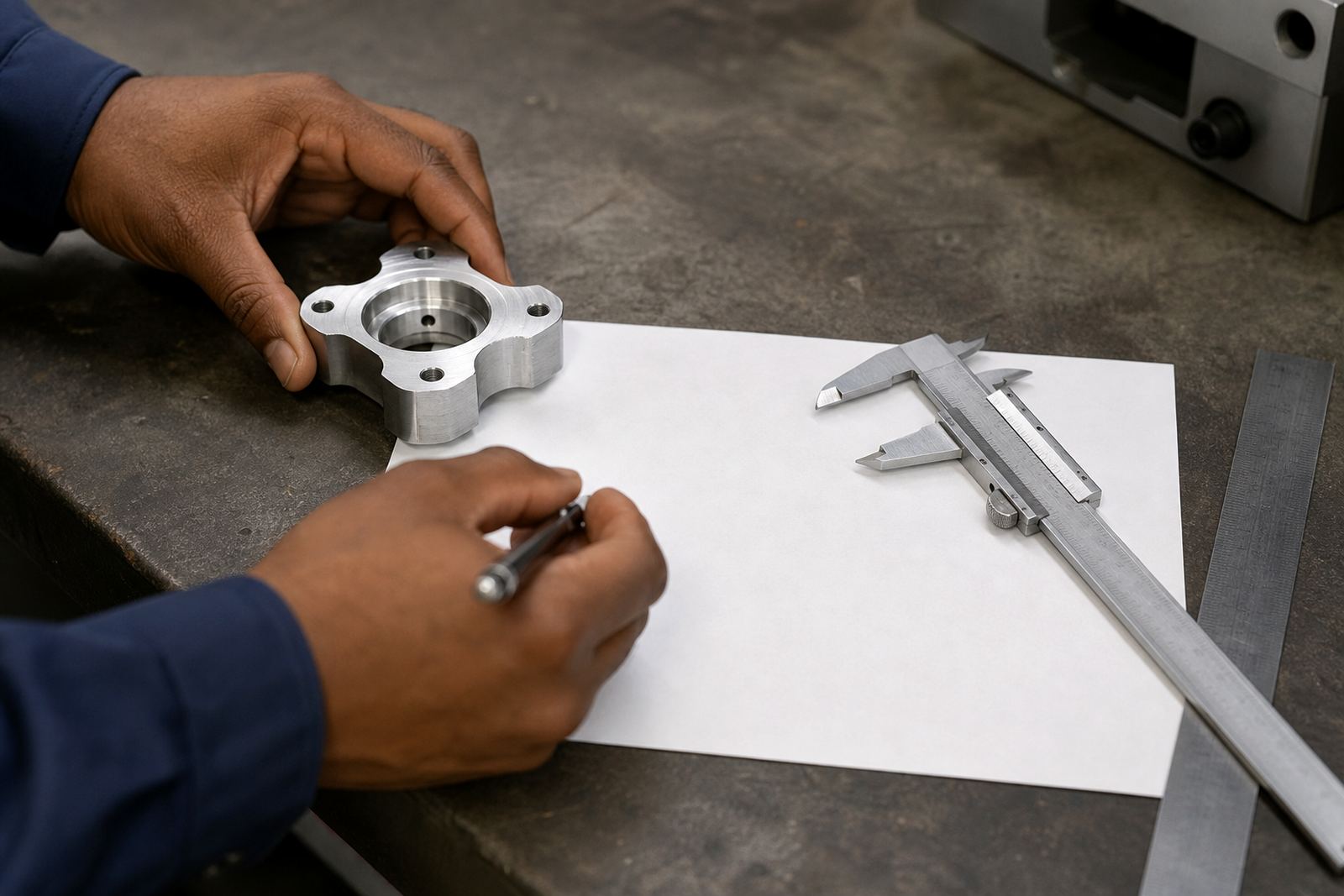
For this reason, tolerance guidance should be discussed before machining starts. If the thread is part of an assembly fit, the mating component may also need to be checked. A sample part remake can be avoided when the thread and the surrounding features are reviewed as one set. In a busy job shop, that saves both time and material.
- Confirm the thread class or fit requirement if shown on the drawing
- Check entry chamfer or lead in details
- Ask which faces control the thread location
- Note any inspection reporting required for the job
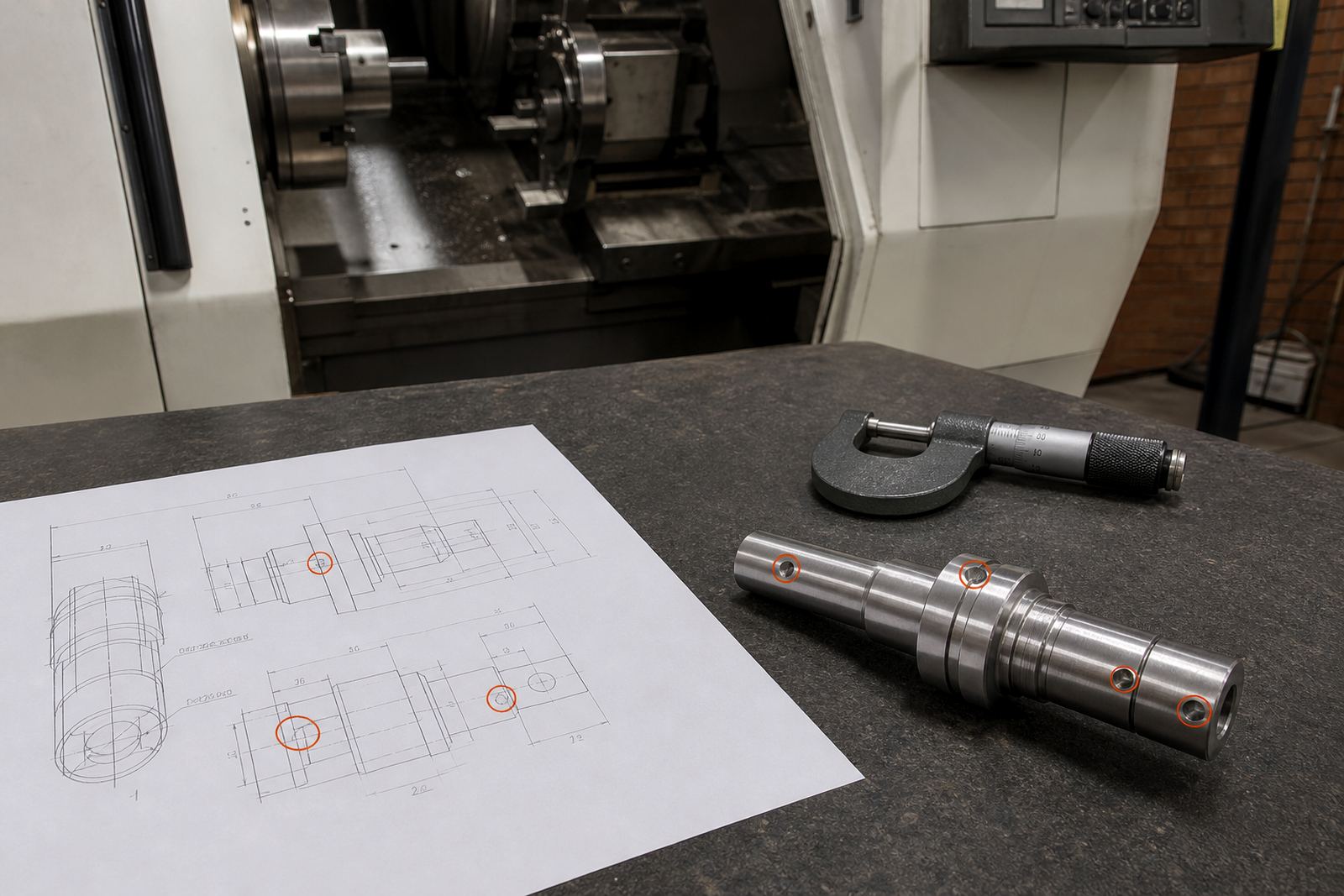
If the thread location drives the whole assembly, the inspection plan should include that feature. A measured thread is useful, but the surrounding location dimensions matter just as much. That is where a clear drawing review helps before the first part leaves the machine.
Plan for assembly, maintenance and repeat orders
Threaded parts are often judged by how well they behave after the first installation. If the fastener needs regular removal, the customer should confirm whether the thread must tolerate repeated use, locking compound, or occasional retightening. If the part is going into a machine frame, panel, or mounting bracket, the assembly sequence matters too. A perfectly machined thread can still be awkward if nearby features block a tool or socket.
For repeat order support, it helps to keep the original drawing notes clear and current. If a drawing update is needed after a sample is tested, record it properly so the next batch is made the same way. This is especially useful for clients across South Africa who want the same part remade for different sites in Durban, Westmead, New Germany or Johannesburg without having to explain the same details again.
- Check access for the tool and fastener head
- Confirm whether locking methods will be used
- Record any drawing updates after the first sample
- Keep the thread note consistent for future batches
A well planned thread saves time on site and in the workshop. It also makes delivery coordination easier because the fitting details are already settled. That matters when the part is one of only a few in the batch and there is no spare room for guesswork.
A simple pre job checklist for threaded features
Before a threaded job is released to the shop floor, run through a short checklist. It keeps the order clear and reduces the chance of missing one small but important detail. For many jobs, especially prototypes and low volume batches, these checks are enough to prevent avoidable delays.
- What is the thread type, size and pitch?
- Is it internal or external?
- Is the thread blind or through?
- What material is being machined?
- How will the part be assembled and serviced?
- Are there any coating, corrosion or finish concerns?
- Which dimensions control the fit?
If any answer is uncertain, it is better to settle it during drawing review or prototype planning. That gives the machining team a clear route and gives the client a part that is ready for assembly, not one that needs adjustment at the last minute. For threaded features, early clarity is usually the cheapest option.