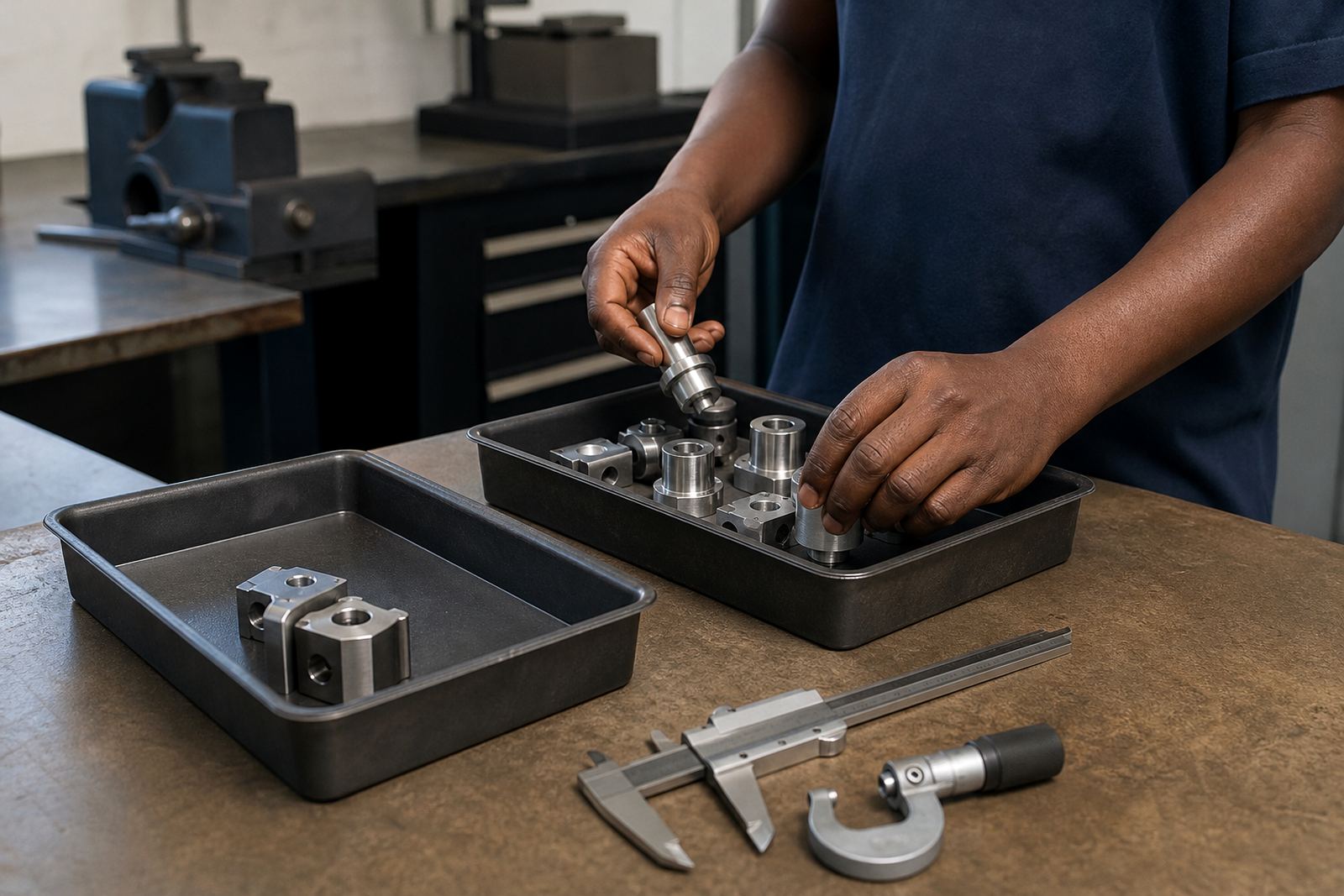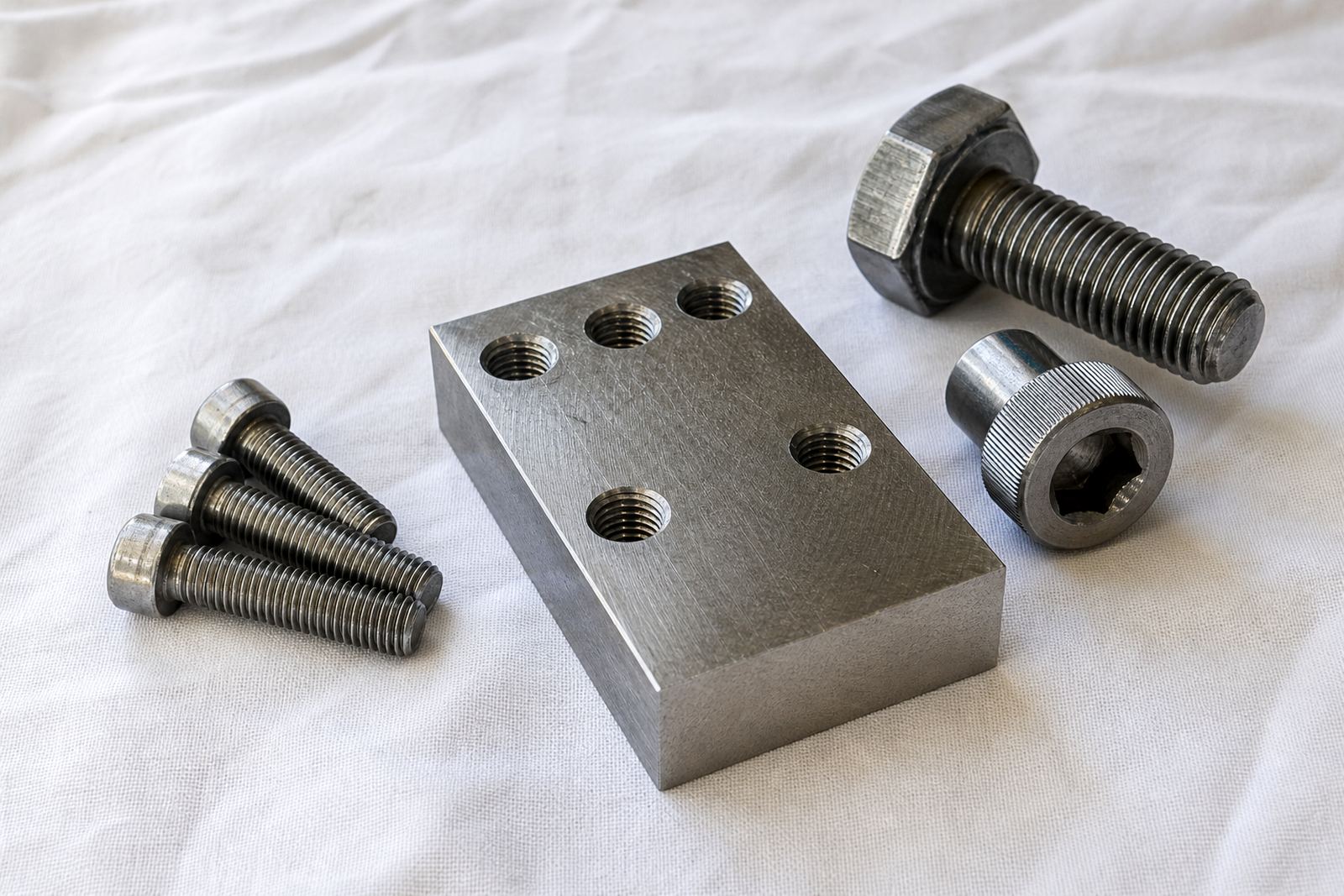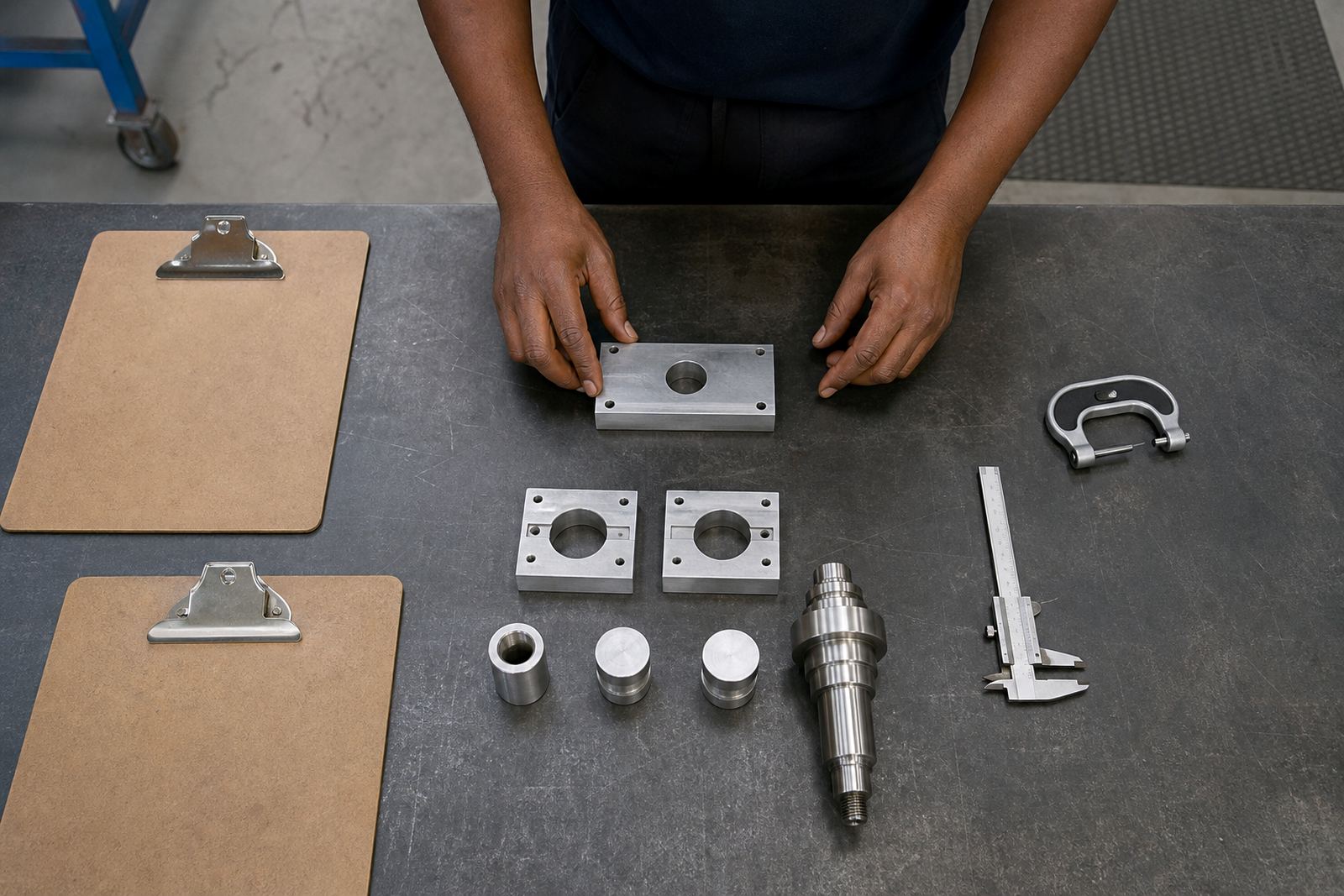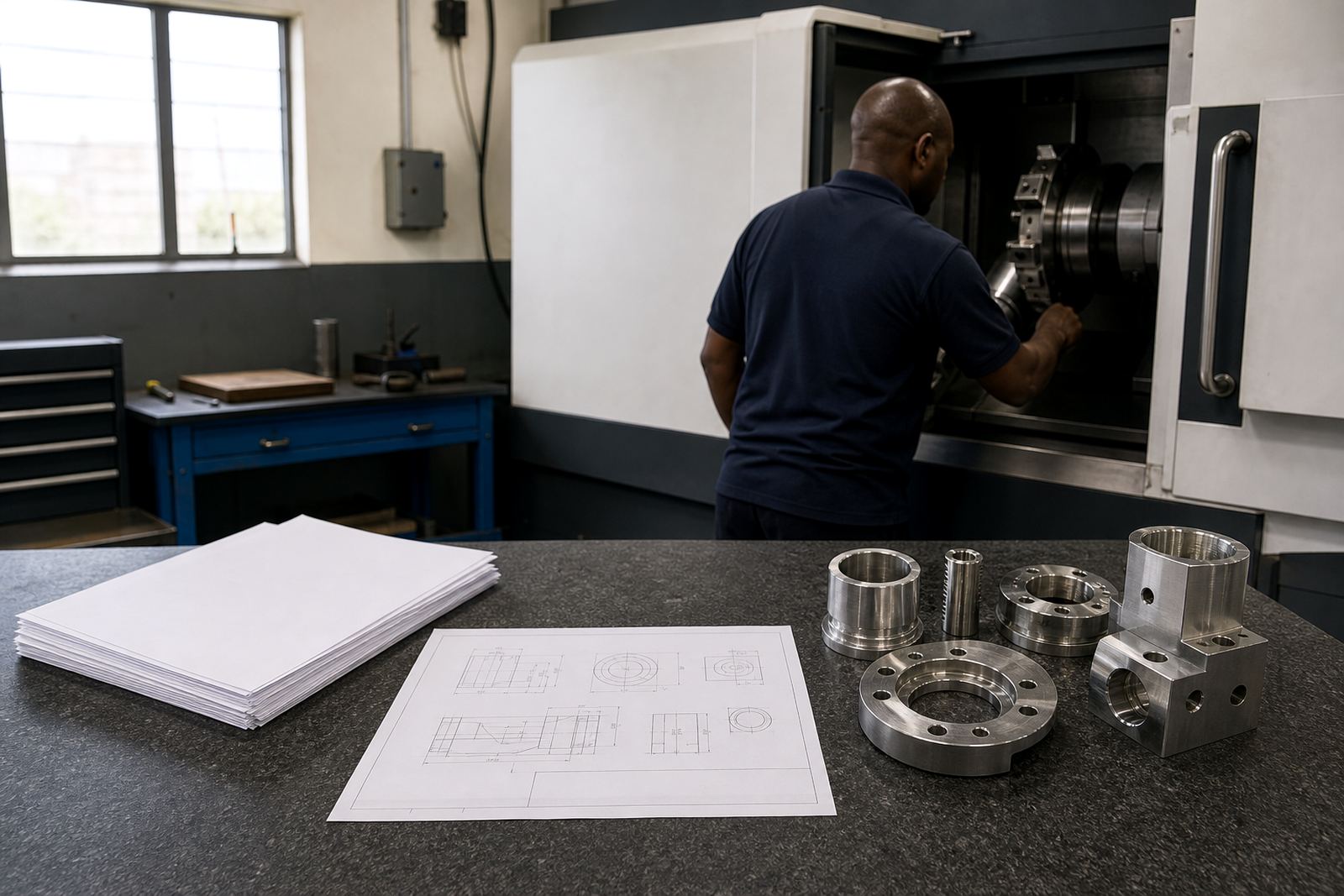
Start with the part and its job
Begin by describing what the part does, where it fits, and what it must handle in service. A mounting bracket, shaft, spacer or housing all need different machining methods, and the team needs to know whether the part carries load, moves against another surface, seals with a gasket, or sits inside a larger assembly. If the part is for Durban coastal conditions, say so, because moisture and corrosion resistance can influence the material and finish choice.
Include the overall size if you have it, even if the drawing is not final. Give the quantity for the first run and whether you expect repeat batches later. For a job shop working on small runs, that helps with batch planning, tool setup and lead time from the start.
Send drawings that can be read and used
A clear drawing saves time on the quotation and reduces back-and-forth. Send the latest revision you have, and make sure the file shows dimensions, hole sizes, thread details, surface finish notes and any special features such as radii, chamfers or counterbores. If you have more than one version, label the one that should be quoted. A clean drawing with one missing note can slow the job more than a large one with many dimensions.
- Dimensioned drawing in PDF or another readable format
- 3D model if available, for checking geometry and fit
- Revision number or date
- Marked-up notes where a feature is still under review
- Any assembly reference showing how the part sits with others
If the drawing is from an older supplier, check that all units are clear. Millimetres are standard for local work, but mixed units still appear and create errors if not confirmed early.
State the material and any reason for it
The material choice affects cutting time, tool wear, finish and price. If you already know the material, name it clearly. If not, explain the conditions the part will face, such as heat, vibration, food contact, wear, outdoor use or exposure to salty air. That allows the team to suggest a sensible option instead of guessing. For example, some parts are best suited to aluminium for light weight, while others need mild steel, stainless steel, brass or engineering plastics depending on strength and corrosion requirements.
If you are open to alternatives, say so. A machinist may be able to suggest a more practical stock size or a material that machines better for a one-off sample or repeat batch, which can reduce waste and keep the turnaround sensible.
Tell us the tolerance and fit expectations
Not every feature needs the same level of accuracy. A bore that carries a bearing may need tighter control than a clearance hole for a fixing bolt. If you know the tolerance required, write it next to the dimension. If you do not, explain how the part must fit. For example, should it slide freely, press in, seal, or match another part already in use? That information helps with tolerance guidance and inspection planning.
Do not assume every dimension needs the same tight limit, because that can push up cost without improving function. For many projects, the most useful brief is a mix of critical and non-critical features, with the critical ones clearly flagged. If you have a sample part, send that too, or ask for sample part remake support if you need a replacement made from a worn original.
- Mark critical dimensions on the drawing
- Note any fit with existing parts
- Say if the part is cosmetic as well as functional
- Include any allowance for post-machining finishing
- State whether a first article or sample part is needed before the batch
List the quantities, deadlines and repeat order plan
Small batch work depends on setup and repeatability, so quantities matter. Say how many parts you need now, how often you may reorder, and whether you want delivery coordination for one site or several. A batch of five parts is handled differently from a batch of fifty, and repeat order support is easier when the original notes are complete. If the job is for Pinetown, Westmead or New Germany, mention whether collection is possible, or if the parts must go to Durban, Pietermaritzburg, Richards Bay or Johannesburg.
Lead times should be practical. If a part is urgent because a machine is down, say that directly, along with the target installation date. For jobs that depend on assembly, let the team know if the parts must arrive together. That helps with batch planning and avoids a situation where one component arrives before the rest and the fit is left hanging.
Use the checklist before you submit the enquiry
A complete enquiry makes quoting easier and usually cuts down on follow-up messages. Before you send the form, check that the basics are included. If one item is not known yet, say so rather than leaving the field blank. Clear gaps are easier to work with than guessed information.
- Your name, company name and preferred contact method through the enquiry form
- Part name or reference number
- Drawing and revision
- Material request or application details
- Quantity for first run and repeat batches
- Critical tolerances or fit notes
- Finish requirements, if any
- Delivery location and timing needs
For repeat jobs, include what has changed since the last order, even if it seems minor. A drawing update, a different finish or a change in quantity can affect how the work is planned, especially when production has already been set up for another run.
What PME CNC Machining can help with after the quote
Once the enquiry is in, the team can review the drawing, check material suitability, suggest part optimisation where needed, and guide the next steps for the job. That may include assembly fit checks, inspection reporting, drawing updates and coordination around delivery. For clients across Durban, Pinetown, Pietermaritzburg, Richards Bay and Johannesburg, the aim is to keep the part practical to make and ready for real use.
Good quoting is not only about price. It is also about making sure the part can be machined cleanly, assembled properly and repeated without surprises. If you send the right details from the start, the process is usually smoother for everyone involved and the result is easier to approve.