Why packing matters before parts leave the workshop
Even a well-machined component can be slowed down by poor packing. Sharp edges, exposed bores, threaded holes and finished faces can pick up damage during handling, vibration or stacking. On longer runs between KwaZulu-Natal and Gauteng, that risk goes up because loads are moved more than once.
We plan packing around the part itself, the route, and how the receiving team will use it. A small-batch job often means mixed sizes, repeated orders and parts that must be identified quickly on arrival. That is why packing is treated as part of the job, not the last minute wrap-up.
Start with the job card and the drawing
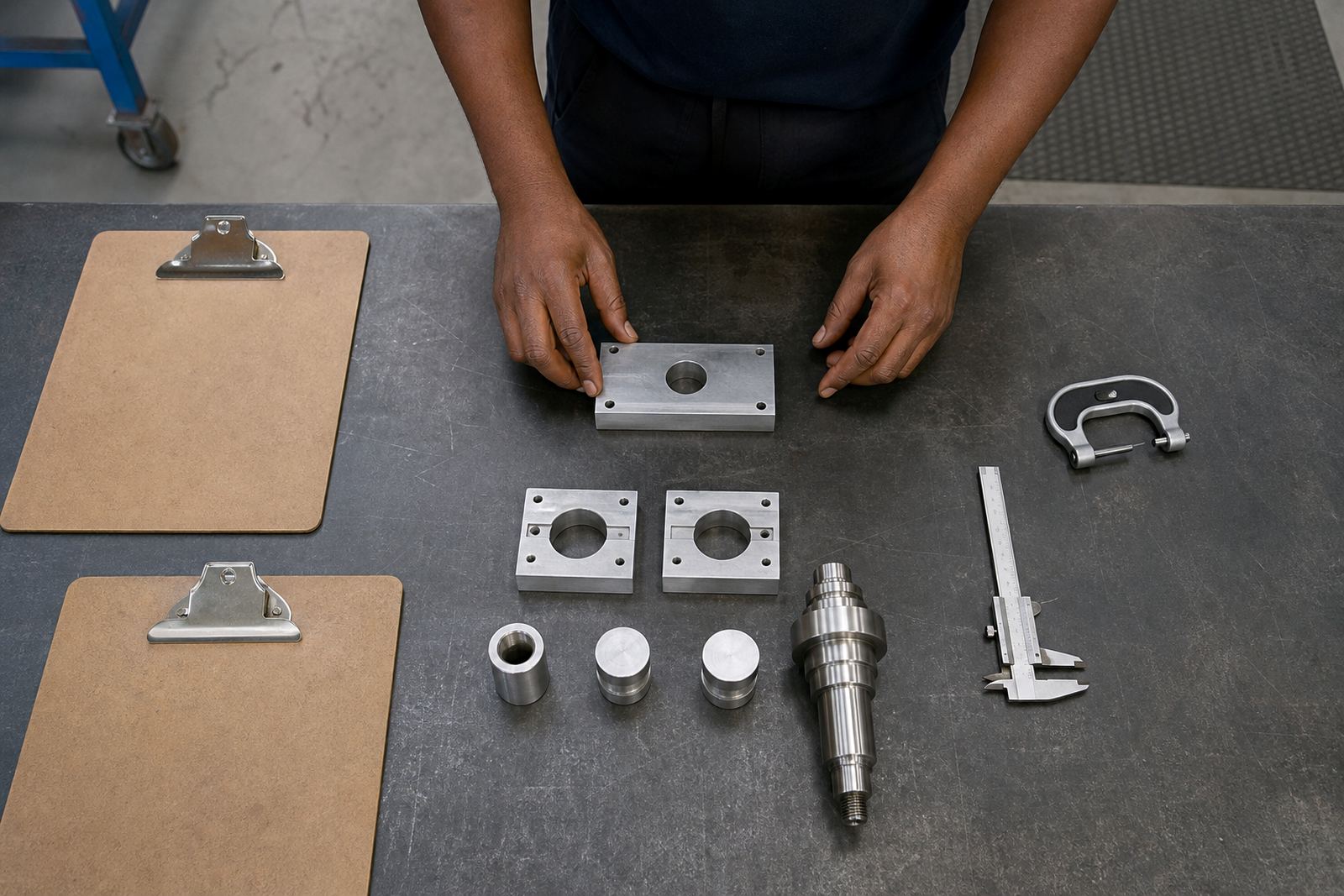
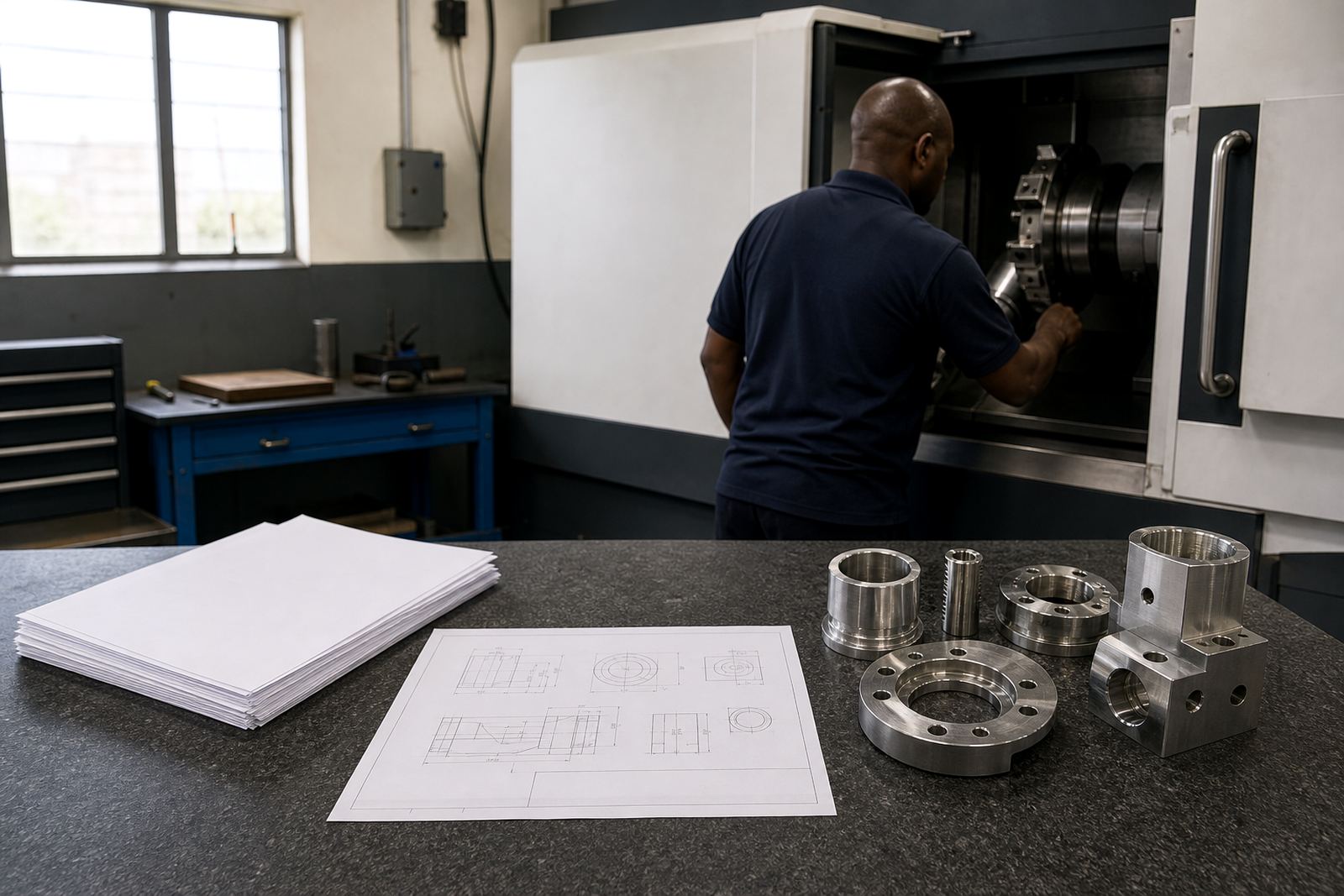
Before anything is wrapped or boxed, the packing plan should be checked against the drawing and the order notes. This is where item names, quantities, revision status and any fitment notes are confirmed. If a part has a tight tolerance, a machined finish, or a matched orientation, that detail must be visible to the person unpacking it.
- Confirm the part number and revision before packing.
- Check quantity against the batch list.
- Mark any parts that are handed, matched, or orientation-sensitive.
- Separate sample parts from production pieces.
- Flag items that need inspection reports or drawing updates with the delivery.
If there is any doubt on identification, the safe move is to stop and verify. A small mistake here can cause delay on site and extra handling for everyone.
Choose packing that suits the machined surface
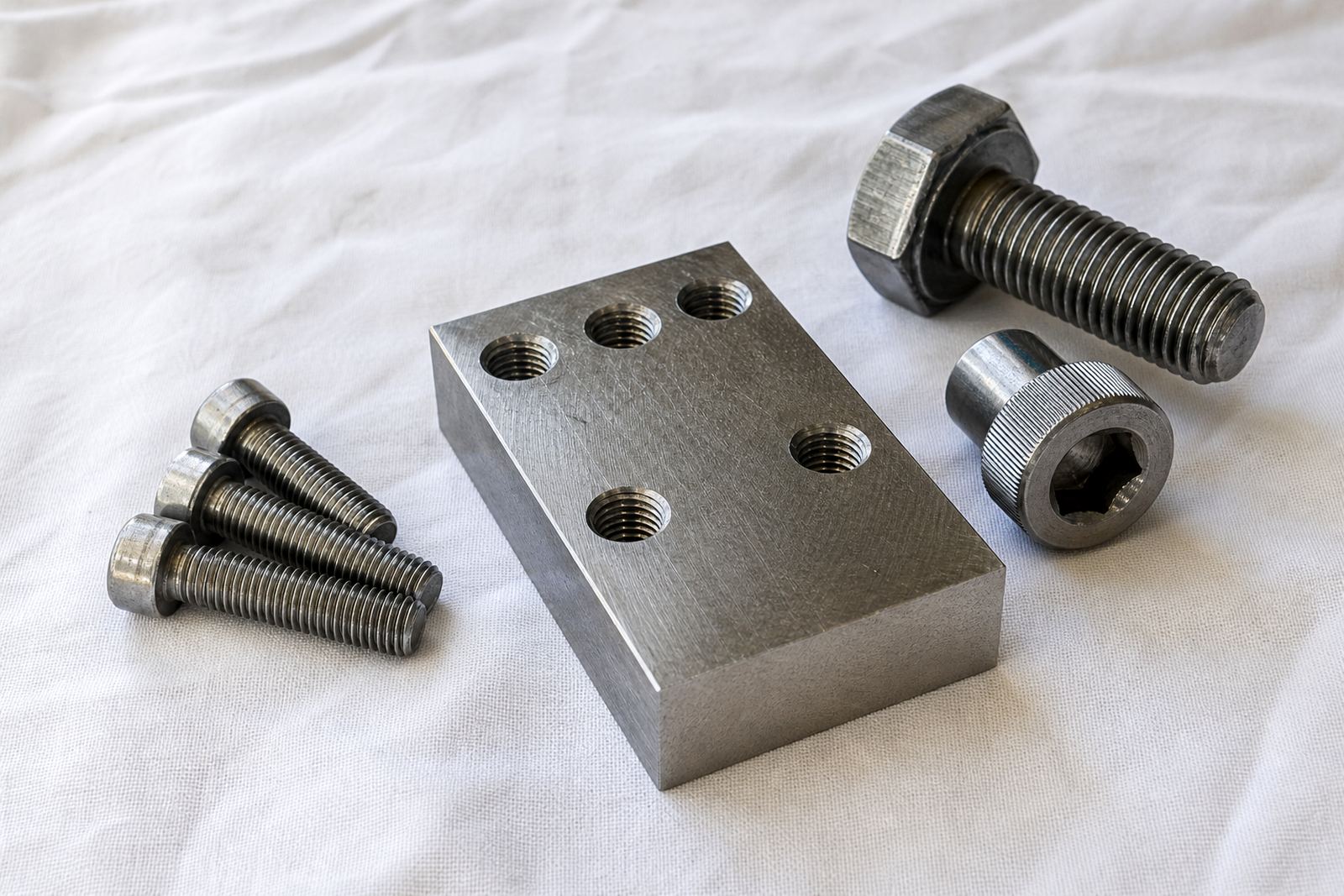
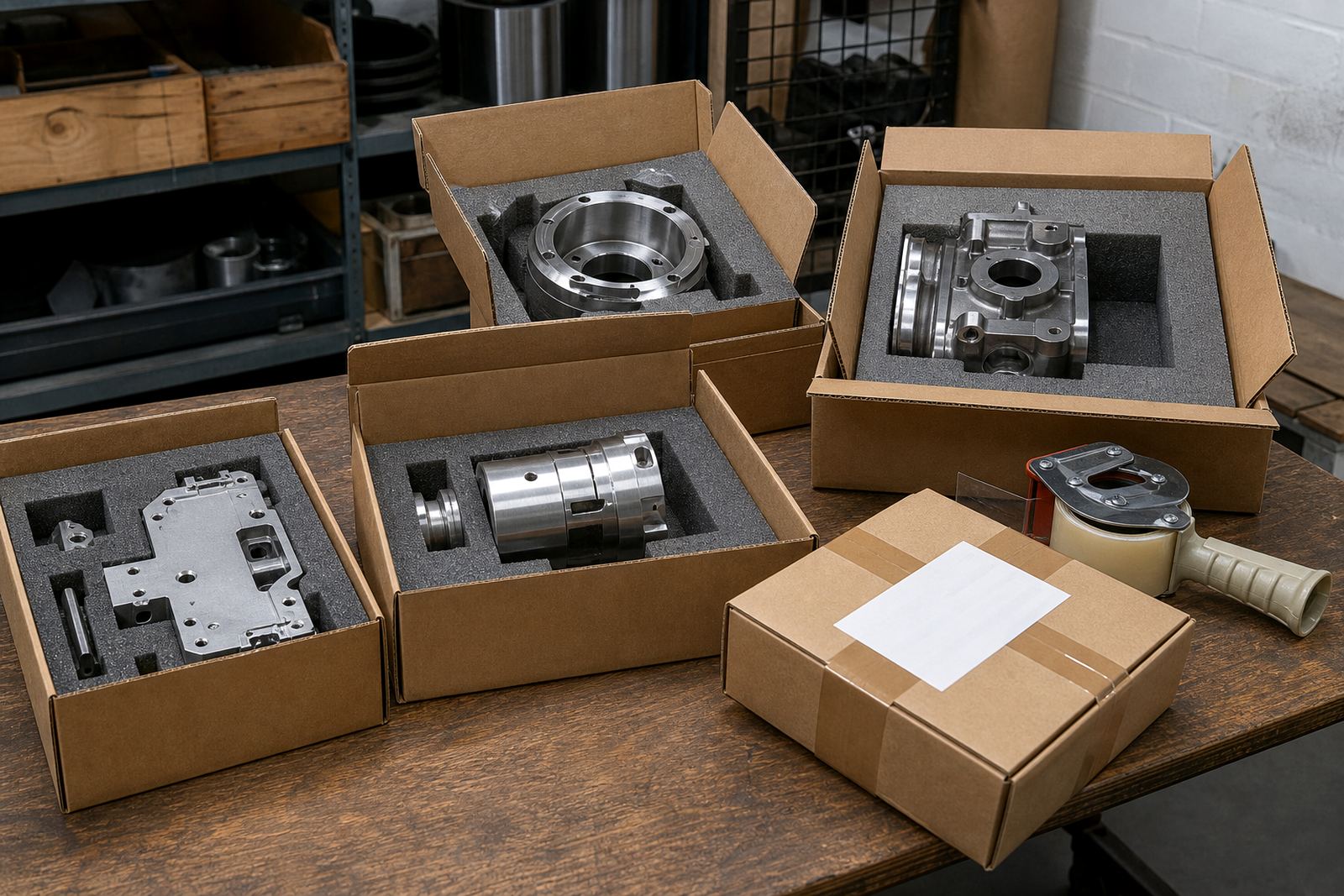
Different parts need different protection. A turned shaft, for example, may need support at the ends to prevent scuffing. A milled plate may need face protection and corner protection. Threads and bores should be capped or covered so swarf, dust and moisture do not collect inside them.
For coastal deliveries into Durban, Umhlanga or Richards Bay, moisture protection is worth taking seriously. Packaging should keep parts dry and clean from loading bay to site store, especially where humidity is high or the receiving area is open to weather. For steel parts that may sit before fitment, light corrosion protection can be included where appropriate.
- Use sleeves, foam, paper wrap or separators to stop metal-to-metal contact.
- Keep polished or finished faces away from straps and hard edges.
- Support long parts so they do not flex in transit.
- Cover threads, bores and tapped holes.
- Add moisture protection when the route or storage conditions call for it.
Label every box so the site team can work faster
Good labelling saves time at receiving, inspection and installation. A box should tell the team what is inside, how many pieces are inside and which job it belongs to. For repeat orders, clear labels also make reordering easier because the old packing notes can be matched to the current batch.
Labels should be readable, secured well and placed where they will not peel during handling. If a box contains mixed items, use internal labels too. That way the crew does not need to unpack everything just to find the first fitting part.
- Job name or order reference.
- Part number and revision.
- Quantity per box and total quantity.
- Gross handling notes if the box is heavy or awkward.
- Any inspection or fitment notes needed on site.
Plan transport for local roads and long-distance runs
Transport planning depends on where the parts are going and how they will be handled on arrival. A local run from Pinetown to Westmead or New Germany may only need simple boxed packing, while a load going to Johannesburg may need more restraint, more separation and better weather protection. Parts should be stacked so they will not move under braking, cornering or rough road conditions.
For bigger or heavier items, delivery coordination should include access at the destination. Some sites have narrow gates, loading bays, or strict receiving times. Municipal or factory site rules can also apply, especially where there are security checks or limited offloading space. Good planning prevents waiting around with a truck full of parts and no clear place to unload.
- Check the site address and receiving times before dispatch.
- Confirm whether offloading equipment is available onsite.
- Keep heavier packs low and secure in the vehicle.
- Allow for traffic, weather and loading bay delays.
- Share delivery notes so the receiving team knows what is arriving.
Receiving checks and follow-up after delivery
Once the parts arrive, they should be checked before final sign-off. The receiving team should count the items, compare them to the packing list and look for any visible handling marks. If an assembly fit check is required, that should be done before the parts disappear into general stores. Early checking makes it easier to sort out any issue while the delivery is still fresh.
If a remake, drawing update or repeat order is needed later, the packing notes and inspection record help keep the next batch consistent. That is especially useful where a customer has multiple sites in Durban, Pietermaritzburg or across Gauteng and wants the same packing method each time.
- Count every item against the packing list.
- Inspect for scuffs, moisture, bent corners or transit damage.
- Store parts in a dry, clean place until fitment.
- Keep the label and paperwork together for traceability.
- Report any issue promptly so it can be reviewed against the job notes.