Project brief for a line under pressure
The client was a process plant maintenance team in Verulam needing a batch of replacement wear strips for a line that could not afford repeated stoppages. The existing strips had worn unevenly, which was affecting guidance, surface contact and the reliability of the moving interface. The brief was simple in principle but strict in practice: replace the worn items in a controlled batch, keep dimensions consistent across all pieces, and make sure the new parts would fit the existing mounting pattern without field rework.
Because this was a working production line, the team needed parts that could be installed quickly during a planned maintenance window. The site was also dealing with normal coastal conditions in KwaZulu-Natal, so material choice and finish mattered. In Verulam, humidity is always part of the picture and if a part is going to sit near moving equipment, poor edge finish or an unsuitable material can shorten its working life very quickly.
- Location: Verulam, KwaZulu-Natal
- Client type: Industrial maintenance team supporting a production line
- Work type: Small batch replacement parts
- Goal: Reduce stoppages and restore consistent line performance
What made the job tricky
The biggest constraint was time. The line could only be taken down for a controlled maintenance slot, so we had to work from the available sample parts and the drawings supplied by the client. There was also a mix of wear conditions to deal with. Some strips had worn at the edges, some had taken impact marks and others were showing uneven surface contact from misalignment further down the line. That meant the replacement set needed to match the practical fit of the worn assembly, not just the nominal dimensions on paper.
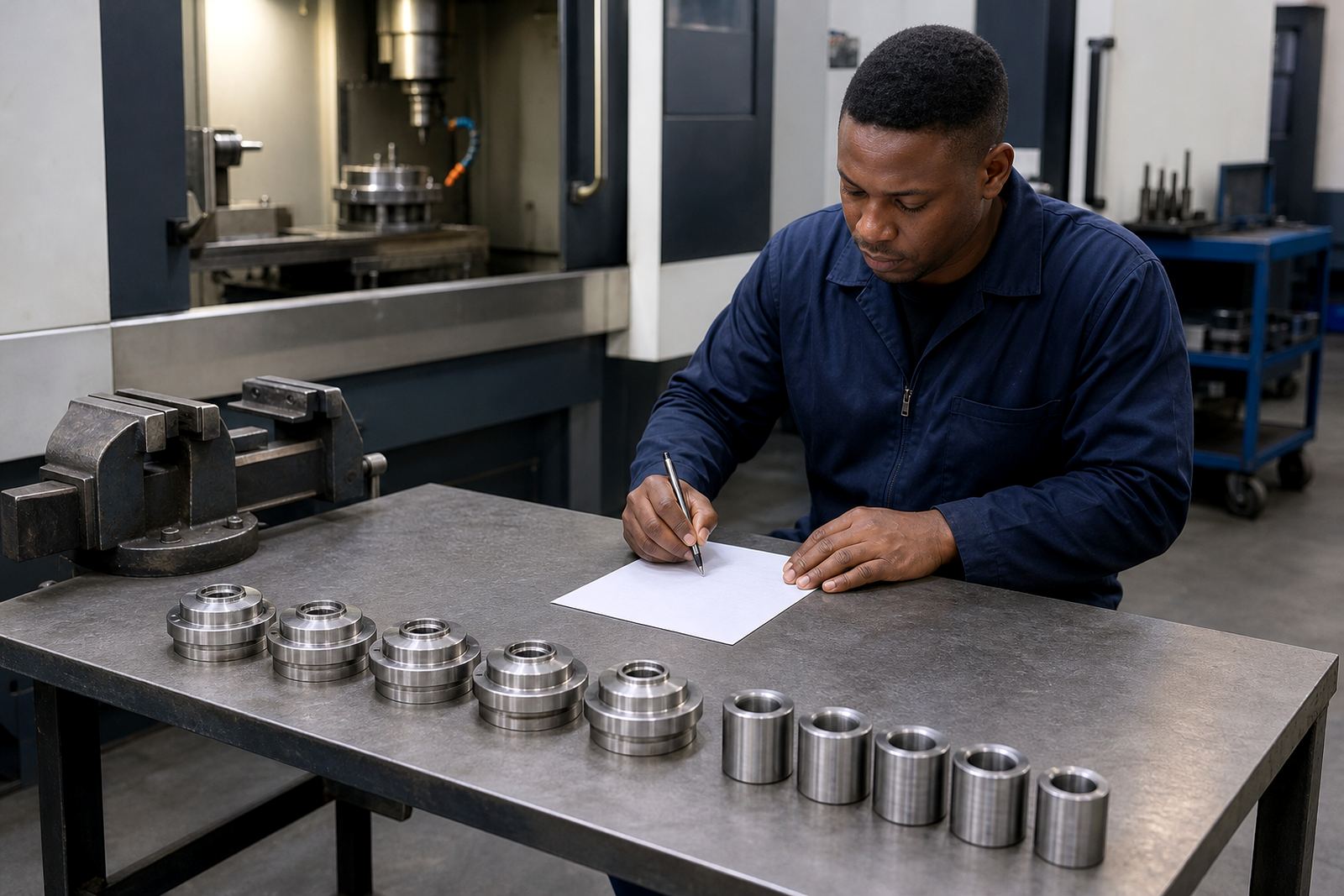
We also had to keep batch consistency tight. Wear strips are simple parts on the surface, but when a line uses several of them together, even small variation in length, hole position or thickness can create alignment problems. In a plant setting that can lead to rubbing, extra noise or premature wear. We therefore treated the job as a matched set, with each piece checked against the same references before release.
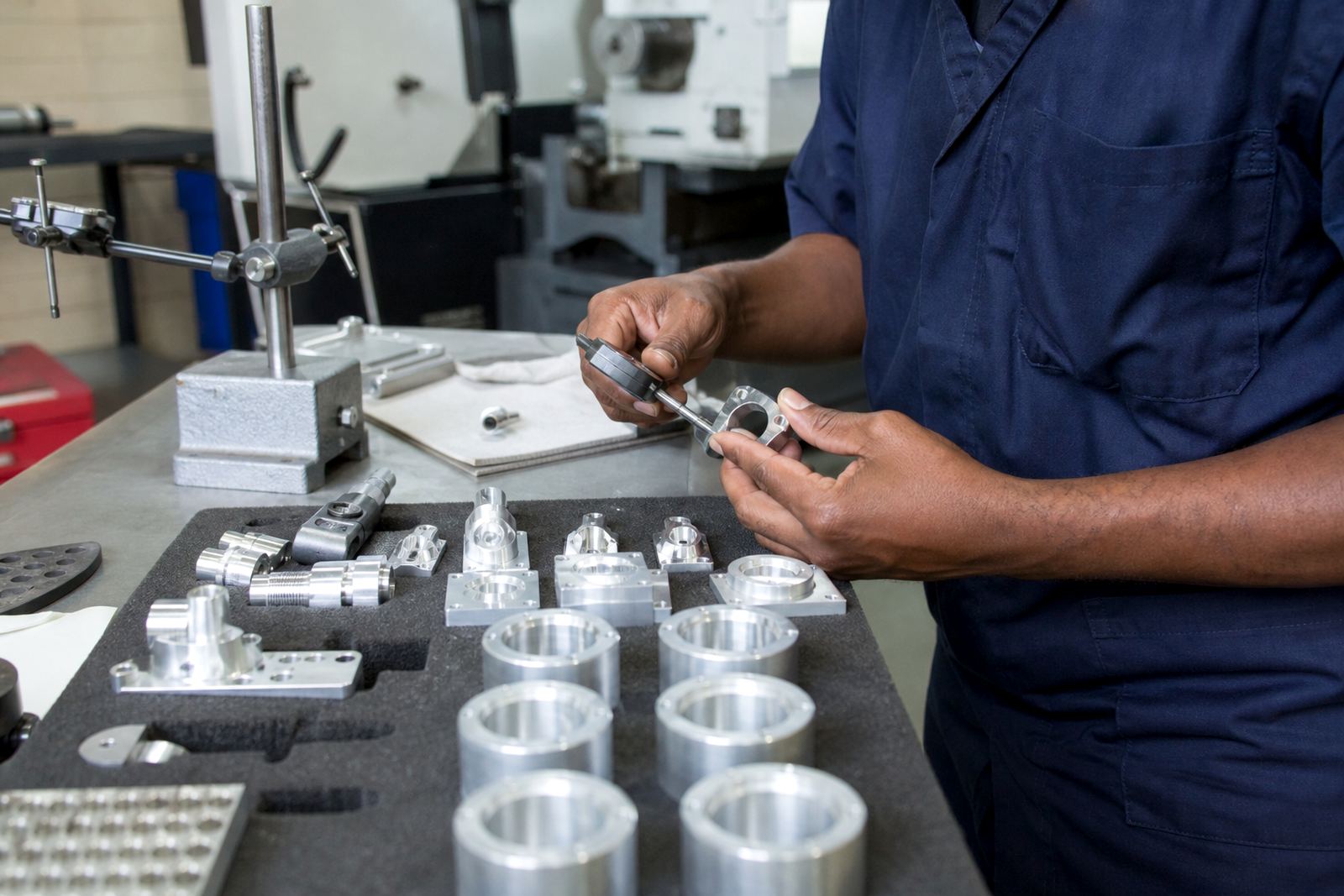
- Measured from existing parts and mounting points before cutting
- Reviewed hole positions, edge breaks and length allowances
- Kept the batch grouped so all pieces were made to the same working reference
CNC milling and turning used on the batch
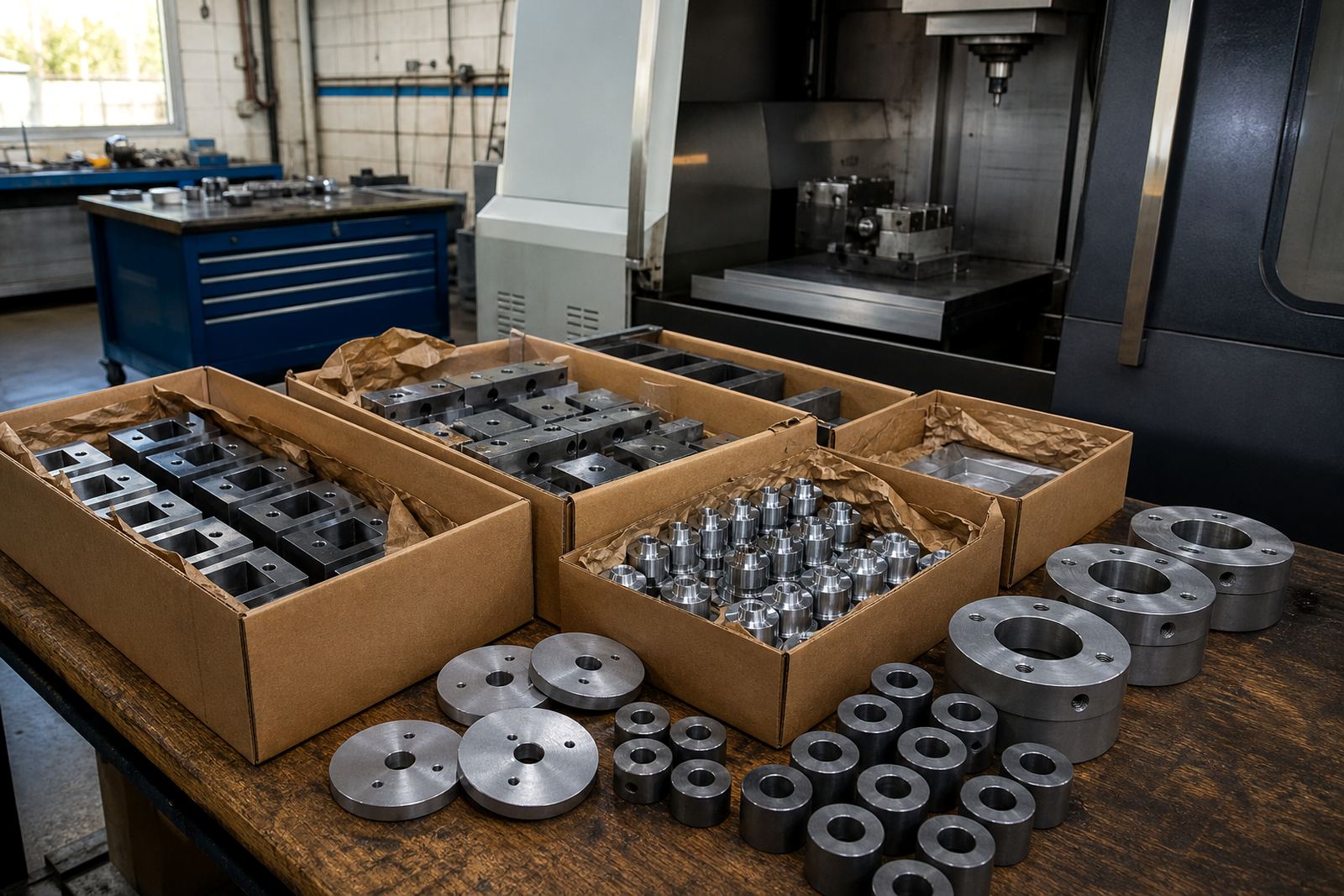
The replacement wear strips were produced through CNC machining methods suited to short runs and repeatable output. Where the geometry needed flat profiles, slotting or hole work, CNC milling was used. Where a part required cylindrical features, spacers or turned sections linked to the assembly, CNC turning was used. The focus was not on making the parts complicated, but on making them accurate enough to drop into place without forcing the maintenance team to file or modify them on site.
For this type of work, material selection depends on the wear environment, the load on the contact face and whether the strip is acting as a guide, spacer or sacrificial wear surface. Common engineering materials can be machined for this purpose, including mild steel, stainless steel and suitable engineering plastics depending on the duty. We selected the machining route around the required finish, the mounting method and the need to keep edge quality clean for assembly.
- CNC milling for profiles, slots and mounting details
- CNC turning where round components were needed for the same assembly
- Deburring and edge finishing to reduce snagging during fitment
Drawing review and tolerance guidance
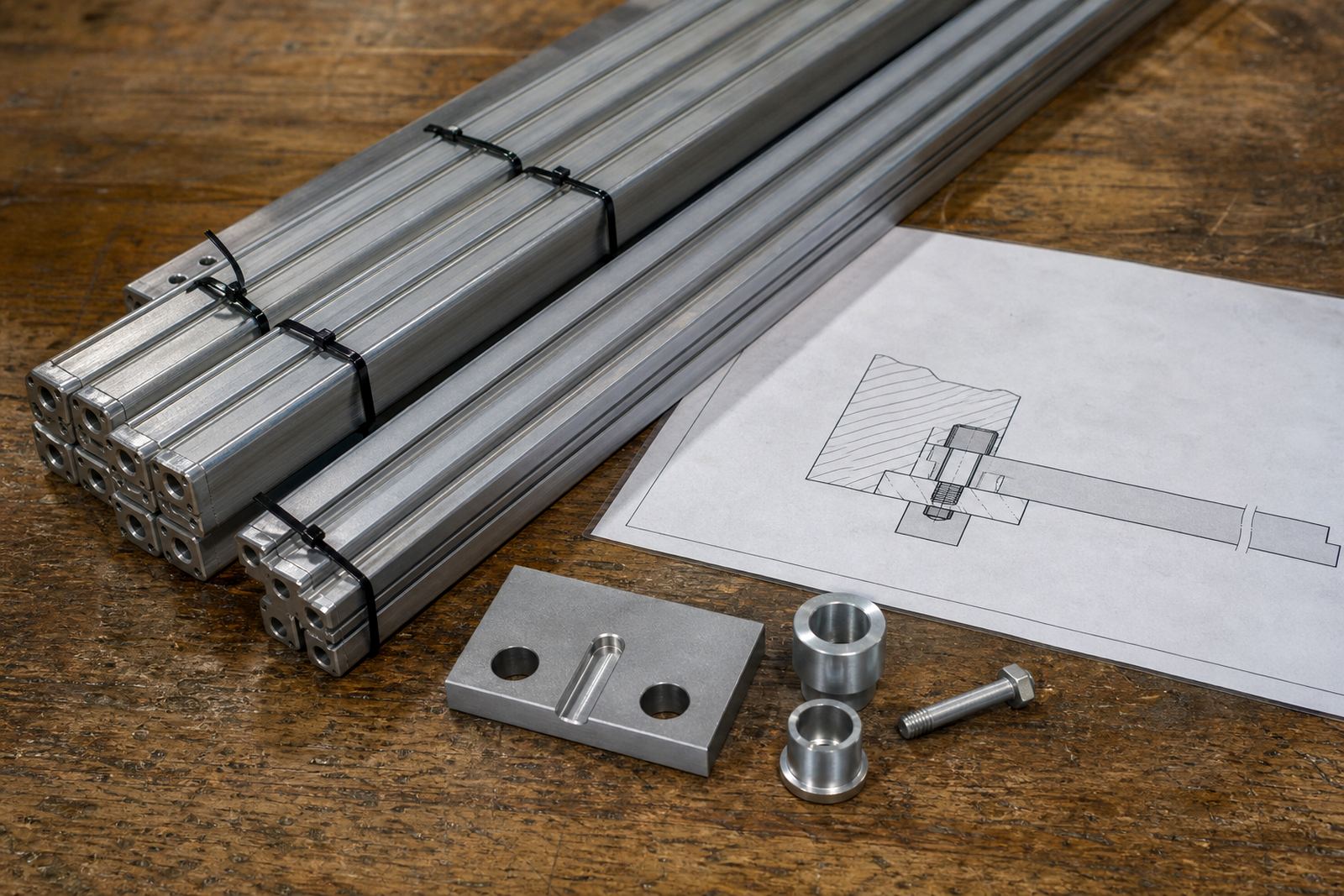
Before production, the drawing set was checked against the sample parts and the known conditions on site. That included confirming the true working length, the centre distances on the mounting holes and the fit of any locating faces. In jobs like this, tolerance guidance is important because the right number on paper is not always the right answer on a worn plant. A good machining plan has to allow for real-world assembly, especially where parts are fitted into older equipment that may already have some service wear.
We also advised on a practical tolerance approach for the batch so the client could keep replacements interchangeable. The aim was to avoid one strip fitting well and another needing extra adjustment. In other words, the batch had to behave like a set. That is the point of controlled small-batch work, you get consistency without overcomplicating the process.
- Drawing Review
- Tolerance Guidance
- Part Optimisation
- Drawing Updates where required for future repeat orders
Timeline and delivery coordination
The work ran over two weeks from review to dispatch. The first stage covered sampling, measurement and drawing verification. The second stage covered machining, inspection and packing for delivery. Because the client needed the parts for a planned maintenance window, delivery coordination was handled to align with the shutdown schedule and avoid parts sitting idle on site longer than necessary.
That timing matters on South African industrial jobs. In Durban and the surrounding areas, a missed delivery slot can push a repair into the next shift or even the next week if the line is booked solid. We kept the batch moving in step with the maintenance plan so the client could install the strips during the window they had already set aside.
- Week 1: Review, measurement and planning
- Week 2: Machining, inspection and dispatch
- Delivery arranged to suit the shutdown schedule
Results on the line and what changed
Once installed, the replacement strips restored the intended contact and guidance points on the line. The maintenance team had a matched batch that could be fitted without the kind of extra trimming that eats into a shutdown window. The main result was practical: less stoppage risk, more predictable fit-up and a cleaner return to service after maintenance.
From a production point of view, the value was in consistency. A line with worn wear strips can start to drift into repeated adjustments, especially if the old parts are replaced one by one with pieces that do not match. By handling the job as a controlled batch, the client got a set of parts that supported repeatable installation and easier future maintenance planning.
- Improved fit consistency across the replacement set
- Reduced need for on-site adjustment during installation
- Better support for repeat order planning if the same line needs more sets later
What we would repeat on a similar job
If we were doing the same kind of wear strip project again, we would follow the same sequence: inspect the worn assembly, verify the mounting references, agree the batch plan and keep the machining and inspection steps locked to the shutdown timing. That approach works well for maintenance teams in Verulam, Pinetown, Durban and other industrial areas where equipment has to go back into service quickly and the parts need to fit first time.
We would also keep the communication practical. For a job like this, what matters is not a long list of promises but clear answers on material, dimensions, fit and delivery. That is how small-batch machining should work when a client is trying to keep a line running through normal operating pressure, load-shedding uncertainty and regular maintenance scheduling.
- Start with the worn sample and the real mounting points
- Make the batch as a matched set, not as loose individual pieces
- Keep delivery tied to the maintenance window
Key facts
| Project location | Verulam, KwaZulu-Natal |
|---|---|
| Work type | Controlled batch wear strip replacement |
| Core process | CNC milling and CNC turning |
| Timeline | 2 weeks from review to dispatch |
| Service scope | Drawing Review, Tolerance Guidance, Part Optimisation, Delivery Coordination |
| Typical application | Industrial line maintenance and replacement parts |