Instrument Part Work For A Small Assembly In Umhlanga
The brief came from an instrument maker in Umhlanga working on a compact assembly with several small components that had to fit together cleanly and repeat the same from part to part. The job was not about volume, it was about consistency, clean edges, and getting the relationship between each feature right first time.
For this project, the parts were suited to CNC milling and turning, with attention to bore sizes, shoulders, face lengths, and the interface points that affect how an instrument goes together. The client needed parts that would support accurate alignment and a smooth final fit, not pieces that needed rework on site or at the bench.
Because the components were small, handling mattered as much as cutting. We planned the sequence carefully so that critical features stayed controlled through machining and checking, and we kept the process practical for a production run of a limited number of parts.
What The Brief Asked Us To Control
The main constraints were repeatability, limited batch size, and the need to protect fine dimensions during machining and inspection. Small parts can move around during cutting if the setup is not right, and even a small burr can interfere with assembly. That is why we treat tolerance guidance as part of the job, not something to leave until the end.
In projects like this, we normally work from the supplied drawing and confirm any areas where the fit needs more care than the rest of the part. If a feature is intended as a sliding fit, press fit, or clearance fit, we make sure the drawing review reflects that so there is no guesswork later. The same applies to thread engagement, edge breaks, and any surface that will locate against another component.
- Small-batch quantity with repeatable dimensions
- Fine fit between mating parts in an instrument assembly
- Careful handling of burrs, sharp edges, and surface finish
- Clear drawing review before cutting started
Material Choice And Machining Method
For this type of job, material selection depends on the function of the part, the load it sees, and how it behaves during machining. Common choices for precision components include aluminium for lighter parts, mild steel for general purpose strength, stainless steel where corrosion resistance is important, and engineering plastics where low weight or insulation is useful. The right choice changes the way tools cut, the amount of heat generated, and how much deburring is needed afterwards.
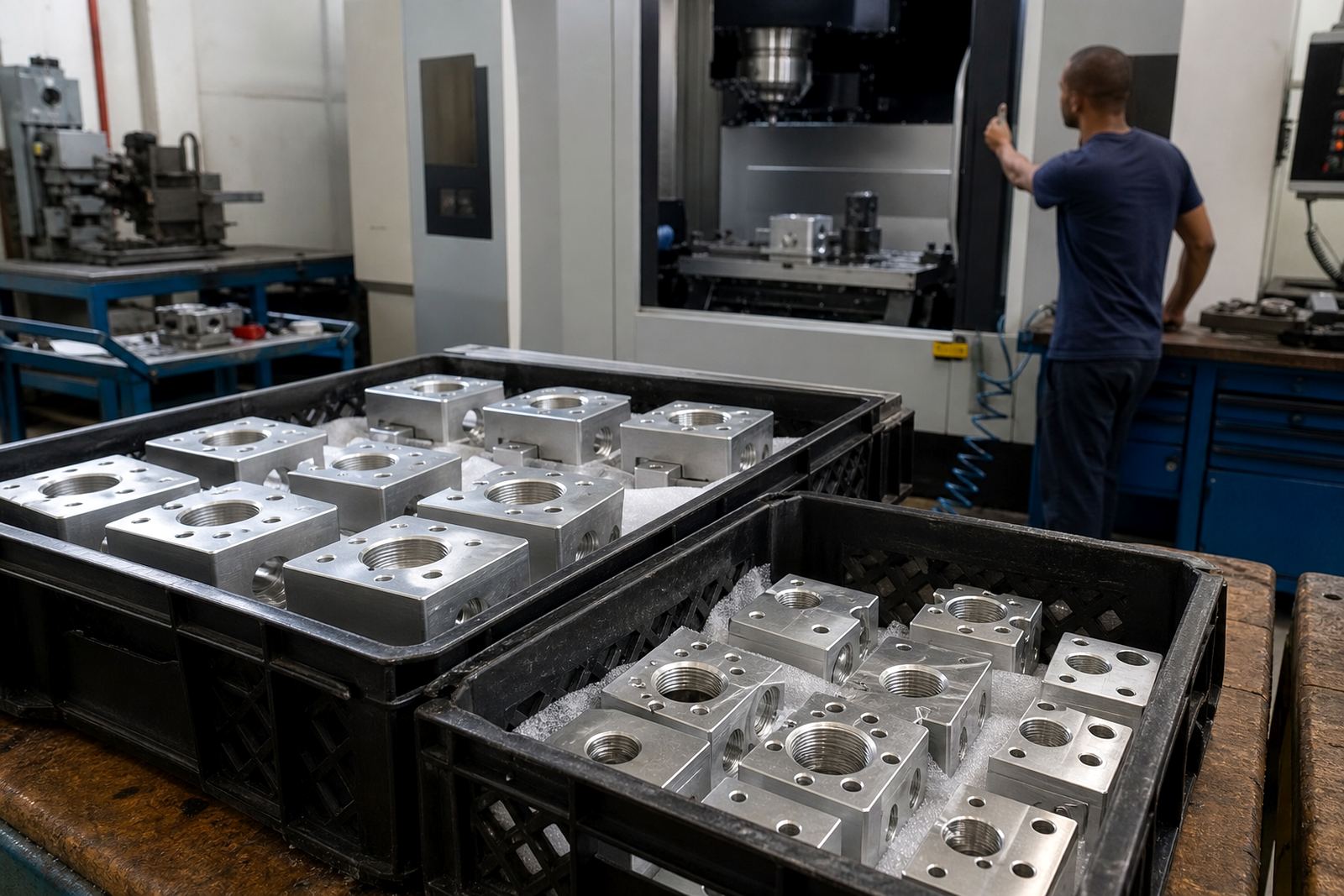
CNC milling was used for the shaped features, slots, pockets, and drilled details, while CNC turning handled the round elements and concentric features. Where a part has to sit true in an assembly, turning helps keep the diameter and face relationship under control. Milling then deals with the secondary geometry that supports the final fit. This mix is common in small instrument parts because it gives better control over both shape and concentricity.
We also kept an eye on the practical side of machining in KwaZulu-Natal conditions. In a humid coastal area, stored material and finished parts need proper care to avoid staining or surface issues, especially on steel. Power interruptions are another local reality, so planning a batch around reliable process stages helps keep work moving without upsetting the job sequence.
How We Ran The Job From Pinetown
The work was processed at our Pinetown base, serving the Umhlanga area with support from our production and quality team. Founded in 2008, PME CNC Machining has built a working method around small production runs, careful scheduling, and practical communication with clients across South Africa.
For this project, the steps followed a simple order: drawing review, material confirmation, prototype planning, machining, inspection, and final coordination for delivery. That approach suits clients who need parts made properly the first time and do not have room for repeated trial pieces. It also helps when drawings need minor clarification before the first cut is made.
- Drawing review and part check before release to production
- Prototype planning to confirm the most critical features
- Batch planning so the sequence stayed controlled
- Inspection reporting to record the finished dimensions
Fit Checks, Inspection, And Repeatability
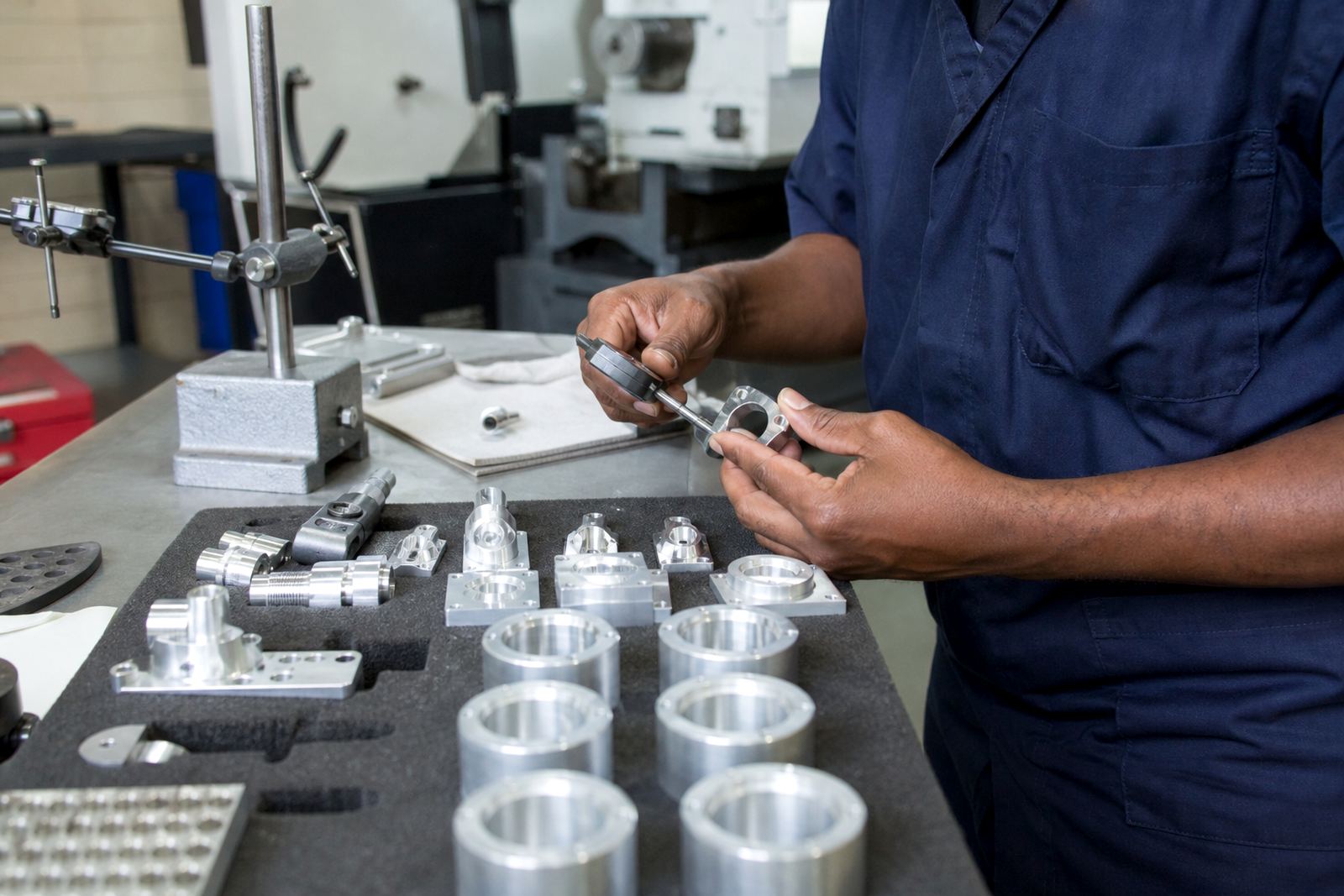
Once the parts were machined, we carried out assembly fit checks to make sure the components matched the intended stack-up. For small instrument work, that step matters because an individual dimension can look fine on paper yet still affect the way the full unit sits together. We checked the parts against the drawing and looked at the features that influence alignment, location, and movement.
When needed, our quality administrator records the measured values in a simple inspection report so the client has a clear record of what was supplied. For repeat orders, those notes help preserve consistency from one batch to the next. If a drawing needs a small update to remove ambiguity, we can mark that up and return it to the client for approval before the next run.
That is often where small-batch machining adds value. The client does not just get a box of parts, they get a repeatable process that can be used again when the assembly is expanded or remade. It saves time later and reduces the risk of a part drifting out of spec between runs.
Result For The Umhlanga Assembly
The final parts supported the instrument assembly as intended, with the repeatable features and clean interface points needed for steady build work. The client received components that were ready for assembly rather than pieces that still needed hand correction. For a small run, that kind of consistency is what keeps a production line or workshop moving.
Across the job, the focus stayed on practical machining detail rather than unnecessary complexity. The parts were made to support reliable fit, clear identification, and straightforward repeat ordering if the same assembly is needed again. That is usually what a precision job shop should aim for on small components, keep the process tight and the result easy to use.
If we were to run a similar job again, we would follow the same sequence: confirm the drawing, check the critical fits early, machine with conservative setup control, and inspect before release. For fine instrument parts, that method works because it gives the client certainty without overcomplicating the job.
Key facts
| Project type | Small-batch CNC machined instrument parts |
|---|---|
| Town served | Umhlanga, KwaZulu-Natal |
| Main processes | CNC milling and CNC turning |
| Job focus | Repeatability, fit checks, drawing review |
| Project duration | About 2 to 3 weeks |
| Base location | Pinetown, KwaZulu-Natal |