Job brief from Johannesburg
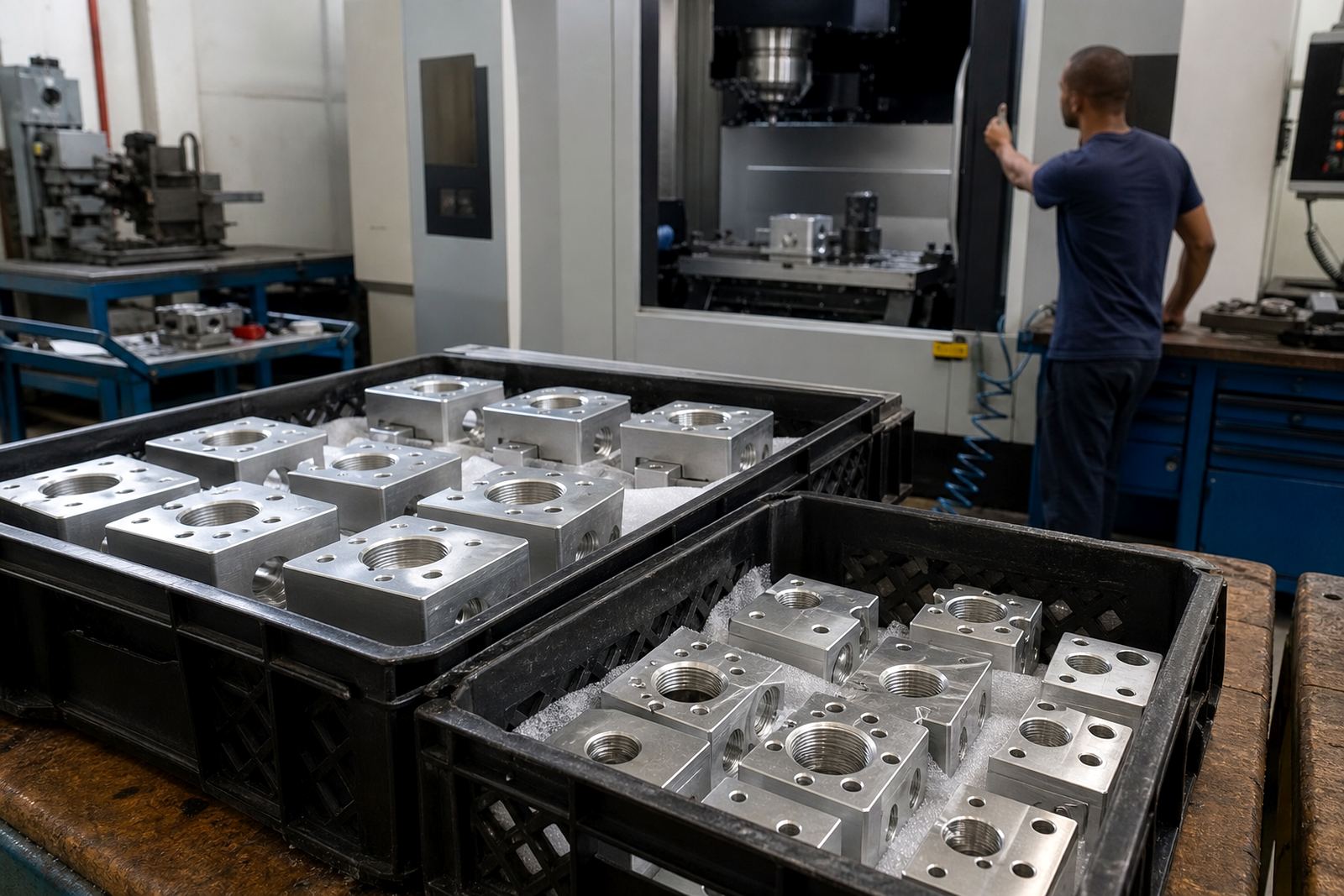
The client came to us with a request for compact manifold-style blocks for a multi-port fluid application. The parts needed straight drilled passages, threaded ports and a clean outer profile so the blocks could sit neatly in a tight assembly layout.
The main challenge was that the block geometry had to stay compact while still allowing enough wall thickness around each passage. That meant planning the machining sequence properly and checking each feature against the drawing before moving on to the next stage.
Key constraints on the part design
These were not large components, but they were sensitive to alignment and edge condition. A small shift in hole position or thread depth can create fitting problems later, especially where multiple passages meet inside one body.
- Compact block size with limited space for tool access
- Multiple drilled passages that had to meet internal positions cleanly
- Threaded holes that needed consistent depth and good thread form
- External faces that had to stay square for mounting and sealing
- Small batch quantity, so setup had to be efficient but still controlled
We also had to keep the finish practical for assembly. Burrs inside a manifold block can cause problems during cleaning or leak testing, so deburring and inspection were part of the work, not an afterthought.
CNC milling and turning approach
For this project we used standard CNC milling and turning methods depending on the feature. Milling was used for the flat faces, pocketing and the drilled port layout, while turning was relevant where round stock or concentric features are part of the preparation process. The goal was to make each feature in the right order so the part stayed stable through the job.
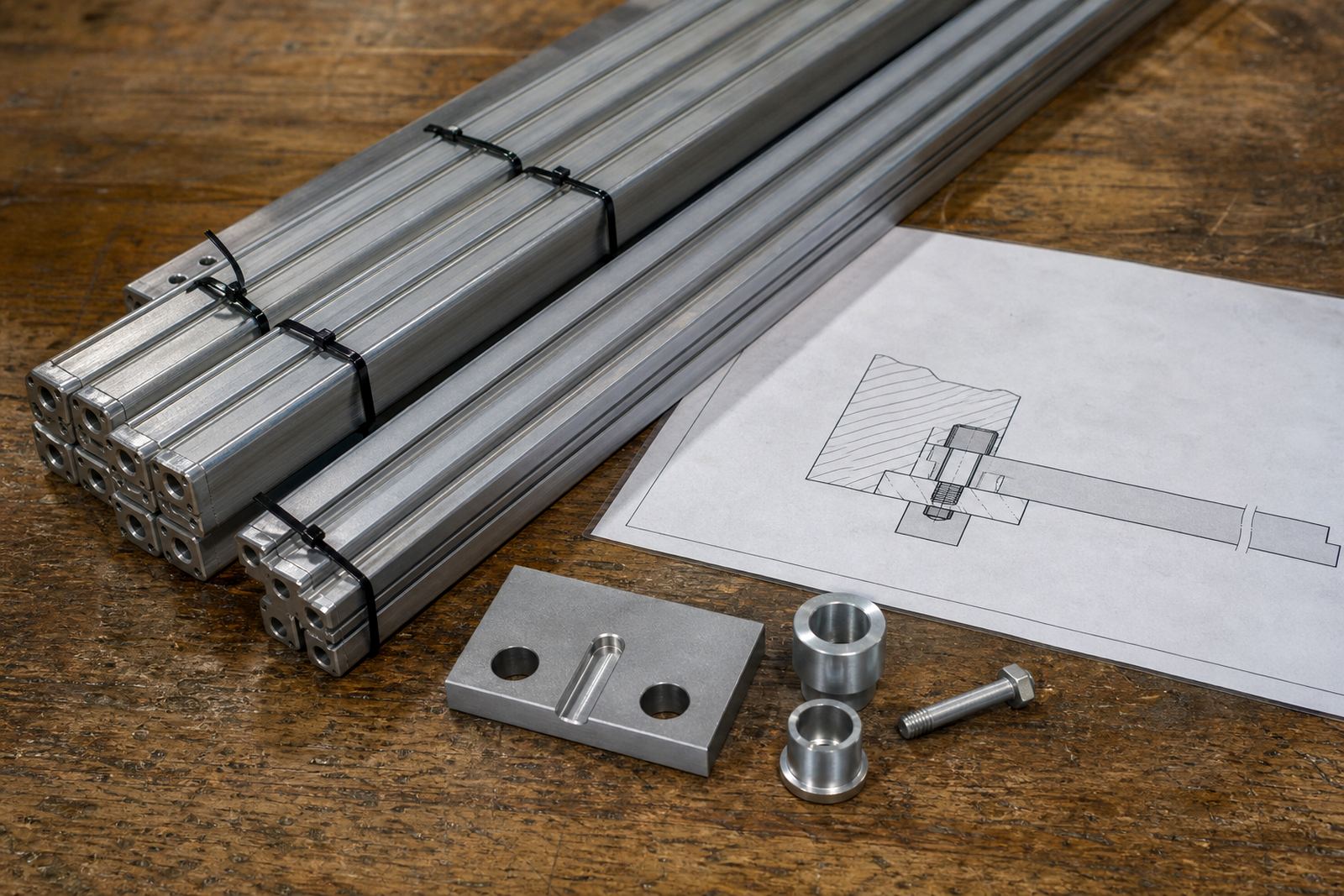
We reviewed the drawing first, then planned the toolpath around the critical faces and port centres. That included checking where a drill could enter safely, where threads would run to depth, and where a second operation would be needed to reach a face that could not be completed in one setup. One good setup can save time, but only if it still keeps the part within the intended tolerance window.
- Drawing review before cutting any metal
- Hole positioning checked against the reference faces
- Threaded features planned with proper allowance for tool run-out
- Secondary operations used only where needed for access
Material choice and machining notes
The material choice was handled around the working environment and the final application. For manifold blocks, the usual considerations are machinability, corrosion resistance and how the material handles repeated fitting and tightening. In South African conditions, especially for parts that may see humidity or coastal air, material selection matters because surface condition and thread life can be affected over time.
We worked to the specified material on the drawing and kept the machining practical for small-batch production. The important point was not to overcomplicate the process, but to make sure the finished block could be cleaned, mounted and inspected without drama. Where necessary, we also considered how the part would be handled after machining, including storage and delivery so the faces and threads would remain in good condition.
For tolerance guidance, we treated the critical dimensions carefully and checked them against the functional needs of the assembly. We do not promise blanket tolerances on every job because the right figure depends on the design, material and feature being machined. What we do is keep the critical areas under control and communicate clearly if a drawing detail needs a practical adjustment.
What we supplied on the job
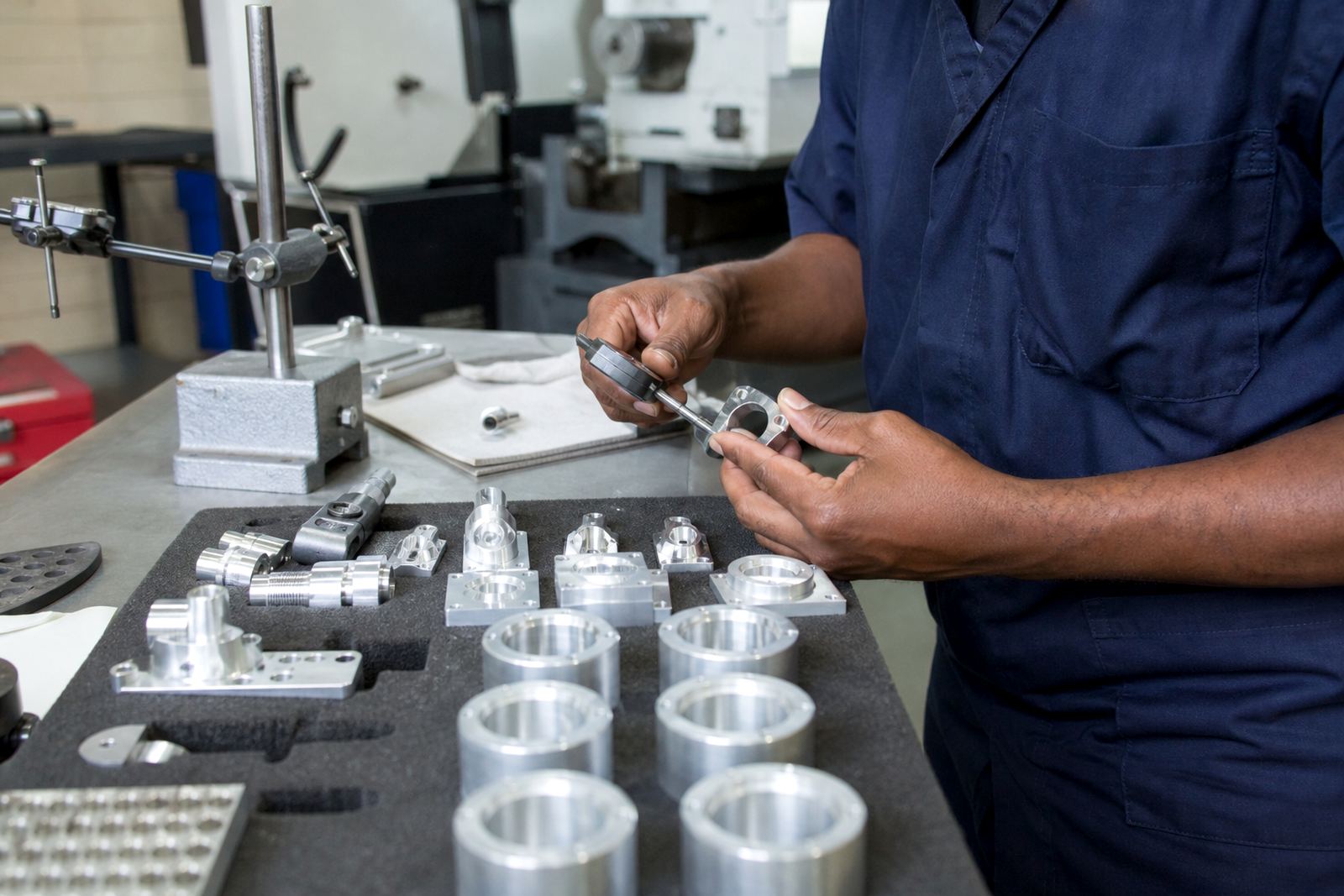
Once the first parts were machined, we carried out inspection and compared the features against the drawing notes. That included the outside dimensions, port positions, thread quality and face condition. If a feature needs to seal or align, it has to be checked properly. There is no shortcut there.
- Small-batch machined manifold blocks
- Inspection reporting for key dimensions
- Deburring and edge cleaning after machining
- Drawing update comments where a note needed clarification
- Delivery coordination to Johannesburg
We also used the job as a control point for repeatability. Once the first-off parts were approved, the remaining pieces could be run with the same setup, which helps keep the batch consistent from start to finish.
Timeline, outcome and what we would repeat
The project moved through drawing review, material preparation, machining and final checking over a short production window of a few weeks. That timing suited the fact that the job was for a small batch, where fast turnarounds matter but accuracy still comes first. The client received parts that matched the intended envelope and were suitable for assembly without extra rework.
What stood out on this job was the value of clear communication before cutting began. The block layout was tight, so the best result came from confirming the critical features early and keeping the sequence disciplined. If we were doing the same work again, we would follow the same approach: review the drawing carefully, machine the reference faces first, verify the port layout and inspect the threads before release.
For Johannesburg clients needing compact manifold blocks or similar small-batch machined parts, that process is usually the difference between a part that simply looks right and one that fits and functions properly in the assembly.
Why Johannesburg clients bring this work to us
Many Johannesburg jobs arrive with a need for practical support rather than just machining. That can include drawing review, part optimisation, sample part remake or repeat order support when a design needs to be held steady over time. Small-batch work benefits from a shop that can move between setup, production and inspection without losing track of the detail.
PME CNC Machining is based in Pinetown, but we regularly support clients across South Africa including Durban, Pietermaritzburg, Richards Bay and Johannesburg. For this project, the combination of careful planning and direct communication suited the job well. It kept the process straightforward and the finished blocks ready for use.
Key facts
| Project | Johannesburg manifold blocks |
|---|---|
| Client type | Industrial client, Johannesburg |
| Work type | Small-batch CNC machined blocks |
| Main features | Drilled and threaded passages |
| Location | Pinetown, KwaZulu-Natal |
| Delivery area | Johannesburg, Gauteng |