Workshop Repair Brief From Pietermaritzburg
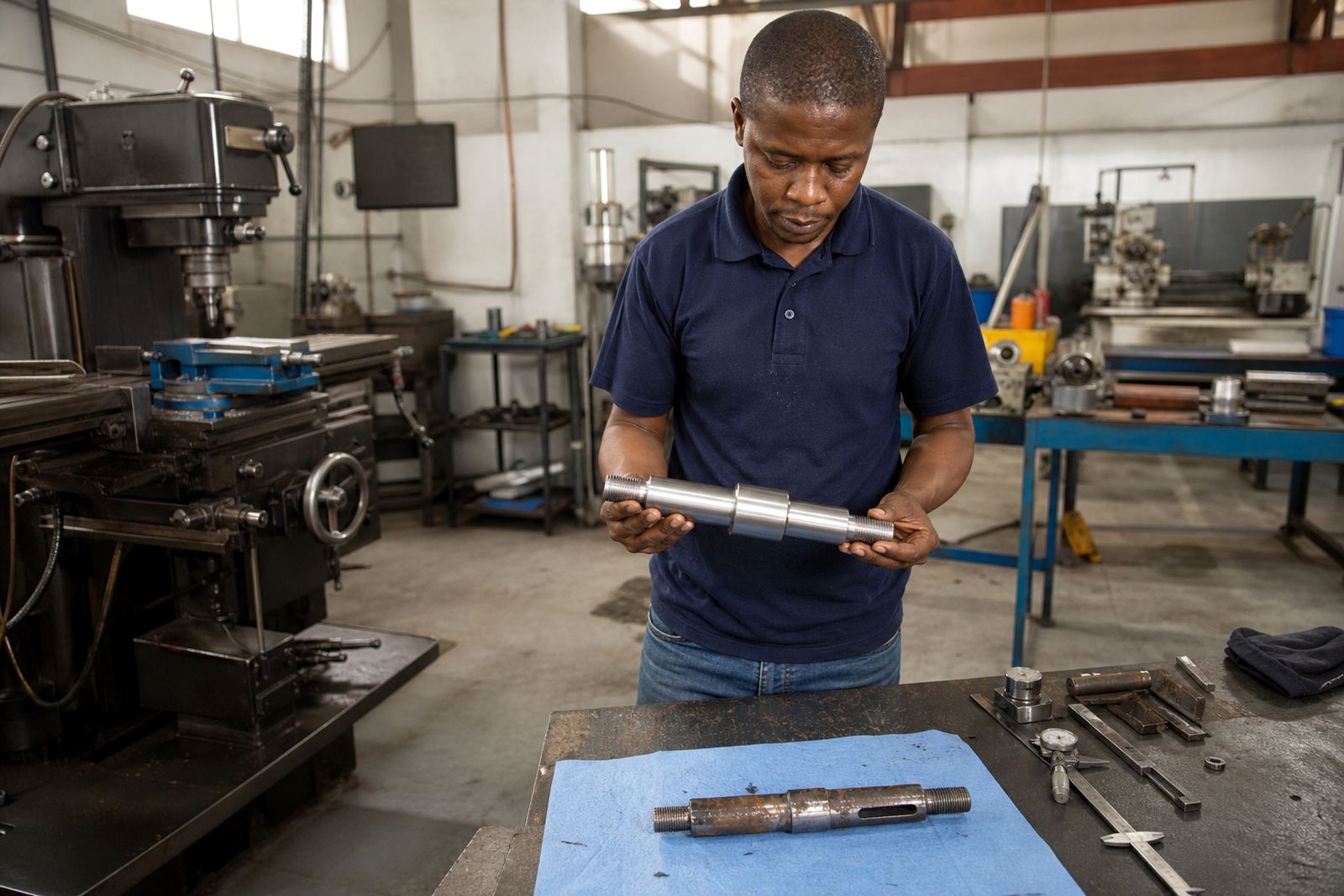
A Pietermaritzburg workshop brought us a worn shaft sample from a machine that had started showing play at the bearing seats and signs of surface damage on the working diameter. The original drawing was not available, so the brief was to reverse-engineer the part from the sample, confirm the critical sizes and make a replacement that would suit the existing housing and mating components.
The customer needed a part that could be installed by their own maintenance team without reworking the whole assembly. That meant the new shaft had to match the original fit at the bearing journals, keyway location and shoulder positions, while still allowing for sensible wear allowances and standard workshop assembly practice. The equipment had been sitting idle for too long already, so timing mattered.
We treated it as a practical repair job rather than a simple copy. The sample was checked for distortion, wear marks and previous machining notes left on the surface. From there we mapped the dimensions that mattered most and separated true geometry from worn areas, which is often the difference between a part that fits once and a part that lasts.
What We Had To Work Around
The main constraint was that the sample itself had wear on the areas that matter most for shaft work. A used shaft can tell you a lot, but it can also mislead you if the bearing journals have polished down or if a shoulder has been damaged during removal. We had to allow for that and avoid copying the wear exactly.
- Existing housing and bearing sizes could not be changed
- The keyway location had to align with the original assembly
- Surface condition needed to suit workshop handling and installation
- The replacement had to be made from readily available material
There was also the usual workshop reality of a repair job in KwaZulu-Natal, where humidity can affect storage and light corrosion can appear quickly if a part sits around too long. Because of that, the material and finish needed to be practical for local conditions not just dimensionally correct. We kept the process straightforward so the customer could get back to fitting parts instead of waiting on extra rework.
Reverse-Making The Replacement Shaft
Once the sample had been measured, we set up the machining plan around the key features: the main shaft diameter, bearing journal sizes, shoulders, ends, and any retaining or drive features. For a job like this, CNC turning is usually the backbone of the work because it gives control over concentric features, shoulder faces and fit diameters. Where needed, milling was used for the keyway and any non-round features that had to line up correctly with the assembly.
We also carried out drawing review from the sample data we captured, then translated that into a machining route suitable for a small batch one-off replacement. The goal was to keep concentricity between the turned sections and maintain a sensible tolerance stack, so the repaired machine would run smoothly without unnecessary bearing preload or looseness. That kind of fit judgement matters on shafts more than many people realise.
Material selection was based on general shafting practice for workshop equipment, with the final choice matched to the service duty and the existing assembly. We did not overcomplicate the part. Instead, we concentrated on the dimensions that affect fit, load transfer and alignment. The result was a replacement that could be installed and checked in the normal way, without special tools or custom modifications.
Checks, Fit-Up And Inspection Reporting
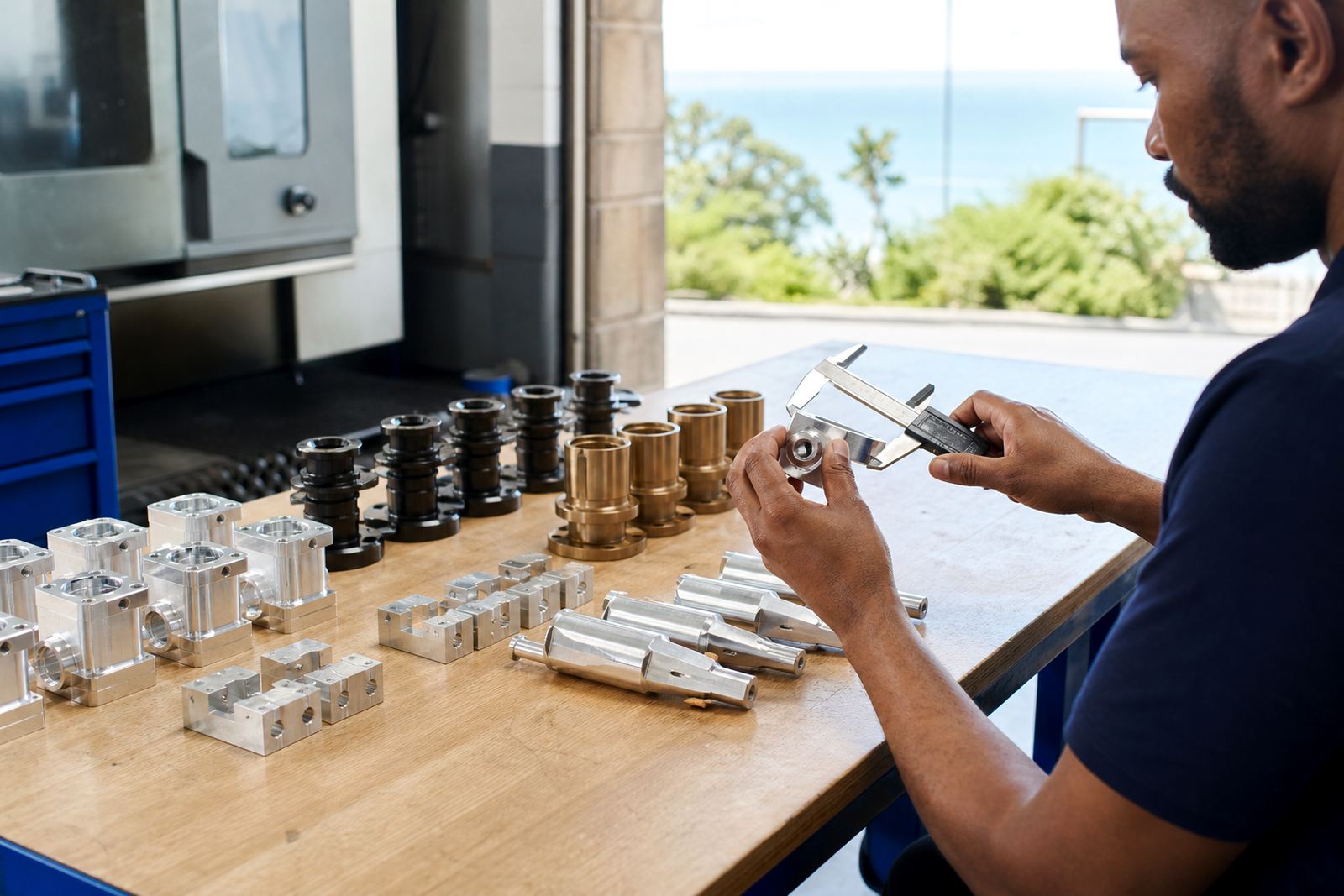
After machining, the part went through dimensional inspection against the reference measurements collected from the sample and the assembly notes supplied by the client. The important part of this stage is confirming that the replacement will work in the real machine, not just on paper. A shaft can look correct and still cause trouble if the shoulders are out or if a journal is slightly undersize.
- Critical diameters measured and checked against fit requirements
- Shoulder positions confirmed for bearing and spacer location
- Keyway alignment reviewed against the original assembly layout
- Surface finish assessed for assembly and service use
We provided inspection reporting for the finished part and included practical notes for the workshop team doing the fit-up. That helped them confirm the replacement against the mating parts before final installation. If a maintenance team is working with limited spare time, clear notes are often as useful as the part itself because they reduce back-and-forth on the floor.
Timeline And Delivery To The Workshop
The project ran over a short, controlled timeline of two weeks from sample receipt to dispatch of the replacement shaft. That window covered measurement, machining, inspection and delivery coordination to Pietermaritzburg. For a repair job, keeping the flow tight matters because the machine may be down, and every extra day affects production planning.
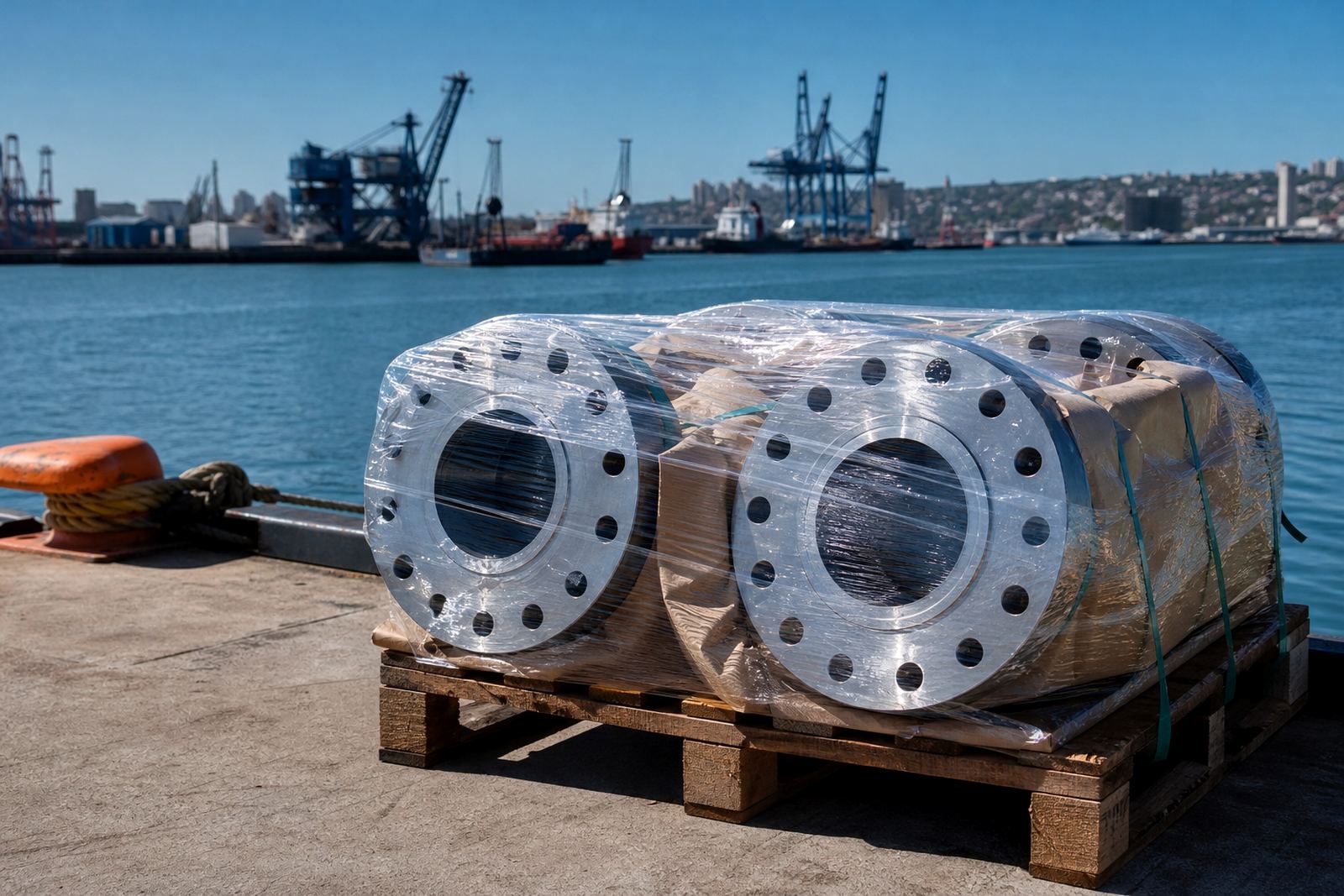
We coordinated delivery so the part reached the customer in a condition ready for installation. The replacement was packed to protect the machined surfaces and bearing journals during transit, which is especially important when parts move between Pinetown, Pietermaritzburg and other inland sites. Transport is not complicated, but damaged edges or light rust can turn a good job into a delay if packing is neglected.
The workshop team was able to move ahead with their repair sequence once the shaft arrived. That included their own final checks on alignment and fit before returning the machine to service. In these jobs, a clean handover is just as important as the machining itself.
What The Customer Got Back In Service
The repaired assembly returned to a usable condition with a replacement shaft that matched the working requirements of the machine. The key outcome was not just a new part, but a part that could slot into the existing repair plan without forcing changes to the housing or related components. That saves time, reduces extra labour and keeps the repair focused on the actual fault.
For us, the success of the job came down to three things: reading the worn sample correctly, machining the replacement to the real fit requirements, and supporting the workshop with clear information at handover. We would approach a similar job the same way again, especially where the original drawing is missing and the sample must speak for itself.
If another Pietermaritzburg repair team brings in a worn shaft, we would again start with a measured sample review, confirm the critical fits before cutting metal, and keep the process practical from start to finish. That approach works well for small-batch repair work, where every dimension has a job to do.
Key facts
| Project type | Reverse-made shaft replacement for a workshop repair |
|---|---|
| Town | Pietermaritzburg, KwaZulu-Natal |
| Client type | Local workshop maintenance team |
| Process | CNC turning with milling for key features |
| Timeline | 2 weeks from sample to dispatch |
| Service points | Drawing review, tolerance guidance, inspection reporting, delivery coordination |