Project Brief For A Howick Water Installation
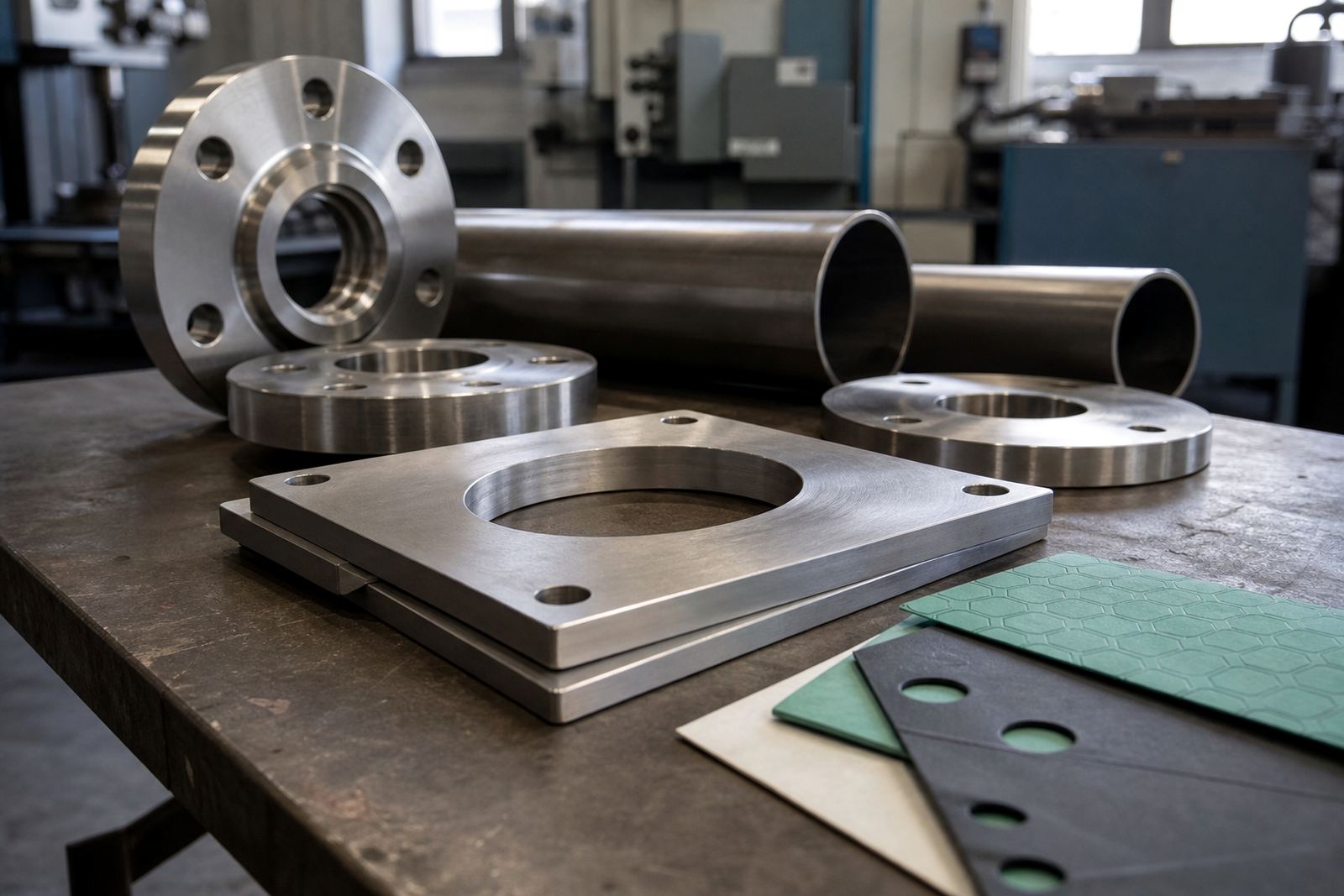
The client was a water services contractor working on a small-batch installation in Howick, KwaZulu-Natal. The immediate problem was simple to describe but awkward to solve: two components on site had different mounting hole patterns and could not be joined without a purpose-made adaptor set. The original parts were not available in a matching format, so the installation team needed machined pieces that could bridge the layout without forcing the equipment or changing the surrounding structure.
We were asked to review the drawing information, confirm the interface sizes and make adaptor pieces that would allow the installation to proceed without reworking the full assembly. The work suited a job shop approach because only a small quantity was needed, and the parts had to be made to fit existing hardware rather than a fresh design. That meant careful checking before cutting any metal.
- Client type: Water-related installation contractor
- Project town: Howick
- Work carried out from: Pinetown, KwaZulu-Natal
- Part purpose: Match two different mounting patterns
What Made The Job Tricky
The main constraint was the mismatch between the two mounting faces. The centres did not align, and there was limited room to alter the surrounding equipment. In that kind of job, you cannot simply enlarge holes and hope for the best. The adaptor must preserve strength, keep the assembly square and allow final fit-up without putting side load into the connected parts.
There was also the usual on-site reality to consider. Water installations often see moisture, handling marks and repeated maintenance access, so the mating faces needed to be accurate and clean. In KwaZulu-Natal, especially where humidity is high, good finishing and sensible material selection help reduce early corrosion and make maintenance easier. Load-shedding can also affect site schedules, so parts need to arrive ready for quick installation when the crew gets the window to work.
- Constraint: Existing mounting patterns could not be altered on site
- Constraint: Limited space around the installation area
- Constraint: Required a fit that allowed assembly without forcing the parts
- Constraint: Delivery had to support a tight site programme
CNC Milling And Turning Work Carried Out
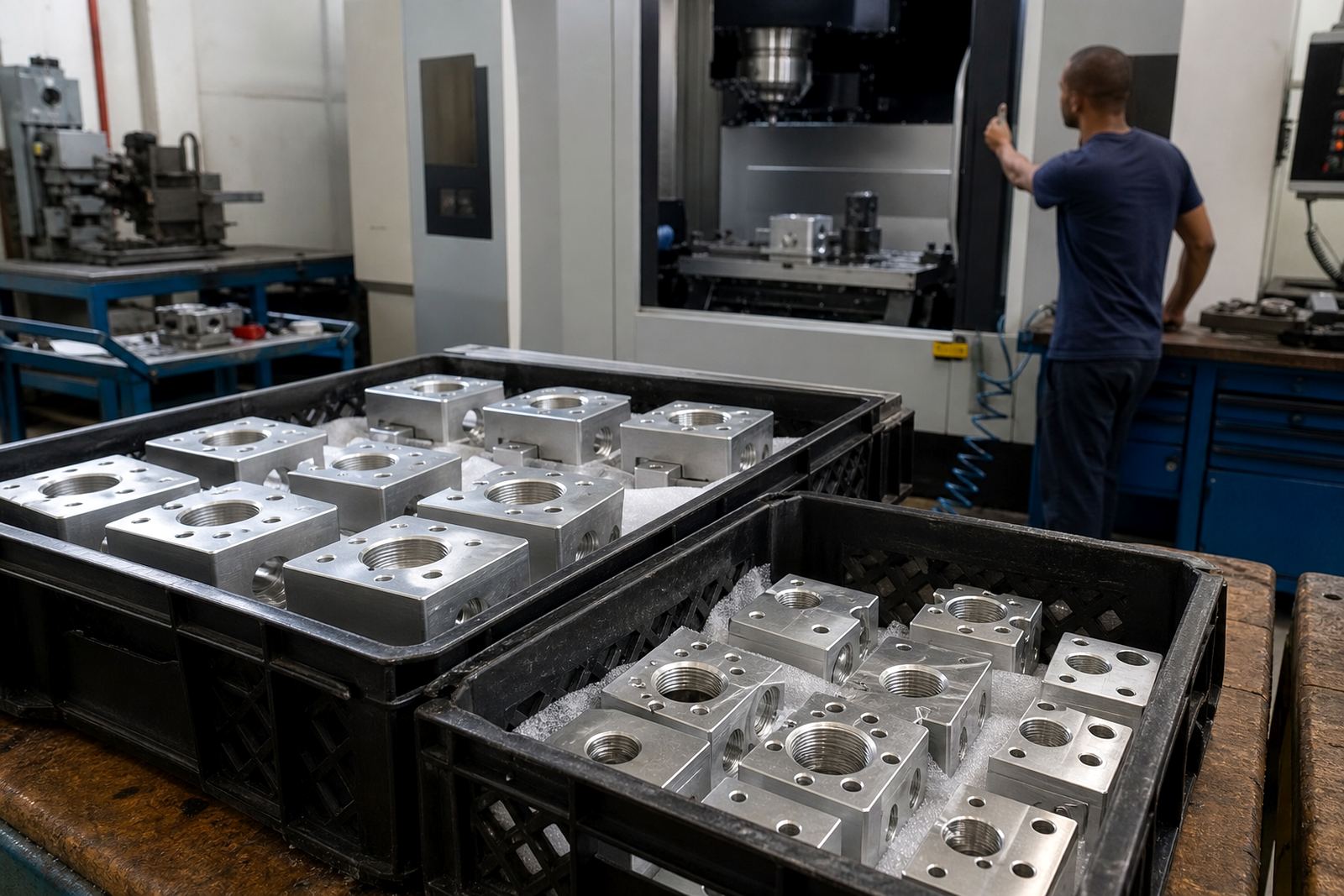
We used CNC milling for the adaptor faces, hole patterns and any profile features needed to match the existing equipment. Where stepped round features were required, turning was the practical method for holding concentricity and keeping the part centred. For a small-batch job like this, the value of CNC work is repeatability: each adaptor comes off to the same drawing and the same check points, which makes installation easier and saves time on site.
The parts were made from common engineering stock suitable for the duty and the environment, with the final choice driven by the application and the level of exposure to moisture. We do not promise one universal tolerance for every job because each drawing and fit requirement is different, but we work to the drawing intent and confirm the critical dimensions before release. Where needed, we can advise on a sensible tolerance band for mounting holes, spigot fits and face-to-face dimensions so the installer is not left guessing.
- CNC milling for hole patterns and flat faces
- CNC turning for round or stepped features where required
- Material choice guided by service conditions and availability
- Drawing review before cutting to reduce rework risk
How We Planned The Small Batch
The order moved through our normal support stages: drawing review, prototype planning, tolerance guidance and then batch planning for the actual parts. Because the request was for a small quantity, we focused on getting the first piece right and then repeating that setup for the rest. That approach suits local project work, where the real cost is often time lost on installation rather than the individual machine cycle.
We also checked the component interfaces for assembly fit, particularly where bolts, washers and clearance around the mounting face could affect the final position. If there is any uncertainty on a job like this, we prefer to remake a sample part or update the drawing before going ahead with the full set. A small correction at the start is far cheaper than stripping a wet installation after it has been bolted in place.
- Drawing review and measurement verification
- Tolerance guidance for matching old and new interfaces
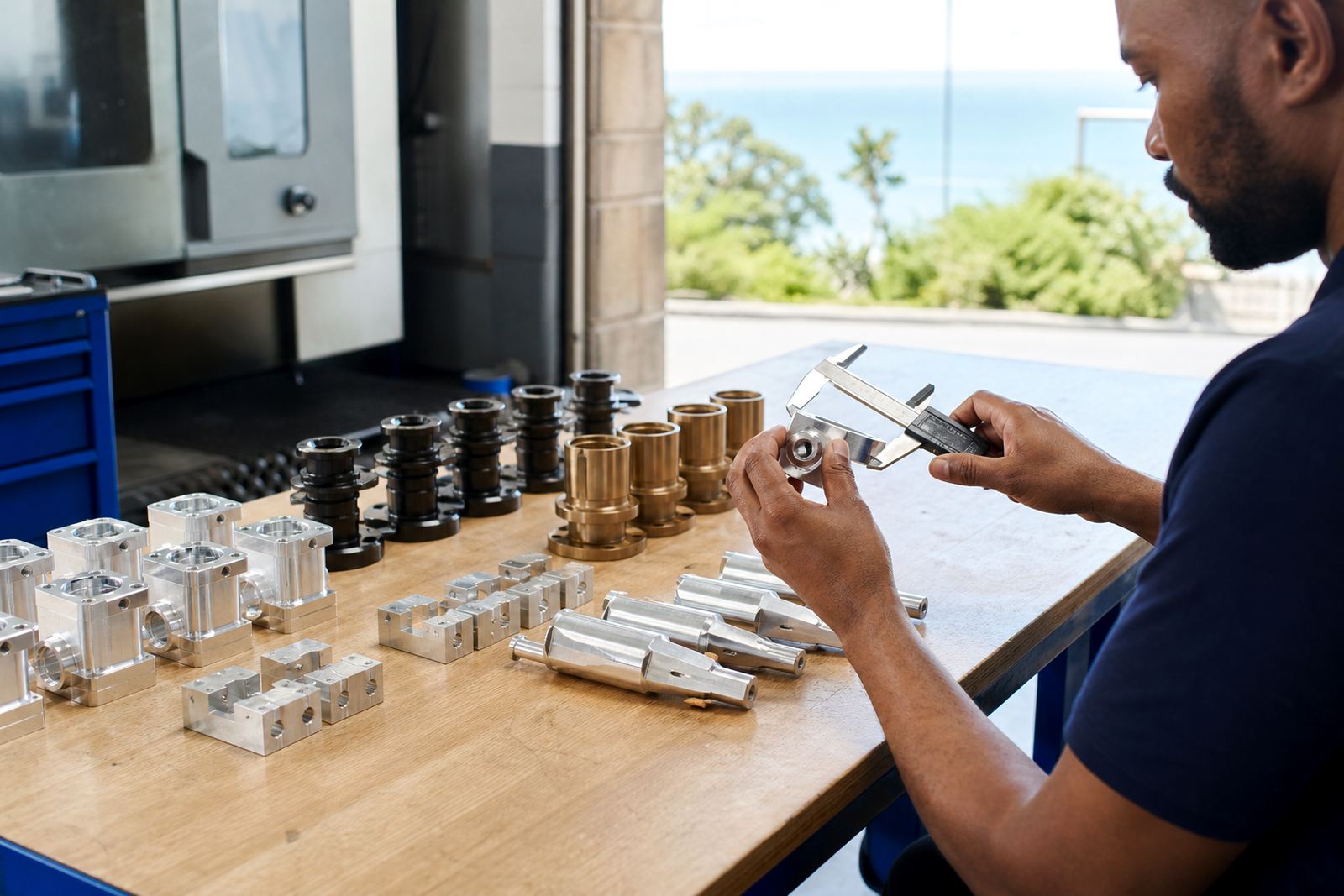
- Sample part check before full batch release
- Assembly fit checks for the final mounting arrangement
Timeline From Enquiry To Delivery
The project moved from enquiry to completed parts over a short multi-week turnaround. The first week was used for reviewing the available information, confirming the required adaptor geometry and agreeing which features had to stay fixed. The second week covered machining, checks and any minor drawing updates needed to keep the site team comfortable with the fit. Delivery coordination followed once the parts were approved.
That timeframe worked well because the client needed the pieces to arrive before the installation window closed. With water-related work, delays can push other trades back, so having a clear plan matters. We kept the communication direct and practical, and that helped the site team know exactly what was coming. No fuss, just the parts and the details needed to install them properly.
- Week 1: Review, measurement check and planning
- Week 2: Machining and in-process inspection
- Final stage: Delivery coordination and handover support
What Changed On Site After Installation
Once fitted, the adaptor pieces allowed the mismatched mounting patterns to meet cleanly and the installation could move ahead without a redesign of the surrounding structure. The main result was a proper mechanical interface that lined up the equipment the way the installer needed. That reduced on-site improvisation and gave the maintenance team a neater assembly to work with later on.
The client also gained a repeatable reference for future work. If the same situation comes up again, there is now a measured part pattern and a clearer path for replacement or duplicate production. For water installations, that kind of practical record is useful because equipment gets serviced, moved or upgraded over time and the original hardware is not always available in the exact same format.
- Mounting patterns aligned without forcing the assembly
- Installation could proceed without modifying the main structure
- Future replacements can be produced from the confirmed pattern
- Cleaner fit-up for maintenance access later on
How We Would Approach A Similar Job Again
We would handle a similar job the same way: confirm the interfaces early, check the drawing against the actual site measurements and make a sample or first-off part before full release. For small-batch adaptor work, that sequence keeps the job controlled and avoids surprises when the installer starts tightening bolts. It also gives room for practical adjustments if a hidden issue turns up, such as a clearance problem or a face that is not as square as expected.
If the same type of request comes in from Howick, Durban, Pinetown, Pietermaritzburg, Richards Bay or Johannesburg, we would again treat it as a fit-up problem first and a machining job second. That mindset helps us choose the right material, the right process and the right check points for the application. It is straightforward work, but it has to be done properly the first time.
- Start with measurement confirmation, not assumptions
- Set the tolerance around the actual mounting need
- Use first-off checks before the full batch
- Keep delivery and installation timing aligned
Key facts
| Project type | Machined adaptor pieces for a water-related installation |
|---|---|
| Town | Howick, KwaZulu-Natal |
| Base workshop | Pinetown, KwaZulu-Natal |
| Process | CNC milling and turning |
| Batch size | Small batch |
| Work scope | Drawing review, sample check, batch machining, delivery coordination |