Short-Run Guide Rail Machining for an Empangeni Process Plant
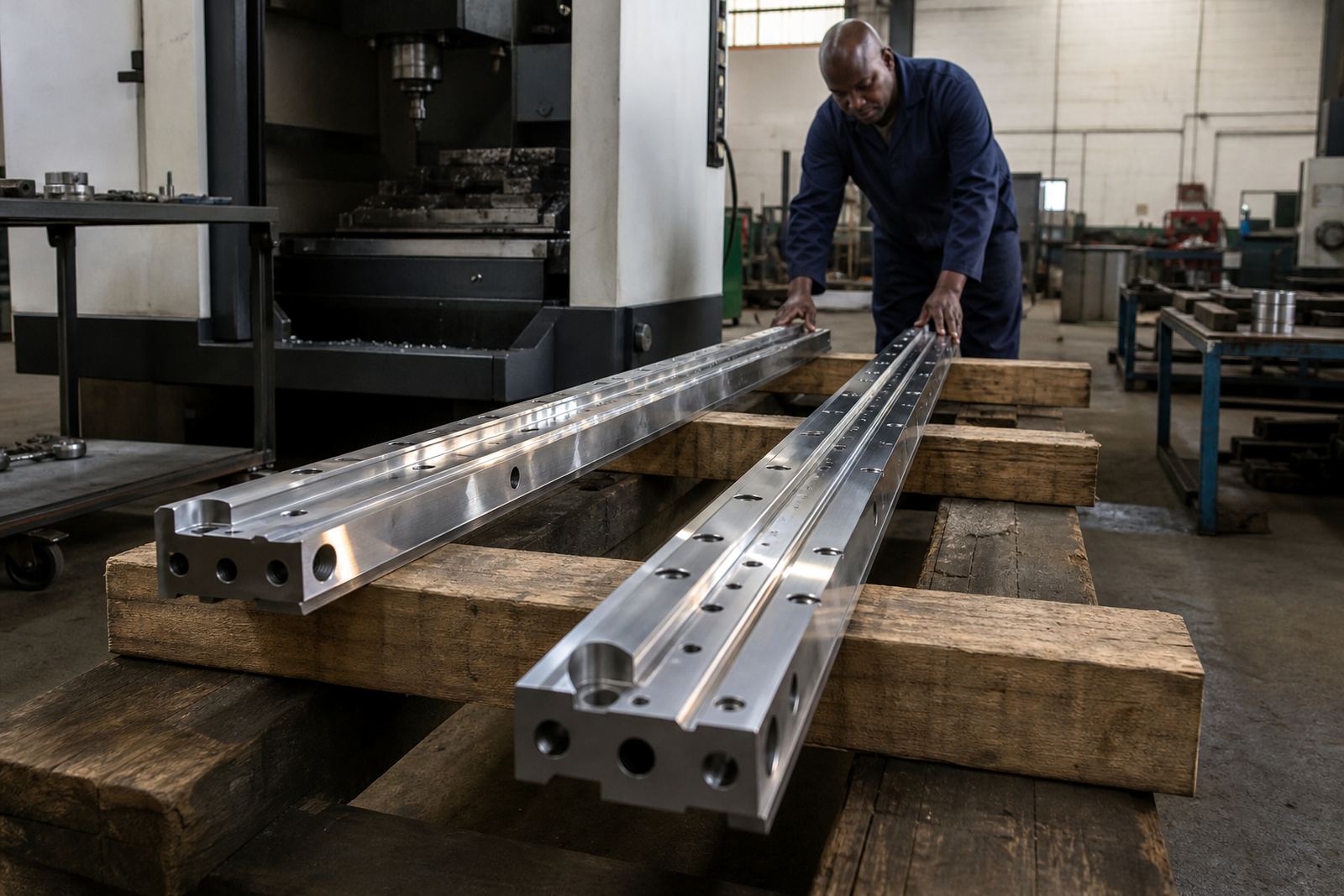
This project came from a process equipment team in Empangeni that needed a small batch of guide rail sections made for an adjustment and replacement job. The original components were worn and the client needed parts that would match existing mounting points, slide cleanly and support reliable alignment during day to day operation. Because the equipment was already in service, the focus was on fit, repeatability and a tidy finish rather than a full redesign.
The brief was straightforward but exacting. We worked from supplied drawings and measured samples, then confirmed the dimensions that mattered most for installation. Guide rail work often looks simple on paper, but once a part has to line up with adjacent brackets, fasteners and moving faces, a few tenths of a millimetre can matter. That is where drawing review and tolerance guidance make a real difference.
- Client type: process equipment maintenance and adjustment
- Area: Empangeni, KwaZulu-Natal
- Job type: short-run replacement guide rail sections
- Primary requirement: close fit to existing mounting and running surfaces
What the Brief Asked Us to Control
The client needed the new rails to suit an existing setup, which meant we had to manage several constraints at once. The sections had to be consistent across the batch, yet still match the wear pattern and interface points of the installed equipment. We also had to keep the work practical for a site that cannot afford long downtime. That meant avoiding unnecessary changes to hole positions, edge conditions or contact surfaces.
Material choice was handled around the service duty of the part and the environment it would operate in. In KwaZulu-Natal, especially in coastal and industrial areas, moisture and dust can affect exposed metalwork over time. We discussed suitable metal options, machining allowances and surface preparation so the finished pieces would hold up in normal plant conditions. The client also wanted the parts supplied ready for fitting, with no need for extra dressing on site.
- Maintain alignment with existing machine geometry
- Keep hole positions and spacing true to the drawing
- Allow for practical installation at site
- Reduce the chance of extra fitting work during shutdown
How We Approached Milling, Turning and Fit
For this type of work, the main operations usually involve CNC milling for profiles, slots, mounting faces and hole patterns, plus turning where round stock or spacer features are needed. The rail sections were planned as a small batch job, so the programme had to be efficient but still allow for careful first-off checks. We looked at the sequence of cuts, datum choice and clamping method before any material was removed.
Where the drawing called for clean edges and accurate faces, the machining path was set up to preserve consistency from part to part. We also checked the contact surfaces that would sit against the frame or guide assembly, because poor flatness or a slightly off-angle edge can cause binding in service. Typical machining work like this is about practical control, not guesswork. The aim is always to hold the part to the drawing and keep the fit sensible for the application.
During production, Siyabonga Patrick Zulu handled machining supervision while Johan Petrus van Wyk managed the CNC programming side. That combination helps when a job needs both efficient cycle planning and a close eye on the finished surface condition. It is the sort of job where one small correction early can save a lot of time later.
Inspection and Sample Checking Before Release
Before the full batch was completed, we carried out sample checks against the drawing and the reference part. Naledi Refilwe Molefe handled the quality administration side, making sure the relevant dimensions and notes were recorded clearly. For guide rail work, the most important checks are usually on length, hole location, edge condition and the surfaces that carry load or slide against another component.
We do not treat inspection as a separate last step only. It runs alongside the job, so if something needs adjusting it can be corrected before more parts are made. On this job, that approach helped keep the batch consistent and reduced the risk of a part arriving on site that needed extra dressing. The client received a clear result that matched the agreed drawing references and installation intent.
- First-off sample checked before the batch was continued
- Critical dimensions compared with the drawing and sample part
- Edges and faces checked for practical assembly fit
- Parts prepared for immediate installation on delivery
Timeline and Delivery Coordination
The guide rail work was completed over a short production window of two weeks from confirmed brief to release. That included drawing review, material planning, programming, machining, inspection and delivery coordination. For a small batch, a tight timeline is often about organisation as much as machine time. The job had to slot in without losing accuracy, and the parts had to be ready when the maintenance team was preparing its shutdown work.
Kyle Brendan Naidoo handled client support and delivery coordination, with Anele Nondumiso Dlamini managing production scheduling. For customers in Empangeni and nearby industrial areas, that kind of coordination is important because many jobs are tied to site access, changeover periods and local maintenance windows. It is easier to fit parts into a planned shutdown than to wait for an extra round of adjustments. The work was collected and moved in a way that suited the client’s fitting sequence.
Results on Site and What We Would Repeat
The finished guide rail sections were supplied for direct use in the equipment adjustment work and the client was able to proceed with the installation without major modification. The result was a cleaner fit against the existing assembly, with the necessary mounting points and working surfaces produced to suit the original layout. For a small-batch machining job, that is the right outcome: parts that do the job, fit properly and keep the maintenance team moving.
If we were doing the same project again, we would follow the same order of work. Start with drawing review, confirm the critical measurements against a sample or installed component, choose material with the operating environment in mind and then machine with inspection built in from the first part. That approach works well for guide rails, brackets, spacers and other process equipment parts where the original machine has to keep running and the replacement must be practical from day one.
PME CNC Machining is based in Pinetown and supports clients across Durban, Westmead, New Germany, Pietermaritzburg, Richards Bay, Johannesburg and Umhlanga, but this Empangeni job is a good example of the kind of work we handle every week. Small runs, clear drawings and fit-critical parts are where a disciplined job shop really earns its keep.
- Small-batch parts made to suit existing equipment
- Useful for maintenance, repair and adjustment work
- Suitable for clients across South Africa needing repeatable machining support
Key facts
| Project location | Empangeni, KwaZulu-Natal |
|---|---|
| Work type | Short-run guide rail sections for process equipment adjustment |
| Process | CNC milling and turning, with inspection and delivery coordination |
| Batch size | Small batch production |
| Timeline | 2 weeks from brief to release |
| Finish intent | Ready for fitting with practical assembly tolerances |