A repair job with little room for delay
The client was a Durban maintenance team working on a handling line used for moving packaged goods through a busy plant. Their rollers had worn unevenly and a few shafts had scoring where bearings were no longer seating properly, so they needed a short batch of replacement parts that could be fitted without changing the surrounding brackets and guards. The priority was practical fit, not a redesign, because the line had to be back in service quickly and the maintenance window was tight.
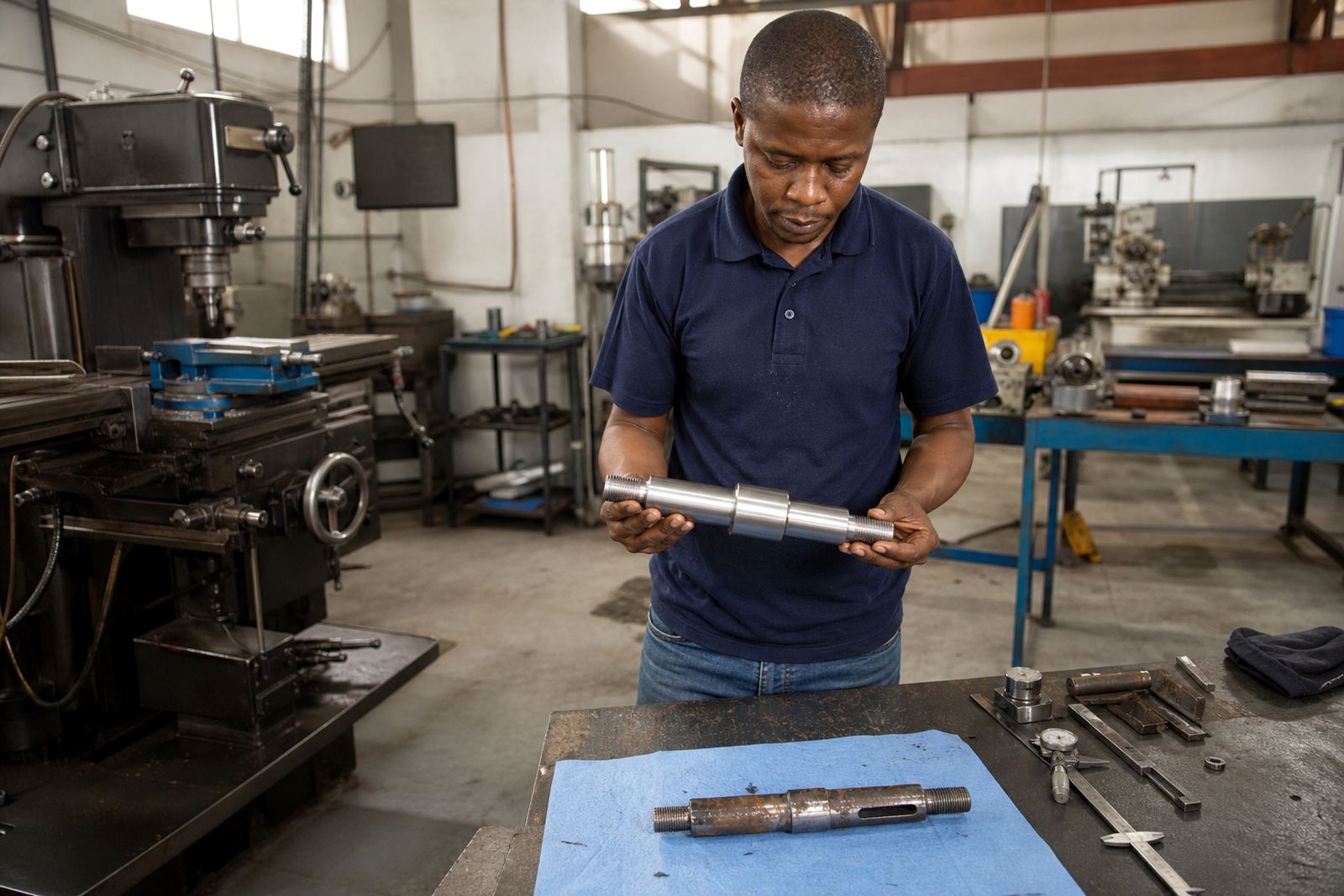
We first worked through the drawings and measured the worn parts against the mating assemblies to confirm the important dimensions. On jobs like this, the small details matter: journal sizes, shoulder positions, groove locations and the finish on the bearing surfaces. If any of those are off, the roller may spin but it will not run cleanly for long. The customer also wanted parts that could handle regular cleaning and the damp conditions common near Durban, where coastal air can cause trouble if material choice and finishing are not thought through.
What the brief asked us to make
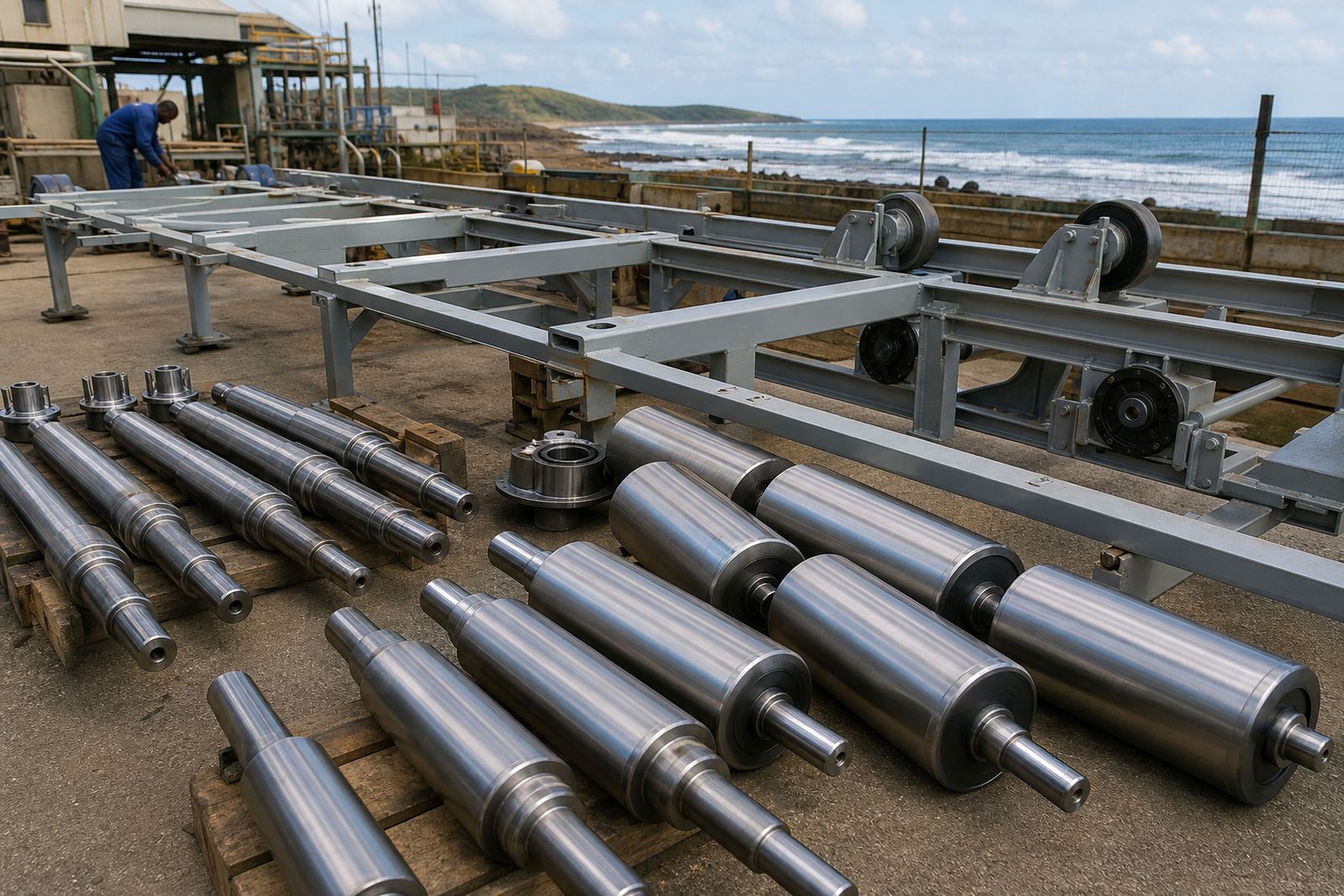
The brief called for a short run of replacement rollers and matching shafts for a conveyor section carrying packaged loads. The parts had to suit existing housings and maintain the same running height, so the repair team could install them without changing the rest of the line. We also had to keep the batch size sensible, since this was a maintenance repair and not a full production redesign.
- Conveyor rollers for a repair section, with consistent outside diameter and straightness
- Matching shafts with bearing journals and shoulders to suit the existing assembly
- Surface finish suitable for repeated rotation and contact with standard bearing sets
- Material selection aimed at wear resistance and practical corrosion control in coastal conditions
- Batch sizes kept small for replacement stock and immediate installation
Because the line had been running for years, there were signs of previous wear and small field fixes. That meant we had to compare the drawing dimensions with the actual parts on site and allow for what the maintenance team called the real world fit. It is a common thing in repair work, and worth checking before any metal is cut.
Machining approach for rollers and shafts
The rollers and shafts were machined as a paired job so the critical sizes stayed aligned from part to part. The shafts were turned to suit the bearing and support points, then the roller bodies were brought to size with the required running surfaces and end features. Where needed, we used the drawing review stage to flag areas that might cause trouble during assembly, such as over-tight shoulders or a length that could pinch the bearing stack.
For parts in this kind of service, material choice depends on load, wear and environment. The job used common engineering materials suitable for turning and milling, selected for practicality rather than anything exotic. In a Durban plant, the mix of humidity, cleaning routines and daily start-stop use can expose weak spots quickly, so a sensible finish and accurate concentricity are more useful than fancy claims.
- Turned shafts for correct journal fit and bearing alignment
- Machined roller ends and locating features to match the existing hardware
- Checked concentricity and runout during the process
- Deburred edges so the parts could be handled safely during fitting
Timeline and handover in weeks
The full job ran over about three weeks from the first enquiry to dispatch. The first week was drawing review, measurements and confirming what could be reproduced from the worn samples. The second week covered machining, inspection and a small amount of adjustment where the field dimensions showed minor differences from the original drawing. The third week was final checking, packing and delivery coordination.
That schedule suited the customer because they could plan the shutdown around the arrival of the parts rather than wait on a long production run. Short-run work is often like this. A few days saved at the front end can make a real difference to the maintenance crew on site, especially when the line feeds into a larger operation and every hour off the floor has knock-on effects.
Inspection points that mattered on site
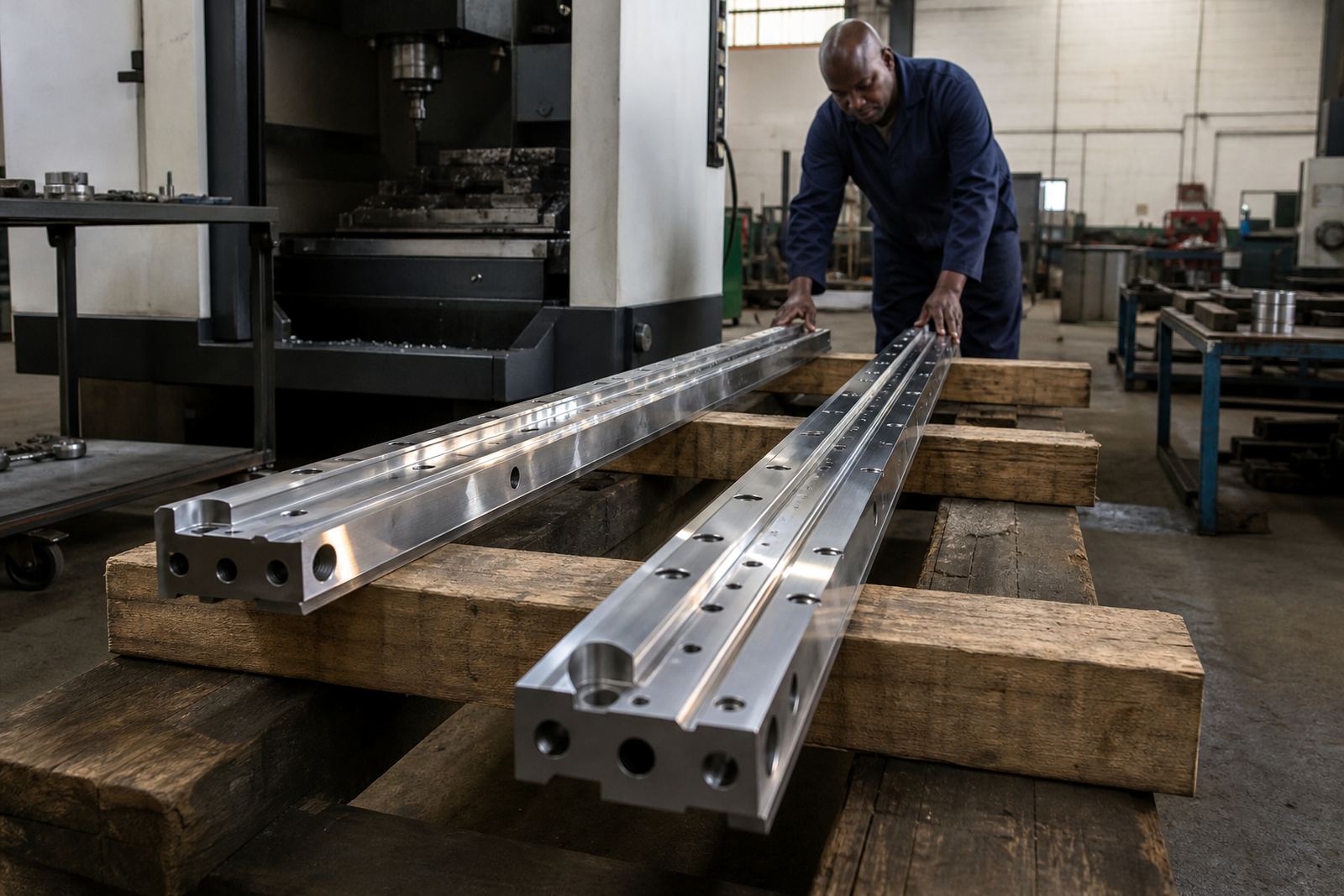
We treated the job as a fitment problem as much as a machining job. The maintenance team needed rollers that would drop into place, hold their line and not add vibration. So the inspection work focused on the dimensions that affect service life most directly.
- Outside diameter to keep the conveyor level consistent across the section
- Shaft diameter and shoulder spacing for bearing fit and axial location
- Overall length so the roller sits correctly within the frame
- Surface finish on the bearing journals to support smooth rotation
- Visual checks for burrs, marks and handling damage before dispatch
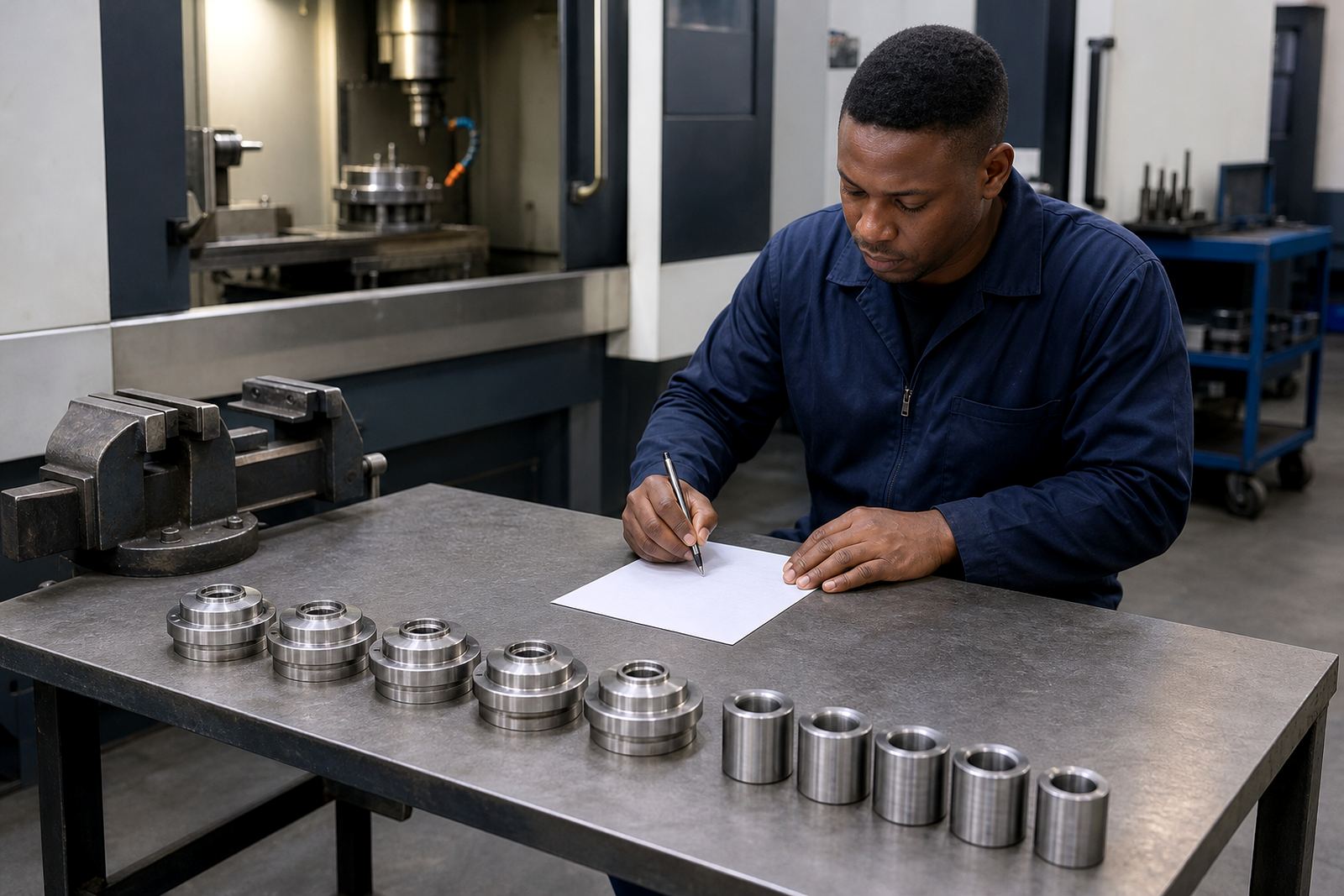
The customer also asked for clear inspection reporting so their fitter could compare the supplied parts against the removed items before installation. That extra step helps reduce surprises during a shutdown, and it gives the team a clean record if the same parts need to be ordered again later. It is one of those simple habits that saves time when things get busy.
What changed after installation
Once fitted, the replacement rollers and shafts restored the line to service without the dragging and uneven running the maintenance team had been seeing. The matching dimensions meant the assembly could be completed within the planned outage and the crew did not have to rework the frame or modify the guards. The result was a cleaner repair and less pressure on the rest of the line.
If we were doing the same job again, we would ask for the removed parts and the latest as-built measurements right at the start, especially on older conveyor systems. That lets us catch small differences caused by previous repairs, wear or site adjustments. We would also keep the same approach on material selection and inspection, since it worked well for a Durban environment where humidity and cleaning routines can affect exposed components over time.
Why this kind of small batch work suits PME
This project is a good example of the kind of job PME CNC Machining handles every week in Pinetown for clients across Durban, Westmead, New Germany and further afield into Pietermaritzburg, Richards Bay and Johannesburg. Small batch machining is often the right answer when a plant needs a replacement part that is no longer sitting on a shelf. The work calls for careful drawing review, sensible batch planning and a clear handover back to the maintenance team.
It also suits the way our team works: practical communication, quick checks on the key dimensions and a focus on parts that fit the way they should. For conveyor rollers and shafts, that means paying attention to the running surfaces, the bearing seats and the lengths that govern installation. Nothing complicated, just the details that keep a repair moving.
- Drawing Review for worn or incomplete parts
- Batch Planning for short runs and repeat orders
- Inspection Reporting for fitment checks
- Delivery Coordination for maintenance windows
When a line is down, the best result is often the one that looks simple from the outside because the hard checking was done early. That is the standard we aim for on repair work of this kind, and it is what made this Durban conveyor job straightforward to install.
Key facts
| Project type | Short-run conveyor rollers and matching shafts for a handling line repair |
|---|---|
| Client location | Durban, KwaZulu-Natal |
| Timeline | About 3 weeks from enquiry to dispatch |
| Core work | Drawing review, machining, inspection and delivery coordination |
| Typical fit factors | Bearing journal size, shoulder spacing, overall length and runout |
| Material approach | Common engineering materials selected for wear, fit and coastal service conditions |