When a sample is all you have
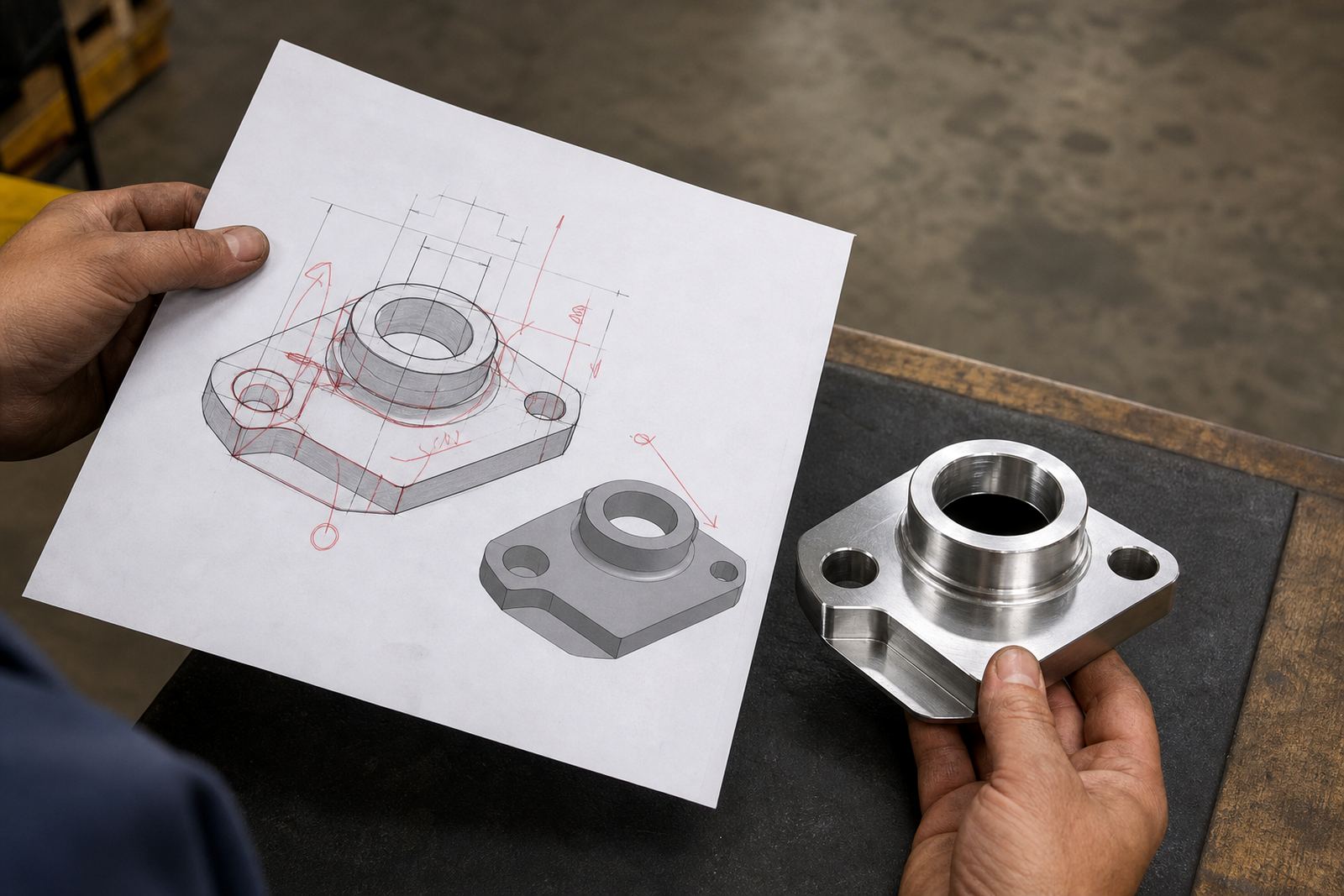
Sample Part Remake is for jobs where a customer has an existing component, but no usable drawing or incomplete information from the original source. We measure the sample, assess the likely machining route, and rebuild the part so it can be made again with consistent results for short production runs or one-off replacements.
This service suits maintenance teams, buyers and technical staff who need a part matched to an existing fit rather than starting from a blank page. It is useful for older equipment, field repairs, and local manufacturing where the original supplier details are no longer available. In coastal areas like Durban and Richards Bay, we also look at corrosion risk and material choice early, since that can affect service life quite a bit.
What we check before machining starts
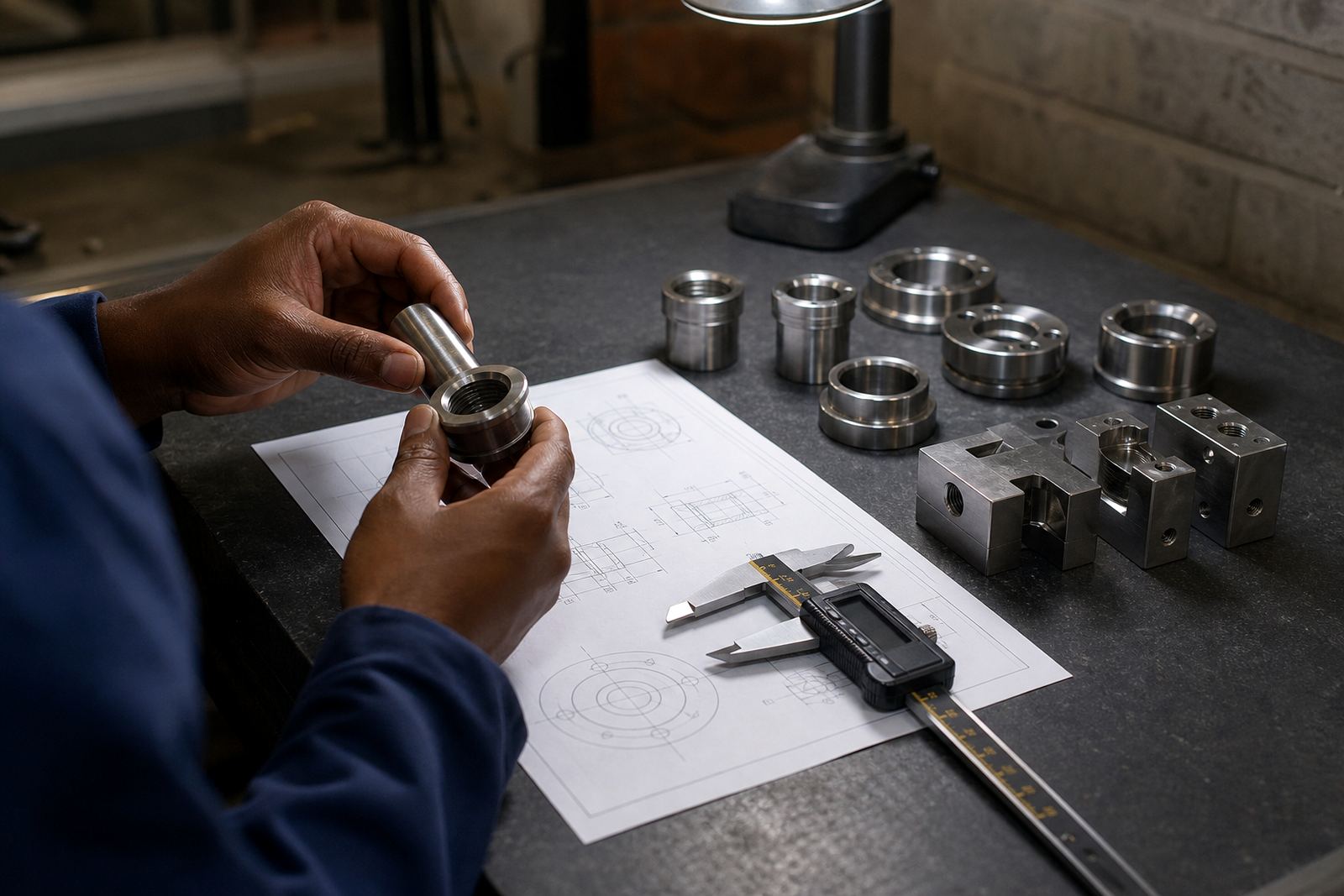
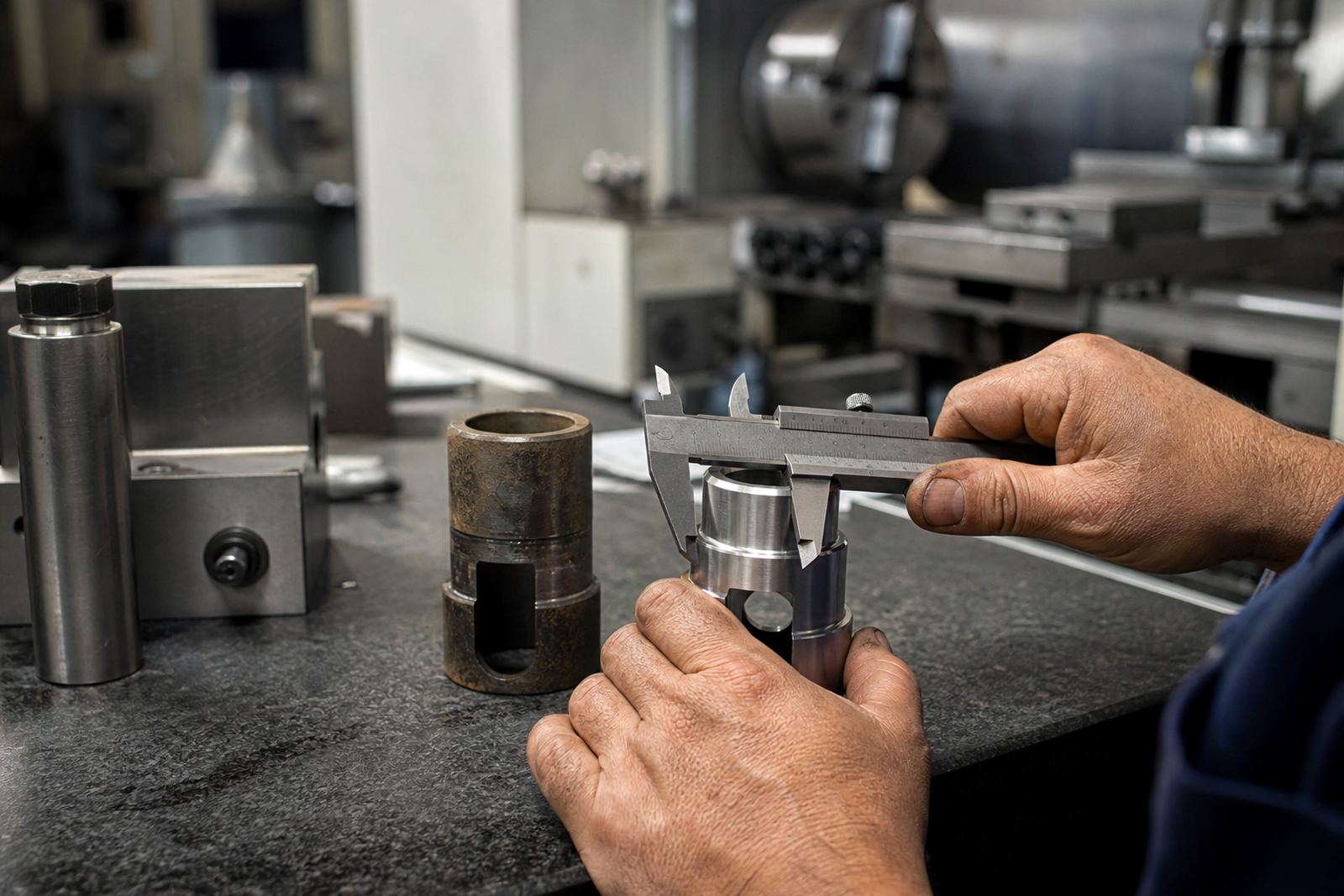
We begin with the sample itself. That means checking critical dimensions, hole positions, thread details, shoulder heights, radii, surface condition and any wear that may have developed on the old part. If the sample is damaged or worn, we note which features are likely original and which ones are not, so the remake reflects the functional part rather than copied damage.
- Dimensional checks on length, diameter, thickness and profile features
- Thread identification, pitch checks and handedness where relevant
- Material assessment based on appearance, weight and application
- Fit review for mating parts, seals, bearings, housings or fixtures
- Tolerance guidance where the original part shows signs of wear
From there we decide whether milling, turning or a mix of both is the right approach. Many remakes need turning for round parts and CNC milling for flats, slots, holes or step features. If the sample is badly worn we may recommend a tolerance band based on function, not just the physical sample.
How the remake process works
Our process is straightforward and suited to small batches. Once the sample is received, we record the relevant dimensions and confirm the likely material and finish. Where needed, we prepare an internal working drawing or update the supplied drawing notes so the next repeat order can be handled faster.
- Receive the sample through the enquiry form and collect job details
- Inspect the part and confirm the target function
- Plan the machining route and material selection
- Produce the remake and carry out a first inspection
- Check fit against the sample or mating assembly where possible
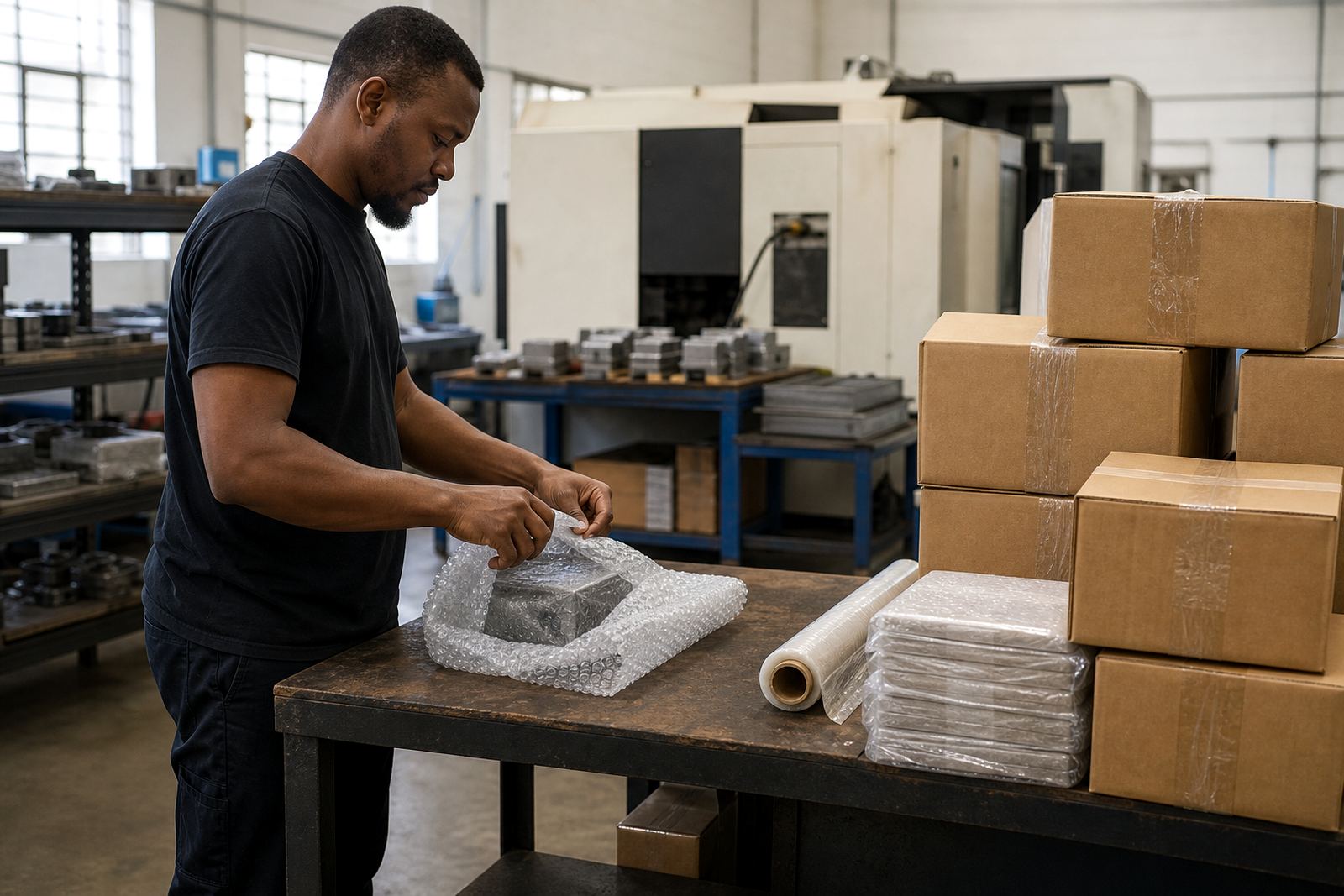
- Arrange delivery coordination to Pinetown, Durban, Pietermaritzburg, Richards Bay or Johannesburg
For many jobs, the first piece is treated as a sample remake and then used to confirm the final production path. If adjustments are needed, we make them before the batch continues. That keeps the job practical and reduces the risk of repeating an old fault that was already on the worn sample.
Materials and part types we commonly remake
Sample remakes can be done in a range of common engineering materials, depending on the application and the wear environment. The final choice depends on loading, corrosion exposure, temperature, surface contact and whether the part will be used indoors, outdoors or in a humid coastal setting. In KwaZulu-Natal, this matters for parts exposed to moisture and salt air.
Typical remake work includes shafts, bushes, spacers, flanges, brackets, adapters, covers, collars, plates and machined fittings. We also remake parts for assemblies that need accurate hole spacing or turned diameters that must match existing components. If the original part was made in a material that is no longer suitable, we can suggest a practical alternative, but the final call always depends on the job needs and the machine environment.
For small batches, the material should be chosen with repeatability in mind. Some parts need better machinability for faster turnaround, while others need added wear resistance or better corrosion behaviour. There is no one-size-fits-all answer, and that is why the sample review matters before chips start flying.
Turnaround, pricing and repeat orders
Turnaround depends on the condition of the sample, the complexity of the geometry, material availability and whether any reverse-checking is needed before cutting. Simple remakes can move quickly once measurements are confirmed. More complex parts with close fits, multiple features or uncertain wear patterns take longer because the accuracy needs to be checked properly.
Pricing is based on the amount of setup, programming, material, inspection and finishing involved. We do not price on guesswork. If a part requires extra measuring, a trial piece, or a remake because the first sample was too worn to read accurately, that gets discussed upfront so there are no surprises later.
- Simple turned parts are usually quicker to quote and remake
- Complex milled shapes need more setup and inspection time
- Repeat orders can be supported once the remake details are confirmed
- Drawing updates are recommended so later batches are easier to process
For clients across South Africa, especially where shutdowns and maintenance windows are tight, we try to keep communication practical and clear. If a job needs staged delivery or a split batch, that can be arranged where the part and schedule allow.
Fit checks, inspection and maintenance intervals
Once the remake is complete, we check the part against the sample dimensions and the intended fit. Where the part forms part of a larger assembly, assembly fit checks are valuable because a component can measure correctly and still feel wrong in service if the mating surfaces are off. Inspection reporting can be supplied for the job record where needed.
If a part is part of routine maintenance, it helps to review wear at sensible intervals rather than waiting for a failure. The right interval depends on duty cycle, vibration, dust, heat, moisture and operator handling. In practical terms, a fast-wearing part may need regular visual checks during service stops, while a static spacer or adapter may only need a dimensional review when the assembly is opened for other work.
- Check for wear marks, fretting and play during scheduled shutdowns
- Review threads and sealing surfaces if the part sees repeated removal
- Reassess fit after any equipment adjustment or rebuild
- Keep a reference sample or updated drawing for the next order
That approach reduces repeat breakdowns and keeps future remakes easier to manage. It also means the next order can be turned around faster because the key dimensions are already on record.
Working with PME CNC Machining in Pinetown
PME CNC Machining is based in Pinetown, KwaZulu-Natal and supports small-batch machining work for Durban, Westmead, New Germany, Umhlanga, Pietermaritzburg, Richards Bay and Johannesburg. The team is led by Mandla Sibusiso Mkhize, with support from Anele Nondumiso Dlamini, Johan Petrus van Wyk, Siyabonga Patrick Zulu, Naledi Refilwe Molefe and Kyle Brendan Naidoo. That mix of production, programming, quality and client support helps keep remake jobs moving in a practical way.
If you need a sample part remade, send the enquiry through the contact page with the sample details, photos if available, and any notes about how the part is used. The more context we get on fit and function, the better the remake path can be planned from the start. That is especially helpful when the original drawing is missing or the old part has been in service long enough to show some wear.
Key facts
| Service type | Sample part remake from an existing physical component |
|---|---|
| Machining methods | CNC milling and CNC turning as required by the part geometry |
| Typical batch size | Single parts to small batches |
| Materials | Common engineering metals and selected engineering plastics, subject to application |
| Tolerance approach | Function-based guidance from sample condition and fit requirements |
| Service area | Pinetown, Durban, Pietermaritzburg, Richards Bay and Johannesburg |