What Part Optimisation Covers
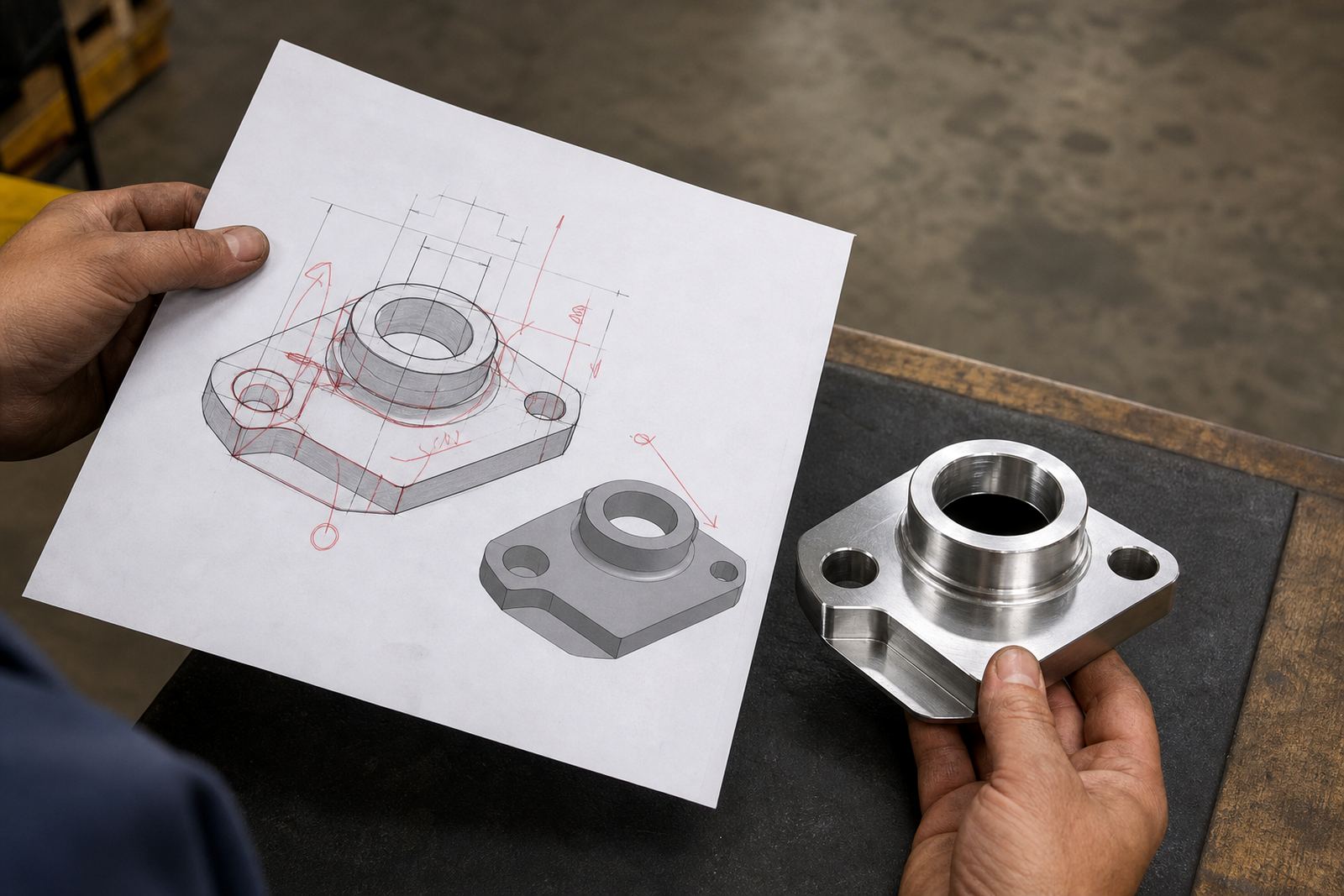
Part optimisation is the stage where a drawing is checked for features that may add cost, slow production, or make repeat machining harder than it needs to be. For small-batch work, this often means reviewing wall thickness, pocket depth, hole sizes, thread choices, radii, tool access and how the part will be held on the machine. The aim is not to change your design for the sake of it, but to make sure the part can be produced cleanly, accurately and with fewer unnecessary steps.
Our team in Pinetown looks at both CNC milling and CNC turning requirements. A simple turned shaft may only need minor changes to shoulder radii or groove placement, while a milled bracket may benefit from fewer setups, better datum choices, or a small change to the underside profile. The best result is usually a part that still does the same job, just with less machining time and less risk of scrap.
- Feature simplification for milled and turned components
- Assessment of tool access and clamping points
- Review of tolerances that may be tighter than the function needs
- Advice on material choice for strength, wear or corrosion resistance
How We Review a Drawing Before Machining
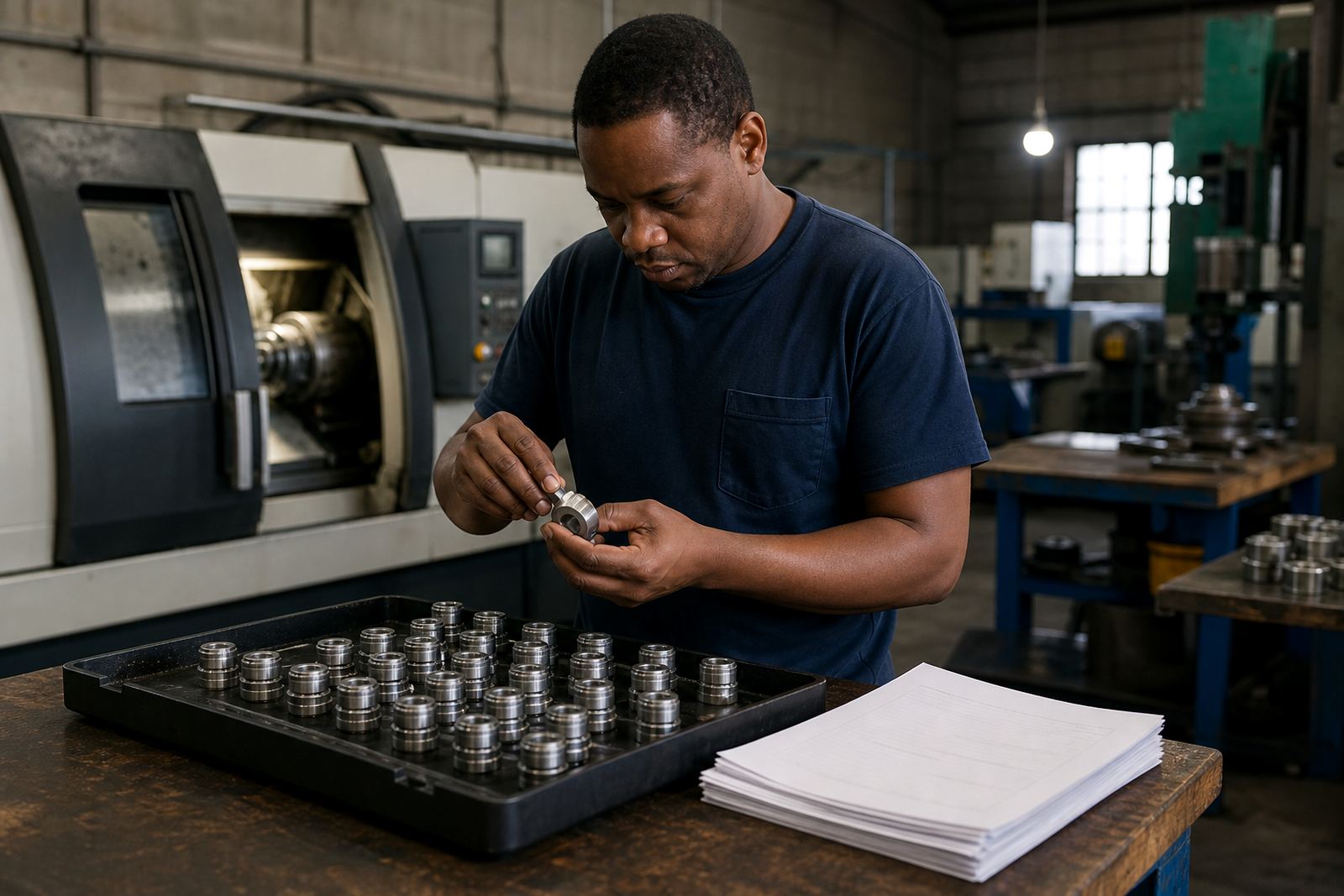
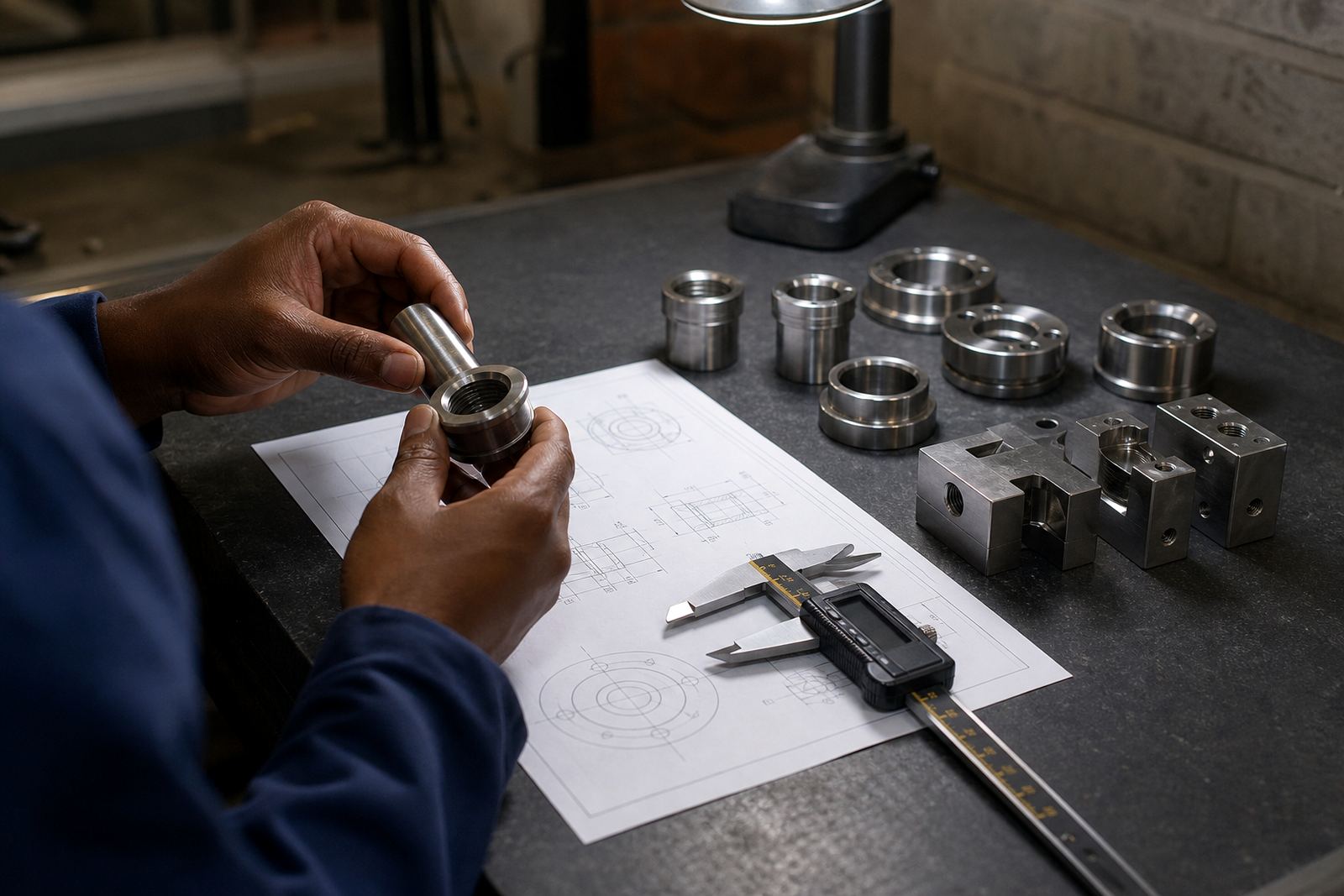
The process starts with your drawing, sketch or sample part. We check the dimensions, critical faces, fit-up points and any areas where the part may be difficult to machine in a small-batch run. If there are multiple ways to make the same component, we will identify the route that is likely to be the most practical for your quantity, lead time and material choice.
Where needed, we look at the geometry with the manufacturing process in mind. For example, internal corners on a milled pocket may need a cutter radius, and deep narrow sections may need extra care to avoid chatter or tool deflection. On turned parts, long slender sections can be affected by support and rigidity. These are the kinds of details that matter when you want a part made properly the first time, especially in South African workshops where lead times and machine availability can change quickly.
- Drawing review against machining methods and material behaviour
- Identification of features that can be combined or reduced
- Checks on measurement points and inspection access
- Advice on reworking sketches or releasing an updated drawing
Specifications We Usually Consider
Part optimisation is guided by the specification, not by guesswork. We look at the intended fit, load, temperature, wear and environment before suggesting changes. A component used inland in Johannesburg may have different corrosion concerns to one used in Richards Bay or Durban where coastal humidity can affect material choice and surface condition. If a part must work around vibration, heat, or regular washdown, we keep that in mind too.
Typical specification checks include tolerances, surface finish expectations, thread engagement, datum strategy and the relationship between mating parts. We do not promise one blanket tolerance for every job, because the suitable figure depends on the size of the part, the material and the process. Still, it helps to know where the critical dimensions are and where a standard production tolerance may be enough. That balance is often where the savings come from.
- Critical dimensions versus non-critical dimensions
- Hole and thread fit requirements
- Surface finish needs on mating or sealing faces
- Material form, stock availability and machinability
What You Receive From the Service
When a part has been reviewed, we provide practical feedback on how to improve manufacture without losing function. This can include a simpler profile, a better method of holding the work, a change to hole placement, or a recommendation to split one difficult part into a more manageable form. If the original drawing needs minor updates, we can also work through those changes with you before the job is released.
For repeat work, optimisation is often about consistency. A part that is easier to machine, easier to inspect and easier to assemble will usually save time on future batches too. That matters for clients in Pinetown, Westmead, New Germany, Umhlanga and further afield who place the same order more than once and need the next run to match the last one closely.
- Manufacturability comments on the supplied drawing
- Suggested feature changes for easier machining
- Guidance on setup efficiency for small batches
- Support for repeat order consistency and fit checks
Turnaround, Planning and Pricing Approach
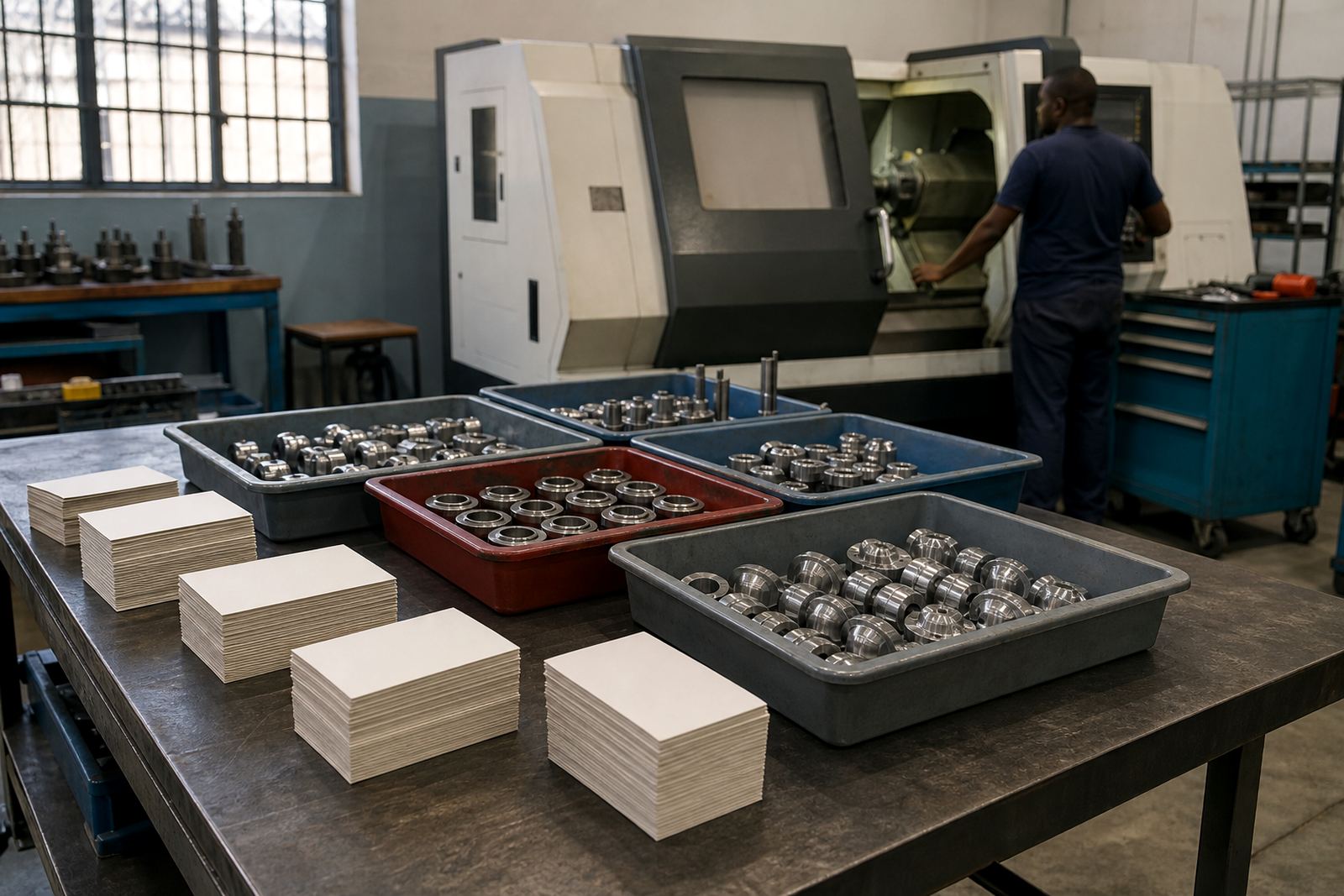
Turnaround depends on the size of the part, the number of features, how complete the drawing is, and whether sample parts or revised dimensions are involved. Simple optimisation reviews can be handled quickly, while complex parts with several mating faces or tight fit requirements may need a more detailed look. We plan work around the realities of a busy job shop, including machine time, material availability and transport across KwaZulu-Natal and Gauteng.
Pricing is handled according to the effort required for review and the level of technical input needed. A basic drawing check will cost differently to a full optimisation exercise that includes updated dimensions, sample part remake planning and assembly fit checks. We keep the approach practical and transparent, so you know what is being reviewed and why. If the best answer is to leave the design as it is, we will say so.
- Short review for straightforward parts
- Deeper optimisation for complex or repeated jobs
- Pricing based on time, drawing detail and revision effort
- Coordination with production planning where needed
Keeping Optimised Parts Running Over Time
Once a part has been optimised and approved, it still helps to review it at sensible intervals. Small-batch parts can drift over time if the product changes, the machine setup changes or the application becomes harsher than expected. We recommend reviewing the drawing and the key fit dimensions whenever the part is reordered, or sooner if you see wear, looseness or changes in assembly. On parts exposed to heat, dust, vibration or coastal air, a quicker check can prevent repeat issues.
For clients across Durban, Pietermaritzburg, Richards Bay and Johannesburg, this kind of maintenance review is especially useful where a component must stay interchangeable across batches. If a thread starts binding, a hole fit loosens, or a sealing surface shows wear, it may be time to adjust the geometry or material choice rather than keep forcing the same drawing into service. A small change now can save a lot of rework later.
- Review drawings at each repeat order
- Check wear points on sealing, sliding or threaded areas
- Update dimensions if fit-up changes in service
- Reassess material choice if the environment changes
Key facts
| Service focus | Simplifying CNC milled and turned parts for small-batch manufacture |
|---|---|
| Typical work | Drawing review, feature reduction, fit and tolerance guidance |
| Materials | Aluminium, mild steel, stainless steel, brass, engineering plastics and similar machinable stock |
| Part type | Single components and repeat small batches |
| Location | Pinetown, KwaZulu-Natal with support across South Africa |
| Primary regions | Durban, Pinetown, Pietermaritzburg, Richards Bay and Johannesburg |