What Repeat Order Support Covers
Repeat order support is for customers who need the same CNC machined part produced again with the same fit, form and function as the earlier batch. It is especially useful where a component must match an existing assembly, replacement part, fixture or machine interface. In many cases the original job notes, tooling approach, material choice and inspection points can be used again, which saves time and reduces the risk of small changes creeping in.
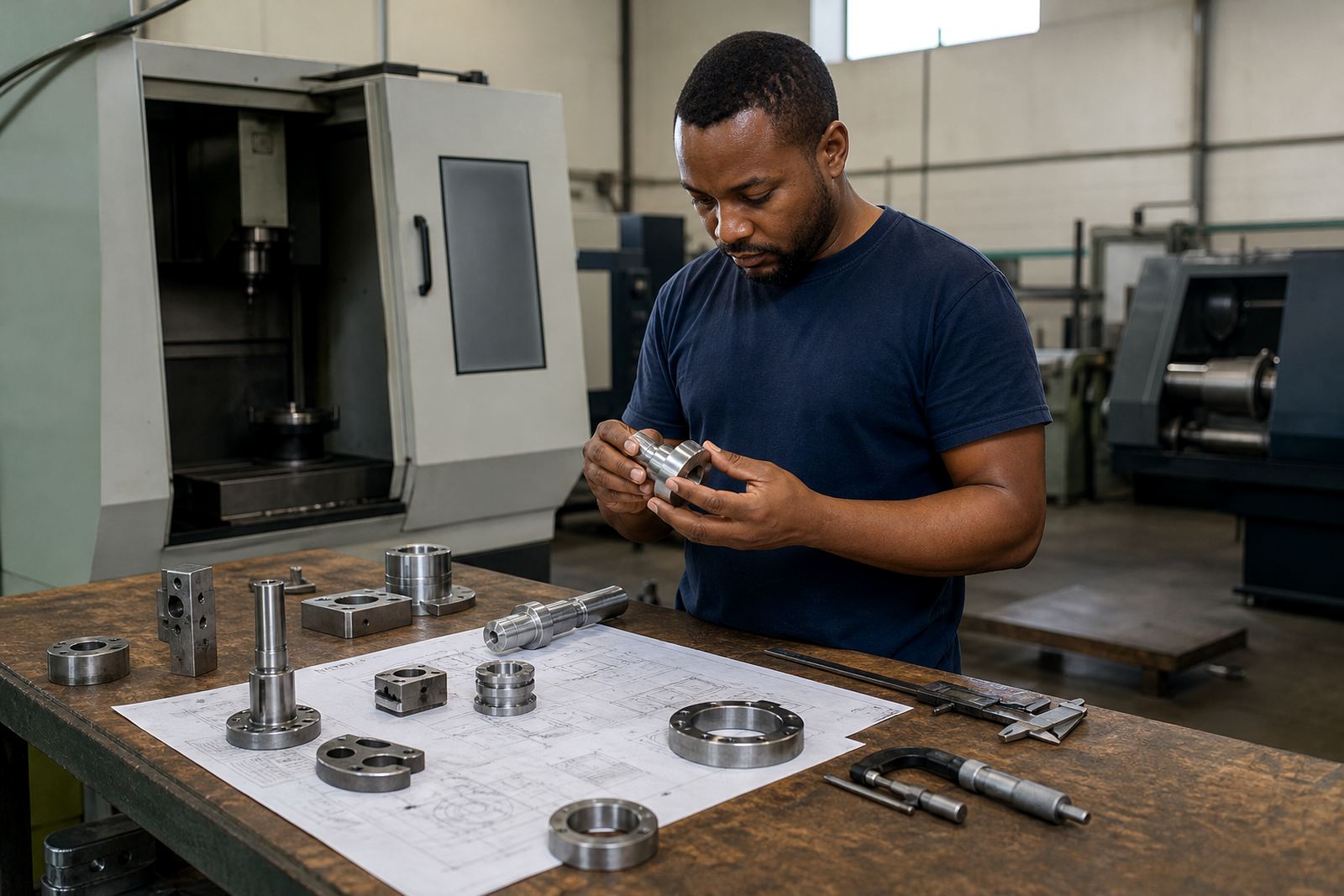
At PME CNC Machining in Pinetown, this service is handled as part of a controlled job history. We check the previous drawing revision, confirmed dimensions, material grade and any special instructions that affected the first run. If a customer has updated requirements, we compare the new request against the previous batch and flag anything that may affect compatibility. That can include hole positions, thread forms, surface finish, edge breaks and overall stack-up. It is careful work, and it matters when a part must drop straight back into service without drama.
- Reuse of approved job notes and part history
- Comparison against the last accepted drawing revision
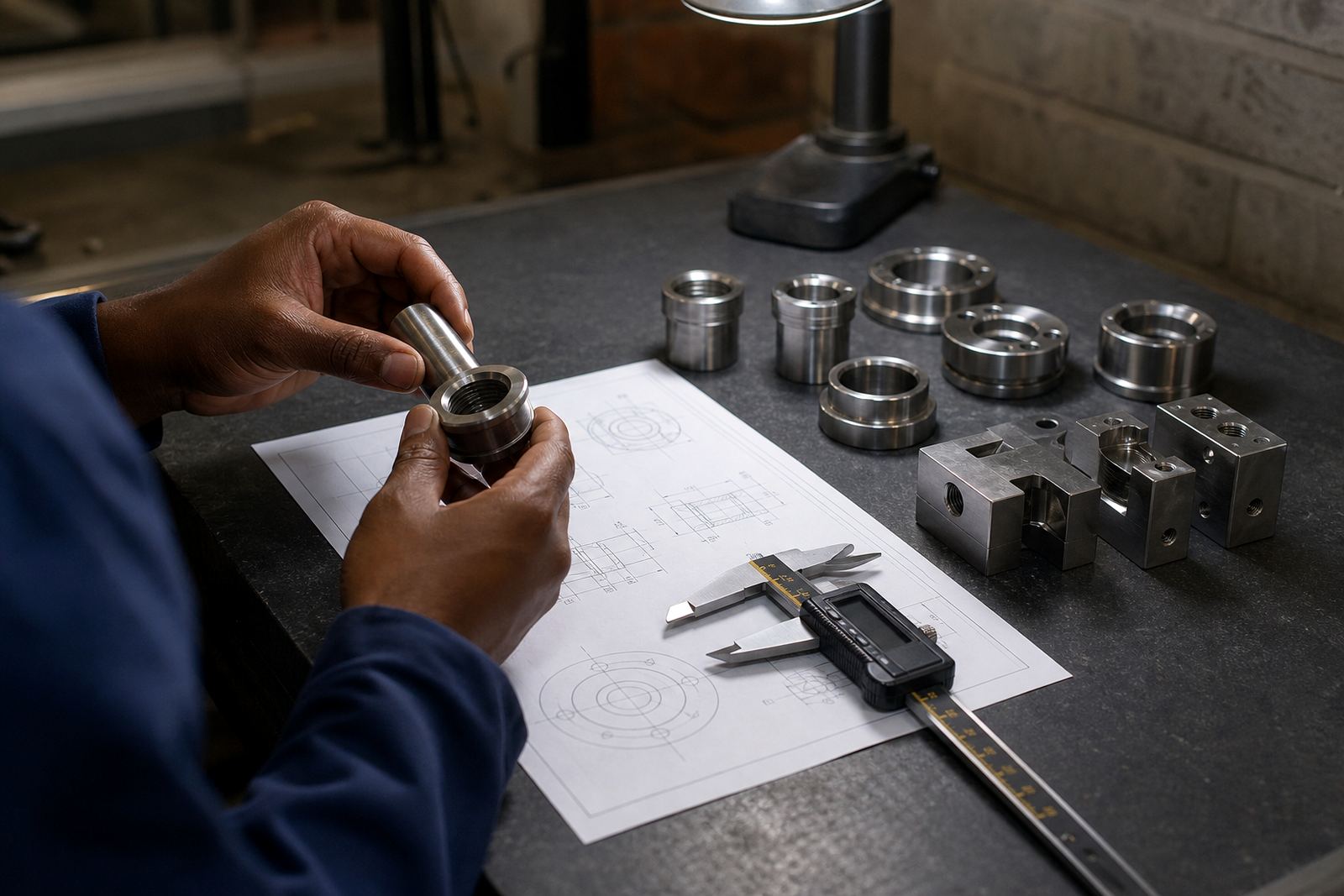
- Checks on critical dimensions, threads and fits
- Support for small-batch repeat runs and replacement parts
How We Handle a Re-Order From Start to Finish
The process begins with the customer sending the part request through the enquiry form on our contact page, together with the earlier part reference if available. We then trace the previous job record and confirm whether the new order is an exact repeat or whether there are changes to quantity, material, finish or dimensions. If a drawing update is needed, we note it clearly before machining starts so there is no confusion later.
Once the job is confirmed, production is planned around the existing route and inspection points. Where possible, the same programming logic and setup method are used again, although the actual machining steps still depend on the part geometry and current material stock. For small-batch work this is usually the most practical way to maintain repeatability. The team monitors the first-off piece against the stored details and then carries the batch through to final inspection. That keeps the order tied to what was approved before, not guesswork.
- Enquiry review and job history check
- Confirmation of exact repeat or revised specification
- Programming, setup and first-off inspection
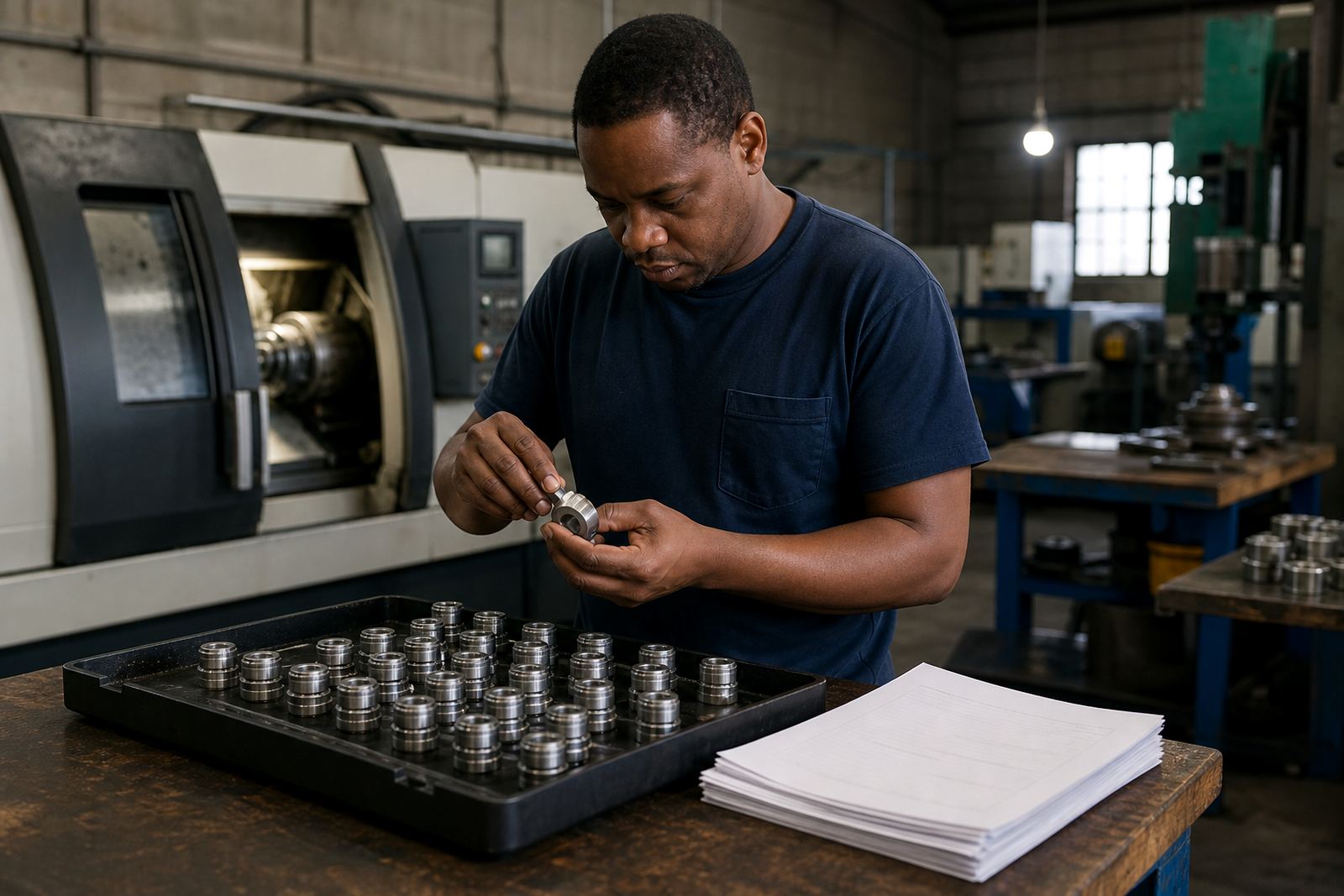
- Batch machining with final dimensional check
Parts, Materials and Tolerance Guidance
Repeat orders often involve parts already in circulation, so the material and fit requirements are usually well understood. We work with common CNC machinable metals and engineering plastics used in general industry, selecting the material that matches the duty of the part, the environment and the existing assembly. In coastal areas like Durban or Richards Bay, corrosion behaviour and humidity exposure may need more attention than a dry inland application, while Johannesburg work may lean more toward wear and mechanical load.
Tolerance guidance is an important part of repeat support because even a small variation can affect fit. The right tolerance depends on whether the part is a sliding fit, locating feature, clamping element or a simple non-critical spacer. We do not promise a fixed universal tolerance for every job because the final requirement comes from the part design, the machine process and the material itself. Instead, we help customers keep the key dimensions within the agreed working range and point out where a change could affect assembly. That kind of practical check is worth doing, even on a part that looks simple.
- Material selection matched to duty and environment
- Fit advice for locating, mating and clearance features
- Attention to threads, bores, shoulders and edge conditions
- Support for replacement parts that must match existing stock
Inspection Records That Make Future Batches Easier
A repeat order is only useful if the history behind it is clear. We keep the job trail tied to the part notes, drawing version, checked dimensions and any special instructions that affected the outcome. That makes future batches easier to plan, especially when a customer returns months later and needs the same result. It also helps where a production line needs a backup part and there is no time to start from scratch.
Inspection reporting can include the main measured features agreed for the job, along with any comments on fit checks or finish requirements. If the part was used in an assembly, the feedback from that first installation is valuable, because it tells us whether the clearances were correct or whether a small adjustment should be considered for the next run. This is one of the main reasons repeat order support is so useful for small batch machining. It turns a one-off job into a usable production reference, and that saves time for everybody.
- Stored part history for future re-orders
- Drawing revision tracking
- Measured feature records for critical dimensions
- Fit feedback carried into the next batch
Turnaround for Repeat Batches
Repeat batches are usually quicker to release than a completely new job because the earlier setup, material choice and inspection points are already known. Turnaround still depends on queue position, quantity, complexity and whether the old batch needs to be matched exactly or revised first. A simple replacement part may move through faster than a multi-feature component with tight fit requirements. We plan the work properly so the customer knows what is realistic before production starts.
Customers across Pinetown, Durban, Westmead, New Germany, Pietermaritzburg, Richards Bay, Umhlanga and Johannesburg often need repeat support because they are running equipment that cannot sit idle. For that reason, we keep the communication direct and practical. If a customer needs a part for maintenance, shutdown work or a machine return to service, we look at what is already on record and confirm the path forward. The aim is not to rush the work blindly, but to use the part history to shorten the lead time where it is safe to do so.
Pricing Approach For Re-Orders
Pricing for repeat order support is based on the actual work required, not a flat one-size-fits-all rate. The main factors are material, quantity, part complexity, whether the drawing has changed, and how much setup or inspection time is needed. A straight repeat with existing data generally takes less preparation than a revised batch, while a part with tighter control points may need more checking. That is the honest way to price machining work, because the time on the job can shift quite a bit from one part to another.
Where the same part is ordered again in the same material and quantity range, the earlier job record can reduce admin and planning time. If the customer needs a sample part remake, a drawing update or a fit adjustment, those items are handled as part of the revised scope. We are clear about what is included before work starts, so the customer knows what they are paying for and why. No hidden extras, just the practical cost of making the part correctly.
- Cost based on quantity, material and machining time
- Separate assessment for drawing changes or fit revisions
- Earlier job records may reduce planning effort
- Clear scope before the batch goes into production
When Repeat Order Support Matters Most
This service is especially valuable where parts wear out over time, where machines need spare components kept on hand, or where a customer wants a reliable small batch run from the same specification. It also helps when the original design is no longer being changed but the business still needs the same part made again and again. For many clients, the real value lies in knowing that the next batch will match the last one closely enough to fit without rework.
Maintenance intervals vary by application. Some parts are replaced during scheduled shutdowns, while others are kept as spare stock and only used when needed. If a component works in a high-load, high-vibration or corrosive environment, the inspection interval may be shorter than for a static part in light service. We can help customers plan the next run around that maintenance cycle, so the part is ready before the old one reaches the end of its life. That planning is often what keeps a job moving without last-minute panic.
- Best for wear parts, replacements and spare stock runs
- Useful for scheduled maintenance and shutdown planning
- Supports stable part supply across repeated batches
- Helps match replacement timing to the maintenance cycle
Key facts
| Service type | Repeat order support for CNC machined small batches |
|---|---|
| Location | Pinetown, KwaZulu-Natal |
| Typical work | Re-orders, replacements, revised repeats and spare batches |
| Machining methods | CNC milling and CNC turning for precision components |
| Materials | Common machinable metals and engineering plastics |
| Coverage | Durban, Pinetown, Pietermaritzburg, Richards Bay and Johannesburg |