Material guidance for the way the part actually works
Material selection starts with the part’s job, not just the drawing. A light bracket for indoor use, a shaft that sees repeated loading, and a component near salt air in Durban will not call for the same stock. We look at the service conditions, mounting method, finish requirement and whether the part must be reworked later or kept as a repeat order item. That practical approach helps avoid over-specifying the job and keeps machining time sensible.
For small-batch work, the right alloy or grade can improve turnaround because it machines more cleanly and reaches final size with less rework. In some cases a simpler material with the right finish is the better choice than a harder grade that slows production and wears tools faster. We also consider how the part will handle load-shedding interruptions, storage in humid coastal conditions and transport between Pinetown, Durban, Pietermaritzburg, Richards Bay and Johannesburg.
What we review before material is confirmed
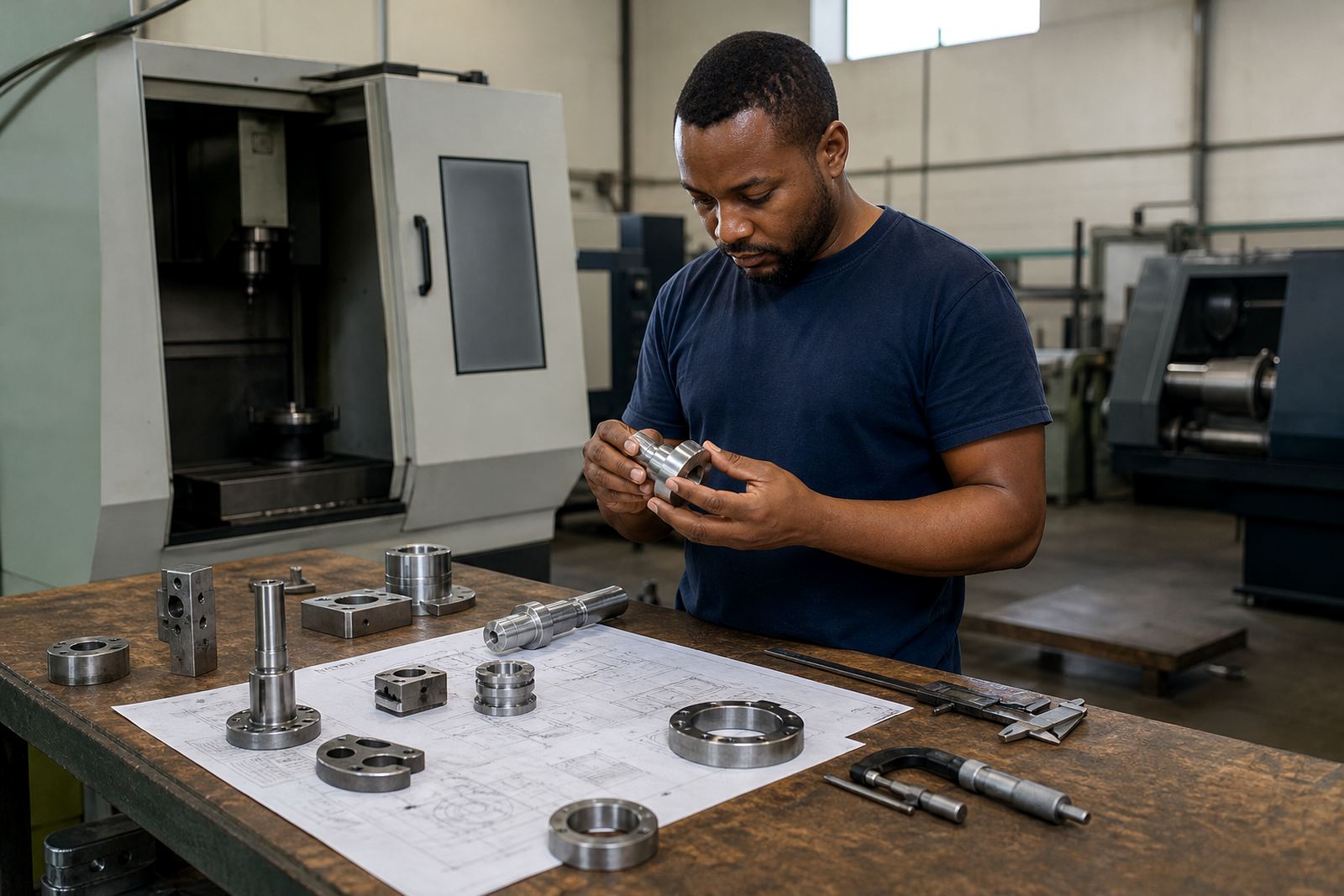
Before cutting starts, PME checks the drawing and asks the questions that affect material choice. That includes whether the part is structural, decorative, moving, sealing, food-contact adjacent or exposed to chemicals. We also review whether the client needs a prototype, a small batch or a repeat run, because the best material for one-off validation may not be the best material for ongoing production.
- Strength and stiffness needed in service
- Corrosion resistance for inland or coastal use
- Wear resistance where rubbing or impact is expected
- Machinability and tool life during CNC milling or turning
- Availability of suitable stock size for the required dimensions
- Surface finish and appearance after machining
- Any later welding, heat treatment or assembly fit requirements
Where needed, we can advise on reasonable stock allowances so the finished size can be achieved without chasing a dimension too aggressively. That helps when a component must fit into an existing assembly or when the mating part is already in use and cannot be changed.
Common machining materials and where they suit best
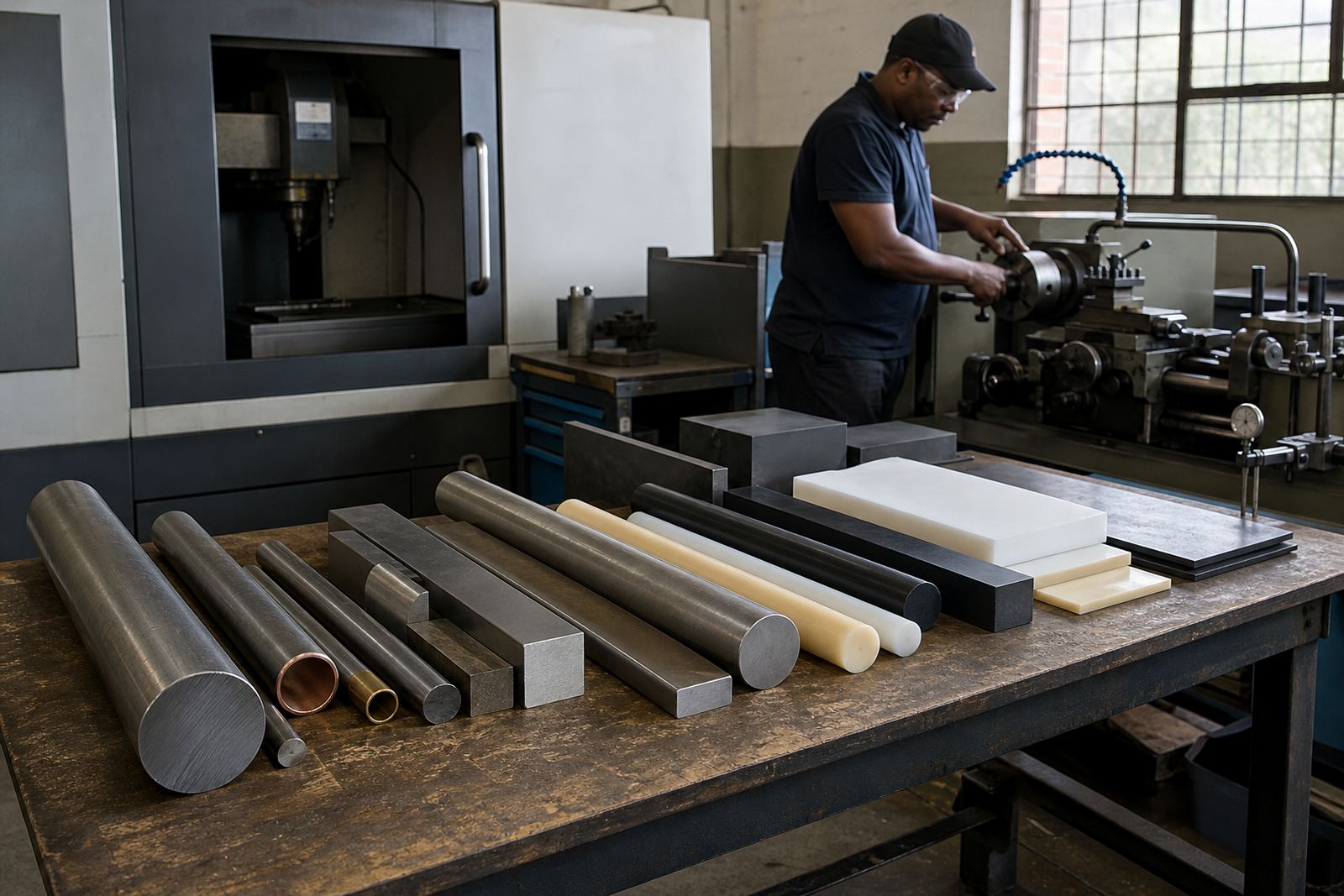
There is no single material that suits every job. Aluminium is often selected where lower mass, decent machinability and good appearance matter. It is commonly used for housings, brackets, covers and fixtures. Mild steel remains a practical choice for general-purpose parts, frames and machine components where cost, strength and straightforward machining matter. For parts needing better wear performance or more resistance to oxidation, medium carbon steel or selected engineering steels may be more suitable, depending on the application.
Stainless steel is often considered for parts exposed to moisture, washing, marine air or process conditions that call for better corrosion resistance. It is commonly used in Durban and Richards Bay work where humidity and salt exposure can be an issue. Certain plastics and engineering polymers can also be useful for guide pieces, low-friction components, insulating parts and lighter-duty applications. Brass and similar alloys can be suitable for fittings, threads and components where good machinability and clean finishing are important.
The right answer depends on the full picture. A material that looks simple on paper may not be the best option if the part must hold a tight fit, cope with repeated vibration or remain stable in a hot workshop. We will say so early, rather than discover it after the job is half done.
Process from drawing review to approved stock
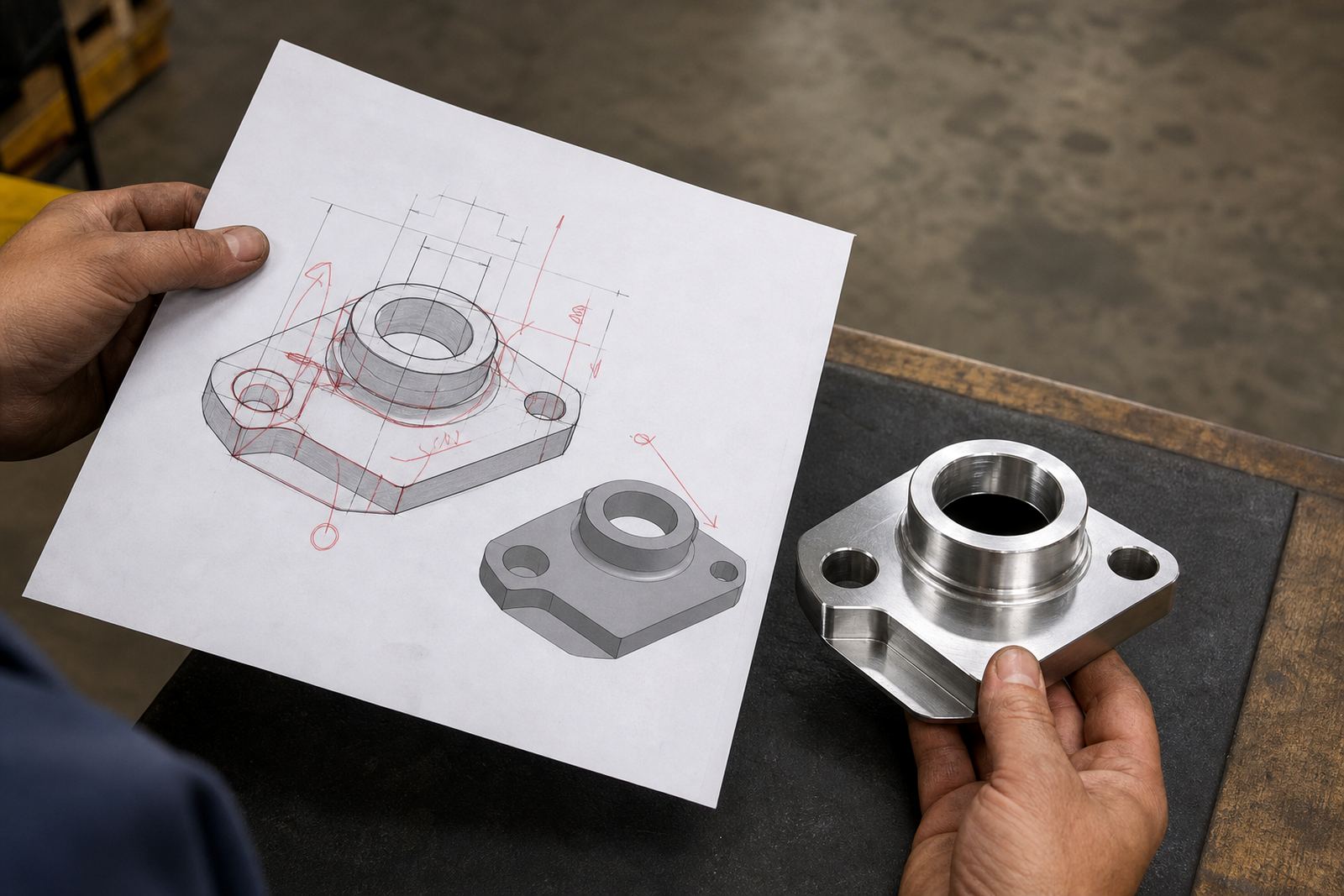
Our process is set up for practical decision-making. We start with a drawing review and check whether the specified material matches the duty of the part. If not, we discuss alternatives and explain the trade-offs in strength, cost, wear and machinability. For jobs where the drawing is not complete, we can help with drawing updates so the material choice and the dimensions match the intended use.
Once a material is selected, we look at supply format, bar size, plate thickness or billet size, and how that stock will be prepared for CNC milling or turning. This is especially useful for small-batch production, where buying the right size from the start can reduce waste and shorten setup time. For some parts, a sample part remake is also sensible if the original material choice did not hold up in service.
- Review the drawing and intended use
- Confirm the service environment and load case
- Suggest suitable material options
- Check stock size, machinability and availability
- Confirm any follow-on work such as finish, assembly or inspection
- Proceed with production planning and scheduling
Turnaround for local and national small batches
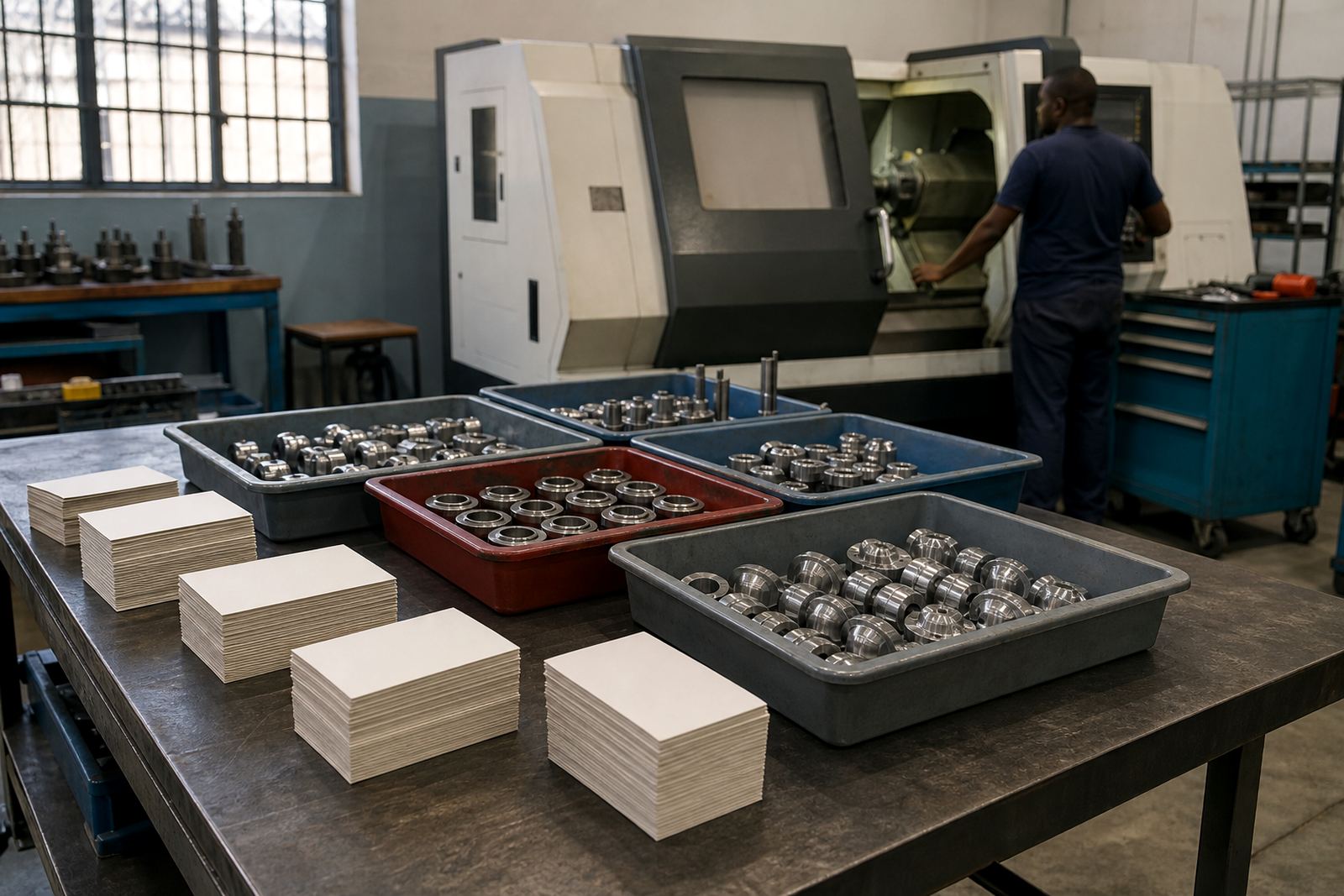
Turnaround depends on the material chosen, the stock size required and how much setup is needed for milling or turning. Some materials machine quickly and are easy to source in standard sizes. Others need more careful handling, slower cutting rates or extra allowance for finishing. If the part is urgent, we will look at what can be done without compromising fit or finish.
Being based in Pinetown helps us support clients across KwaZulu-Natal and further afield. We regularly handle enquiries linked to Durban, Westmead, New Germany, Pietermaritzburg, Richards Bay, Umhlanga and Johannesburg. For coastal or inland jobs, material choice can affect how quickly parts move from approval to completion, particularly when there are repeat orders, inspection requirements or an assembly fit check before release.
When conditions are changing because of load-shedding or transport timing, we plan carefully so material is available before the job starts. That saves time later and reduces the chance of a half-finished job waiting on stock or a replacement piece. It is a small thing, but it matters on busy production weeks.
Pricing approach and what affects the quote
Pricing is based on the material selected, the quantity required, the amount of machining involved and the complexity of setup. A straightforward part in a readily available material is usually simpler to quote than a component that needs special stock, tighter fit checks or extra finishing steps. We do not force a one-size-fits-all answer because the right material can save money over the life of the part even if the initial stock is a bit more expensive.
For small-batch work, the best pricing approach is usually to match the material to the actual duty of the part. Over-specifying the grade can push up cost without real benefit, while under-specifying can lead to wear, corrosion or early replacement. We help clients strike that balance sensibly, especially where repeat order support is expected or where parts must work across different sites.
Quoting also takes into account any inspection reporting, delivery coordination and assembly fit checks needed after machining. If a drawing needs minor updates to reflect a better material choice, that can be handled early rather than corrected after production starts.
Maintenance intervals, replacement planning and re-order support
Material selection does not end once the part leaves the shop. The right maintenance interval depends on the environment and how hard the component works. A dry indoor component may only need periodic visual checks, while a part exposed to moisture, dust or repeated movement may need closer inspection. In coastal areas around Durban and Richards Bay, corrosion checks matter more than they do inland, especially where the component has unprotected edges or fasteners.
We advise clients to think in terms of usage cycles, not just calendar time. A machine part running daily will need attention sooner than a spare used occasionally. If a component shows wear, we can help assess whether a repeat order in the same material makes sense or whether a different grade would improve service life. That kind of guidance is useful for maintenance teams who need a practical answer, not guesswork.
- Visual inspection for wear, corrosion or deformation
- Check threaded areas, bores and mating faces for fit
- Review exposed edges and contact points after service
- Plan repeat orders before stock becomes urgent
- Update the drawing if a better material choice is adopted
For clients managing multiple sites, having a consistent material plan also helps with spares control and future production. It keeps the job easier to repeat and makes replacements more predictable when something wears out.
Key facts
| Typical materials | Aluminium, mild steel, stainless steel, engineering steels, brass and selected engineering polymers |
|---|---|
| Common services | Drawing review, material selection, prototype planning, batch planning and tolerance guidance |
| Job type | Small-batch CNC milling and turning for parts, components and assemblies |
| Location served | Pinetown, Durban, Westmead, New Germany, Pietermaritzburg, Richards Bay, Umhlanga and Johannesburg |
| Material factors | Strength, corrosion resistance, wear resistance, machinability and stock availability |
| Client contact | Enquiry form on the contact page only |