How repeat orders are handled
Repeat orders are useful when a part has already been proven in service and you want the next run to match the same fit and function. At PME CNC Machining, we use the earlier job record, the latest drawing information and your current quantity requirement to plan the next batch properly.
That may mean a straight re-run, or it may mean checking whether a small drawing revision needs to be built into the new order. We look at the machining process, material availability and any fit or inspection notes from the previous job before cutting metal again. If your parts must work with an existing assembly, it is better to confirm the details first than to assume the old setup still applies.
What we check before machining starts
Before a repeat order goes into production, we compare the request against the last approved information and note anything that has changed. This can include dimensions, finish requirements, hole positions, thread details, material grade or the quantity needed for the next run. It helps prevent the usual headaches that come from using an old sketch or a half-updated drawing.
- Previous drawing reference and revision status
- Any changes to size, tolerance or surface finish
- Material type, section size and stock availability
- Fit checks for mating parts, inserts or assemblies
- Packaging, labelling and delivery instructions
CNC milling and turning for repeat parts
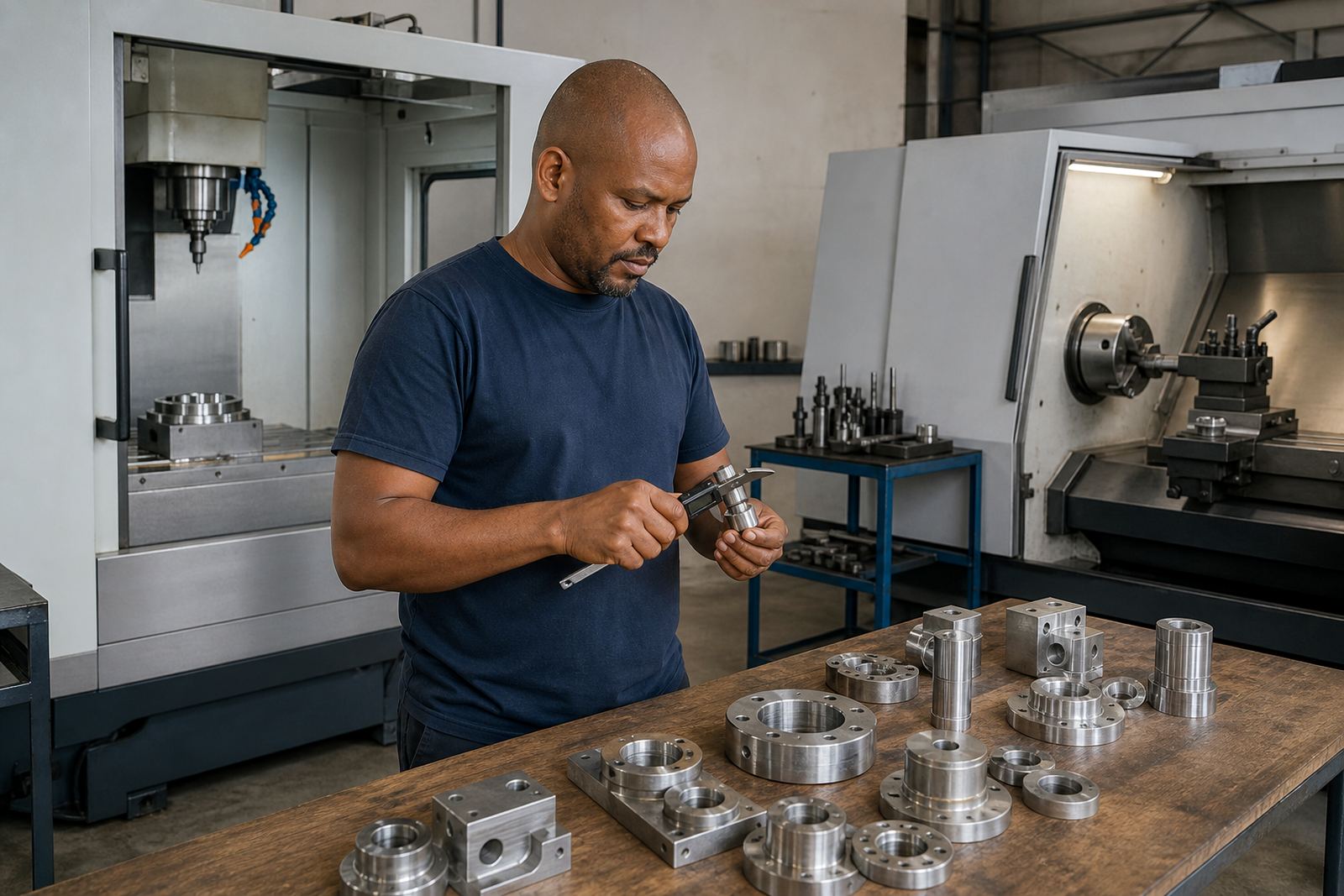
Repeat orders often suit CNC milling for flat features, pockets, slots, faces and drilled patterns, while CNC turning is used for shafts, bushes, spacers, sleeves and other round components. When the part has both turned and milled features, we plan the sequence so the critical dimensions are held as consistently as possible.
For small-batch work, repeatability matters. The goal is not only to make one good part, but to make the next batch match the one before it in a practical way. Material choice also matters because different metals and engineering plastics behave differently during machining. Some materials move more with heat, some need sharper tool control, and some require extra care around burrs and edge condition.
Drawing updates and tolerance guidance
If your drawing has been revised, we can work from the updated information and flag any points that need clarification before machining begins. That includes areas where a tolerance is tight, where a feature affects assembly, or where the drawing note does not fully describe the requirement.
Tolerance guidance is especially helpful on repeat orders because it lets us focus on the features that actually control the fit. Not every dimension on a part carries the same importance. Some are functional, some are reference dimensions and some are there for general shape. Sorting that out early saves time and keeps the order cleaner.
- Check whether the revision changes the part function
- Confirm which dimensions are critical to fit
- Review any new notes on finish, deburring or assembly clearance
- Agree the updated drawing before production starts
Quantities for small-batch production
Repeat orders are often placed when a first batch has sold through, a maintenance team needs spares, or production is ready to move from trial quantities to a slightly larger run. We handle small-batch work for clients in Pinetown, Durban, Westmead, New Germany, Pietermaritzburg, Richards Bay, Johannesburg and Umhlanga, with delivery coordination arranged to suit the job.
Because the parts are already known, repeat orders can be planned with less back and forth than a first-time job. Even so, it is worth confirming the final quantity, any packaging requirements and whether the batch needs inspection reporting or sample part remake support. If the site is dealing with load-shedding, or a shutdown window on site, tell us that upfront so the timing can be worked out properly.
Materials, fit checks and inspections
Repeat machining jobs often involve the same material as the original run, but sometimes the material needs to change because of stock availability, corrosion exposure or wear. In coastal areas like Durban and Richards Bay, material selection may need extra thought where humidity and salt air affect storage or service life. For inland jobs, the focus may be on load, wear and ease of replacement.
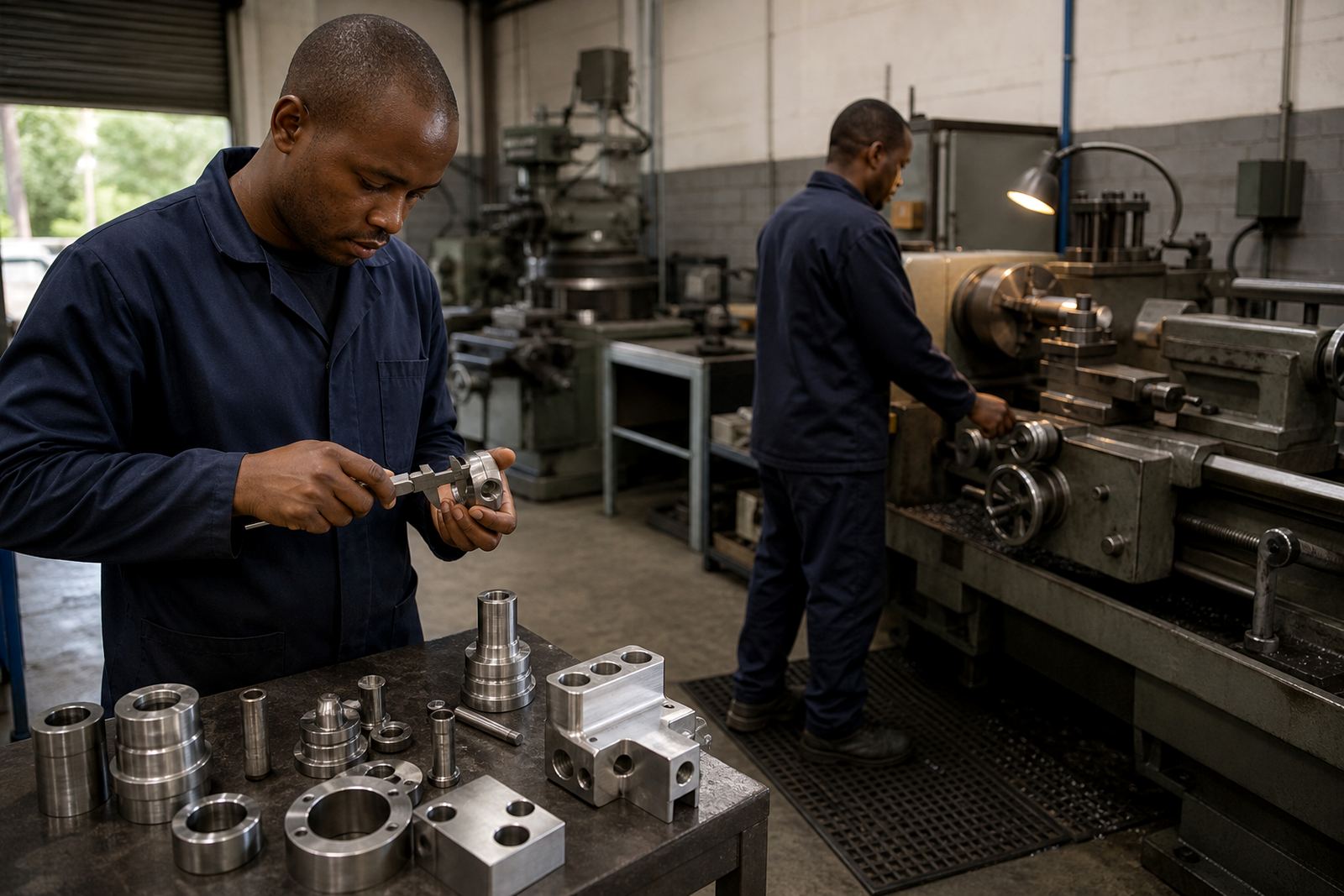
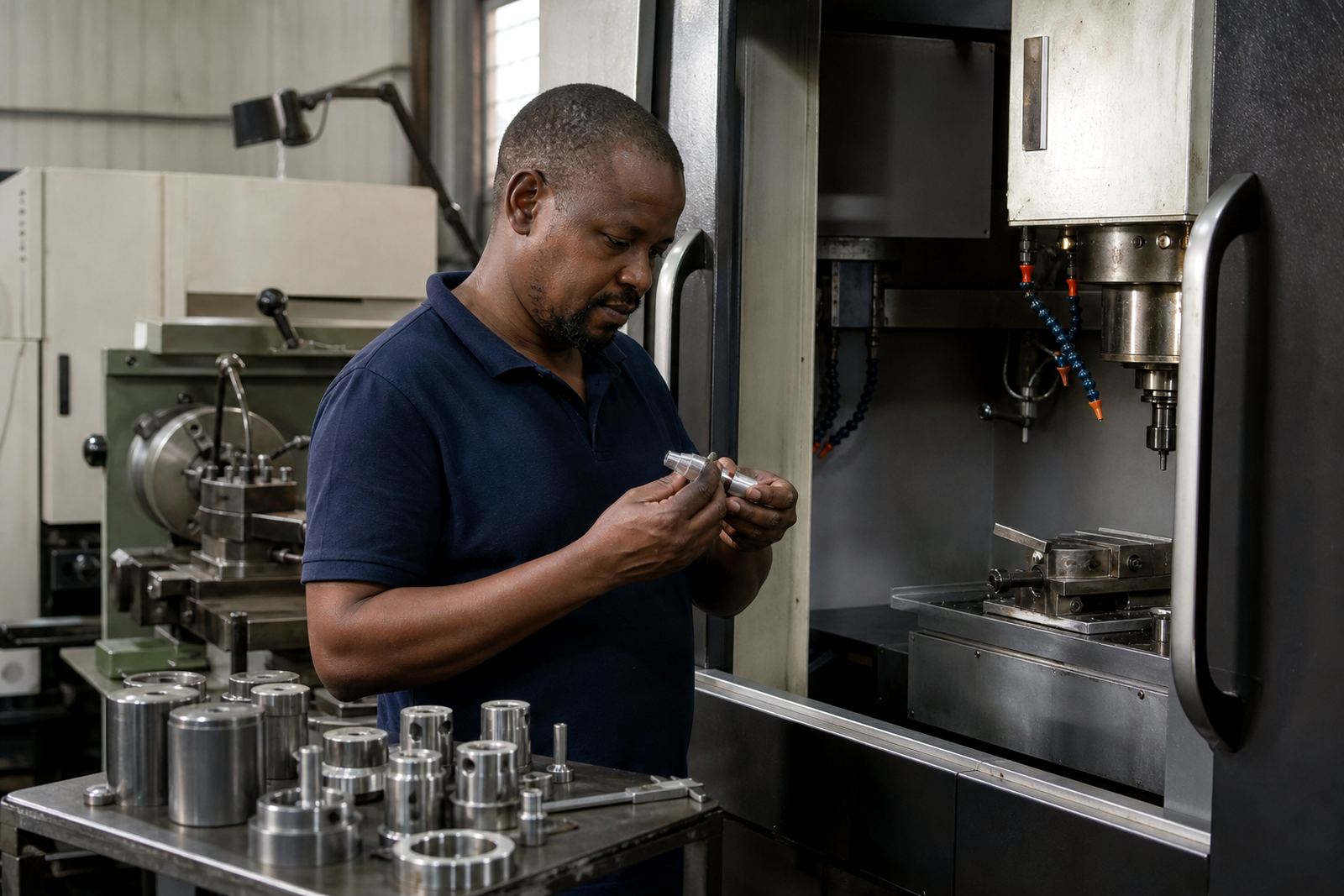
Where needed, we can support assembly fit checks and inspection reporting so the repeat order is not just made again but checked against the function it has to serve. That is useful for brackets, adapters, shafts, spacers and other parts that must align with existing equipment or tooling. A clean repeat order should save time on the floor, not create another round of adjustments.
How to send in a repeat order request
The simplest way to start is through the enquiry form on our contact page. Include the part name if you have one, the quantity required, the latest drawing or revision information and any notes from the previous batch. If the part is changing, say what changed and whether the old part is still available for comparison.
- Part description and any old job reference
- Updated quantity
- Revised drawing or sketch, if applicable
- Material request or acceptable alternatives
- Delivery town and any timing constraints
From there, our team can review the request and plan the next machining run. Mandla Sibusiso Mkhize oversees the business, with support from Anele Nondumiso Dlamini, Johan Petrus van Wyk, Siyabonga Patrick Zulu, Naledi Refilwe Molefe and Kyle Brendan Naidoo across production, programming, quality and client support. It keeps repeat work organised, which matters when the same part has to come back right.