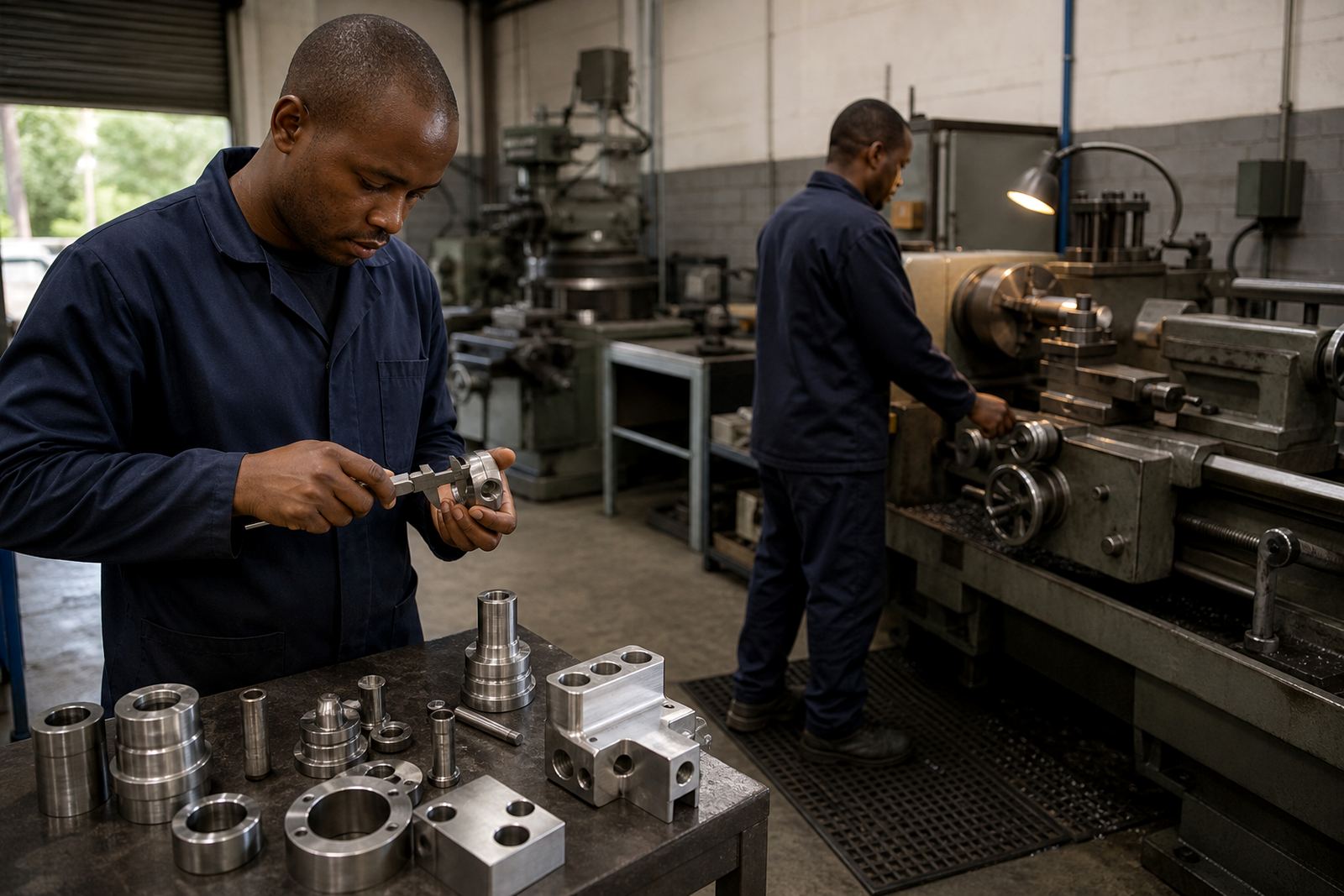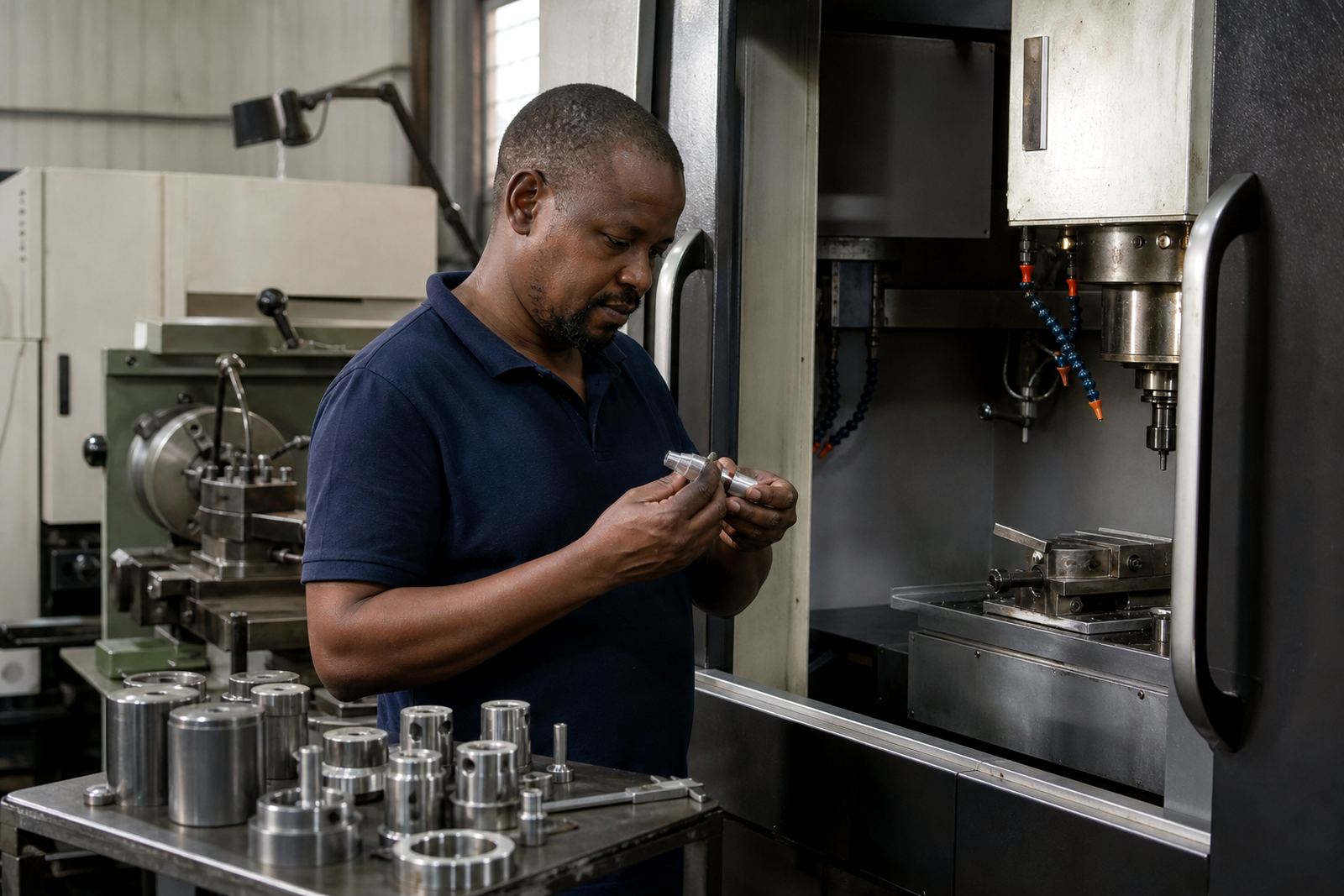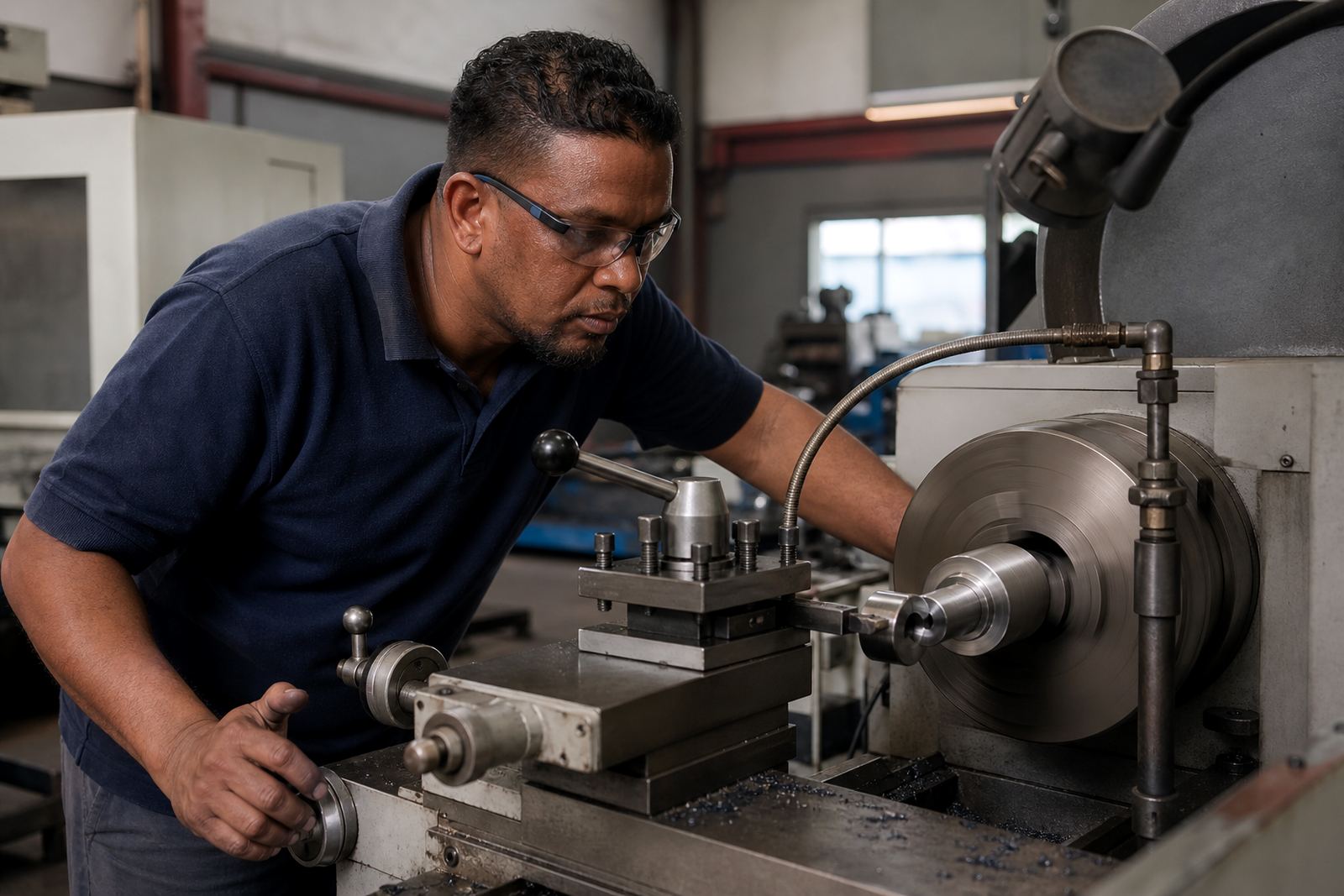
Start with the drawing and the part details
The quickest way to request a quote is to send the drawing for the part, along with the quantity you need and the material type if it is already decided. If you only have a sample part, an old component or a rough sketch, include that as well. That helps us assess whether the job is best suited to CNC milling, CNC turning or a mix of both.
For quotation purposes, it also helps to say what the part does in the assembly, whether it is a one-off replacement or a repeat order, and if there are any fit or finish points that matter on site. If there are mounting holes, threads, bearing faces, shaft diameters or matching parts, mention those early. Small details save time later and keep the quote practical.
What to include when you send a quote request
A complete request makes it easier to price the job properly and avoid back-and-forth. Please include as much of the following as you can:
- 2D drawings, 3D models or a clear sketch with dimensions
- Required quantity, including any future repeat order estimates
- Material preference, or the service conditions if you are unsure
- Target tolerance or fit requirement, if known
- Surface finish needs, deburring, tapping or secondary work
- Delivery town and timing needs
If your drawing is still changing, say so. We can work from a current revision and help identify the features that will affect machining time, setup and inspection. That way the quote reflects the job that will actually be produced, not just the first idea on paper.
How we assess milling, turning and batch size
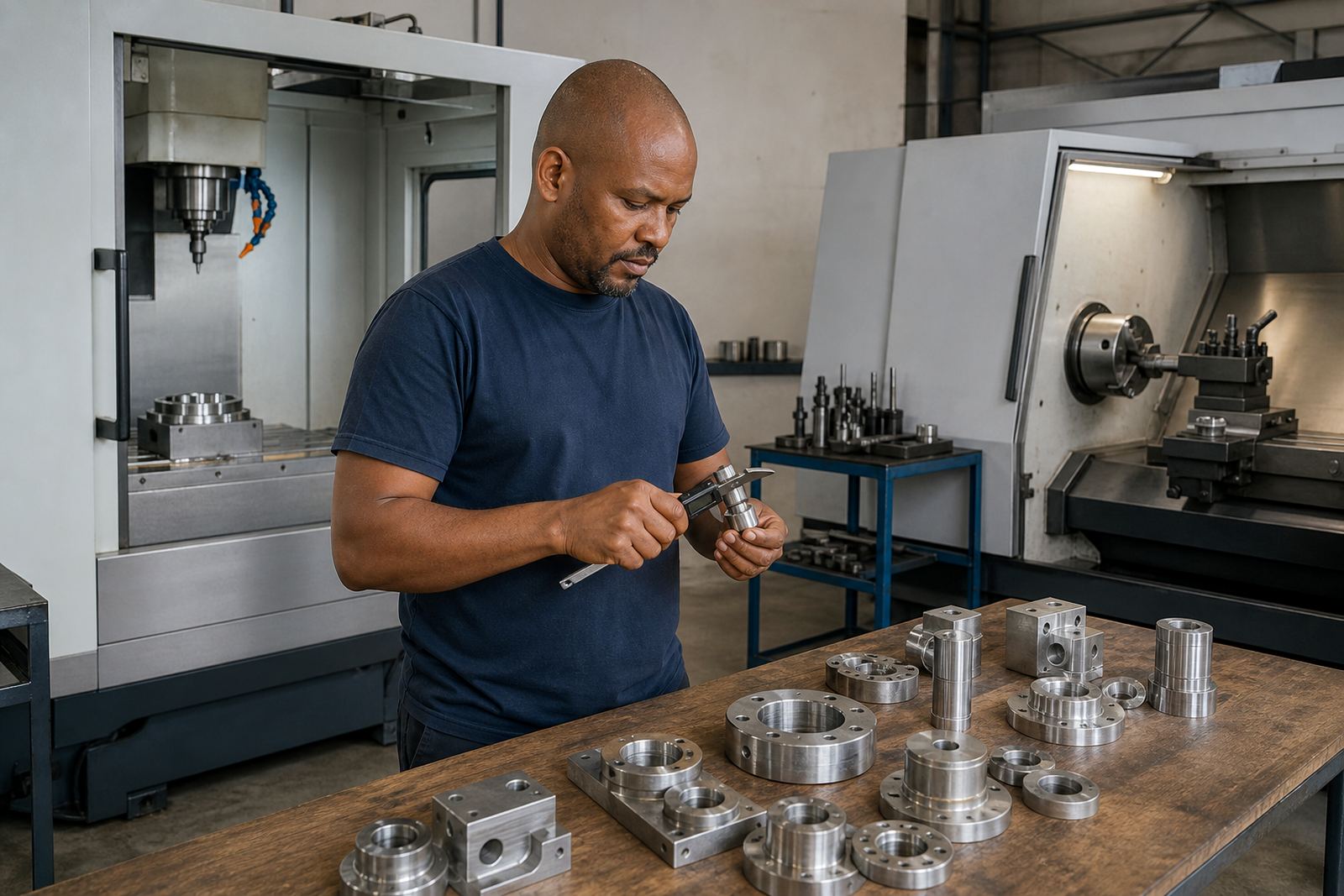
Different parts call for different machining methods. Cylindrical parts, spacers, shafts and bushes often suit turning, while brackets, plates, flanges and housings often suit milling. Some jobs need both, especially when a turned blank later needs slots, holes or flats added. The number of setups matters too, because each setup adds time and affects the way the part is checked.
For small batch production, we look at repeatability, material availability and how the parts will be used after machining. If a part is going into a hot, wet or coastal environment, or if it will carry load and vibration, material choice and finishing become even more important. Durban and Richards Bay jobs for example may need extra thought around corrosion, while inland work can focus more on wear and fit.
- Simple parts with fewer features are usually quicker to price
- Tighter fits and critical faces need more inspection time
- Repeat batches can benefit from revised setups and drawing updates
- Assembly fit checks help prevent costly rework later
Material selection and tolerance guidance
If you have not settled on a material yet, we can guide the choice based on the part’s job, wear, corrosion exposure and budget. Common machining materials include aluminium, mild steel, stainless steel, brass and engineering plastics, each with its own behaviour on the machine and in service. We do not guess on material if the application is critical, because the wrong choice can affect tool life, finish and dimensional stability.
Tolerance guidance is also part of a sensible quote. Some features can be held more tightly than others, but the right tolerance depends on the function of the part and how it will be measured. A bearing seat, a sliding fit or a threaded section all need different thinking. We will flag features that may need extra care, and if a drawing asks for a very tight tolerance we will check whether that is practical for the material, quantity and finish required.
Quotation turnaround, revisions and sample part remakes
Once the drawing and details are in hand, the quotation can be built around setup time, machining time, material cost and any extra steps such as deburring, inspection reporting or assembly fit checks. If a drawing is incomplete or the part is unusual, we may ask a few follow-up questions before finalising the quote. That is normal and it prevents avoidable surprises once the job starts.
If you already had a sample made elsewhere and need a remake, send the old part and the reason for the change. That could be a fit issue, a drawing correction, a wear problem or a needed reduction in lead time. We can then review where the dimensions need adjustment and whether a drawing update is needed for the next run.
- Quote based on the latest drawing revision
- Clarify if the part is for first article, replacement or batch work
- Use sample parts to confirm fit before a full repeat order
- Ask for drawing updates when features are being improved
Delivery coordination across KwaZulu-Natal and beyond
We are based in Pinetown and support machining work for clients across Durban, Westmead, New Germany, Umhlanga, Pietermaritzburg, Richards Bay and Johannesburg. Delivery planning matters, especially when parts are needed to keep a maintenance job moving or to avoid downtime on site. Tell us whether the parts are urgent, staged for a shutdown, or part of a scheduled production run.
If access times, loading bay rules or site sign-in procedures affect delivery, include those details in the request. For coastal towns, humidity and corrosion exposure can influence the choice of material and finish, while load-shedding or power interruptions can affect planning on both sides, so realistic timing helps. Clear coordination keeps the order moving without confusion.
A practical checklist before you submit
Before you send the request, take a minute to check the basics. A well-prepared enquiry makes it easier for us to give you a quote that is useful, not vague. It also helps with lead time planning, especially for repeat batches or parts with several features.
- Drawing or sample part attached
- Quantity stated clearly
- Material preference noted, or application explained
- Any tolerance, finish or fit requirement mentioned
- Delivery town and timing included
- Special instructions for inspection or assembly fit checks added
Once received, our team at PME CNC Machining can review the request and come back with the next steps. Mandla Sibusiso Mkhize and the production team keep the process practical, so you know what can be made, what needs clarification and what the order will need to run cleanly.