What to Send With Your Drawing
When you upload drawings, the more context we have the easier it is to assess the job correctly. A clean 2D drawing, 3D model if available, and any notes on finish, thread callouts, critical faces or sealing surfaces all help us understand what the part must do in service.
If you are working from an older part, a sample, or a revised sketch, include that too. We regularly handle small-batch work for clients in Pinetown, Durban, Westmead, New Germany, Pietermaritzburg, Richards Bay, Umhlanga and Johannesburg, so we are used to jobs that start with partial information and need careful clarification.
- Drawing files in a common format such as PDF, DWG, DXF or STEP
- Reference photos of the part or assembly if useful
- Material preference, if already known
- Quantity needed and whether it is a prototype or repeat order
- Any dimensions that must not change
How We Review CNC Milling and Turning Jobs
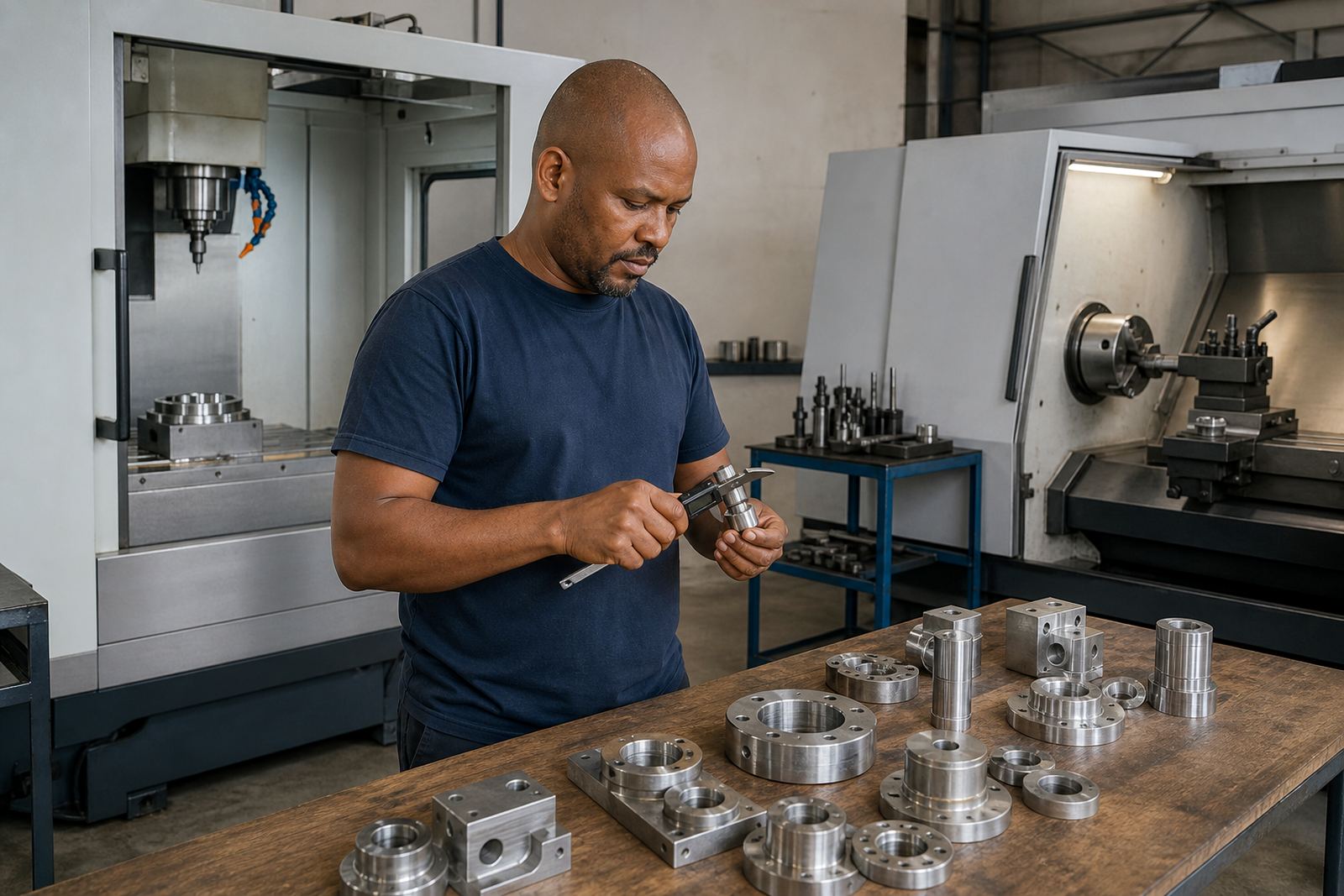
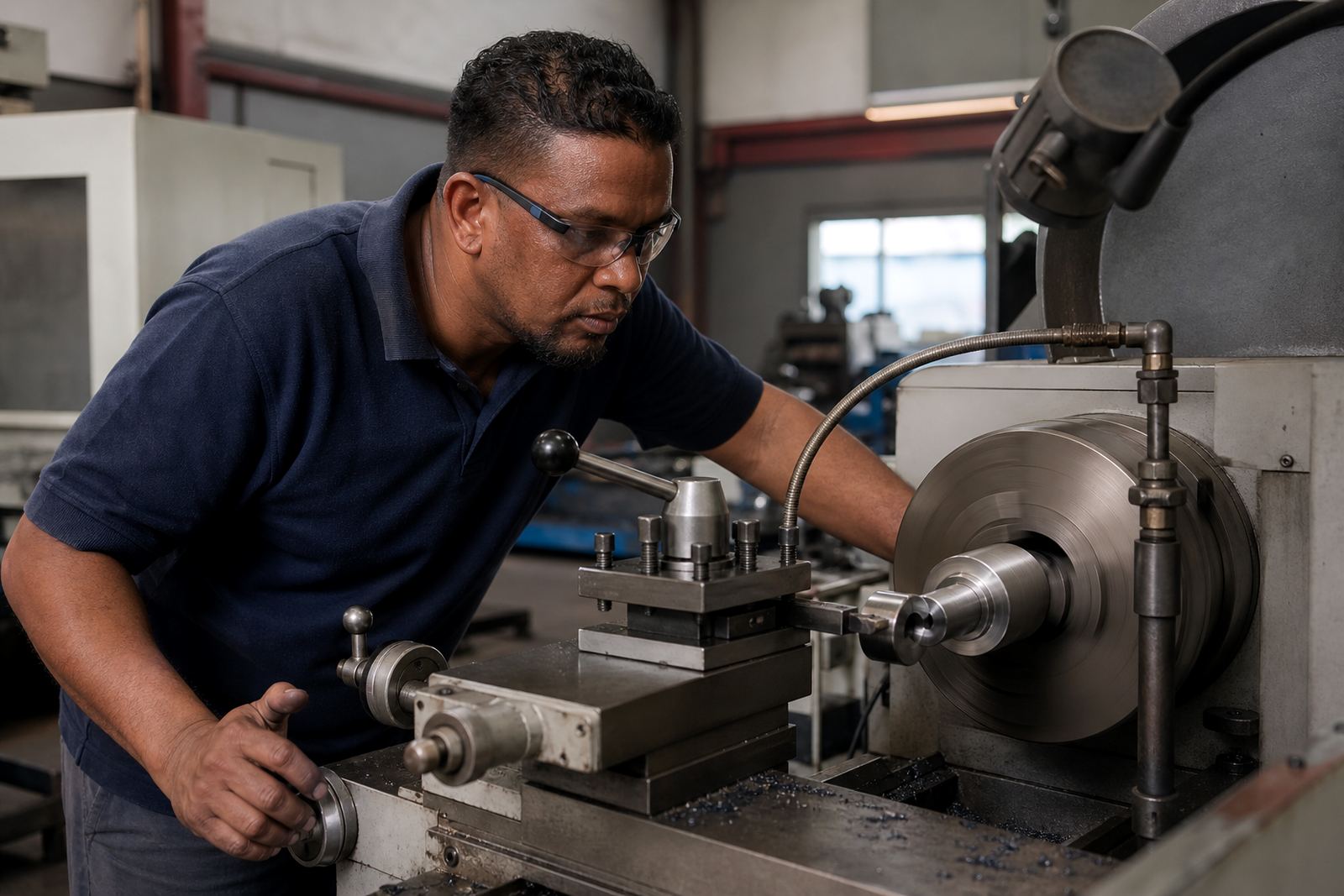
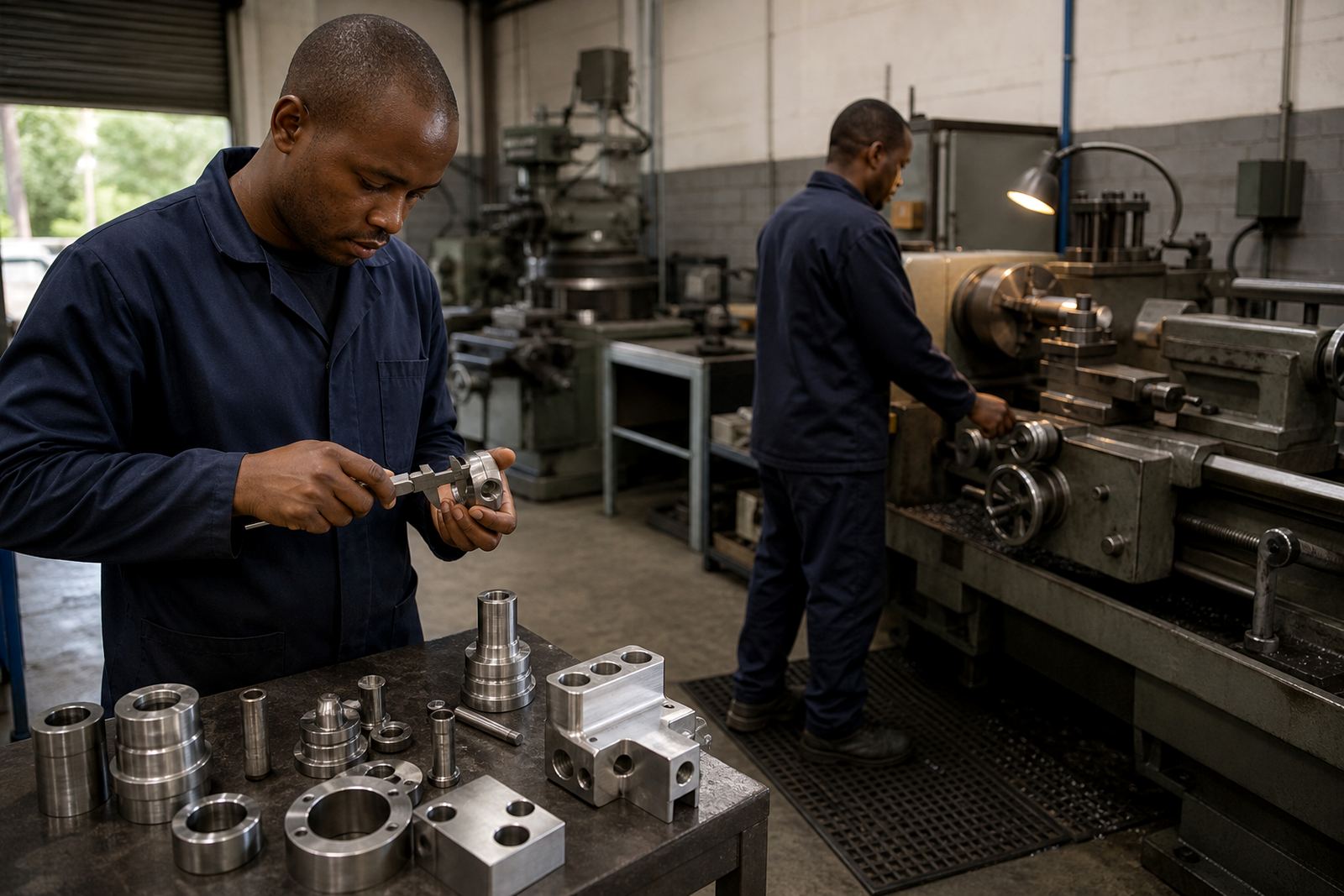
Our review process is practical. We look at the geometry first, then check whether the part is better suited to CNC milling, CNC turning, or a combination of both. Milled parts often have flats, pockets, slots and hole patterns, while turned parts usually suit round features, diameters, shoulders and threaded sections. Some components need both operations, especially where a turned blank must later receive milled faces or cross holes.
We also check whether the drawing is realistic for the material selected and the quantity required. A design that works well in aluminium may need different allowances in stainless steel, mild steel or engineering plastics. On tight jobs we may suggest small drawing updates to help with tool access, clamping, repeatability or finishing. That sort of check can save time later and reduce avoidable scrap.
Tolerances, Fits and What to Highlight Up Front
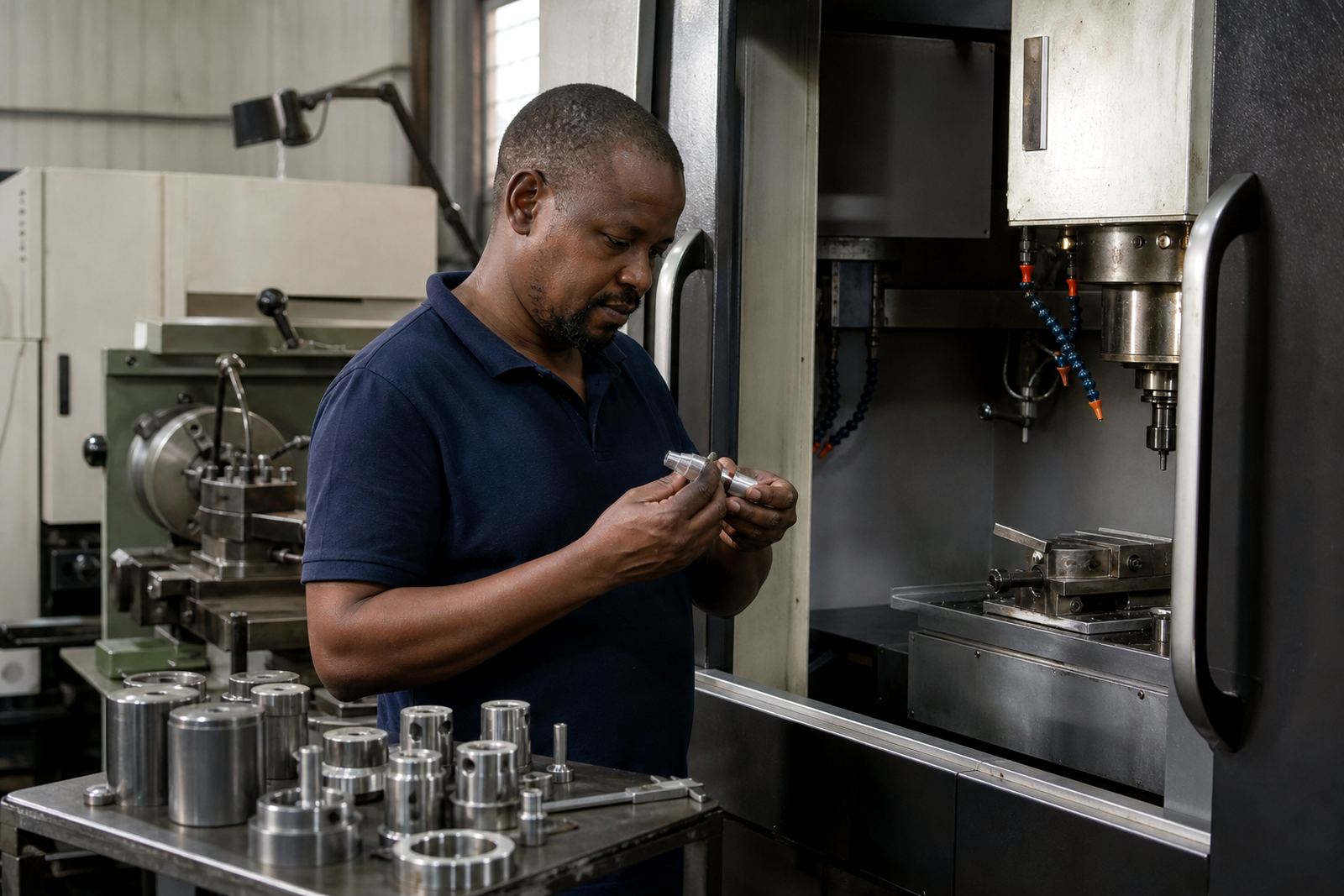
Tolerances matter because they decide how a part will fit, move or seal in the final assembly. If a bore must accept a bearing, a shaft must run smoothly, or a face must mate against another component, mark those features clearly on the drawing. If a dimension is only for general shape and not critical, say so. It helps the team focus on the features that really matter.
We cannot treat every feature the same way. Fine tolerances can add cost and may require extra setup, inspection or slower machining. A clear note on critical dimensions, surface finish expectations and any assembly fit checks lets us plan the job sensibly. If you are unsure, our team can help with tolerance guidance before the part goes into production.
- Mark critical dimensions clearly
- Identify mating faces, holes and shafts
- Note any surface finish or deburring needs
- Separate general dimensions from functional ones
- Flag anything that must match an existing part
Material Selection for South African Working Conditions
Material choice depends on how the part will be used. Some components need strength and wear resistance, others need corrosion resistance for coastal humidity in Durban, Richards Bay or Umhlanga, and some need light weight for easier handling. We can review your drawing against the intended duty and suggest suitable material options for the job.
In some cases the same part can be made in more than one material, but the finishing, machining behaviour and cost will vary. Aluminium machines differently from steel, and stainless steel can behave differently again. If the part will face heat, vibration, wet conditions or regular cleaning, those details should be mentioned on upload so the choice is informed and practical.
Prototype Planning Before We Cut Metal
Small-batch work often starts with a first-off sample or prototype. That first part lets us confirm dimensions, thread quality, hole alignment and assembly fit before moving to the full batch. If you need a sample part remake or a drawing update after checking a fit, include that history in the notes so we can understand what changed.
For prototype planning, tell us how the part will be checked on your side. If it has to slide into a housing, line up with an existing bracket or clear another component, that information helps us think ahead. It is better to discuss those points early than discover a mismatch after production has started.
- Is the part for testing, repair or final use?
- Will there be an assembly fit check?
- Does the drawing need revision after the first sample?
- Are there time constraints linked to shutdowns or maintenance?
How to Use the Enquiry Form Correctly
Use the enquiry form on our contact page to send the files and a short note with the job details. Tell us where the part is going, the quantity required, and whether you need repeat order support later. If there are multiple drawings, label them clearly so the correct revision is reviewed. One small typo in a file name is not a disaster, but mixing old and new versions can slow things down.
Once the files are received, our team can move through drawing review, batch planning, part optimisation and delivery coordination as needed. Mandyla and the team in Pinetown work with jobs from across South Africa, and clear uploads make it easier to give a sensible response without unnecessary back and forth.
If Your Drawing Is Not Final Yet
You do not need a perfect pack to start the conversation. If you only have a rough sketch, a worn sample, or a partially complete drawing, send what you have and explain what is missing. We can still advise on likely machining approach, material selection and which dimensions should be checked first.
For urgent work, mention the deadline and the reason for it, such as maintenance, line stoppage, machine repair or a replacement part that must be made quickly. That helps us assess the job properly and decide what can be done within the available time. Clear information now usually means fewer surprises later.